
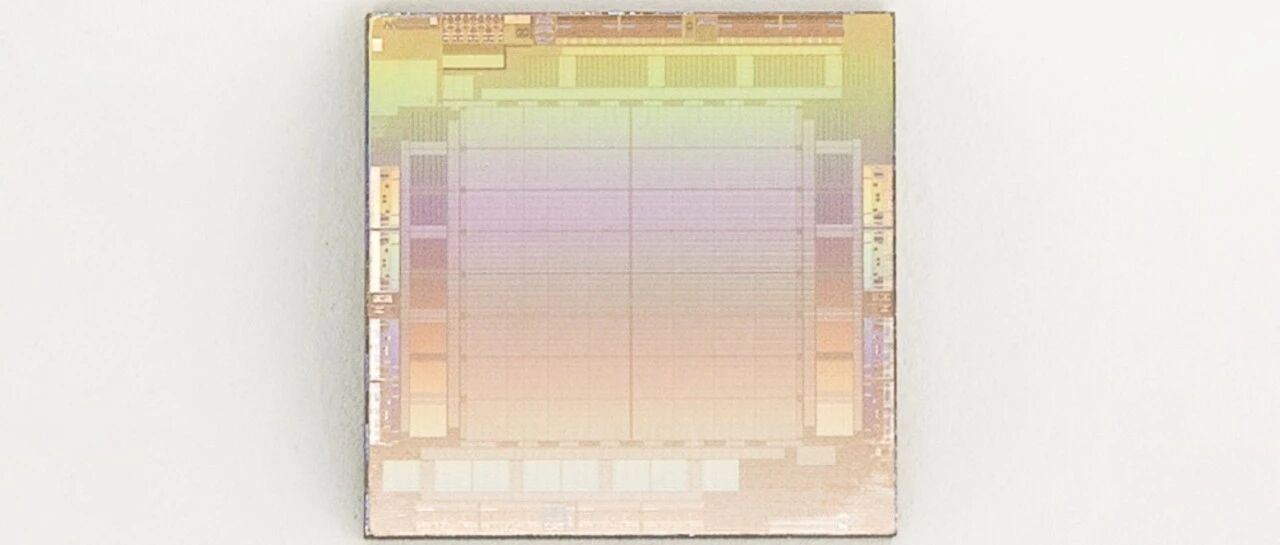
MTIA v2芯片

Search documents
突发,Meta放弃一颗自研芯片,拥抱谷歌TPU
半导体行业观察· 2026-02-27 02:19
Core Insights - Meta has faced significant challenges in the development of its custom chips, leading to the abandonment of both the Iris and Olympus training chips [2] - The company has opted to rent Google's AI chips, indicating a strategic shift in its approach to AI model development [2] Group 1: Meta's Chip Development Journey - Meta's strategy to enter the custom chip market aims to overcome the limitations of existing AI accelerators, with projected R&D spending of approximately $50 billion by 2025 [4] - The company intends to design its own CPU and XPU, pushing interconnect ASIC manufacturers to meet its demands [4] - Meta has been developing custom chips since 2020, launching the Meta Training and Inference Accelerator (MTIA) v1 in May 2023, which is primarily focused on inference rather than training [5][6] Group 2: MTIA Chip Specifications - MTIA v1 is manufactured using TSMC's 7nm process, with a frequency of 800 MHz, providing 102.4 TOPS at INT8 precision and 51.2 TFLOPS at FP16 precision [6] - The upcoming MTIA v2, set for release in April 2024, will feature a 68.8% increase in frequency to 1.35 GHz and a 2.6 times increase in power consumption to 90 watts [7][8] - Both MTIA chips utilize a RISC-V architecture, with MTIA v2 designed to enhance performance for inference tasks [9] Group 3: Acquisition of Rivos - Meta's acquisition of AI chip startup Rivos in October 2025 is seen as a strategic move to bolster its chip development capabilities [11] - Rivos, founded in 2021, has a strong team with experience from major tech companies, focusing on AI acceleration and RISC-V architecture [12][13] - The acquisition is expected to enable Meta to create high-end RISC-V chips tailored for its AI workloads, providing a competitive edge against NVIDIA and AMD [14] Group 4: Partnerships and Market Position - Meta has recently engaged in significant GPU transactions with NVIDIA and AMD, enhancing its bargaining power in the competitive landscape [16][17] - The company is also negotiating with Google for TPU rentals, which could further diversify its AI infrastructure and reduce reliance on traditional GPU providers [18][19] - Google's success with its TPU in internal workloads poses a challenge to NVIDIA's dominance, highlighting the shifting dynamics in the AI chip market [20]


GenAI系列报告之64暨AI应用深度之三:AI应用:Token经济萌芽
Shenwan Hongyuan Securities· 2025-09-24 12:04
Investment Rating - The report does not explicitly provide an investment rating for the industry Core Insights - The report focuses on the commercialization progress of AI applications, highlighting significant advancements in various sectors, including large models, AI video, AI programming, and enterprise-level AI software [4][28] - The report emphasizes the rapid growth in token consumption for AI applications, indicating accelerated commercialization and the emergence of new revenue streams [4][15] - Key companies in the AI space are experiencing substantial valuation increases, with several achieving over $1 billion in annual recurring revenue (ARR) [16][21] Summary by Sections 1. AI Application Overview: Acceleration of Commercialization - AI applications are witnessing a significant increase in token consumption, reflecting faster commercialization progress [4] - Major models like OpenAI have achieved an ARR of $12 billion, while AI video tools are approaching the $100 million ARR milestone [4][15] 2. Internet Giants: Recommendation System Upgrades + Chatbot - Companies like Google, OpenAI, and Meta are enhancing their recommendation systems and developing independent AI applications [4][26] - The integration of AI chatbots into traditional applications is becoming a core area for computational consumption [14] 3. AI Programming: One of the Hottest Application Directions - AI programming tools are gaining traction, with companies like Anysphere achieving an ARR of $500 million [17] - The commercialization of AI programming is accelerating, with several startups reaching significant revenue milestones [17][18] 4. Enterprise-Level AI: Still Awaiting Large-Scale Implementation - The report notes that while enterprise AI has a large potential market, its commercialization has been slower compared to other sectors [4][25] - Companies are expected to see significant acceleration in AI implementation by 2026 [17] 5. AI Creative Tools: Initial Commercialization of AI Video - AI video tools are beginning to show revenue potential, with companies like Synthesia reaching an ARR of $100 million [15][21] - The report highlights the impact of AI on content creation in education and gaming [4][28] 6. Domestic AI Application Progress - By mid-2025, China's public cloud service market for large models is projected to reach 537 trillion tokens, indicating robust growth in AI applications domestically [4] 7. Key Company Valuation Table - The report provides a detailed valuation table for key companies in the AI sector, showcasing significant increases in their market valuations and ARR figures [16][22]




电子行业周观点:ASIC需求全面爆发,重视自研芯片产业机遇
GOLDEN SUN SECURITIES· 2025-06-08 13:30
Investment Rating - The report maintains an "Increase" rating for the industry, emphasizing the explosive demand for ASICs and the investment opportunities in self-developed chip industries by CSPs like Amazon and Google [5][7][31]. Core Insights - The demand for custom ASICs is experiencing a comprehensive explosion, with significant growth expected in the custom acceleration computing chip market, projected to reach $42.9 billion by 2028, growing at a CAGR of 45% from 2023 to 2028 [14][31]. - Major North American CSPs are accelerating their self-developed ASIC layouts, with Google and Amazon leading the progress in custom chip development [14][19]. - Broadcom's guidance indicates that XPU deployments will exceed expectations in 2026, driven by strong demand for customized AI accelerators [20][22]. - Marvell is set to start 3nm chip production in 2026, with significant progress in custom AI XPU projects for large-scale data center clients [3][26]. - Wistron reported a significant revenue increase in May 2025, indicating a robust growth phase for ASIC demand, with AI inference servers expected to account for nearly 50% of the market [30][31]. Summary by Sections ASIC Demand and CSP Developments - The custom acceleration computing chip market is projected to grow from $6.6 billion in 2023 to $42.9 billion by 2028, with a CAGR of 45% [14]. - Google has launched the TPU v6 Trillium chip, expected to replace the TPU v5 by 2025, while Amazon is focusing on the Trainium v2 chip for generative AI applications [15][19]. - Meta is developing the MTIA v2 chip in collaboration with Broadcom, focusing on energy efficiency and low-latency architecture [18]. - Microsoft is enhancing its Maia series chips for Azure cloud applications, with the next generation being developed in partnership with GUC and Marvell [18][19]. Broadcom's Performance and Projections - Broadcom reported AI semiconductor revenue exceeding $4.4 billion in Q2 2025, a 46% year-over-year increase, with expectations for continued growth into 2026 [20][22]. - The company is collaborating with three clients and four potential clients for custom AI accelerator deployments, anticipating significant demand for XPUs in the second half of 2026 [20][22]. Marvell's Innovations and Collaborations - Marvell is set to initiate 3nm chip production in 2026, with strong demand from large-scale data center clients driving revenue growth [3][26]. - The partnership with NVIDIA to incorporate NVLink Fusion technology into custom platforms enhances Marvell's capabilities in the custom chip market [26]. Wistron's Revenue Growth - Wistron reported a revenue of 208.4 billion New Taiwan Dollars in May 2025, reflecting a 162% year-over-year increase, driven by the explosive demand for ASICs [30][31].


