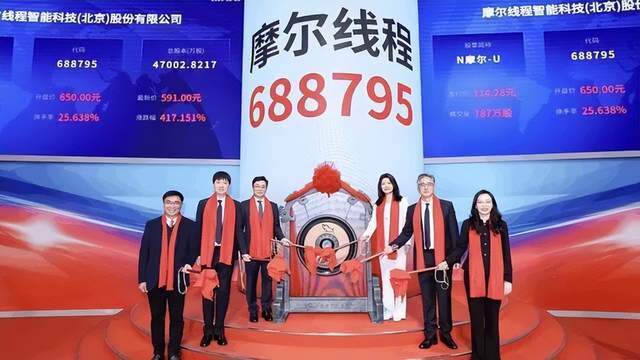
MUSA生态

Search documents
首届开发者大会,让摩尔线程全功能GPU的独特优势更「具像化」
雷峰网· 2025-12-26 00:25
Core Viewpoint - The article discusses the advancements made by Moores Threads in the field of full-function GPUs, highlighting the launch of the new Huagang architecture, which enhances computing density by 50% and improves performance by 10 times, showcasing the company's rapid development and broad application potential in various industries [1][22]. Group 1: Moores Threads' Innovations - Moores Threads has showcased its full-function GPU capabilities, which span from consumer applications to vertical industries, integrating graphics, AI, and high-performance computing [3][7]. - The company has introduced the Huagang architecture, along with new AI training and inference chip Huashan and professional graphics chip Lushan, which significantly enhance performance metrics [22][29]. - The Huashan chip features advanced floating-point performance and supports over 100,000 card computing clusters, while Lushan offers substantial improvements in gaming and AI computation performance [29][31]. Group 2: Application Cases and Market Impact - The article highlights nearly 100 application cases that demonstrate the unique capabilities of Moores Threads' full-function GPUs across various sectors, including gaming, healthcare, and AI [15][49]. - The integration of AI capabilities with graphics rendering allows for complex applications in fields such as medical imaging and industrial design, showcasing the versatility of the technology [11][15]. - Moores Threads has achieved 100% compatibility with the top 50 popular games in China since the launch of its consumer-grade graphics card, indicating strong market acceptance [9]. Group 3: MUSA Ecosystem and Developer Engagement - The MUSA (Meta-computing Unified System Architecture) is a comprehensive technology stack developed by Moores Threads, aimed at fostering a robust developer ecosystem [33][49]. - The company aims to attract a large number of developers to build applications on the MUSA platform, emphasizing the importance of collaboration between manufacturers and developers [35][38]. - Moores Threads has set a goal of reaching one million MUSA developers, indicating its commitment to expanding its ecosystem and enhancing the value of its technology [47][49].

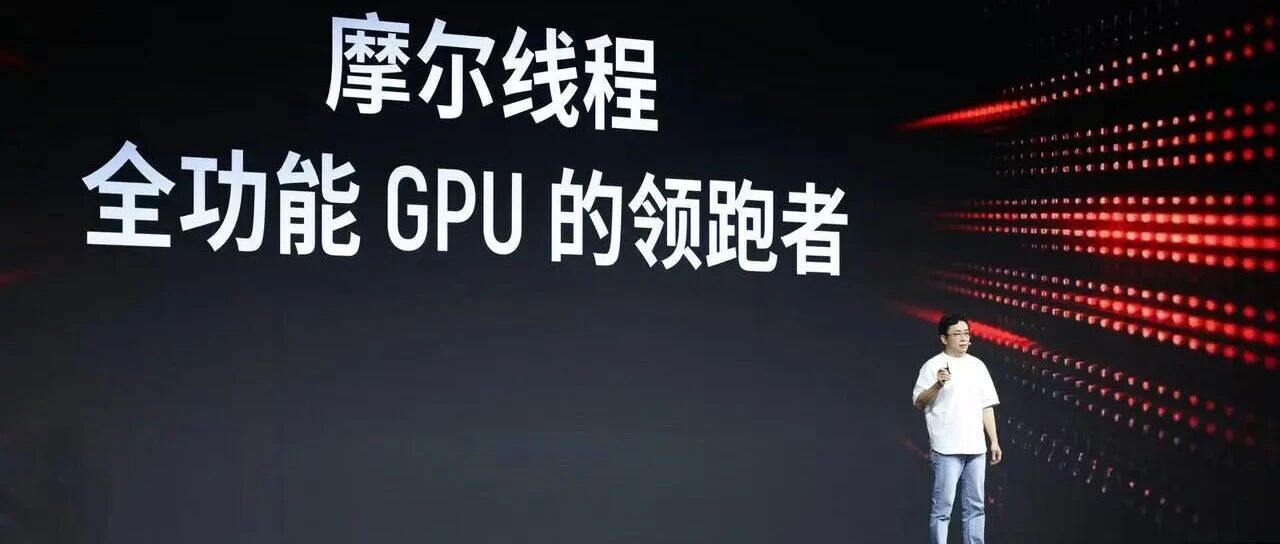
谷歌挑战英伟达,摩尔线程、沐曦内部人士怎么看?
第一财经· 2025-12-18 14:06
Core Viewpoint - The release of Google's next-generation AI model Gemini 3 series, showcasing the performance and cost advantages of its self-developed TPU, poses a strong challenge to NVIDIA's dominance in the GPU market, leading to a significant market reaction where NVIDIA's market value dropped by over $100 billion [3]. Group 1: Hardware Competition - The core debate centers around the division of labor between general-purpose GPUs and specialized chips like TPUs, rather than a simple replacement relationship [4]. - Google's ability to develop TPUs is attributed to its status as a full-stack integrated company, leveraging its strong infrastructure, foundational models, and cloud services to optimize costs [4]. - The continued advantage of GPUs is attributed to their flexibility, full functionality in a multi-modal era, and the established ecosystem, particularly NVIDIA's CUDA ecosystem, which has created a significant competitive barrier [5]. Group 2: Perspectives on Chip Architecture - The founder of Moex, Sun Guoliang, emphasizes that no chip architecture is inherently superior; the key lies in the application scenarios [6]. - Both GPUs and ASICs like TPUs are expected to coexist due to the diverse and rapidly evolving application scenarios in the industry [6]. - Despite acknowledging the value of general-purpose chips, there is recognition of the potential for specialized chips in specific scenarios, particularly for large cloud service companies once their algorithms stabilize [6]. Group 3: Infrastructure and Performance - In the current AI model competition, the peak computing power of a single card is not the sole determining factor; the ability to construct high-performance networks that connect thousands of cards and deeply integrate with software stacks is crucial [7]. - Moex has multiple production-grade thousand-card clusters operational, indicating a shift from experimental setups to real-world applications supporting training and inference [7]. - The primary challenge in AI infrastructure is to provide a reliable general computing power platform that supports large-scale model training and inference, rather than isolated cards or servers [8].


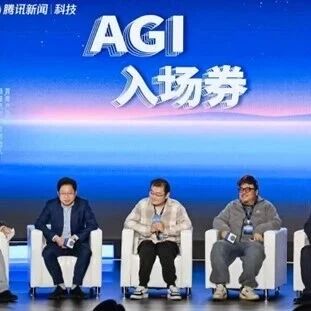
摩尔线程上市募资75亿买理财,这事听起来挺魔幻的
Sou Hu Cai Jing· 2025-12-13 06:17
Group 1 - The core point of the article is that after its IPO, Moore Threads announced plans to invest up to 7.5 billion yuan in wealth management products instead of using the funds for immediate growth initiatives like mergers or production expansion, signaling a cautious approach in a capital-intensive industry [2][3][29] - The company clarified that the funds would primarily be allocated to three areas: next-generation AI training and inference chips, next-generation graphics chips, and next-generation AI SoCs, indicating a strategic focus on R&D despite the immediate decision to park funds [4][6] - The article highlights that chip development is inherently slow due to physical constraints, making it difficult to rapidly deploy funds as seen in the internet sector, where capital can be spent quickly to drive growth [5][6][8] Group 2 - The slow pace of software development, particularly in building the MUSA ecosystem, is a significant factor that delays the overall progress, as it requires extensive time and effort to adapt software for new hardware [10][11][12] - The article points out that even with substantial funds available, the company cannot quickly convert this capital into accelerated R&D due to the nature of the industry, which requires a gradual investment approach rather than a sudden influx of cash [13][14][21] - The capital market's valuation of Moore Threads is based on future potential rather than current performance, with the company still in a loss-making phase and using the funds primarily for survival rather than expansion, reflecting a defensive strategy [23][26][27][28] Group 3 - The article emphasizes that the expectation for rapid advancements in hard technology does not align with the reality of development timelines, where capital can be quickly acquired but ecosystem and production capabilities take years to establish [29][30][31] - The 7.5 billion yuan is viewed as a buffer that allows the company time to wait for production capacity and ecosystem development, rather than being seen as idle funds [32][33]