
庐山芯片

Search documents
摩尔线程去年预亏10亿,旗舰GPU量产
Guan Cha Zhe Wang· 2026-01-21 14:01
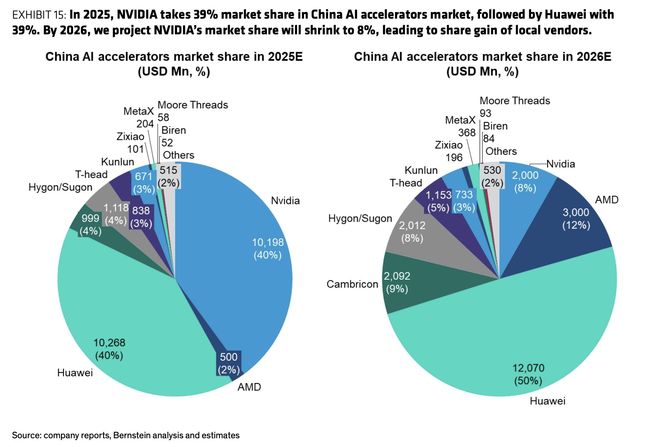
Core Viewpoint - The company, Moore Threads, forecasts a significant revenue increase for 2025, driven by the booming AI industry and strong demand for high-performance GPUs, despite expected net profit decline and ongoing research and development investments [1][2]. Financial Performance - Expected revenue for 2025 is projected between 1.45 billion to 1.52 billion yuan, representing a year-on-year growth of 230.70% to 246.67% [1]. - The anticipated net profit is estimated to be between 950 million to 1.06 billion yuan, reflecting a year-on-year decline of 34.50% to 41.30% [1]. - The company expects a non-recurring loss of 1.04 billion to 1.15 billion yuan, which is a reduction of 29.59% to 36.32% year-on-year [1]. Market Position and Competition - Moore Threads positions itself uniquely in the domestic market with its "AI + Graphics" dual-drive strategy, utilizing its MUSA architecture [2]. - The company claims to be the only domestic GPU capable of competing with NVIDIA, integrating AI computation acceleration, graphics rendering, scientific computing, and video codec capabilities [2]. - According to Bernstein Research, NVIDIA and Huawei are expected to dominate the Chinese AI accelerator market with 40% market share each by 2025, while other competitors like Haiguang and Pingtouge hold only 4% [2]. Research and Development - The GPU industry is characterized by high barriers to entry, significant R&D investment, and long development cycles, requiring comprehensive R&D capabilities [3]. - Moore Threads has invested over 4.3 billion yuan in R&D from 2022 to the first half of 2025, compared to 1.07 billion yuan by Cambrian for 2024 [3]. Technological Advancements - The company has achieved market-leading performance with its fourth-generation GPU architecture, the MTT S5000, which has reached a floating-point computing capability of 10 Exa-Flops in a cluster [5]. - The fifth-generation GPU architecture, "HuaGang," supports full precision calculations and will lead to the development of high-performance AI training chips and graphics rendering chips [5]. - Recent collaborations have demonstrated the capabilities of the MTT S5000 in training large models, marking significant advancements in the domestic GPU sector [6]. Funding and Future Projects - Moore Threads announced plans to use its own funds to meet the financial needs of its R&D projects, ensuring the smooth progress of GPU development [6]. - The funding will focus on three core R&D projects: next-generation AI training and inference chips, next-generation graphics chips, and next-generation AI SoC chips [6].

摩尔线程:五年“长考”,筑起全功能算力的硬核长城
半导体行业观察· 2025-12-26 01:57
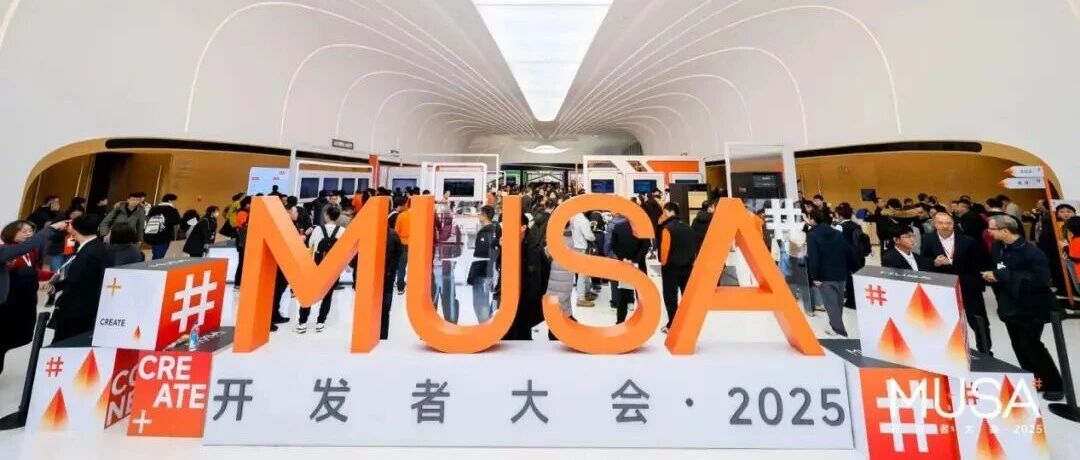
Core Viewpoint - The semiconductor industry recognizes that while developing a chip may take three years, it often takes a decade for developers to write code for that chip. The success of NVIDIA's CUDA is fundamentally a victory of software stack and developer ecosystem. For domestic GPUs, merely matching computational power is insufficient for long-term competitiveness; the real challenge lies in establishing a deeply integrated hardware-software architecture that allows global developers to transition seamlessly [1][3]. Group 1: MUSA Ecosystem and Achievements - The MUSA developer conference showcased a strong consensus on the need for an ecosystem breakthrough, emphasizing that it was not just a technical release but a large-scale event with around 1,000 participants [1]. - Over the past five years, the company has made significant strides, including the development of five chips, an investment exceeding 4.3 billion yuan in R&D, a 77% R&D personnel ratio, and over 200,000 active developers, highlighting its unique position in the domestic GPU sector [3]. Group 2: MUSA Architecture - MUSA (Meta-computing Unified System Architecture) is not merely a software package; it encompasses a full-stack technology system that integrates chip architecture, instruction sets, programming models, and software libraries, enabling developers to efficiently write, migrate, and optimize code on the company's GPUs [6][8]. - The MUSA architecture defines unified technical standards from chip design to software ecosystem, similar to how Android and Windows function as platforms rather than just software installers [8]. Group 3: Full-Function GPU - The concept of a "full-function GPU" is rooted in its ability to handle multiple tasks, including graphics rendering, AI tensor computation, physical simulation, and ultra-high-definition video encoding, making it versatile for various applications [12][15]. - The evolution of GPU capabilities has been pivotal in the computing revolution, transitioning from graphics acceleration to general computing and now to AI-driven applications [10][14]. Group 4: New Architectures and Innovations - The latest "Huagang" architecture has been introduced, featuring a 50% increase in computational density and a tenfold improvement in computational efficiency, along with new asynchronous programming models and AI-driven rendering capabilities [19][21]. - The company has filed over 1,000 patents, with more than 500 granted, establishing a leading position in the domestic GPU industry [21]. Group 5: Key Products - The "Huashan" chip is designed for AI training and inference, featuring advanced load balancing and a new generation of Tensor Cores optimized for AI applications, significantly enhancing computational efficiency [24][25]. - The "Lushan" chip, aimed at high-performance graphics rendering, boasts a 15-fold increase in 3A game performance and a 64-fold increase in AI computing performance compared to previous models [28][30]. Group 6: AI Factory and Large-Scale Systems - The company is advancing towards building AI factories capable of supporting over 100,000 GPUs, addressing challenges such as connectivity, fault tolerance, and energy efficiency in large-scale systems [34]. - The new MTLink 4.0 technology enhances data transmission efficiency, while the ACE 2.0 engine optimizes GPU collaboration, ensuring high stability and availability in large clusters [34]. Group 7: MUSA 5.0 Software Stack - The MUSA 5.0 upgrade represents a significant milestone, providing seamless support for various applications, including AI training and scientific computing, while ensuring compatibility with both international and domestic CPU operating systems [36][37]. - The upgrade includes enhancements in performance optimization, open-source tools, and programming languages tailored for 3D graphics and AI applications, improving developer efficiency [40]. Group 8: Embodied Intelligence and AI SoC - The company is venturing into embodied intelligence with the launch of the "Changjiang" AI SoC, integrating multiple computational cores to support advanced AI applications in robotics and next-generation devices [39]. - The MT Lambda simulation platform aims to enhance the efficiency of transitioning from simulation to real-world applications, providing a comprehensive solution for embodied intelligence [42]. Group 9: Developer Ecosystem - The success of the domestic GPU ecosystem hinges on attracting developers, addressing high migration costs, and improving toolchains and documentation [46]. - The MUSA software stack is designed to enhance developer experience, facilitating a smooth transition to domestic GPUs while ensuring compatibility with mainstream ecosystems [47].
首届开发者大会,让摩尔线程全功能GPU的独特优势更「具像化」
雷峰网· 2025-12-26 00:25
Core Viewpoint - The article discusses the advancements made by Moores Threads in the field of full-function GPUs, highlighting the launch of the new Huagang architecture, which enhances computing density by 50% and improves performance by 10 times, showcasing the company's rapid development and broad application potential in various industries [1][22]. Group 1: Moores Threads' Innovations - Moores Threads has showcased its full-function GPU capabilities, which span from consumer applications to vertical industries, integrating graphics, AI, and high-performance computing [3][7]. - The company has introduced the Huagang architecture, along with new AI training and inference chip Huashan and professional graphics chip Lushan, which significantly enhance performance metrics [22][29]. - The Huashan chip features advanced floating-point performance and supports over 100,000 card computing clusters, while Lushan offers substantial improvements in gaming and AI computation performance [29][31]. Group 2: Application Cases and Market Impact - The article highlights nearly 100 application cases that demonstrate the unique capabilities of Moores Threads' full-function GPUs across various sectors, including gaming, healthcare, and AI [15][49]. - The integration of AI capabilities with graphics rendering allows for complex applications in fields such as medical imaging and industrial design, showcasing the versatility of the technology [11][15]. - Moores Threads has achieved 100% compatibility with the top 50 popular games in China since the launch of its consumer-grade graphics card, indicating strong market acceptance [9]. Group 3: MUSA Ecosystem and Developer Engagement - The MUSA (Meta-computing Unified System Architecture) is a comprehensive technology stack developed by Moores Threads, aimed at fostering a robust developer ecosystem [33][49]. - The company aims to attract a large number of developers to build applications on the MUSA platform, emphasizing the importance of collaboration between manufacturers and developers [35][38]. - Moores Threads has set a goal of reaching one million MUSA developers, indicating its commitment to expanding its ecosystem and enhancing the value of its technology [47][49].
技术突围与资本共振: 人工智能赛道涌现上市潮
Zhong Guo Zheng Quan Bao· 2025-12-22 20:37
Core Insights - The Chinese AI industry is experiencing a significant capital market influx, with companies like Zhipu and MiniMax aiming for IPOs, indicating a critical phase of commercialization in AI technology [1][2] - The AI sector is projected to grow rapidly, with the core industry expected to exceed 900 billion yuan in 2024 and potentially surpass 1.2 trillion yuan in 2025, reflecting a 24% growth rate [1][6] - Despite the rapid growth, challenges such as high costs and low returns in AI applications persist, necessitating patience from investors [1][7] Company Summaries - Zhipu, established in 2019, has empowered over 12,000 enterprise clients and 80 million terminal devices, leading the independent general-purpose AI model market in China with a 6.6% market share [2] - MiniMax, founded in early 2022, has rapidly developed a product matrix for both C-end and B-end users, reaching over 2.12 million personal users and 130,000 enterprise clients across more than 200 countries [2] - Both Zhipu and MiniMax have shown substantial revenue growth, with Zhipu's revenue increasing from 57.4 million yuan in 2022 to 312.4 million yuan in 2024, and MiniMax's revenue projected to grow from 3.46 million USD in 2023 to 30.52 million USD in 2024 [5] Market Trends - The demand for AI models is surging, with daily token consumption in China exceeding 30 trillion by mid-2023, reflecting a 300-fold increase within a year [5] - The AI chip market is also thriving, with companies like MoEr Thread and MuXi achieving significant market valuations, indicating a robust demand for underlying computational power [2][3] - The global AI market is expected to reach 900 billion USD by 2026, with China being one of the fastest-growing markets, projected to exceed a 30% growth rate [6] Application Challenges - The integration of AI into various industries is facing structural challenges, particularly in manufacturing, where AI's penetration remains limited due to data accessibility and reliability issues [7][8] - The high consumption of data and computational resources raises concerns about the unclear commercial return paths for AI investments, with many companies currently operating at a loss [8][9] - There is a pressing need for improved data sharing and high-quality datasets to enhance AI model performance and facilitate broader adoption, especially among SMEs [7][8]
科创综指ETF鹏华(589680)上涨1.7%,光计算与GPU新架构提振硬科技板块
Xin Lang Cai Jing· 2025-12-22 06:00
Core Insights - The Shanghai Stock Exchange Sci-Tech Innovation Board Composite Index (000680) has shown a strong increase of 1.63%, with notable gains in constituent stocks such as Andar Intelligent (688125) rising by 20.00%, and Dingtong Technology (688668) increasing by 19.66% [1] - A research team from Shanghai Jiao Tong University has made a breakthrough in all-optical computing chips, enabling large-scale semantic media generation models, which has positively impacted market sentiment towards hard technology and AI sectors [1] - The new GPU architecture "Huagang" announced by Moole Technology (688795.SH) at its first MUSA Developer Conference features a 50% increase in computing density compared to the previous generation, supporting full precision calculations and large-scale intelligent computing clusters [1] Industry Analysis - Recent research from CITIC Securities highlights that AI-themed indices focused on the Sci-Tech Innovation Board and ChiNext exhibit significant characteristics concentrated in upstream core components, particularly in optical modules and AI chips [2] - Guotai Junan's macro market outlook suggests that despite short-term market volatility, certain institutions believe that assets related to technology innovation have long-term investment value due to profit growth, accelerated innovation, and attractive valuations [2] - As of December 19, 2025, the Sci-Tech Innovation Board Composite Index ETF (589680.SH) covers 576 stocks, with a sector distribution showing electronics at 47.08%, biomedicine at 14.48%, and power equipment at 9.57% [2]
平安证券(香港)港股晨报-20251222
Ping An Securities Hongkong· 2025-12-22 04:09
Market Overview - The Hong Kong stock market experienced fluctuations, with the Hang Seng Index closing at 23,831 points, down 145 points or 0.61% [1] - The net inflow of funds through the Hong Kong Stock Connect was HKD 484 million, with the Shanghai Stock Connect contributing HKD 283 million and the Shenzhen Stock Connect contributing HKD 201 million [1] - The US stock market saw all three major indices rise, with the Dow Jones up 0.38%, the Nasdaq up 1.31%, and the S&P 500 up 0.88% [2] Sector Performance - In the Hong Kong market, local real estate, software, and 5G concept sectors saw significant declines, while gold stocks performed well [1] - In the US market, large technology stocks generally rose, with Oracle up over 6%, Nvidia up nearly 4%, and Broadcom up over 3% [2] - The biopharmaceutical sector in Hong Kong saw a general increase, with WuXi Biologics rising over 4% [1] Investment Opportunities - The report emphasizes that low-valued high-dividend sectors remain attractive for investment in Hong Kong stocks, particularly in December, which saw a net inflow of HKD 24.2 billion [3] - Key sectors to watch include artificial intelligence applications, semiconductors, and industrial software, which are expected to benefit from long-term growth opportunities [3] - The report suggests focusing on leading companies in the semiconductor and robotics sectors, as well as state-owned enterprises with low valuations and high dividends [3] Notable Company Developments - Changan Automobile received the first L3 autonomous driving license in China, marking a significant step towards commercial application of L3 autonomous driving technology [9] - The report highlights the launch of new GPU architectures by Moore Threads, which could enhance the domestic semiconductor industry [9] - Companies such as BYD and XPeng Motors are recommended for their potential in the electric vehicle market, particularly as AI applications in driving technology expand [9]
卢伟冰称小米17Ultra涨价;星链一颗卫星异常丨新鲜早科技
2 1 Shi Ji Jing Ji Bao Dao· 2025-12-22 01:56
Group 1: Industry Developments - A Starlink satellite from SpaceX experienced an anomaly, losing contact with the ground and producing debris, which poses a potential threat to other satellites in orbit [2] - The first L3-level autonomous driving license in China was issued to Changan Automobile, marking a significant step towards commercial application of L3 autonomous driving technology [3] - Beijing's humanoid robotics center has open-sourced the XR-1 model, which is the first to pass national standards for embodied intelligence, advancing the domestic embodied intelligence industry [4] - Turing Quantum and Moore Threads have signed a strategic cooperation agreement to develop a hybrid computing architecture that integrates GPU and quantum processors [5] - Chinese robot "Deep Sea Giant Shark 3" won a combat robot competition in Abu Dhabi, showcasing advanced design and capabilities [6] - Researchers at Shanghai Jiao Tong University achieved a breakthrough in optical computing chips, supporting large-scale semantic media generation models [7] Group 2: Corporate News - Xiaomi's president confirmed that the price of the upcoming Xiaomi 17 Ultra smartphone will increase due to rising memory costs, which are expected to continue increasing in the coming years [2] - New Unisplendour Group signed a strategic cooperation agreement with Shanghai Yidian to collaborate on artificial intelligence and intelligent computing [10] - Wallen Technology plans to acquire at least 60% of Liao Jing Electronics, which operates in integrated circuits and electronic components [14] - Tianpu Co. announced the expiration of a tender offer from Zhonghao Xinying for 33.52 million shares, representing 25% of the company's total equity [15] - Lianchuang Electronics is planning a change in control due to a potential transfer of shares by its major shareholder [16] - *ST Dongyi's restructuring plan was approved by the court, allowing the company to focus on its main business while leveraging resources in the computing industry [17]
摩尔线程,走英伟达的路,也走自己的路
Tai Mei Ti A P P· 2025-12-22 01:37
Core Insights - The core message of the news is that Moore Threads is evolving from a GPU manufacturer to a comprehensive computing infrastructure company, similar to Nvidia, but tailored to address the unique challenges of the Chinese market [2][3]. Group 1: Product Development and Strategy - Moore Threads introduced its full-featured GPU architecture "Huagang" and the MUSA (Meta-computing Unified System Architecture) at the MDC 2025, emphasizing a shift towards a more integrated approach to computing [2][5]. - The company aims to support a wide range of applications, including graphics, AI, HPC, and video processing, through its full-featured GPU, which is designed to handle mixed computing tasks rather than focusing solely on AI [2][5][6]. - The MUSA architecture encompasses a complete technology stack, from chip architecture to software frameworks, allowing for versatile applications across different industries [7][8][10]. Group 2: Technical Innovations - The full-featured GPU integrates multiple computing engines, including AI computation, 3D graphics rendering, high-performance computing, and intelligent video encoding, to meet diverse computational needs [6][7]. - The latest MUSA upgrade to version 5.0 enhances compatibility with various programming languages and significantly improves performance metrics, such as achieving over 98% efficiency in core computation libraries [10][11]. - The "Huagang" architecture boasts a 50% increase in computing density and substantial improvements in energy efficiency, supporting a wide range of precision from FP4 to FP64 [12][14]. Group 3: Market Position and Future Outlook - Moore Threads is positioning itself as a key player in the domestic GPU market, leveraging its unique methodologies to tackle challenges such as supply chain uncertainties and technological barriers [3][5]. - The company is set to release two new chips, "Huashan" for AI training and "Lushan" for high-performance graphics rendering, which are expected to significantly enhance capabilities in their respective fields [14][15]. - The launch of the "Kua'a" supercomputing cluster marks a significant milestone, achieving floating-point performance of 10 Exa-Flops and demonstrating high efficiency in AI training and inference tasks [15][16].
首块L3级自动驾驶牌照发布;摩尔线程发布新一代GPU架构|盘前情报
2 1 Shi Ji Jing Ji Bao Dao· 2025-12-22 00:40
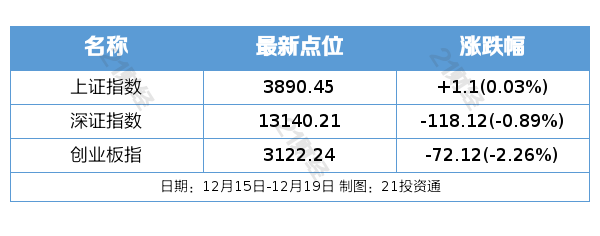
Market Performance - A-shares showed mixed performance from December 15 to December 19, with the Shanghai Composite Index closing at 3890.45 points, up 0.03%, while the Shenzhen Component Index fell 0.89% to 13140.21 points, and the ChiNext Index dropped 2.26% to 3122.24 points [1][2] - Over 54% of stocks in the A-share market rose during the week, with 107 stocks gaining over 15% and 31 stocks declining more than 15% [1] International Market Trends - The New York stock market indices rose on December 19, with the Dow Jones Industrial Average increasing by 183.04 points to 48134.89 points (up 0.38%), the S&P 500 rising by 59.74 points to 6834.50 points (up 0.88%), and the Nasdaq Composite gaining 301.26 points to 23307.62 points (up 1.31%) [3][4] - European stock indices also saw gains, with the FTSE 100 closing at 9897.42 points (up 0.61%), the CAC 40 at 8151.38 points (up 0.01%), and the DAX at 24288.40 points (up 0.37%) [3][4] - International oil prices experienced slight increases, with WTI crude oil futures rising by 51 cents to $56.66 per barrel (up 0.91%) and Brent crude oil futures increasing by 65 cents to $60.47 per barrel (up 1.09%) [3][4] Regulatory Developments - The National Development and Reform Commission, along with other regulatory bodies, released the "Internet Platform Pricing Behavior Rules" to enhance price regulation and protect consumer rights in the platform economy [5] - The National Internet Information Office and the China Securities Regulatory Commission are intensifying efforts to combat false information in the capital market, warning that spreading such information will lead to legal consequences [6] Automotive Industry Advancements - Changan Automobile received the first official license plate for L3-level autonomous driving, marking a significant milestone in the development of intelligent connected vehicles in China [6][7] - The Ministry of Industry and Information Technology granted the first batch of L3-level conditional autonomous driving vehicle licenses, allowing companies like Changan and BAIC to conduct road trials in designated areas [6][7] Technology Sector Developments - Moore Threads unveiled its new GPU architecture "Huagang," which supports full precision computing and is designed for large-scale computing clusters, with plans to launch high-performance AI chips in the coming year [8] - The AI infrastructure investment is expected to grow, with the global computing chip market expanding, benefiting hardware suppliers in the industry [8] Financial Sector Initiatives - The People's Bank of China and other financial authorities in Fujian Province are implementing a plan to enhance financial support for technology innovation and strategic emerging industries, aiming for a 10% annual growth in technology-related loans by 2025-2027 [9] Scientific Breakthroughs - Researchers at Shanghai Jiao Tong University achieved a breakthrough in the field of optical computing chips, which could support large-scale semantic media generation models, addressing the performance gap in traditional chip architectures [10] Commodity Market Insights - International silver prices reached a new high, with a year-to-date increase of 132.11%, significantly outpacing gold prices [11] Investment Strategies - Tianfeng Securities suggests focusing on three main investment directions: breakthroughs in AI technology, economic recovery, and undervalued assets benefiting from AI trends [12] - Huaxi Securities indicates that conditions for a "spring rally" are accumulating, recommending investments in sectors supported by industrial policies and consumer stimulus [13]
音频 | 格隆汇12.22盘前要点—港A美股你需要关注的大事都在这
Ge Long Hui A P P· 2025-12-21 22:47
Global Market Insights - Major global markets are entering a "Christmas mode" with the release of key economic data such as US GDP [1] - US stock indices collectively rose last Friday, with the Nasdaq increasing by 1.31% and Nvidia rising nearly 4% [1] - New York silver prices reached a historical high, approaching $68, with an approximate increase of 8.7% last week [1] - Concerns regarding AI have led Australia's largest pension fund to plan a reduction in global stock allocations [1] - The US military announced a $3.5 billion procurement for 72 missile warning and tracking satellites, marking the largest transaction for low Earth orbit constellations to date [1] - Former President Trump reached an agreement with nine pharmaceutical companies to significantly lower drug prices [1] - Elon Musk became the first individual to reach a net worth of $700 billion [1] - The US House of Representatives is proposing a tax "safe harbor" for stablecoins and cryptocurrency staking [1] Greater China Region Insights - A-shares are expected to reach a record high in dividend payouts by 2025 [1] - The Ministry of Commerce reported that foreign investment in China from January to November 2025 was 693.18 billion yuan, a year-on-year decrease of 7.5% [1] - Shanxi province has abolished its "fireworks ban," with the China Fireworks Association expressing support [1] - Hong Kong is expected to issue its first batch of stablecoin licenses in early 2026 [1] - Shanghai has released its first "Game Ten Measures" to support the development of the gaming industry [1] - Moore Threads launched the Lushan chip, claiming a 15-fold performance improvement for 3A games [1] - The new GPU architecture from Moore Threads can support clusters of up to 100,000 cards [1] - Several accounts involved in spreading rumors and illegal stock recommendations have been dealt with [1] - Today, Hong Kong stocks including Huazhi Biotechnology-B, BenQ Hospital, Nanhua Futures, and Impression Dahongpao are set to be listed, along with six stocks including Woan Robotics for subscription [1] - Today, A-shares for Shaanxi Tourism and Xin Guangyi are available for subscription [1] - Selected announcements include Qingdao Port's plan to invest 9.097 billion yuan in the first phase of the Dongjiakou container terminal project, and Huati Technology stating it does not engage in commercial aerospace-related business [1] - A-share investment warning includes Zhuoran Co. and its actual controller receiving a notice of investigation [1]