Mate X6

Search documents
从“猎奇”到“信赖”:折叠屏手机用户发展洞察报告
艾瑞咨询· 2026-02-20 00:04
Core Insights - The global foldable smartphone market is experiencing continuous growth, particularly in China, driven by technological advancements and an improved supply chain, leading to product diversification [1] - China has emerged as the main growth engine for the global foldable smartphone market, with Huawei maintaining a significant market share [1][18] - User willingness to purchase foldable smartphones is increasing, with higher expectations for product functionality and experience [1] Market Overview - The global smartphone market has transitioned into a phase of stock competition since 2017, with annual shipment volumes declining by approximately 2.52%, projected to reach 1.22 billion units by 2024 [2] - The flat smartphone market has become saturated, prompting manufacturers to innovate product forms to explore the high-end market [5] Competitive Landscape - The foldable smartphone industry chain includes upstream raw material supply, midstream design and manufacturing, and downstream sales [7] - Chinese manufacturers, led by Huawei and Samsung, are driving the industry chain's collaborative progress, injecting strong momentum into the market [7][9] - Huawei's market share in China has significantly increased from 35.0% in Q1 2023 to 75.0% in Q1 2025, indicating a strengthening of its leading position [18] User Behavior and Preferences - The majority of foldable smartphone users are male and female, with a higher preference among first-tier and new first-tier city users [20] - Users predominantly use foldable smartphones priced between 5,000 to 9,000 yuan, with Huawei being the most used brand at 62.3% [22] - The key reasons for purchasing foldable smartphones include a stronger sense of technology and future appeal, with 44.7% of users citing this as a primary factor [24] Product Development and Trends - Foldable smartphones are transitioning from niche products to mainstream devices, with a focus on hardware optimization and software ecosystem development [1][43] - The hardware is evolving from merely functional to providing a comprehensive user experience, with innovations in hinge and screen technology [45] - The market is expected to see a significant shift in 2026, with foldable smartphones becoming more mainstream as user acceptance increases [15] User Satisfaction and Recommendations - Huawei leads in user satisfaction, with a higher rating than the overall market, followed by Xiaomi and Samsung [30] - The net recommendation value for Huawei and Xiaomi indicates strong user advocacy and brand loyalty [31] Future Outlook - Over 90% of consumers are considering purchasing a foldable smartphone for their next device, with a focus on reliability, battery life, and hardware specifications [41] - The transition from "novelty" to "common use" is evident, with 95.5% of consumers willing to switch to foldable smartphones in the future [47]


从“猎奇”到“信赖”:折叠屏手机用户发展洞察报告
艾瑞咨询· 2026-02-05 00:00
Core Insights - The global foldable smartphone market is experiencing continuous growth, particularly in China, driven by technological advancements and an improved supply chain, leading to product diversification [1] - China has emerged as the main growth engine for the global foldable smartphone market, with Huawei maintaining a significant market share [1][18] - User willingness to purchase foldable smartphones is increasing, with higher expectations for product functionality and experience [1] Market Overview - The global smartphone market has transitioned into a saturated phase since 2017, with annual shipment volumes declining by approximately 2.52%, projected to reach 1.22 billion units by 2024 [2] - The foldable smartphone segment is seen as a strategic direction to overcome market growth bottlenecks, with expected high growth in shipments from 2022 to 2024 [5] Competitive Landscape - The foldable smartphone industry chain includes upstream raw material supply, midstream design and manufacturing, and downstream sales [7] - Chinese manufacturers, led by Huawei and Samsung, are driving the industry forward through strong technological capabilities and market influence [7][8] User Behavior and Preferences - The user demographic for foldable smartphones shows a preference among high-education individuals, with over 75% of users holding a bachelor's degree or higher [20] - The majority of users spend between 5,000 to 9,000 yuan on foldable smartphones, with Huawei being the most popular brand, accounting for 62.3% of usage [22] - Key reasons for purchasing foldable smartphones include a stronger sense of technology and innovation, with 44.7% of users citing this as a primary factor [24] Brand Recognition and Perception - Huawei leads in brand recognition across various metrics, significantly ahead of competitors like Samsung, Xiaomi, and OPPO [26] - In terms of brand image, Huawei excels in high-end perception, business appeal, and innovation, reinforcing its leadership in the foldable smartphone sector [28] User Satisfaction and Future Intentions - User satisfaction is highest for Huawei, indicating strong brand loyalty, followed by Xiaomi and Samsung [30] - Over 90% of consumers are considering purchasing a foldable smartphone for their next device, with a focus on reliability and battery life [41] Market Transition - The foldable smartphone market is transitioning from a niche segment to mainstream practicality, driven by hardware maturity and software ecosystem improvements [43] - The hardware is evolving from merely functional to providing a comprehensive user experience, with innovations in hinge and screen technology [45] - Consumers are shifting from "novelty" to "regular use," with 95.5% expressing willingness to switch to foldable smartphones in the future [47]

读懂人群战报:一场2026年手机厂商的“用户争夺战”
Xin Lang Cai Jing· 2026-02-04 12:20
Core Insights - The Chinese smartphone market has entered a phase of stock competition, with cost pressures and market differentiation posing core challenges [1] - The competition logic has fundamentally shifted from price wars to a focus on precise user targeting, emphasizing the importance of understanding consumer needs [1][30] - JD.com has launched innovative weekly smartphone sales rankings based on user demographics, providing valuable insights for both consumers and manufacturers [1][34] Group 1: Market Dynamics - The updated rankings reflect the competitive landscape among different consumer segments, showcasing brand recognition and product penetration in various demographics [4][34] - Huawei dominates the high-end business segment with its Mate 80 model, while vivo and OPPO have made significant inroads in the high-end market [4][35] - The competition among younger consumers is intense, with OPPO and vivo leading in the female and male college student categories, respectively [4][34] Group 2: Brand Strategies - Leading brands like Huawei, OPPO, and vivo are focusing on long-term, targeted user engagement strategies to build competitive advantages [8][37] - Huawei's user engagement is centered around its "Huawei Fan" ecosystem, which facilitates deep connections with core users and incorporates their feedback into product development [8][39] - OPPO employs a dual-series strategy with its Find and Reno lines to cater to high-end and younger demographics, enhancing brand recognition through targeted marketing efforts [8][43] Group 3: Collaborative Efforts - JD.com plays a crucial role as a collaborative partner for brands, leveraging its user data and resources to enhance user engagement and conversion rates [8][39] - The partnership between JD.com and Huawei has led to effective high-end user acquisition strategies, including targeted marketing events and exclusive offers [8][41] - OPPO's collaboration with JD.com has amplified its user engagement initiatives, resulting in significant growth in its high-end market presence [8][45] Group 4: Future Outlook - The smartphone market in 2026 is expected to see intensified competition, with brands needing to focus on deep user insights and emotional connections to succeed [30][56] - JD.com's unique position as a direct channel to high-quality users will be pivotal for manufacturers seeking to innovate and grow [30][56] - The key to success will be the ability of brands to build long-term, emotional relationships with users throughout the entire product lifecycle [30][56]


苹果突然宣布:华为、小米等也能以旧换新!
Shen Zhen Shang Bao· 2026-01-16 08:26
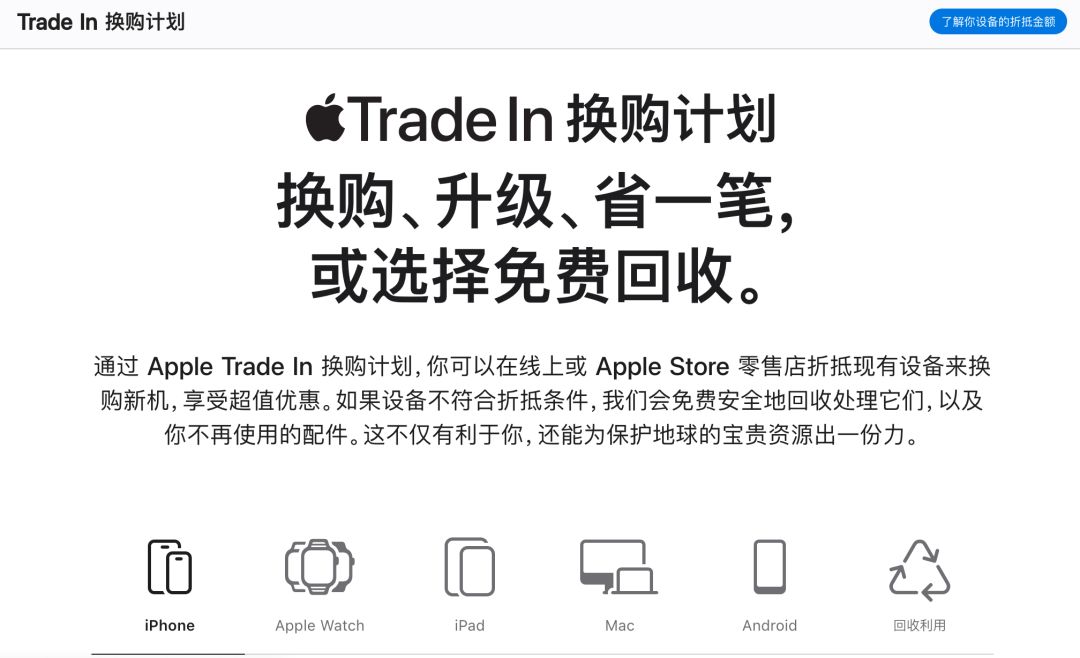
Core Insights - Apple has expanded its Apple Trade In program to include a wider range of brands, such as Huawei, OPPO, OnePlus, Samsung, vivo, and Xiaomi, allowing customers to trade in their old devices for new ones [1][3] Group 1: Trade-In Program Details - The Apple Trade In program allows customers to receive significant discounts on new devices when trading in old ones, with the iPhone 16 Pro Max offering up to 5800 yuan and the MacBook Pro up to 6050 yuan [3] - Specific trade-in values for other brands include Huawei Mate XT at 5400 yuan, Mate X6 at 3800 yuan, vivo X200 Pro at 1900 yuan, and OPPO Find X8 Pro at 1700 yuan [3] - The program enables consumers to trade in devices online or at Apple Store retail locations, and Apple will also recycle devices that do not meet trade-in conditions [3] Group 2: Historical Context - The Apple Trade In program was initially launched in mainland China on March 31, 2015, supporting trade-ins for iPod, iPad, and iPhone 4 and later models [3] - Users can assess the value of their old devices in-store to offset the cost of new purchases [3]

从“猎奇”到“信赖”:折叠屏手机用户发展洞察报告
艾瑞咨询· 2026-01-11 00:05
Core Insights - The global foldable smartphone market is experiencing continuous growth, particularly in China, driven by technological advancements and an improved supply chain, leading to product diversification [1] - China has emerged as the main growth engine for the global foldable smartphone market, with Huawei maintaining a significant market share [1][18] - User willingness to purchase foldable smartphones is increasing, with higher expectations for product functionality and experience [1] - The transition from niche to mainstream market for foldable smartphones is anticipated, with sustained demand growth and a focus on hardware optimization and software ecosystem development [1] Market Overview - The global smartphone market has entered a phase of stock competition since 2017, with annual shipment volumes declining by approximately 2.52%, projected to reach 1.22 billion units by 2024 [2] - The flat smartphone market has become saturated, prompting manufacturers to innovate product forms to explore the high-end market [5] Competitive Landscape - The foldable smartphone industry chain includes upstream raw material supply, midstream design and manufacturing, and downstream sales [7] - Chinese foldable smartphone manufacturers, such as Huawei and Samsung, are leading the industry chain with strong technological capabilities [7][8] User Behavior and Preferences - The majority of foldable smartphone users are male and female, with a higher preference among first-tier and new first-tier city users [20] - Users with higher education levels, particularly those with a bachelor's degree or above, show a greater preference for foldable smartphones [20] - The price range for most users of foldable smartphones is between 5,000 to 9,000 yuan, with Huawei being the most used brand [22] Purchase Motivations - The key reason for purchasing foldable smartphones is the stronger sense of technology and futurism, accounting for 44.7% of responses [24] - Users have a substantial budget for purchasing foldable smartphones, with 28.4% willing to spend between 8,000 to 10,000 yuan [24] Brand Recognition and Image - Huawei leads in brand recognition across various dimensions, including high-end perception, business style, and innovation [26][28] - User satisfaction is highest for Huawei, followed by Xiaomi and Samsung, indicating strong user approval [30] Future Trends - Over 90% of consumers are considering purchasing a foldable smartphone for their next device, focusing on reliability, battery life, and hardware specifications [41] - The foldable smartphone market is transitioning from a niche to a mainstream product, with 95.5% of consumers willing to switch to a foldable device in the future [47]

华为高端机再战迪拜
Di Yi Cai Jing· 2025-12-12 09:25
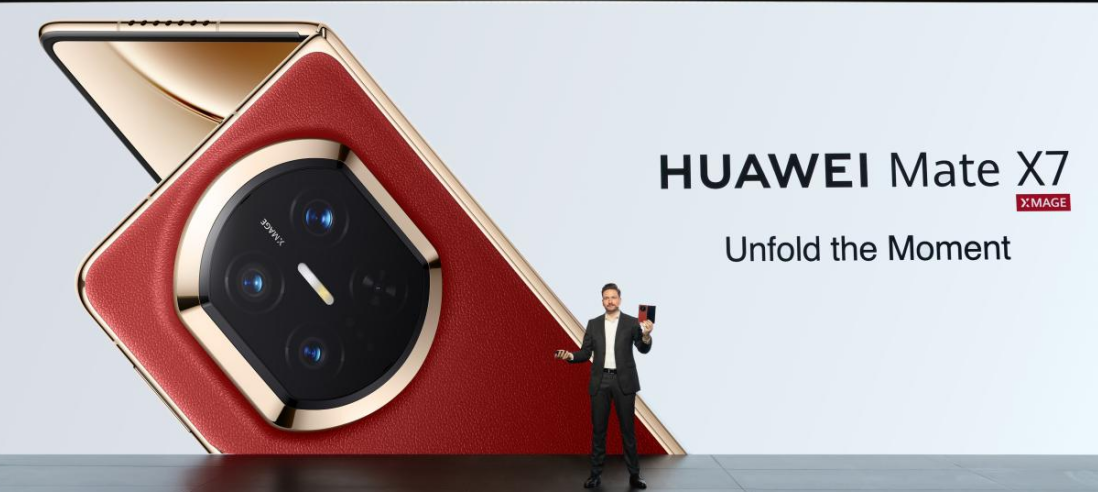
Core Insights - Huawei is striving to regain market share in the high-end smartphone segment in the Middle East, which has been dominated by Apple and Samsung for a long time [1][4] - The Middle East market is becoming a crucial growth pillar for Chinese smartphone brands outside Asia, with Huawei launching multiple high-end products in a short span [1][6] Group 1: Market Dynamics - The Middle East smartphone market is projected to reach 15.1 million units by Q3 2025, reflecting a 23% year-on-year growth, with the UAE market growing by 13% [2] - Apple and Samsung dominate the high-end market, holding over 90% of the market share, with Apple accounting for approximately 46% and Samsung 45% in the $500 and above price segment [4] Group 2: Strategic Moves - Huawei's recent product launch in Dubai includes the Mate X7 foldable phone, targeting direct competition with Samsung's Galaxy Z Fold series [2] - Huawei is not only focusing on smartphone deployment but also accelerating its market actions in the Middle East by proposing a regional smart transformation strategy and collaborating with local companies [5] Group 3: Challenges and Opportunities - Huawei faces significant challenges in overcoming brand recognition and ecosystem barriers in the high-end market [4] - The Middle East market presents both growth opportunities in the mid-range segment and profit potential in the high-end and mid-high-end markets for Chinese brands [6]
从“猎奇”到“信赖”:折叠屏手机用户发展洞察报告
艾瑞咨询· 2025-12-04 00:05
Group 1 - The core viewpoint of the report highlights the continuous growth of the global foldable smartphone market, particularly in China, driven by technological advancements and an improved supply chain, leading to product diversification [1][4][5] - The report indicates that the foldable smartphone market is transitioning from a niche to a mainstream market, with increasing consumer acceptance and willingness to purchase [1][43][47] - Huawei is identified as a leading player in the foldable smartphone market, significantly increasing its market share from 35.0% in Q1 2023 to 75.0% in Q1 2025, showcasing its dominant position [18] Group 2 - The global smartphone market has entered a phase of stock competition since 2017, with annual shipment volumes declining by approximately 2.52%, projected to reach 1.22 billion units by 2024 [2] - The foldable smartphone segment is seen as a strategic direction to break through the stagnation in market growth, with expected high shipment growth from 2022 to 2024 [5][15] - The foldable smartphone industry chain includes upstream raw material supply, midstream design and manufacturing, and downstream sales, with major players like Huawei and Samsung leading the charge [7] Group 3 - The Chinese foldable smartphone industry has matured, achieving international advanced standards in technology, and creating a virtuous cycle of technology, cost, and market [8][9] - The report outlines the diverse product forms in the foldable smartphone market, with Huawei leading in innovative designs such as tri-fold and wide-fold models [11] - The user demographics indicate a strong preference for foldable smartphones among high-education users, with over 75% of users holding a bachelor's degree or higher [20] Group 4 - The primary reasons for purchasing foldable smartphones include a stronger sense of technology and future, with 44.7% of users citing this as a key factor [24] - Users show a willingness to spend, with 28.4% budgeting between 8,000 to 10,000 yuan for their next foldable smartphone [24] - Huawei leads in brand recognition and user satisfaction, with a significant market share and positive user feedback on its products [26][30] Group 5 - The report notes that foldable smartphones are perceived as carriers of innovation and multifunctional devices, with varying perceptions between male and female consumers [34] - Social interaction and entertainment are the primary use cases for foldable smartphones, indicating a need for further exploration of productivity applications [36] - Users express concerns regarding hardware durability and software experience, highlighting areas for improvement in future models [39] Group 6 - Over 90% of consumers are considering purchasing a foldable smartphone for their next device, focusing on reliability, battery life, and hardware specifications [41] - The transition from "niche novelty" to "mainstream utility" is emphasized, driven by advancements in hardware technology and software ecosystems [43][45] - The report concludes that foldable smartphones are moving towards becoming reliable, everyday devices, with a significant percentage of users willing to switch to foldable models in the future [47]

港股概念追踪|iPhone17进入大规模量产阶段 折叠屏有望成为行业新增长点(附概念股)
智通财经网· 2025-09-12 00:42
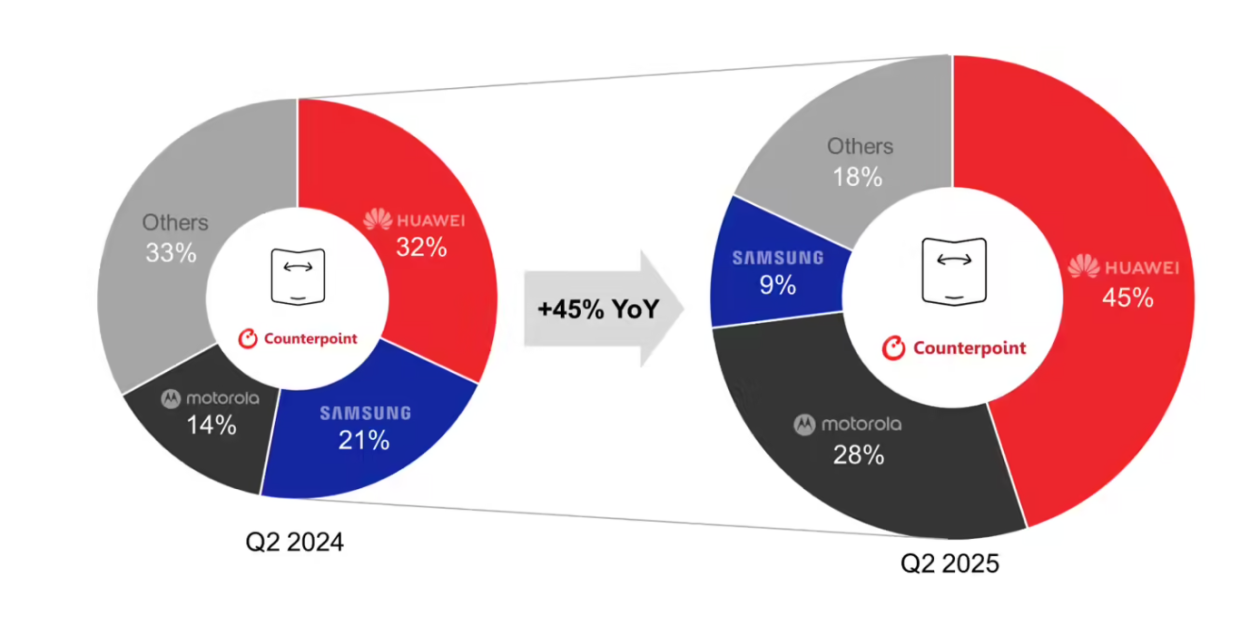
Group 1 - In Q2 2025, global foldable smartphone shipments surged by 45% year-on-year, indicating a significant recovery driven by strong performances in both the Chinese and U.S. markets [1][2] - Motorola's Razr 60 series has been a key contributor to this growth, particularly in the U.S. market, where its pricing strategy has made it the most cost-effective foldable smartphone at $699 [1][2] - Huawei's Mate X6 leads the Chinese market, accounting for over one-third of Huawei's foldable smartphone shipments in the same quarter [1][3] Group 2 - UTG (Ultra-Thin Glass) has become the new mainstream trend for foldable screens, outperforming CPI (Cover Plastic) in various performance metrics [2] - Apple is expected to raise the average selling price of the iPhone 17 series by 5% in FY2026, marking the first price increase since 2017, without affecting demand [2] - Analysts predict that Apple will launch its first foldable iPhone in 2026, with expected shipments of 8-10 million units, growing to 25 million units by 2027 [3] Group 3 - China remains the largest market for foldable device shipments, aligning with global growth trends [3] - Samsung's latest Galaxy Z Fold and Flip 7 achieved record sales in Q3, but the company's market share has significantly declined [3] - Key players in the foldable screen supply chain include Hongteng Precision, Lens Technology, BYD Electronics, and Sunny Optical [4]
iPhone17进入大规模量产阶段 折叠屏有望成为行业新增长点(附概念股)
Zhi Tong Cai Jing· 2025-09-12 00:42
Group 1 - In Q2 2025, global foldable smartphone shipments surged by 45% year-on-year, indicating a significant recovery driven by strong performances in both the Chinese and U.S. markets [1][2] - Motorola's Razr 60 series has been a key contributor to this growth, particularly in the U.S. market, where its base model is priced at $699, making it the most cost-effective foldable smartphone available [1][2] - Huawei's Mate X6 leads the Chinese market, accounting for over one-third of Huawei's foldable smartphone shipments in the same quarter [1][3] Group 2 - UTG (Ultra-Thin Glass) has become the new mainstream trend for foldable screens, outperforming CPI (Cover Plastic) in various performance metrics [2] - Apple is expected to slightly increase the prices of the iPhone 17 series for the first time since 2017, with an anticipated average price increase of 5% for the 2026 fiscal year [2] - Analysts predict that Apple will launch its first foldable iPhone in 2026, with expected shipments of 8-10 million units, growing to 25 million units by 2027 [3] Group 3 - China remains the largest market for foldable device shipments, aligning with global growth trends [3] - Samsung's latest Galaxy Z Fold and Flip 7 achieved record sales in Q3, yet the company's market share has significantly declined [3] - The foldable screen supply chain includes companies such as Hongteng Precision, Lens Technology, BYD Electronics, and Sunny Optical [4]
2025 Q2季度全球折叠手机出货量同比增45%,华为以45%市占率领跑
Huan Qiu Wang· 2025-09-04 04:22
Core Insights - Huawei holds a leading position in the global foldable smartphone market with a 45% market share, significantly higher than Motorola's 28%, representing a 17 percentage point difference [2] - China remains a key market for foldable smartphones, with Huawei's Mate X6 model being particularly popular among consumers, contributing to over one-third of Huawei's total foldable smartphone shipments in Q2 2025 [2] - Motorola has successfully increased its market share through strategic positioning in the U.S. market, offering foldable smartphones starting at $699, making it the lowest-priced option in the region [2] - Samsung is experiencing a decline in market share, dropping from 21% in Q2 2024 to 9% in Q2 2025, largely due to Motorola's rapid rise in the market [2]