
MemoMind One

Search documents
CES 2026观察:“物理AI时刻”要靠中国制造落地
Jing Ji Guan Cha Wang· 2026-01-10 11:01
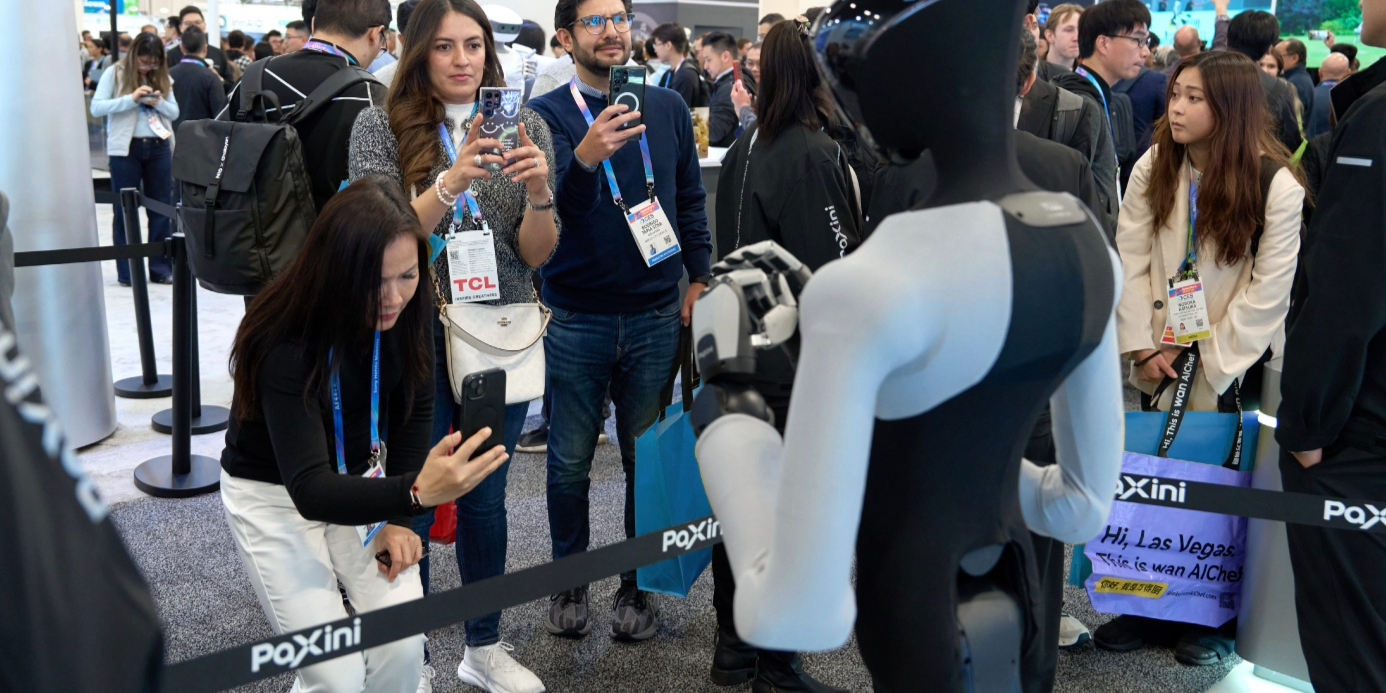
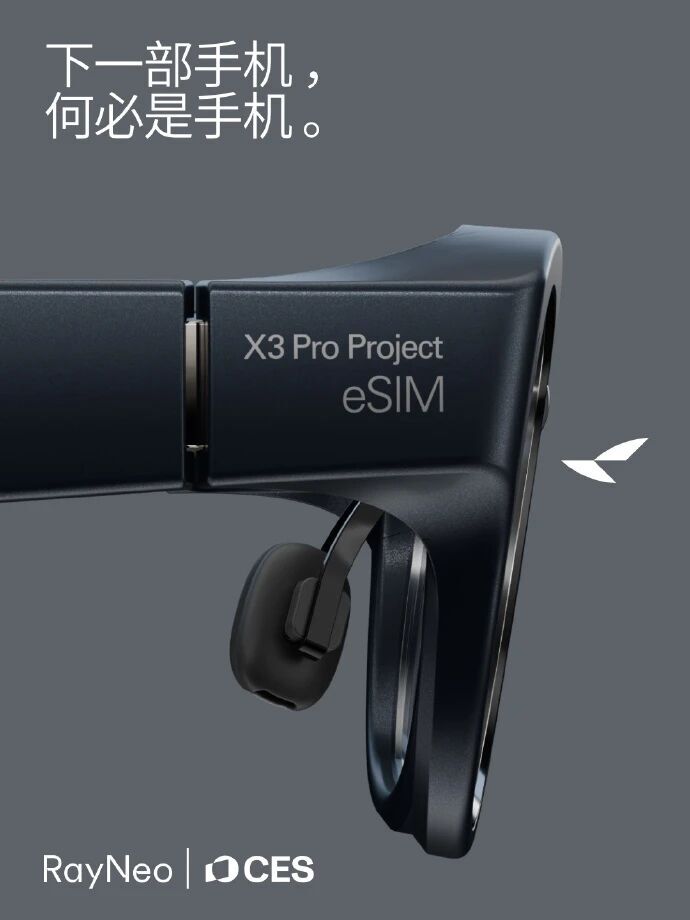
Group 1: Physical AI and Computing Power - The core theme of CES 2026 is the emergence of "Physical AI," where AI technology is transitioning from generating text or video to interacting with physical hardware [4][10] - AMD's chairwoman, Lisa Su, highlighted the increasing demand for computing power, predicting a 100-fold increase in global computing capacity over the next five years [3][4] - The presence of over 200 Chinese companies at CES indicates a strong support for the "Physical AI moment," showcasing various AI applications in physical products [4][23] Group 2: Robotics Innovations - The robotics sector at CES has shifted focus from mere physical movement to specific job functions and operational scenarios, with Chinese companies leading this evolution [5][9] - Companies like Pasoni and Fourier Intelligence showcased advanced robots capable of performing intricate tasks, such as ice cream making and automotive part sorting, demonstrating significant advancements in robotic dexterity [5][6] - The global sales of robots are projected to reach approximately $45 billion by 2026, with expectations to exceed $60 billion by 2030, driven by rising labor costs and efficiency in Chinese manufacturing [8][9] Group 3: Smart Glasses and AR Technology - Chinese companies are aggressively entering the AR/AI glasses market, aiming to redefine the concept of a "second screen" beyond smartphones [11][12] - Innovations include the launch of the world's first dual-lens AR glasses with eSIM functionality by Thunderbird Innovation, allowing users to make calls and connect to the internet without a smartphone [12][13] - The global market for smart glasses is expected to see significant growth, with sales projected to reach around $10.7 billion by 2026, reflecting an over 80% year-on-year increase [18][23] Group 4: Display and Chip Technology - Companies like Tianma Microelectronics and TCL Huaxing are pushing the boundaries of display technology, with innovations such as large-scale OLED screens and advanced automotive displays [19][20] - Lenovo and NVIDIA announced a partnership to enhance AI infrastructure, aiming to quadruple their business collaboration over the next few years [22] - The trend in AI chip development is moving towards high computing power, low energy consumption, and integration, with significant growth expected in AI terminal sales by 2028 [22][23]





在拉斯维加斯,我看到概念已死
虎嗅APP· 2026-01-10 09:16
Core Viewpoint - The article discusses the shift in the AI hardware industry from a focus on disruptive innovation to a more pragmatic approach, emphasizing the importance of "scene value" in product development [4][7]. Group 1: AI Hardware Trends - At CES 2026, the atmosphere was notably different from previous years, with less emphasis on grand concepts and more on practical upgrades [5][6]. - The AI hardware industry is moving towards a focus on specific use cases and functionality, rather than broad, ambitious claims [7][15]. Group 2: Wearable Devices - The wearable device sector saw an increase in cross-industry players, particularly in the AI glasses market, with products designed for specific functionalities rather than flashy features [9][12]. - Notable products include the MemoMind AI glasses, which offer user-friendly design and practical applications, and the OpenGuide AI glasses aimed at assisting visually impaired users [11][12][15]. Group 3: Companion Robots - The companion robot market has expanded rapidly, with over 50 companies showcasing products at CES, but many face challenges related to product consistency [20][21]. - There is a trend towards customization in companion robots, allowing for personalized features and interactions, as seen in prototypes like the Fourier desktop companion robot [24][28]. Group 4: Cleaning Robots - The cleaning robot sector is experiencing significant technological advancements, with products like the Cyber X and G-Rover capable of navigating stairs and complex environments [36][38]. - Future developments may include robots with mechanical arms for more precise cleaning tasks, as demonstrated by the AI cleaning robot that can handle laundry processes [43][45].

中国AI眼镜军团CES霸场,27家公司组团秀肌肉,2026百镜大战
Xin Lang Cai Jing· 2026-01-09 09:01
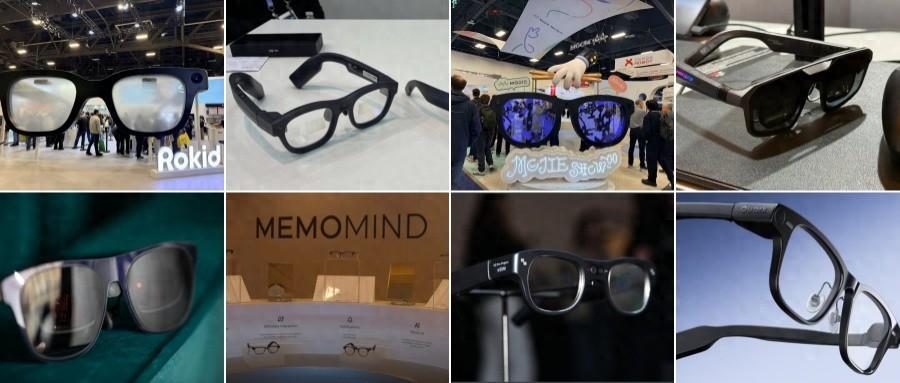
Core Insights - The CES 2023 showcased a significant presence of Chinese manufacturers in the smart glasses and VR/AR market, indicating a shift in industry dynamics with local players gaining traction [2][44] - The Chinese smart glasses market is projected to see substantial growth, with shipments expected to reach 623,000 units by Q3 2025, reflecting a year-on-year increase of 62.3% [4][46] - The event highlighted the competitive landscape, with numerous companies unveiling innovative products, suggesting a "battle of the glasses" in the coming years [42][85] Group 1: Major Players - Rokid attracted attention with its giant glasses display and launched the Rokid Style, claimed to be the lightest full-feature AI glasses at 38.5 grams, starting at $299 [7][48] - INMO introduced two key products: INMO Go3, which offers real-time translation in 261 languages, and INMO AIR3, the first mass-produced 1080P wireless AR glasses, which sold out quickly [9][53] - XREAL showcased the ROG Xreal R1, the first gaming glasses with a 240Hz refresh rate, and announced the upcoming XREAL 1S, featuring a proprietary chip for 3D content conversion [14][57] Group 2: Cross-Industry Innovations - Alibaba presented the Quark AI glasses S1, which allows interaction through voice commands and boasts a battery life of 7 hours, powered by dual flagship chips [22][66] - XGIMI launched its MemoMind AI glasses, marking its entry into the smart glasses market with two series [27][70] Group 3: Emerging Startups - Gyges Labs introduced the world's first AI note-taking ring, which gained significant media attention for its unique functionality [30][73] - MicroVision unveiled the M6 series of AR glasses, which feature hardware that can be sustainably upgraded without replacing the entire device [32][75] - Various smaller companies showcased innovative products, contributing to a diverse and competitive landscape in the smart glasses sector [40][83]
AI应用潮席卷CES 中国产业链竞技“落地赛”
Shang Hai Zheng Quan Bao· 2026-01-07 17:53
Core Insights - The CES 2026 showcases China's advancements in AI hardware and robotics, highlighting the industry's shift towards practical applications and increased collaboration opportunities [1][2] Group 1: AI Hardware and Robotics - Over 20 Chinese humanoid robot companies participated in CES 2026, demonstrating a wide range of technologies and applications, including the launch of the Genie Sim 3.0 simulation platform by AGIBOT and the introduction of the Care-bot GR-3 by Fourier [2] - The event has alleviated concerns about a bubble in the humanoid robotics sector, indicating a trend towards more practical and consumer-oriented products [2] - AI hardware is evolving towards more specialized and practical applications, with AI toys and health-monitoring devices gaining traction [2] Group 2: Strategic Collaborations - Google and Chinese AR company XREAL announced a long-term strategic partnership to promote the Android XR ecosystem for AR glasses, emphasizing the importance of collaboration in the industry [4][5] - XREAL has previously signed strategic agreements with companies like Longqi Technology and Jingsheng Mechanical and Electrical to enhance the AI/AR supply chain [5] - Hesai Technology plans to double its annual production capacity of LiDAR from 2 million units in 2025 to 4 million units in 2026 to meet the growing demand in robotics [5] Group 3: Industry Trends and Innovations - The integration of AI technology in various applications, such as smart charging and smart home solutions, is accelerating, with notable innovations like the AI charging robot showcased by Daotong Technology [3] - The display industry is also evolving, with TCL and Hisense presenting new Mini LED display technologies at the event, indicating a trend towards advanced display solutions [5]
极米科技发布AI眼镜品牌MemoMind
Zhong Zheng Wang· 2026-01-07 07:14
Core Insights - The company, XGIMI Technology, launched its AI glasses brand MemoMind at CES 2026, marking a shift in the smart glasses market from generic products to scenario-based solutions, which are seen as the core interaction medium of the future [1][2] Market Trends - According to IDC, the global smart glasses market is expected to reach a shipment volume of 23.687 million units by 2026, with China's market alone projected to exceed 4.915 million units [1] Company Development - XGIMI Technology has invested over 1.5 billion yuan in R&D since its listing in 2021, achieving a research expense ratio of 12.15% by mid-2025, and has accumulated 1,219 patents [1] Product Offerings - The MemoMind One represents the company's technological advancement in consumer-grade AI display, utilizing a Micro LED and light guide solution to provide rich visual information for various needs, expected to launch later this year [1] - The MemoMind Air series introduces two new technological directions: MemoMind Air Display, which significantly reduces weight and power consumption while providing essential information, and another product focused entirely on AI experience, which will be revealed later this year [2] Financial Backing - The operational entity of the MemoMind brand, Shenzhen Qilai Innovation Intelligent Technology Co., Ltd., recently raised 50 million yuan through a financing round, achieving a valuation of 770 million yuan, aimed at enhancing R&D and operational capital for the mass production and market promotion of MemoMind AI glasses [2]

中国智能眼镜“扎堆”CES 2026
Guo Ji Jin Rong Bao· 2026-01-06 14:55
Core Insights - The CES 2026 event in Las Vegas is showcasing advancements in technology, particularly in the fields of semiconductors, artificial intelligence, and consumer electronics, with a notable focus on smart glasses as a potential replacement for smartphones [1] Group 1: Smart Glasses Market Developments - The global first eSIM smart glasses are set to be unveiled by Thunderbird Innovation, which has also secured over 1 billion yuan in funding from major Chinese telecom operators, indicating a significant investment in the smart glasses sector [3] - Rokid has launched its AI smart glasses, Rokid Style, at CES, which are marketed as the lightest full-featured AI glasses at 38.5 grams, priced starting at $299, and compatible with multiple AI engines [3] - XREAL has introduced the ROG Xreal R1, the first AR glasses with a 240Hz refresh rate, targeting the gaming market and enhancing the AR experience [4] Group 2: Industry Collaborations and Innovations - Google has announced its return to the smart glasses market with Project Aura, collaborating with XREAL to integrate advanced optical and AI capabilities [6] - Lenovo is set to unveil several AI concept products, including a personal AI smart glasses prototype, during CES, highlighting its collaboration with NVIDIA in the AI space [6] - XGIMI has expanded its strategic focus from home projectors to personal smart glasses with the launch of its MemoMind brand, offering two series of AI glasses [7] Group 3: Market Predictions and Policy Support - The Chinese government has included smart glasses in its new subsidy policy for digital and smart products, marking a significant step for the industry [9] - IDC forecasts that the global smart glasses market will exceed 23.687 million units by 2026, with China's market expected to surpass 4.915 million units, indicating a shift towards large-scale growth [10]
跨界进军可穿戴领域 极米科技发布AI眼镜品牌MemoMind
Zheng Quan Ri Bao Wang· 2026-01-06 13:09
Company Overview - XGIMI Technology Co., Ltd. has launched a new AI smart glasses product line named MemoMind at the 2026 International Consumer Electronics Show, indicating a strategic expansion from smart projection and automotive displays into the wearable technology sector [1] - The MemoMind brand represents a significant extension of XGIMI's product offerings, leveraging over a decade of optical technology and industrial design expertise to create a new independent AI hardware brand [1] Product Features - The MemoMind AI glasses product line includes a spectrum of offerings from comprehensive to lightweight options, with MemoMind One being a standout product designed for consumer-level AI display needs, expected to be released in late 2026 [1] - The MemoMind Air series showcases two new technological directions: MemoMind Air Display focuses on lightweight display technology, while another variant emphasizes AI experience without visual display, offering audio versions [2] Market Position and Investment - The operational entity for the MemoMind brand is Shenzhen Qilai Innovation Intelligent Technology Co., Ltd., a subsidiary of XGIMI, which recently raised 50 million yuan in funding, increasing its valuation to 770 million yuan [3] - The investment aims to enhance R&D and operational capital for the mass production and market promotion of MemoMind AI glasses, supporting XGIMI's strategic transition from large-scale projection to intelligent personal devices [3] Industry Trends - The AI glasses market is transitioning from generic products to scenario-based solutions, positioning itself as a core interaction medium for the future, with IDC predicting that global shipments of smart glasses will exceed 23.687 million units by 2026 [3] - The Chinese smart glasses market is expected to surpass 4.915 million units, driven by strategic positioning, economic experimentation, and advancements in AI capabilities [3] - Industry experts highlight ongoing innovations in display technology, emphasizing the pursuit of higher resolution, lighter weight, and lower power consumption, alongside enhanced AI functionalities and interoperability with other smart devices [4]
极米科技于CES 2026发布AI眼镜品牌MemoMind
Xin Lang Cai Jing· 2026-01-06 11:49
Core Insights - The company, XGIMI Technology, has launched a new AI glasses brand called MemoMind at CES 2026, featuring innovative technology aimed at enhancing user efficiency in specific scenarios [1] Product Overview - MemoMind One utilizes a MicroLED and waveguide solution, designed to serve as a "second screen" for tasks ranging from message notifications to graphical navigation, with an official release expected later this year [1] - The MemoMind Air series showcases two new technological directions: - MemoMind Air Display focuses on lightweight display technology, significantly reducing the weight and power consumption of the glasses while providing navigation, translation subtitles, and message summaries [1] - The second direction emphasizes an AI-centric experience, eliminating the visual display module and offering both audio and non-audio hardware versions, with more information to be announced later this year [1]