MetaERP

Search documents
汉得信息冲刺A+H上市,AI合作与海外业务成增长看点
Jing Ji Guan Cha Wang· 2026-02-12 10:34
Group 1: Core Viewpoint - Company HanDe Information (300170) has submitted a prospectus to the Hong Kong Stock Exchange, accelerating its H-share listing plan, which may enhance its global layout capabilities through an "A+H" dual capital platform [1] Group 2: Business Progress - The company has established AI collaborations with leading firms such as ByteDance, DeepSeek, Manus, Baidu, and Huawei, focusing on computing power sharing, joint R&D, and revenue-sharing models, expected to contribute AI-related revenue by 2026 [2] - As a core partner in Huawei's MetaERP implementation, the company's Xinchuang business is projected to generate revenue of 1.6 billion yuan by 2026 [2] Group 3: Financial Status - For the first nine months of 2025, the company reported revenue of 2.439 billion yuan, a year-on-year increase of 3.67%, and a net profit attributable to shareholders of 145 million yuan, up 6.96% [3] - As of June 30, 2025, trade receivables reached 1.505 billion yuan, with a significant portion of receivables over three years old, indicating potential recovery risks [3] - The accounts receivable turnover days increased from 145 days in 2024 to 167 days in the first half of 2025, reflecting a decline in collection efficiency [3] Group 4: Business Status - The company has set up subsidiaries in nine countries, with Southeast Asia's order volume increasing by 120% year-on-year in 2025, and overseas revenue expected to reach 1.3 billion yuan in 2026, a year-on-year growth of 116.7% [4] - Through self-developed AI tools, traditional digital services are projected to generate revenue of 1.84 billion yuan in 2026, a year-on-year increase of 3.4%, providing cash flow support for high-growth businesses [4] Group 5: Stock Performance - Since the beginning of 2026, the stock price has risen by 33.67%, but it has recently declined by 17.49% over the past 20 days, with high trading activity, including a net purchase of 482 million yuan on January 12, 2026 [5]

华为的20个管理方法论
Xin Lang Cai Jing· 2026-01-16 13:38
Core Viewpoint - Huawei's corporate culture emphasizes the release and openness of power, allowing young talents to grow and thrive, which contrasts with the power monopolization seen in many private enterprises [1][3]. Group 1: Power Distribution and Management Philosophy - Knowledge workers are inherently ambitious and passionate about power, which Huawei recognizes by distributing authority among its employees, including younger and less experienced ones [1][2]. - The concept of reducing the scarcity of power is evident in Huawei's practice of granting numerous vice president titles to many employees, enhancing their sense of achievement [2]. - Huawei's management philosophy encourages power experimentation, allowing managers to learn from mistakes, which fosters growth and development [3]. Group 2: Employee Welfare and Motivation - Huawei's focus on employee welfare includes both material incentives (referred to as "belly") and intellectual engagement (referred to as "brain"), ensuring a holistic approach to employee satisfaction [4][5]. - The company aims to provide high living standards for employees in challenging locations, emphasizing the importance of a conducive work environment [4]. - Huawei's mission-driven culture, alongside its financial incentives, creates a strong sense of purpose and cohesion among its workforce [5][6]. Group 3: Strategic Focus and Long-term Vision - Huawei prioritizes ideals over immediate financial gains, rejecting short-term speculation in favor of long-term strategic goals [6][7]. - The company’s unique culture, characterized by a commitment to long-term vision and innovation, has enabled it to evolve from a small trading company to a global technology leader [6][7]. - Huawei's rejection of capitalization and diversification reflects its focus on maintaining a unified corporate identity and mission [6][7]. Group 4: Organizational Structure and Governance - Huawei's organizational culture is rooted in Chinese philosophy, emphasizing collective effort and shared benefits, which enhances its operational effectiveness [7][8]. - The company has established a governance structure that promotes meritocracy and accountability, ensuring that leadership is based on capability rather than lineage [29][30]. - Huawei's approach to leadership development emphasizes the importance of adaptability and resilience among its executives [30][31]. Group 5: Innovation and Adaptation - Huawei's transition to self-developed ERP systems in response to external pressures illustrates its commitment to innovation and self-reliance [9][10]. - The company has successfully replaced its ERP system with MetaERP, demonstrating its ability to adapt and maintain operational continuity [10]. - Continuous internal reform and openness to external collaboration have been crucial to Huawei's growth and competitive advantage [13][14]. Group 6: Knowledge Management and Learning Culture - Huawei fosters a learning-oriented environment, encouraging employees to engage with management knowledge and practices from various sources [23][24]. - The company's knowledge management system is designed to be open, systematic, purposeful, and professional, supporting effective decision-making and organizational learning [23][24][26]. - Huawei's emphasis on collective learning and knowledge sharing has been instrumental in its ability to innovate and respond to market changes [25][26]. Group 7: Future Leadership and Succession Planning - Huawei's succession planning focuses on merit-based leadership, ensuring that future leaders are chosen based on their capabilities rather than familial ties [29][30]. - The company has established a governance framework that supports systematic leadership transitions, promoting a culture of accountability and performance [30][31]. - Huawei's leadership philosophy emphasizes the importance of resilience and adaptability in its executives, preparing them for future challenges [30][31].
比替换ERP还复杂,华为自己是如何鸿蒙化的?
Guan Cha Zhe Wang· 2025-12-16 03:20
Core Viewpoint - Huawei is advancing its internal operations towards a fully integrated HarmonyOS ecosystem, aiming to enhance digitalization and intelligence within the company [1][2]. Group 1: Internal Implementation of HarmonyOS - Huawei has initiated a comprehensive push for HarmonyOS integration, with a decision made by the company's board to prioritize internal applications supporting HarmonyOS [1]. - The company has over 1 million devices, including mobile phones, PCs, and tablets, and more than 50,000 applications, making the transition to a new operating system complex [1]. - The internal implementation of HarmonyOS is seen as more complex than previous ERP system replacements, with a broad impact across the organization [1]. Group 2: Progress and Achievements - As of now, Huawei's mobile and tablet devices have fully transitioned to HarmonyOS, with significant capabilities achieved in document handling, meetings, emails, images, and videos [2]. - The company has developed strategies for internal HarmonyOS implementation, including optimizing applications and leveraging cloud-edge collaboration to reduce complexity [4]. Group 3: New Product Launches - Huawei introduced the new commercial computer, the Huawei Qingyun HM740, designed for government and enterprise markets, featuring a 2.8K OLED screen and a 21-hour battery life [5]. - The HarmonyOS Professional Edition has been released, providing enhanced IT management and security solutions for enterprises [5]. Group 4: Market Position and Competition - The launch of HarmonyOS-based products raises questions about Huawei's entry into the domestic "Xinchuang" market, where it previously used other operating systems [7]. - If HarmonyOS enters the Xinchuang market, it will compete with existing domestic operating systems like Tongxin and Kirin, potentially disrupting the current market landscape [9]. Group 5: Ecosystem Development - The success of HarmonyOS in broader markets hinges on building a robust ecosystem, with partnerships established with various companies to support HarmonyOS applications [11]. - As of December, over 1,500 devices, including keyboards and mice, have been adapted to support HarmonyOS, indicating a growing ecosystem [11].


中软国际 - 行业专属 AI 智能体业务扩张;2025 年上半年业绩好于担忧;中性评级
2025-08-27 01:12
Summary of Chinasoft International (0354.HK) Conference Call Company Overview - **Company**: Chinasoft International (0354.HK) - **Industry**: IT Services and Solutions Key Points Business Performance - **1H25 Performance**: The company's gross margin (GM) was 22%, aligning closely with estimates of 22.1%, indicating a recovery in profitability compared to 2H24 [4][9] - **Revenue Trends**: Revenue for 1H25 was reported at RMB 8,507 million, a decrease of 6% from 1H24 but a 7% increase year-over-year [8][16] - **Net Income**: Net income for 1H25 was RMB 316 million, reflecting a 40% increase from 2H24 and a 10% increase year-over-year [8][16] Strategic Initiatives - **AI Transformation**: The company is focusing on AI transformation for its ERP business, aiming to enhance efficiency and margins through AI Agent outsourcing services [3][9] - **AI Projects**: Over 300 AI assistant projects have been implemented across various sectors including manufacturing, finance, healthcare, and energy in 1H25 [3][9] Market Position and Technology - **Harmony OS**: The management highlighted the expected rapid revenue growth from Harmony OS over the next three years, supported by favorable policies and technology advantages [2][9] - **Technology Edge**: Harmony OS is noted for its low latency of less than 3μs and the ability to connect over 200 devices, making it suitable for industries with high data security requirements [2][9] Financial Outlook - **Earnings Revisions**: The company has revised its net income estimates downward for 2025E, 2026E, and 2027E by 17%, 31%, and 30% respectively, due to lower revenue expectations and gross margins [9][10] - **Future Projections**: Despite the revisions, double-digit revenue growth is still anticipated for 2026 and 2027, driven by the expansion into intelligent cloud services and solutions [9][10] Valuation and Rating - **Current Valuation**: The stock is trading at 18x 2026E PE, close to the target PE multiple of 17x, indicating that positive factors are largely priced in [1][17] - **Target Price**: The target price is set at HK$6.3, reflecting a downside potential of 5.8% from the current price of HK$6.69 [19][17] - **Rating**: The company maintains a Neutral rating due to concerns over growth visibility amid soft IT services budgets [17][18] Risks - **Key Risks**: Include variability in customer diversification, recovery of IT services budgets, R&D investment levels, and product mix upgrades [18][9] Additional Insights - **Operational Efficiency**: The company has improved its operating efficiency, leading to a lower operating expense ratio than expected [4][9] - **Market Context**: The overall China Software sector is experiencing a re-rating driven by generative AI, which may influence future valuations [10][17]
【掘金行业龙头】AI智能体+工业互联网,公司电子制造领域细分系统市占率行业前三,联合华为发布盘古制造大模型
财联社· 2025-07-23 04:14
Group 1 - The article emphasizes the importance of timely and professional information interpretation in the investment landscape, particularly focusing on the investment value of significant events, analysis of industry chain companies, and key policy interpretations [1] - The company has established itself in the electronic manufacturing sector, achieving a top three market share in segmented systems, and has collaborated with Huawei to launch the Pangu manufacturing large model [1] - The company is actively promoting AI business development by integrating "generative AI + intelligent agents" into its strategy, aligning with Huawei's MetaERP strategy, and has served over 3,000 enterprise clients [1]

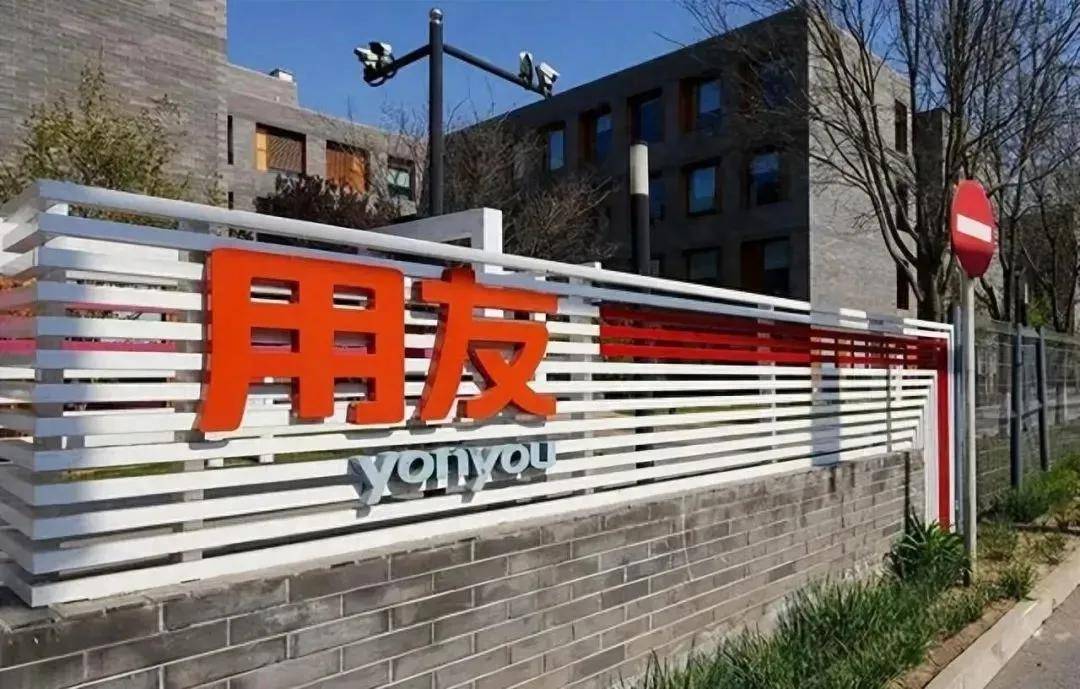
用友网络赴港 IPO:是救命稻草还是背水一战?
Sou Hu Cai Jing· 2025-07-22 06:40
Core Viewpoint - Yonyou Network is facing significant financial challenges, including increasing net losses, declining revenue, and cash flow pressures, raising questions about its upcoming IPO in Hong Kong as a potential lifeline or a desperate gamble [1][8]. Financial Performance - The company forecasts revenue between 3.56 billion and 3.64 billion yuan for the first half of 2025, representing a year-on-year decline of 4.3% to 6.4% [3]. - Expected net losses for the same period are projected to be between 925 million and 1.025 billion yuan, continuing a trend of poor financial performance [3]. - In 2023, Yonyou reported a loss of 933 million yuan, marking its first loss since going public, with losses expected to widen to 2.07 billion yuan in 2024 [3]. - The first quarter of 2025 saw a net loss of 736 million yuan, a year-on-year decline of 62.41% [3]. Cloud Service Transition - Despite cloud service revenue increasing from less than 60% in 2021 to around 75% in 2024, the growth rate plummeted from 55.5% in 2021 to -3.4% in 2024 [4]. - Yonyou's cloud service performance contrasts sharply with competitors like Kingdee International, which saw a 13.4% growth in cloud service revenue in 2024 [4]. - The company is struggling with a "customization trap," leading to difficulties in scaling R&D investments and negatively impacting gross margins, which fell below 40% in Q1 2025 [4]. Cash Flow and Debt - As of the end of Q1 2025, current liabilities increased by 11.80% to 11.44 billion yuan, with nearly 6.5 billion yuan in short-term borrowings and payables [5]. - Cash reserves dropped by 29.66% to 2.889 billion yuan, insufficient to cover upcoming liabilities, indicating a critical need for external funding [5]. - The company submitted its IPO application to the Hong Kong Stock Exchange on June 27, 2025, aiming to alleviate short-term debt pressures [5]. Management and Organizational Challenges - Frequent changes in management since 2019 have led to instability, with multiple leadership transitions affecting strategic execution [6]. - The company has undergone significant layoffs, reducing its workforce by over 5,000 in less than two years, yet management costs have risen due to increased severance payments [6]. - Despite investments in AI and cloud services, the company has not effectively enhanced its core business sales capabilities, with high sales expenses still driving revenue growth [6]. Competitive Landscape - Yonyou faces intensified competition from SAP, Huawei's MetaERP, and Kingdee International, which are encroaching on its market share [7]. - Economic downturns have led to reduced IT budgets for small and medium enterprises, further shrinking the market and intensifying price competition [7]. Strategic Outlook - The upcoming IPO may provide necessary funding and help stabilize the company, but addressing management stability and optimizing organizational structure are crucial for long-term recovery [8].