
Mistral 7B

Search documents
垂直领域小型语言模型的优势
3 6 Ke· 2025-11-04 11:13
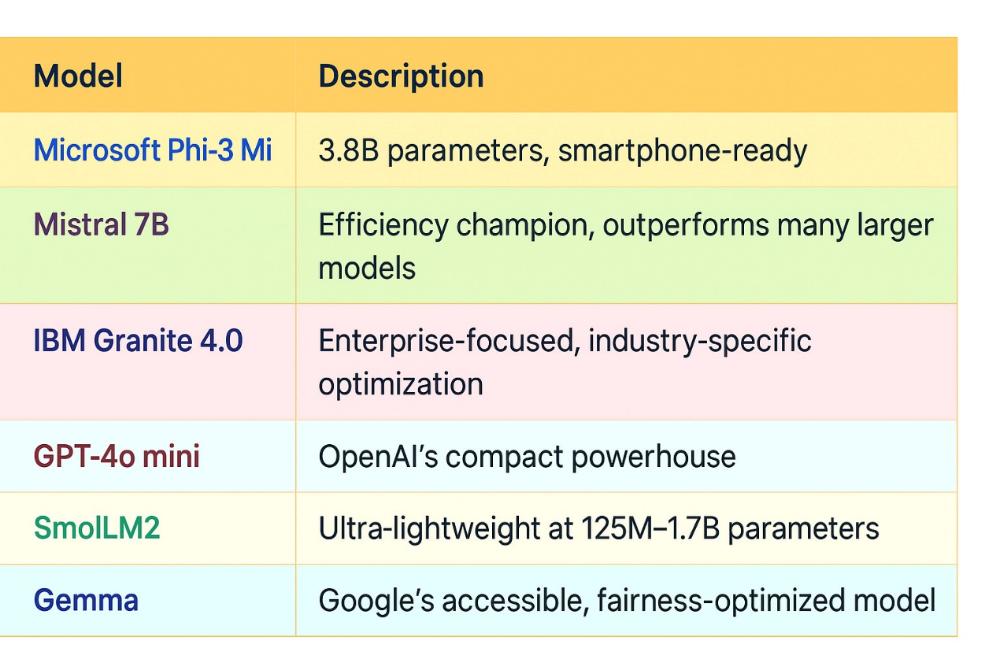
Core Insights - The article highlights the shift in artificial intelligence (AI) deployment from large language models (LLMs) to small language models (SLMs), emphasizing that smaller models can outperform larger ones in efficiency and cost-effectiveness [1][4][42] Group 1: Market Trends - The market for agent-based AI is projected to grow from $5.2 billion in 2024 to $200 billion by 2034, indicating a robust demand for efficient AI solutions [5] - Companies are increasingly recognizing that larger models are not always better, with research showing that 40% to 70% of enterprise AI tasks can be handled more efficiently by SLMs [4] Group 2: Technological Innovations - Key technological advancements enabling SLM deployment include smarter model architectures, CPU optimization, and advanced quantization techniques, which significantly reduce memory requirements while maintaining performance [20][27] - The introduction of GGUF (GPT-generated unified format) is revolutionizing AI model deployment by enhancing inference efficiency and allowing for local processing without expensive hardware [25][27] Group 3: Applications and Use Cases - SLMs are particularly advantageous for edge computing and IoT integration, allowing for local processing that ensures data privacy and reduces latency [30][34] - Successful applications of SLMs include real-time diagnostic assistance in healthcare, autonomous decision-making in robotics, and cost-effective fraud detection in financial services [34][38] Group 4: Cost Analysis - Deploying SLMs can save companies 5 to 10 times the costs associated with LLMs, with local deployment significantly reducing infrastructure expenses and response times [35][37] - The cost comparison shows that SLMs can operate with a monthly cost of $300 to $1,200 for local deployment, compared to $3,000 to $6,000 for cloud-based API solutions [36][37] Group 5: Future Outlook - The future of AI is expected to focus on modular AI ecosystems, green AI initiatives, and industry-specific SLMs that outperform general-purpose LLMs in specialized tasks [39][40][41] - The ongoing evolution of SLMs signifies a fundamental rethinking of how AI can be integrated into daily workflows and business processes, moving away from the pursuit of larger models [42]

三位90后,估值700亿
创业家· 2025-08-11 10:09
Core Viewpoint - Mistral AI, founded by three young graduates, is raising $1 billion in a new funding round, reaching a valuation of $10 billion, reflecting a nearly 50-fold increase in just two years [4][8]. Group 1: Company Overview - Mistral AI was established by three 90s graduates who previously worked at top AI companies and returned to France to seize the AI opportunity [8]. - The company launched its first open-source model, Mistral 7B, which outperformed competitors in several benchmarks, quickly gaining attention in the developer community [8][9]. - Mistral aims to lead the generative AI wave through open-source initiatives, contrasting with closed models from competitors like OpenAI [8][9]. Group 2: Funding and Valuation - Mistral AI completed a record seed round of $113 million shortly after its founding, achieving a valuation of over $260 million [12]. - By the end of 2023, Mistral raised $415 million in Series A funding, led by a16z, increasing its valuation to $2 billion [13]. - The company’s valuation skyrocketed to $6 billion after a $640 million Series B round, with major investors including Microsoft and Nvidia [14]. - Currently, Mistral is negotiating a $1 billion funding round, which could elevate its valuation to approximately $10 billion [14]. Group 3: Competitive Landscape - The AI landscape is becoming increasingly competitive, with the emergence of DeepSeek as a significant player, prompting Mistral to accelerate its product development and commercialization efforts [9]. - Mistral has launched several products, including the chatbot Le Chat, which achieved high download rates in France but struggled internationally [9]. - The company is actively pursuing partnerships with industry giants like Nvidia to enhance its market position [9]. Group 4: Young Entrepreneurs in AI - The AI sector is witnessing a surge of young entrepreneurs, with several companies founded by 90s graduates achieving significant funding and rapid growth [16][17]. - Companies like Perplexity and Genesis AI have also seen remarkable valuations, highlighting the trend of young innovators in the AI space [16][17]. - This new generation of entrepreneurs is characterized by their global perspective and technical expertise, positioning them well to capitalize on AI opportunities [18].

三位90后,估值700亿
3 6 Ke· 2025-08-10 23:32
Core Insights - Mistral AI is raising approximately $1 billion in a new funding round, which will bring its valuation to $10 billion, marking a nearly 50-fold increase in valuation since its inception two years ago [1] - The founders, all in their 30s, are highly educated individuals with backgrounds from top institutions and experience in leading AI companies [2][4] - Mistral AI aims to lead the generative AI wave through open-source models, contrasting with closed models from competitors like OpenAI and Anthropic [4][5] Company Overview - Mistral AI was founded by three young scholars who returned to Paris from Silicon Valley to capitalize on the AI revolution [4] - The company launched its first open-source large model, Mistral 7B, which outperformed competitors in benchmark tests [4] - Mistral has received significant backing from prominent venture capital firms and wealthy individuals, achieving record seed funding and subsequent rounds [7][10] Funding and Valuation - Mistral AI's initial funding round raised $1.13 billion, setting a record for seed funding in Europe, with a valuation exceeding $2.6 billion [7] - Subsequent funding rounds have seen Mistral's valuation soar to $20 billion and then to $60 billion, with major investments from firms like a16z and Nvidia [9][10] - The latest funding round aims to secure $1 billion, potentially increasing the company's valuation to $10 billion [1][10] Competitive Landscape - The AI open-source landscape is becoming increasingly competitive, with companies like DeepSeek gaining traction and being referred to as "the Chinese version of Mistral" [5] - Mistral has launched several products, including a chatbot and an inference model, to compete directly with emerging players [5] - Despite initial success in France, Mistral's international market performance has been mixed, prompting a focus on commercialization and partnerships with industry giants [5][10] Industry Trends - The rise of AI has led to a surge of young entrepreneurs entering the field, with many achieving significant funding and rapid growth [11][12] - Companies like Perplexity and Anysphere have also seen remarkable valuations and funding, indicating a broader trend of youth-driven innovation in AI [12][13] - The current generation of entrepreneurs is characterized by a strong educational background and a global perspective, positioning them well to leverage opportunities in the AI sector [14]
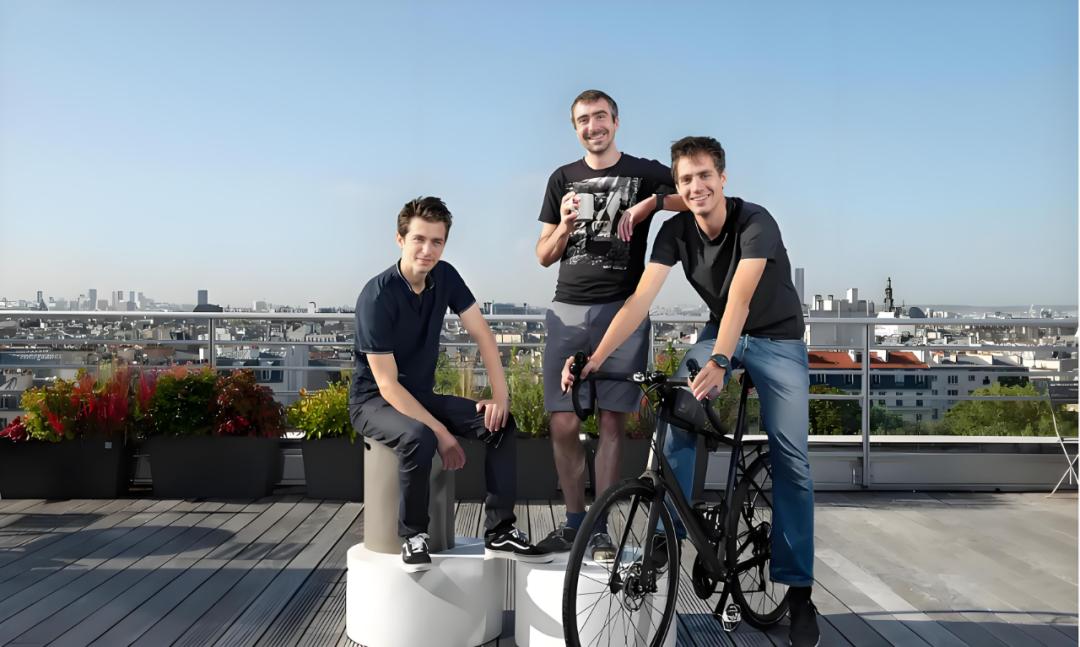
欧洲版DeepSeek,估值700亿
Hu Xiu· 2025-08-10 08:16
Core Viewpoint - Mistral AI, founded by three young graduates, has achieved a staggering valuation of $10 billion within two years, reflecting the rapid growth and potential of the AI industry [2][16]. Group 1: Company Overview - Mistral AI was established by three 90s graduates who previously worked at top AI firms and recognized the opportunity in the AI revolution [5][6]. - The company raised $1 billion in its latest funding round, increasing its valuation to approximately $10 billion [2][26]. - Mistral's first product, the open-source model Mistral 7B, outperformed competitors in benchmark tests, quickly gaining attention in the developer community [7][8]. Group 2: Investment and Growth - Mistral AI has attracted significant investment from notable venture capital firms, achieving a record seed funding of $113 million shortly after its inception [17][18]. - The company’s valuation skyrocketed from $2.6 million to $20 million within six months, marking its entry into the unicorn club [23]. - Recent partnerships with major players like Nvidia and Microsoft have further solidified Mistral's position in the AI landscape [24][14]. Group 3: Competitive Landscape - The AI sector is becoming increasingly competitive, with Mistral facing challenges from other open-source models like DeepSeek, which has gained global popularity [10][11]. - Despite initial success in France, Mistral's international performance has been mixed, prompting the company to enhance its product offerings [13][12]. - The emergence of other young AI startups, such as Perplexity and Anysphere, highlights the growing trend of young entrepreneurs in the AI space [30][32]. Group 4: Future Outlook - Mistral aims to lead the AI industry over the next decade, emphasizing the importance of open-source models for global AI development [8][28]. - The founders express a strong commitment to maintaining their ambitious vision as they navigate the evolving AI landscape [15].

三位90后,估值700亿
投资界· 2025-08-10 07:45
Core Viewpoint - The article highlights the rapid rise of Mistral AI, a startup founded by three young graduates, which has achieved a remarkable valuation of approximately $10 billion within two years, showcasing the explosive growth potential in the AI sector [2][6][12]. Group 1: Company Overview - Mistral AI was founded by three 90s graduates who previously worked at top AI firms and returned to France to capitalize on the AI revolution [6][8]. - The company launched its first open-source large model, Mistral 7B, which outperformed competitors in several benchmark tests, quickly gaining attention in the developer community [6][7]. - Mistral AI aims to lead the generative AI wave through open-source initiatives, contrasting with closed models from competitors like OpenAI [6][7]. Group 2: Funding and Valuation - Mistral AI completed a record seed round of $1.13 billion shortly after its establishment, achieving a valuation of over $2.6 billion [10]. - By the end of 2023, the company raised $415 million in Series A funding, increasing its valuation to $2 billion, and later secured $640 million in Series B funding, bringing its valuation to $6 billion [11][12]. - The latest funding round discussions could potentially elevate Mistral's valuation to around $10 billion, with significant interest from major investors [12][13]. Group 3: Competitive Landscape - The AI landscape is becoming increasingly competitive, with the emergence of other open-source models like DeepSeek, which has gained significant traction [7][8]. - Mistral AI has launched several products, including a chatbot and a reasoning model, to compete directly with other players in the market [8]. - Despite initial success in France, Mistral's international performance has been mixed, indicating challenges in scaling beyond local markets [8]. Group 4: Industry Trends - The article notes a trend of young entrepreneurs in the AI sector, with many 90s graduates leading startups that are rapidly gaining valuations and market presence [14][16]. - The rise of AI is compared to the historical impact of electricity, suggesting that AI will significantly influence GDP across nations [13].

数据中心维护成本:人工智能盈利能力的潜在风险(以及如何解决)
GEP· 2025-05-29 00:40
Investment Rating - The report does not explicitly provide an investment rating for the AI infrastructure industry Core Insights - The primary threat to profitability in the AI sector is not model performance but rather the escalating infrastructure costs associated with data centers [3][4] - As generative AI usage surges, hyperscalers are experiencing significant increases in operating expenses, necessitating a focus on maintenance to ensure profitability [4][5] - The financial dynamics of AI infrastructure are shifting, with maintenance costs becoming a critical factor for profitability [6][7] Summary by Sections Cost Structure of AI Infrastructure - AI infrastructure incurs three major costs: the cost to build, the cost to serve, and the cost to maintain, with maintenance being the most controllable yet often overlooked [9][12] - The cost to serve AI users is rapidly increasing due to the high volume of queries, leading to tight unit economics [4][9] Inference Economics - Inference represents a recurring operational cost in the generative AI lifecycle, contrasting with the one-time capital investment required for training [8][11] - The profitability equation for hyperscalers is defined as Gross Profit = Revenue – (Operational Cost Per Token × Token Volume) – Maintenance Cost, emphasizing the importance of managing operational costs [12] Maintenance Strategies - Effective maintenance strategies are essential for managing operational costs and ensuring system stability, with a focus on five key domains: hardware infrastructure, environmental systems, network connectivity, software configuration, and AI-specific activities [18][19][20][21] - Techniques such as quantization, distillation, caching, and routing can significantly reduce per-query inference costs without compromising quality [15][16] Outsourcing Maintenance - Many organizations are considering outsourcing AI data center maintenance to specialized third-party providers to enhance efficiency and reduce costs [28][33] - Outsourcing can provide access to specialized talent, better service-level agreements, and advanced diagnostic tools, but it also poses challenges such as data security risks and potential loss of institutional knowledge [32][34] Future Trends - The report anticipates increased integration between third-party maintenance providers and AI operations platforms, as well as the emergence of autonomous maintenance systems powered by AI [54]