NAND chips

Search documents
Micron Just Did Something Even Nvidia Hasn't Done. Is the AI Stock a Buy?
Yahoo Finance· 2026-03-19 17:35
Core Insights - Micron reported a significant earnings increase, with revenue nearly tripling to $23.9 billion, surpassing expectations of $19.2 billion [1] - The growth was primarily driven by high demand for memory chips in AI applications and a supply shortage that has increased prices [2] Financial Performance - Revenue increased by 196%, while net income surged by 771% to $13.8 billion, translating to $12.07 per share, with adjusted EPS at $12.20, exceeding the consensus estimate of $8.65 [3] - Gross margin more than doubled from 36.8% to 74.4%, and operating margin tripled to 67.6%, a level not previously reached by Nvidia [3][4] Market Dynamics - Despite strong earnings, Micron's stock fell by 3% after the announcement, indicating market skepticism about the sustainability of its margins [7] - The memory chip market is cyclical, with potential for shortages and inventory gluts, raising concerns about the longevity of Micron's current profit levels [8] Future Outlook - Micron's fiscal third-quarter guidance anticipates revenue of approximately $33.5 billion, a 260% increase, with gross margin projected to rise to 81% and adjusted EPS between $18.75 and $19.55 [9] - The CEO indicated that demand for DRAM and NAND chips is expected to remain tight beyond 2026, with bit shipments projected to grow by around 20% [10]

Micron stock falls despite AI demand driving blowout earnings, outlook
Invezz· 2026-03-18 21:05
Core Viewpoint - Micron Technology reported exceptional second-quarter earnings driven by strong demand for memory chips, particularly from AI and data center expansions, despite a decline in stock price due to broader market concerns [1][2]. Financial Performance - Adjusted earnings per share reached $12.20, significantly surpassing Wall Street's expectation of $9.19 [2]. - Revenue soared to approximately $23.9 billion, exceeding consensus estimates of around $20 billion and marking a nearly threefold increase from the same period last year [2][4]. - Net income rose to about $13.8 billion, with gross margins expanding to over 74% [4]. Demand Drivers - The demand for high-performance DRAM and NAND chips has outstripped supply, particularly for AI workloads and data centers, leading to increased volumes and pricing [3][5]. - Cloud memory revenue increased by over 160% to $7.75 billion, while mobile and client business revenue climbed to $7.71 billion from $2.24 billion a year ago [5]. Market Dynamics - Tight supply conditions in the memory market, especially in high-bandwidth memory (HBM), have supported pricing and margins, with no significant new capacity expected before mid-2027 [7][8]. - The imbalance between supply and demand has resulted in a sharp increase in memory prices, contributing to revenue growth and margin expansion [8]. Future Outlook - Micron provided strong forward guidance, expecting third-quarter revenue of about $33.5 billion, significantly higher than analyst estimates of around $24.3 billion [10]. - Adjusted earnings per share for the upcoming quarter are projected at approximately $19.15, well above expectations near $12 [10]. - A 30% increase in the quarterly dividend to 15 cents per share was also announced, indicating confidence in sustained demand for memory chips [10][11].


Micron Technology (MU) to Capitalize on Surging AI demand for AI Training and Inference
Yahoo Finance· 2026-03-13 18:30
Micron Technology (NASDAQ:MU) is one of the debt free halal stocks to buy. On March 12, Mizuho kept its Outperform rating on Micron Technology (NASDAQ:MU) and set a price target of $480. This came just before Micron’s earnings report on March 18. Micron Technology (MU) to Capitalize on Surging AI demand for AI Training and Inference Mizuho expects Micron’s results to be stronger than Wall Street’s forecasts. For the May quarter, they see $25 billion in revenue and $11.13 earnings per share (EPS), which i ...
Micron stock falls as weakness hits global memory sector
Invezz· 2026-03-06 20:46
Group 1 - Micron Technology shares fell 2% to $389.12 amid weakness in South Korean memory stocks, with Samsung Electronics and SK Hynix also declining [1][1][1] - Micron has a 12-month gain of 344.77% but is currently trading 4% below its 20-day simple moving average of $406.13 and 29.8% above its 100-day SMA of $300.60 [1][1][1] - The company is set to report earnings on March 18, with estimates for EPS at $8.56 and revenue at $19.10 billion, both significantly up year over year [1][1][1] Group 2 - Western Digital has seen a 60% year-to-date increase in stock price, driven by improved business conditions and demand related to AI and cloud computing [1][1][1] - The company has diversified its supply chain and expanded capacity to navigate supply challenges, with expectations for continued revenue growth [1][1][1] - Customer concentration poses a risk, as three clients account for 46% of H1 FY26 revenue, which could impact results during hyperscaler deployment cycles [1][1][1] Group 3 - The dip in Micron's stock highlights the influence of South Korean memory market movements on US trading, especially with an important earnings report approaching [1][1][1] - Western Digital's rebound reflects an improving sector cycle and AI-driven demand, but elevated valuations and customer concentration may limit potential for disappointment [1][1][1]
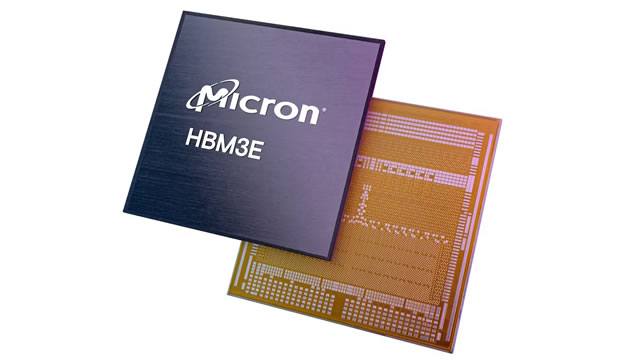
Should You Forget Micron and Buy This Other Artificial Intelligence (AI) Chip Stock Instead?
Yahoo Finance· 2026-02-27 18:40
Core Insights - The memory and storage sector within artificial intelligence (AI) is emerging as a significant investment opportunity, particularly for companies like Micron Technology and Sandisk [1][2] Group 1: Market Dynamics - The ongoing AI data center buildout has led to increased capital expenditures from major tech companies such as Microsoft, Amazon, Alphabet, and Meta Platforms, creating a demand for high-performance memory chips and storage solutions [5] - A supply-demand imbalance in the memory and storage markets is anticipated, with prices for DRAM and NAND chips expected to rise by up to 60% and 38% respectively in the first quarter [6] - This memory supercycle is driving unprecedented revenue and profit growth for companies like Sandisk and Micron, prompting investors to shift capital from hyperscalers to these beneficiaries [7] Group 2: Company Profiles - Micron Technology specializes in dynamic random access memory (DRAM) and NAND solutions, positioning itself as a key player in the memory market [1] - Sandisk, following its spinoff from Western Digital, has become a significant player in NAND flash storage, particularly in enterprise solid state drives (SSDs) that are essential for scaling AI workloads [8][9] - Sandisk's innovation in high bandwidth flash (HBF) technology offers a more energy-efficient memory capacity solution compared to traditional high bandwidth memory (HBM) products [9]
铠侠控股:电话会议纪要- 价格上行趋势将延续,但对估值倍数维持中性看法
2026-02-25 04:07
24 February 2026 | 5:36PM JST Equity Research Kioxia Holdings (285A.T): Conference call: Price uptrend to continue, but stay Neutral on valuation multiple We held a conference call with Kioxia Holdings' IR team on the morning of February 20. We summarize the key points below (on 3Q results, 4Q guidance, and the outlook for FY3/27 earnings). We believe the price uptrend, unprecedented in recent years, and accompanying earnings expansion are likely to continue. However, given that Kioxia's P/E multiple at the ...
As Kioxia Earnings Kick Memory Stocks Into Gear, Should You Buy Sandisk Here?
Yahoo Finance· 2026-02-18 19:57
Core Viewpoint - Kioxia forecasts significantly higher demand for NAND memory chips, positively impacting sentiment across the memory sector, including Sandisk [1][2] Group 1: Market Dynamics - Analysts expect demand for memory chips to outpace supply into 2026 and beyond, contributing to a 1200% rise in Sandisk shares over the past six months [2] - Kioxia and Sandisk extended their joint venture at flash memory plants through 2034, focusing on AI-enabled smart manufacturing of advanced 3D NAND [3] Group 2: Company Performance - Sandisk's stock has increased approximately 1180% over the past 12 months and 154% year-to-date [5] - Sandisk's current valuation is at a forward P/E multiple of about 27.3, above the sector median of roughly 23, indicating investor confidence in long-term AI-driven earnings growth [8] Group 3: Financial Results - Sandisk reported fiscal second-quarter revenue of about $3.02 billion, a 31% sequential increase, exceeding guidance [9] - GAAP net income for Sandisk reached approximately $803 million, resulting in a diluted EPS of $5.15 [9]
Prediction: Micron's Stock Price Will Be Worth This Much by the End of 2026
Yahoo Finance· 2026-02-16 13:05
Core Viewpoint - The AI revolution is significantly impacting semiconductor stocks, particularly benefiting companies like Micron Technology, which is positioned to capitalize on the growing demand for memory and storage solutions in AI infrastructure [1][2]. Group 1: AI Impact on Semiconductor Industry - The AI revolution has shifted capital expenditure budgets towards GPUs from Nvidia and AMD, while also increasing the focus on memory and storage solutions [1][2]. - Major tech companies are developing advanced AI applications, which require not only GPUs but also substantial memory and storage capabilities [4][5]. Group 2: Micron Technology's Position - Micron Technology is transitioning from being viewed as a cyclical semiconductor business to a key player in the AI infrastructure supercycle, driven by its high-bandwidth memory (HBM) solutions [3][5]. - The company is experiencing a surge in demand, with its existing inventory already sold out, indicating strong market interest [6]. Group 3: Financial Outlook for Micron - Micron is investing in additional manufacturing capacity to meet the soaring demand, with projections indicating a significant revenue increase to $76 billion in the current year, representing an 81% growth compared to the previous year [7]. - Earnings-per-share (EPS) estimates for Micron are expected to roughly triple, reflecting the anticipated explosive growth in revenue and profits by 2026 [7].
Memory chip squeeze widens gap between market winners and losers
The Economic Times· 2026-02-10 10:13
Core Insights - The global consumer electronics sector has seen a decline of 10% since the end of September, while memory makers, including Samsung Electronics, have surged approximately 160% [1][17] - Current valuations in the market largely assume that supply disruptions will normalize within one to two quarters, but there are concerns that this tightness may persist longer [2][17] Industry Trends - Memory chip shortages and rising prices are frequently mentioned in earnings reports, indicating a significant impact on various companies [17] - Companies like Qualcomm and Nintendo have experienced stock declines due to concerns over memory constraints affecting production and profitability [5][17] - The demand for memory chips is being exacerbated by massive AI infrastructure spending, shifting production capacity towards high-bandwidth memory [8][17] Market Dynamics - Spot prices for DRAM have increased by over 600% in recent months, despite weak demand for end products like smartphones and cars [11][17] - Memory chip makers have emerged as significant winners in the tech sector, with companies like SK Hynix, Kioxia Holdings, and Nanya Technology seeing stock increases of over 150% to 400% since the end of September [12][17] - The current memory cycle is described as a "supercycle," breaking traditional boom-and-bust patterns, with no signs of demand momentum softening [9][13][17]


Is Micron the New Nvidia?
The Motley Fool· 2026-02-08 23:25
Core Insights - Memory chips are emerging as a critical bottleneck in AI development, shifting focus from traditional AI chips like those from Nvidia to memory solutions from companies like Micron Technology [1][2] Company Overview - Micron Technology is gaining attention as a potential leader in the AI chip market, following in the footsteps of Nvidia [2] - The company specializes in high-bandwidth memory (HBM), dynamic random access memory (DRAM), and NAND chips, which are essential for AI workloads [7] Market Trends - The total addressable market (TAM) for AI accelerators is projected to grow at a 16% compound annual growth rate (CAGR) through 2033, reaching $604 billion, providing a favorable environment for Micron [6] - Micron's TAM for memory is expected to increase from $35 billion in 2025 to $100 billion by 2028, indicating significant growth potential [7] Demand Dynamics - Demand for memory chips is accelerating faster than that for GPUs, suggesting that Micron's solutions are well-positioned for substantial growth [8] - Rising capital expenditure budgets from hyperscalers are driving up the prices of memory and storage chips, with expectations of price increases of 60% for DRAM and 38% for NAND chips in the first quarter [10][11] Investment Perspective - Micron's stock has seen a dramatic increase of 348% over the past year, yet it trades at a forward price-to-earnings (P/E) multiple of 12, indicating a discount compared to other AI chip leaders [12][14] - The strong demand for HBM chips suggests a multi-year supercycle, making Micron an attractive investment opportunity [14] - Micron's role in the memory market is likened to Nvidia's early days in the AI revolution, positioning it as a potential "new Nvidia" [15]