Nano banana

Search documents
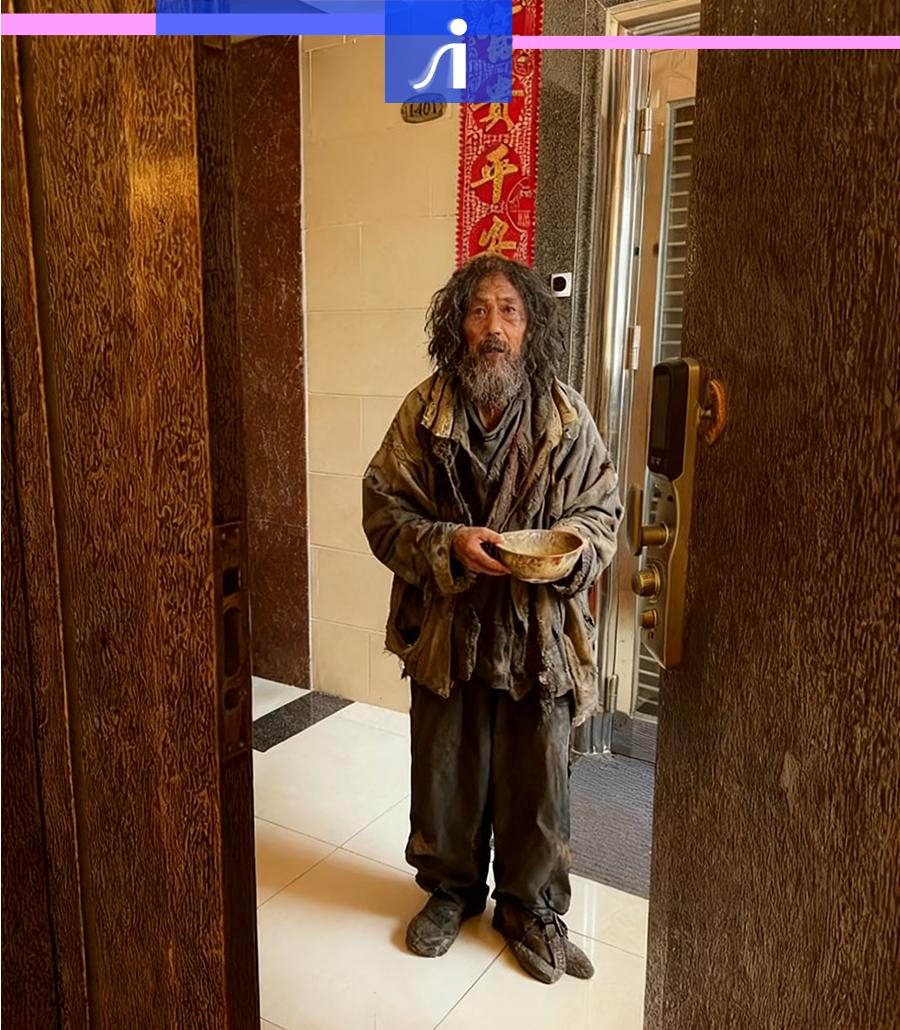
我用AI生成流浪汉骗我爸,结果他摇来了特警
3 6 Ke· 2025-11-27 06:18
Core Viewpoint - A new trend of "AI homeless man prank" has emerged on social media platforms like TikTok, where users create and share videos of fake scenarios involving a homeless person entering their homes, leading to alarming reactions from family members [4][6][7]. Group 1: Trend Overview - The prank involves using AI-generated images to depict a homeless man in various situations at home, which are then sent to family members, capturing their panicked responses [4][6]. - The hashtag homelessmanprank has over 1,600 related videos on TikTok, with many posts garnering millions of views, showcasing the popularity of this trend among teenagers [4][6]. - The trend has spread to other platforms like Snapchat and Instagram, as well as Chinese social media like Douyin and Xiaohongshu, indicating a global reach [6]. Group 2: Reactions and Consequences - Initially perceived as a harmless prank, the situation escalated when some parents called the police, mistaking the prank for a real home invasion, which could lead to significant law enforcement responses [7][9]. - Police departments have expressed concerns about the potential dangers of such pranks, as they can divert resources from actual emergencies and create panic [7][23]. - Some users have reported that their prank led to police intervention, highlighting the serious implications of these actions [15][23]. Group 3: Broader Implications of AI Usage - The rise of AI-generated content has led to various issues, including misinformation and harmful pranks, prompting calls for regulation and responsible use of AI technologies [21][23]. - Authorities have begun to address the misuse of AI in creating deceptive content, emphasizing the need for clear identification of AI-generated materials [23].

我们用21款AI修图工具修了100张图:谁才是真正的“修图神器”?|Jinqiu Scan
锦秋集· 2025-11-10 11:38
Core Viewpoint - The article focuses on evaluating 21 AI image editing tools across six real-life scenarios to determine their effectiveness in understanding and executing user requests for image modifications [4][11][141]. Group 1: Evaluation Methodology - The evaluation consists of six rounds, each using the same prompt for image editing, with all models set to their latest default configurations [11][12]. - Three general evaluation dimensions are used: visual consistency, local quality, and content consistency [12][13][14]. Group 2: Performance Results - Top performers include Tencent Yuanbao, Meitu Xiu Xiu, and Qwen Image Edit, scoring 15 points for effectively meeting user prompts without noticeable discrepancies [23]. - Nano Banana, Sora, Lovart, Manus, and Runway scored 14 points, with minor issues in image retrieval capabilities [28]. - Tools like Jiemeng 4.0, Wake Map, and Pixel Cake scored around 10 points, showing significant errors despite being dedicated image editing software [30]. Group 3: Specific Findings - In the first round, Tencent Yuanbao and Meitu Xiu Xiu excelled in removing unwanted elements while enhancing image clarity [23]. - The second round highlighted Qwen Image Edit and Genspark as top performers in foreground extraction, maintaining original details [41]. - The third round saw Jiemeng 4.0 and Tencent Yuanbao achieving high scores for effectively replacing elements while preserving the original image's integrity [65]. Group 4: Future Directions - The article indicates plans for future evaluations of AI tools in areas such as game development, knowledge bases, and companionship products [7].

Nano-Banana核心团队首次揭秘,全球最火的AI生图工具是怎么打造的
创业邦· 2025-09-03 10:10
Core Insights - The article discusses the advancements of the "Nano Banana" model, highlighting its significant improvements in image generation and editing capabilities, which include faster generation speeds and better understanding of complex instructions [5][6][9]. Group 1: Model Capabilities - Nano Banana has achieved a substantial quality leap in image generation and editing, with faster speeds and the ability to understand vague and conversational instructions while maintaining consistency in multi-step edits [5][6]. - The model's key enhancement lies in its "native multimodal" capabilities, particularly "interleaved generation," allowing it to process complex instructions step-by-step and maintain context [5][29]. - For high-quality text-to-image generation, the Imagen model remains the preferred choice, while Nano Banana is better suited for multi-round editing and creative exploration [5][37]. Group 2: Future Goals - The future objective of Nano Banana is not only to enhance visual quality but also to pursue "intelligence" and "fact accuracy," aiming to create a model that understands user intent deeply and generates creative outputs beyond user prompts [6][50][53]. - The team envisions a model that can accurately generate charts and other work-related content, emphasizing the importance of both aesthetic appeal and functional accuracy [53][57]. Group 3: User Interaction and Feedback - User feedback has been instrumental in shaping the model's development, with the team continuously collecting data on common failure modes to improve future iterations [42][44]. - The model's ability to maintain character consistency across multiple images has improved, allowing for more complex scene reconstructions and edits [45][48]. Group 4: Comparison with Other Models - While Imagen excels in generating high-quality images from text prompts, Nano Banana is positioned as a more versatile creative partner capable of handling complex workflows and understanding broader contextual cues [37][39]. - The integration of insights from different teams has led to significant improvements in the model's natural aesthetics and overall performance [46][48].

Nano Banana官方提示词来了,附完整代码示例
量子位· 2025-09-03 05:49
Core Viewpoint - The article discusses the rising popularity of the Nano-banana tool, highlighting its innovative features and the official guidelines released by Google to help users effectively utilize this technology [1][8]. Group 1: Features of Nano-banana - Nano-banana allows users to generate high-quality images from text descriptions, edit existing images with text prompts, and create new scenes using multiple images [15]. - The tool supports iterative refinement, enabling users to gradually adjust images until they achieve the desired outcome [15]. - It can accurately render text in images, making it suitable for logos, charts, and posters [15]. Group 2: Guidelines for Effective Use - Google emphasizes the importance of providing detailed scene descriptions rather than just listing keywords to generate better and more coherent images [9][10]. - Users are encouraged to think like photographers by considering camera angles, lighting, and fine details to achieve realistic images [19][20]. - The article provides specific prompt structures for various types of images, including photorealistic shots, stylized illustrations, product photography, and comic panels [20][24][35][43]. Group 3: Examples and Applications - The article showcases examples of images generated by Nano-banana, such as a cat dining in a luxurious restaurant under a starry sky, demonstrating the tool's capability to create detailed and imaginative scenes [14][17]. - It also includes code snippets for developers to integrate the image generation capabilities into their applications, highlighting the accessibility of the technology [21][29][35].
Nano-Banana核心团队首次揭秘,全球最火的 AI 生图工具是怎么打造的
3 6 Ke· 2025-09-02 01:29
Core Insights - The article discusses the advancements and features of the "Nano Banana" model developed by Google, highlighting its capabilities in image generation and editing, as well as its integration of various technologies from Google's teams [3][6][36]. Group 1: Model Features and Improvements - Nano Banana has achieved a significant leap in image generation and editing quality, with faster generation speeds and improved understanding of vague and conversational prompts [6][10]. - The model's "interleaved generation" capability allows it to process complex instructions step-by-step, maintaining consistency in characters and scenes across multiple edits [6][35]. - The integration of text rendering improvements enhances the model's ability to generate structured images, as it learns better from images with clear textual elements [6][13][18]. Group 2: Comparison with Other Models - For high-quality text-to-image generation, Google's Imagen model remains the preferred choice, while Nano Banana is better suited for multi-round editing and creative exploration [6][36][39]. - The article emphasizes that Nano Banana serves as a multi-modal creative partner, capable of understanding user intent and generating creative outputs beyond simple prompts [39][40]. Group 3: Future Developments - Future goals for Nano Banana include enhancing its intelligence and factual accuracy, aiming to create a model that can understand deeper user intentions and generate more creative outputs [7][51][54]. - The team is focused on improving the model's ability to generate accurate visual content for practical applications, such as creating charts and infographics [57].