OCI

Search documents
Oracle(ORCL) - 2026 Q3 - Earnings Call Transcript
2026-03-10 22:02
Financial Data and Key Metrics Changes - Oracle reported a strong Q3 fiscal year 2026, with both organic total revenue and organic non-GAAP EPS growing by 20% or more in USD, marking the first time in over 15 years this has occurred [6][10] - Cloud applications revenue increased by 11% in constant currency, reaching an annualized run rate of $16.1 billion [10] - Deferred revenue for cloud applications grew by 14%, supporting the acceleration thesis [20] Business Line Data and Key Metrics Changes - Within cloud applications, Fusion ERP revenue grew by 14%, Fusion SCM by 15%, Fusion HCM by 15%, and Fusion CX by 6% [10] - NetSuite revenue also increased by 11%, while industry SaaS solutions across various sectors grew by 19% [10] - Multi-cloud database revenue surged by 531% year-over-year, and AI infrastructure revenue grew by 243% year-over-year [21] Market Data and Key Metrics Changes - Oracle achieved significant growth in its partnerships with major cloud providers, expanding its database services across multiple clouds [21][23] - The company reported a $553 billion remaining performance obligation (RPO), indicating strong future revenue potential [24] Company Strategy and Development Direction - Oracle is focusing on integrating AI into its applications, with over 1,000 AI agents already embedded in its Fusion applications [68][79] - The company is positioning itself as a disruptor in the SaaS market by embedding AI capabilities directly into its applications, rather than viewing AI as a replacement for existing systems [68][79] - Oracle's strategy includes leveraging its multi-cloud partnerships to enhance its database services and AI infrastructure [21][23] Management's Comments on Operating Environment and Future Outlook - Management expressed confidence in the ongoing demand for AI and advanced compute capabilities, anticipating continued growth across the economy [28] - The company is optimistic about its ability to deliver profitable recurring revenue from its AI infrastructure and multi-cloud database services [27][28] - Management highlighted the importance of maintaining an investment-grade rating while pursuing significant financing to support growth initiatives [39] Other Important Information - Oracle raised $30 billion through investment-grade bonds and mandatory convertible preferred stock, with a record oversubscription [8] - The company is committed to maintaining a rapid financial reporting process, leveraging Oracle Fusion to close and file results faster than competitors [9] Q&A Session Summary Question: Insights on AI infrastructure's halo effect on traditional cloud workloads - Management confirmed a positive halo effect from AI infrastructure on traditional cloud workloads, with increased business activity and pipeline growth [32][34] Question: Data center location strategy for AI inferencing - Management discussed the importance of data center location in relation to latency and the evolving demand for inferencing capabilities [42][44] Question: Opportunities with AI database and private LLMs - Management noted a growing demand for integrating private data with AI models, emphasizing the importance of cloud adoption for leveraging AI [50][51] Question: Profitability of AI data centers and sovereign cloud strategy - Management expressed confidence in the profitability of AI data centers, highlighting the mix of services that contribute to overall margins [56][61] Question: Customer sentiment regarding SaaS and AI - Management reported that customers are not abandoning their core systems but are instead seeking to integrate AI capabilities into existing applications [67][68] Question: Oracle's evolving role in AI across enterprise systems - Management emphasized the significance of data gravity and the integration of AI agents within Oracle's applications to enhance customer value [72][79]

Oracle(ORCL) - 2026 Q3 - Earnings Call Transcript
2026-03-10 22:00
Financial Data and Key Metrics Changes - Oracle reported a strong Q3 fiscal year 2026, with both organic total revenue and organic non-GAAP EPS growing by over 20% in USD, marking the first time in over 15 years this has occurred [5] - The company raised $30 billion through investment-grade bonds and mandatory convertible preferred stock, with a record oversubscription [6] Business Line Data and Key Metrics Changes - Cloud applications revenue increased by 11% in constant currency, reaching an annualized run rate of $16.1 billion, with Fusion ERP, SCM, and HCM growing by 14% and 15% respectively [9][10] - Industry SaaS solutions for various sectors combined saw a growth of 19% [10] Market Data and Key Metrics Changes - Multi-cloud database revenue grew by 531% year-over-year, while AI infrastructure revenue increased by 243% year-over-year [20] - Deferred revenue for cloud applications was up 14%, supporting the acceleration thesis [19] Company Strategy and Development Direction - Oracle is focusing on integrating AI into its applications, with over 1,000 AI agents already embedded in its Fusion applications [66] - The company is positioning itself as a disruptor in the SaaS market by embedding AI capabilities directly into its applications, rather than viewing AI as a threat [66][77] Management's Comments on Operating Environment and Future Outlook - Management expressed confidence in the profitability of AI data centers, with gross margins expected to remain in the 30%-40% range [55] - The company is optimistic about the ongoing demand for AI and advanced compute, indicating that investments in data centers and infrastructure will yield long-term value [26] Other Important Information - Oracle's transition from a seasonal license business to a predictable recurring revenue cloud business is contributing to its growth and profitability [25] - The company is committed to maintaining its investment-grade rating while exploring additional funding mechanisms [35] Q&A Session Summary Question: Insights on AI infrastructure's halo effect on traditional cloud workloads - Management confirmed the presence of a halo effect, with increased momentum in traditional cloud workloads due to the integration of AI capabilities [30][32] Question: Strategy for optimizing data center locations for AI inferencing - Management highlighted that latency is relative and emphasized the importance of hardware innovation over data center location [40][42] Question: Adoption of private LLMs and AI database growth - Management noted a growing demand for combining private data with existing AI models rather than creating entirely new private LLMs [48][49] Question: Profitability of AI data centers and sovereign cloud opportunities - Management expressed confidence in the profitability of AI data centers and highlighted the unique positioning of Oracle's Alloy model for sovereign cloud solutions [52][60] Question: Customer sentiment regarding the future of SaaS in light of AI - Management reported that customers are eager to integrate AI into their existing systems rather than replace them, indicating a positive outlook for SaaS [65][66] Question: Oracle's evolving role in the AI interaction layer across enterprise systems - Management emphasized the importance of data gravity and the integration of AI capabilities within Oracle's existing applications to enhance customer value [70][72]
Oracle Earnings Prediction Market Preview: What Will Larry Ellison Say? - Oracle (NYSE:ORCL)
Benzinga· 2026-03-10 17:46
Core Insights - Traders are pricing a 77% chance that Oracle will exceed the $1.71 EPS consensus, but historical performance indicates that even if Oracle beats EPS, the stock may still decline due to revenue misses [1] - The significant gap in trader sentiment regarding Oracle's discussion of "OpenAI" (92%) versus "Stargate" (64%) suggests that while OpenAI will likely be a focal point, Stargate may be avoided due to negative press [2] Financial Performance - Oracle's backlog has reached 90%, increasing by 14 points, with remaining performance obligations hitting $523 billion last quarter, a 438% year-over-year increase [4] - Despite the large backlog, Oracle has missed analyst revenue estimates in eight of the last ten quarters, raising concerns about the conversion of backlog into revenue [4] Strategic Partnerships - The $500 billion Stargate venture has stalled, lacking a dedicated team and clear operational roles, leading to gridlock in the partnership [3] - In contrast, OpenAI has secured a separate $30 billion-per-year deal with Oracle for 4.5 gigawatts of capacity, expanding its compute capabilities outside the Stargate framework [3] Market Sentiment - The upcoming earnings call is expected to focus more on narrative rather than just financial numbers, with particular attention on how Oracle's leadership addresses the challenges surrounding Stargate [6] - If Oracle's leadership avoids tough questions regarding capital expenditures and lost data center deals, even a strong earnings report may not prevent a stock decline [7]


美国互联网与软件:4Q25 云业务对比-资本开支激增盖过云业务增长-US Internet and Software_ 4Q25 Cloud Compare_ Surging Capex Growth Outweighs Cloud Growth
2026-02-11 15:40
Summary of Key Points from the Conference Call Industry Overview - The conference call discusses the US Internet and Software industry, specifically focusing on the cloud services sector, highlighting the performance of major cloud providers in Q4 2025. Core Insights and Arguments - **Overall Industry Growth**: The cloud industry experienced a growth acceleration of approximately 5 percentage points to +34.7% year-over-year (YoY), driven by increases at AWS, GCP, and OCI [1] - **Individual Provider Performance**: - **Microsoft Azure**: Growth decelerated by 1 percentage point to +38% YoY constant currency (CC), impacted by capacity constraints and prioritization of Copilot and R&D [2] - **Amazon AWS**: Growth accelerated to +24% YoY CC, up from 20% in Q3, with significant revenue contributions from Trainium and Graviton products [2] - **Google Cloud**: Growth surged to +48% YoY, a notable increase from +34% in Q3, with 75% of clients utilizing vertically optimized AI products [2] - **Oracle Cloud Infrastructure (OCI)**: Growth accelerated by 12 percentage points to +66% YoY CC [1] Capital Expenditure (Capex) Insights - **Capex Growth**: Total capex for the cloud sector increased by over $11 billion quarter-over-quarter (QoQ), exceeding expectations. Specific capex figures include: - Microsoft: $35.1 billion in Q4, with expectations of a QoQ decline in F3Q but higher YoY growth for FY26 [3] - AWS: Approximately $27 billion in Q4, representing a +52% YoY increase [3] - Google Cloud: Approximately $14 billion in Q4, reflecting a +95% YoY increase [3] Booking and Revenue Backlog - **Bookings Growth**: Microsoft reported a remarkable 230% YoY growth in commercial bookings for 2QFY'26, driven by a $250 billion commitment from OpenAI [4] - **Revenue Backlogs**: - AWS backlog grew to $244 billion, a +38% YoY increase, bolstered by core AWS and AI demand [4] - Google Cloud backlog reached $240 billion, increasing by $147 billion YoY, attributed to rising AI demand and partnerships [4] Profitability Metrics - **Gross Margin and Operating Margin**: - Microsoft’s cloud gross margin was 67%, slightly better than guidance but down 3 percentage points YoY due to AI scaling [5] - AWS operating margin was 35%, exceeding expectations and higher than the previous quarter [5] - Google Cloud's operating margin improved significantly by 1,260 basis points YoY to 30.1% [5] Additional Noteworthy Points - The significant demand for AI infrastructure and solutions is a key driver of revenue growth across all major cloud providers, indicating a strong market trend towards AI integration [2] - The competitive landscape shows AWS maintaining a market share of 44%, with Azure at 30%, Google Cloud at 22%, and OCI at 5% [1] This summary encapsulates the essential insights from the conference call, providing a comprehensive overview of the current state and future outlook of the cloud services industry.



本季度云业务:超大规模服务商 2025 年第三季度表现如何-Cloud in the Quarter How did the hyperscalers do in 3Q25
2026-01-07 03:05
Summary of Key Points from the Conference Call Industry Overview - The hyperscale market is a significant opportunity in the Software/Cloud/Internet sector, estimated at $1.3-1.5 trillion, potentially the largest in technology [4][2] - The market is currently influenced by the Generative AI wave, with concerns about CAPEX growth and associated margins for AI-related infrastructure investments [2][3] Company-Specific Insights Microsoft (MSFT) - Microsoft is leading in AI and non-AI revenue growth, with Azure growing 39% in constant currency (40% reported) in Q3 [15][50] - CAPEX for Q1 FY26 was $34.9 billion, with expectations for continued growth driven by strong demand signals [15][50] - Concerns exist regarding the sustainability of AI revenue and exposure to OpenAI, but long-term growth and margin potential are viewed positively [8][50] Amazon (AMZN) - AWS growth accelerated to 20% year-over-year, reaching $33 billion, with AI contributions growing at triple digits [10][35] - AWS capacity has doubled since 2022 and is expected to double again by 2027, with a backlog growth of 22% year-over-year [10][35] - Management revised FY25 CAPEX guidance to $125 billion, primarily for AWS infrastructure [10][35] Google (GOOGL) - Google Cloud revenues increased by 34% year-over-year, reaching approximately $15 billion, with a significant backlog of $155 billion [12][17] - Despite strong demand, revenue growth is limited by capacity constraints, and management expects this to continue into 2026 [12][17] - CAPEX guidance for 2025 was raised from $85 billion to $91-93 billion, reflecting a 73% year-over-year increase [12][17] Oracle (ORCL) - Oracle's OCI revenue grew 68% year-over-year, with total Remaining Performance Obligations (RPO) increasing significantly [9][20] - Concerns about CAPEX required for capacity build-out and the sustainability of AI revenue exist, but the long-term growth potential is viewed favorably [9][20] Alibaba (BABA) - Alicloud revenue growth accelerated to 34.5% year-over-year, with AI-related products contributing significantly [13][18] - Management indicated strong revenue growth expectations for the coming quarters, despite higher comparative growth rates [13][18] Additional Insights - The hyperscale market is experiencing a shift in sentiment due to AI developments, leading to confusion about potential bubbles in the market [14] - The competitive landscape is evolving, with questions about which companies will emerge as winners or losers in the AI space [3][14] - The overall capital intensity of IaaS/PaaS is a critical factor, with ongoing analysis of the cost structures and profitability of major players [6][5] Conclusion - The hyperscale cloud market is poised for significant growth, driven by AI and increasing demand for cloud services. Each major player is navigating unique challenges and opportunities, with varying growth rates and CAPEX strategies. Investors should closely monitor these developments to identify potential investment opportunities and risks.

Phillip Securities Raises Oracle 2026 Capex Forecast to $50B Highlighting Confidence in OCI and Full-Stack AI Leadership
Yahoo Finance· 2025-12-28 17:46
Core Insights - Analysts view Oracle Corporation (NYSE:ORCL) as one of the most active US stocks to buy, with Phillip Securities lowering its price target to $344 while maintaining a Buy rating [1] - RBC Capital also reduced its price target to $250, keeping a Sector Perform rating, following mixed FQ2 2026 results [2] Financial Performance - Oracle reported a 13% year-over-year increase in total revenue to $16.1 billion, driven primarily by a 33% surge in cloud revenue to $8 billion, which now constitutes half of Oracle's total business [3] - Within the cloud segment, OCI revenue increased by 66% to $4.1 billion, significantly boosted by a 177% rise in GPU-related revenue [3] - Other notable revenue increases included Autonomous Database revenue, which rose by 43%, and Cloud Applications revenue, which reached $3.9 billion, up 11% [3] Future Projections - For FQ3, Oracle anticipates total cloud revenue growth between 37% and 41%, and total revenue growth between 16% and 18% in constant currency [4] Capital Expenditure Outlook - Phillip Securities raised its 2026 capital expenditure forecast for Oracle from $35 billion to $50 billion, reflecting confidence in Oracle's dual role as a specialized cloud provider and a leader in full-stack AI [1][3]
Citizens Stays Constructive on Oracle (ORCL) Amid Investor Confusion on OCI
Yahoo Finance· 2025-12-24 07:59
Group 1 - Oracle Corporation is recognized as a significant player in the AI sector, with Citizens maintaining a "Market Outperform" rating and a price target of $342.00, reflecting confidence in its cloud business model and funding structure despite debt concerns [1] - Citizens noted an increase in the cost of insuring Oracle's debt and highlighted investor confusion regarding its OCI business model, suggesting that the perceived risks are more complex than they appear [2] - The firm emphasized the value of Oracle's long-term contracts and its ability to finance projects efficiently, asserting that the net present value (NPV) of Oracle's take-or-pay contracts remains positive, with robust financing capabilities [3] Group 2 - While Oracle is seen as a potential investment, there are opinions that other AI stocks may offer greater upside potential and lower downside risk, indicating a competitive landscape in the AI investment space [4]
甲骨文(ORCL):2026财年第二季度业绩点评:RPO维持高增长,关注后续收入转化情况
Guolian Minsheng Securities· 2025-12-15 09:32
Investment Rating - The investment rating for Oracle (ORCL) is "Cautious Recommendation" [8] Core Insights - Oracle's FY26Q2 total revenue reached $16.1 billion, a year-on-year increase of 13%, which fell short of Bloomberg consensus expectations; adjusted gross margin was 67.8%, down 4.7 percentage points year-on-year, also below expectations; adjusted net profit was $6.6 billion, up 54% year-on-year, exceeding expectations due to a $2.7 billion pre-tax gain from the sale of its stake in Ampere [6] - The Remaining Performance Obligations (RPO) maintained high growth, amounting to approximately $52.3 billion, with an increase of $6.83 billion since August, representing a year-on-year growth of 433%, primarily driven by contracts signed with clients such as Meta and NVIDIA, indicating a continued diversification in order reserves [6] - Cloud business revenue (IaaS + SaaS) was $8 billion, a year-on-year increase of 33%, which was below expectations; specifically, cloud infrastructure (IaaS) revenue was $4.1 billion, up 66% year-on-year, with GPU-related revenue increasing by 177%; cloud applications (SaaS) revenue was $3.9 billion, up 11% year-on-year [6] - AI infrastructure demand continues to drive OCI's accelerated growth, with 147 customer-facing regions operational and 64 in planning; the company delivered nearly 400MW of data center computing power to customers last quarter, with GPU computing power delivered this quarter increasing by 50% [6] - The company expects FY26Q3 cloud revenue to grow by 37-41% year-on-year and total revenue to increase by 16-18%; Non-GAAP EPS is projected to be between $1.64 and $1.68 [6] - The company maintains its FY26 full-year revenue guidance at $67 billion and has raised its FY26 CapEx expectation to approximately $15 billion [6] Summary by Sections Financial Performance - FY26Q2 total revenue was $16.1 billion, up 13% year-on-year; adjusted gross margin was 67.8%, down 4.7 percentage points; adjusted net profit was $6.6 billion, up 54% year-on-year [6] RPO and Order Growth - RPO reached approximately $52.3 billion, with a year-on-year growth of 433%, driven by contracts from major clients [6] Cloud Business Performance - Cloud business revenue was $8 billion, with IaaS revenue at $4.1 billion (up 66%) and SaaS revenue at $3.9 billion (up 11%) [6] AI Infrastructure and Growth - Strong demand for AI infrastructure is driving OCI's growth, with significant increases in computing power delivered [6] Future Guidance - FY26Q3 revenue growth expectations and full-year guidance remain positive, with increased CapEx expectations [6]
股价暴跌40%后或迎反弹?摩根大通:甲骨文Q2财报的关键在于“干净的”云收入增长+“清晰的”RPO披露
美股IPO· 2025-12-10 13:02
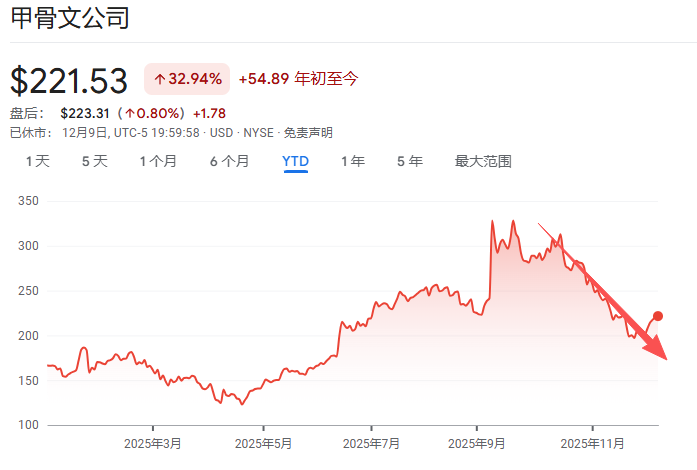
摩根大通认为,Q2财报的核心在于将"惊人的"长期RPO转化为近中期收入和现金流。备受关注的OpenAI协议一旦完全启动,每年可能贡献 数百亿美元收入。预计Q&A环节将聚焦于最大AI合约的集中度和持续时间,特别是有多少RPO余额与少数交易对手相关,相对于更广泛的AI 实验室、超大规模云服务商和大型企业客户群体。 在从年内高点暴跌40%后,甲骨文股价有望迎来反弹吗?摩根大通认为,前提是公司能在今夜发布的第二财季财报中展示稳健的云业务增 长,并对其庞大的剩余履约义务(RPO)余额提供更清晰的披露。 财报关键看点:连接长期合约与短期现金流 报告指出,Q2财报的核心在于将"惊人的"长期RPO转化为近中期收入和现金流。Q1业绩显示,甲骨文可以同时错过近期收入预期但交付非 凡的订单量,RPO同比增长数百个百分点,得益于数十亿美元的AI基础设施合约,包括 备受关注的OpenAI协议。该协议一旦完全启动,每 年可能贡献数百亿美元收入。 摩根大通预计Q&A环节将聚焦于最大AI合约的集中度和持续时间 ,特别是有多少RPO余额与少数交易对手相关,相对于更广泛的AI实验 室、超大规模云服务商和大型企业客户群体。 甲骨文已表示,大型AI ...

股价暴跌40%后或迎反弹?摩根大通:甲骨文Q2财报的关键在于“干净的”云收入增长+“清晰的”RPO披露
Hua Er Jie Jian Wen· 2025-12-10 08:11
Core Viewpoint - Oracle's stock price has dropped 40% from its peak this year, and a rebound is contingent on the company's ability to demonstrate robust cloud business growth and provide clearer disclosures regarding its substantial remaining performance obligations (RPO) in the upcoming Q2 earnings report [1][3]. Group 1: Stock Performance and Market Sentiment - Oracle's stock fell 40% from September 10 to November 25, while the S&P 500 rose approximately 4%, driven by investor reassessment of the OpenAI project relative to Google's Gemini and concerns over the value of concentrated RPO balances [1]. - Analyst Mark Murphy believes that investor sentiment has swung too rapidly in both directions, lacking space for reasonable assessments of intermediate outcomes [3]. Group 2: Earnings Report Highlights - The key focus of the Q2 earnings report will be on converting significant long-term RPO into near-term revenue and cash flow, with Q1 performance showing a remarkable order volume despite missing recent revenue expectations [4]. - Oracle's RPO grew by hundreds of percentage points, attributed to multi-billion dollar AI infrastructure contracts, including the notable OpenAI agreement, which could contribute hundreds of billions in annual revenue once fully operational [4]. Group 3: Future Growth Projections - Oracle's ambitious 2030 target includes total revenue of approximately $225 billion, with OCI revenue exceeding $160 billion, alongside a medium double-digit revenue growth expectation for the 2026 bridging plan [5][6]. - In the last month of Q2, Oracle signed an additional $65 billion in RPO with various major clients, pushing total RPO above $500 billion, which alleviates concentration concerns and supports Oracle's positioning as a leading AI infrastructure provider [6]. Group 4: Capital Expenditure and Cash Flow Challenges - Oracle plans to significantly increase capital expenditures to about $35 billion annually to support OCI and AI infrastructure development, which will pressure free cash flow relative to investor expectations [7]. - The success of the AI infrastructure strategy presents substantial revenue opportunities but also imposes heavier near-term balance sheet and cash flow burdens, leading to a reassessment of stock price based on the scale of obligations and customer concentration risks [7]. - Morgan Stanley maintains a "neutral" rating on Oracle with a target price of $270, reflecting a higher long-term trajectory for OCI, partially offset by pressured free cash flow forecasts [7].