Oracle Cloud Infrastructure(OCI)

Search documents
捡剩饭、傍大款,甲骨文拿命搏生存?
3 6 Ke· 2026-01-23 01:51
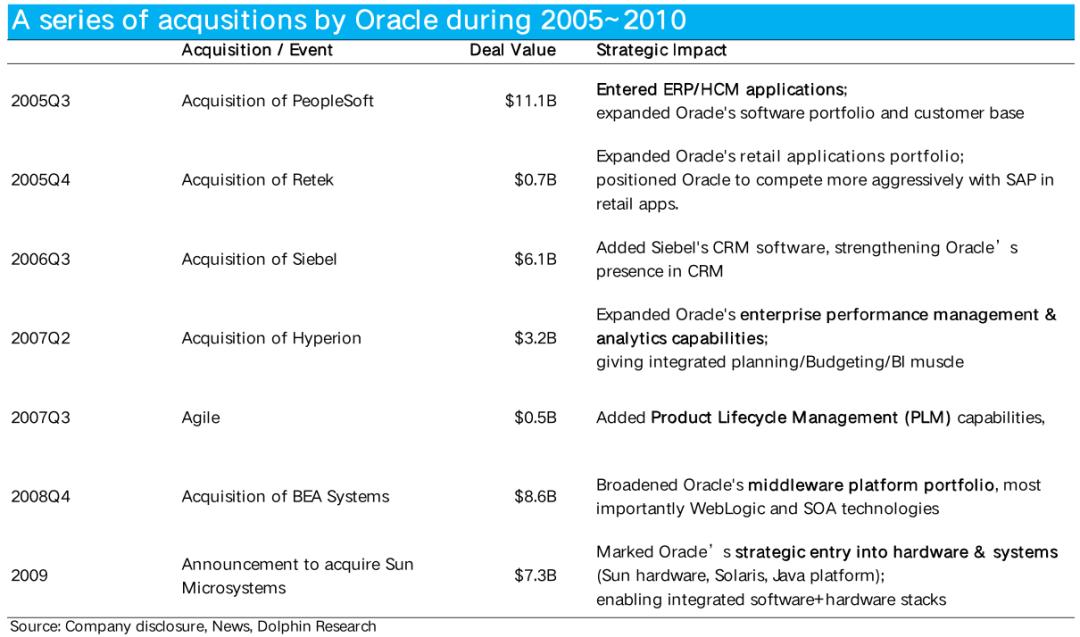
Company History - Oracle has evolved from a traditional database management company established over 50 years ago to a significant player in the cloud services industry, particularly in AI cloud services [1][5]. - The company initially focused on relational database management systems and gradually diversified into enterprise management software, including ERP, CRM, and HCM solutions through both internal development and strategic acquisitions [2][4]. - After acquiring Sun Microsystems, Oracle expanded into hardware and operating systems, integrating its software and hardware offerings into comprehensive solutions [3][5]. Business Structure and Revenue Composition - Oracle's business segments are now classified into four main categories: Cloud, Software, Hardware, and Services, with the cloud segment being the most critical for revenue growth [10][11]. - The cloud business is further divided into IaaS (Oracle Cloud Infrastructure - OCI) and SaaS (Oracle Cloud Applications - OCA), with OCI rapidly gaining importance and surpassing OCA in revenue contribution [12][13]. - Traditional software and hardware segments have seen stagnant or declining growth, with software revenue dropping from over 60% to less than 40% of total revenue [14][15]. Key Trigger Point - $300 Billion Order - Oracle announced a staggering $300 billion in new demand contracts, equivalent to 5.8 times its total revenue for the fiscal year 2025, indicating a significant growth trajectory [25][26]. - The revenue guidance for fiscal years 2026 to 2030 suggests a compound annual growth rate of 31%, with OCI expected to grow from approximately $10 billion in 2025 to $166 billion by 2030 [25][26]. - The majority of this new order is believed to come from OpenAI, with a substantial annual contract value of around $60 billion starting from fiscal year 2027 [31][32]. Partnership with OpenAI - Oracle has replaced Microsoft as OpenAI's primary cloud service partner, which has led to significant revenue opportunities but also comes with risks associated with customer concentration [34][36]. - The partnership allows Oracle to leverage OpenAI's technology while providing substantial cloud computing resources, although it raises concerns about the quality and sustainability of the business [36][39]. - Oracle's reliance on a single client for a large portion of its revenue could pose risks, similar to those faced by other cloud service providers with concentrated customer bases [37][39]. Summary of Opportunities and Risks - Oracle's future growth heavily depends on the success of its OCI business, which is critical for the company's survival as traditional business segments decline [45]. - The company faces challenges related to high capital expenditures and debt levels, which could strain its financial health if not managed properly [39][40]. - While the partnership with OpenAI presents significant revenue potential, it also carries risks of over-reliance on a single client and the possibility of unfulfilled contracts [46].


寻找A股甲骨文
36氪· 2025-09-18 00:19
Core Viewpoint - Oracle's recent financial report revealed a significant increase in remaining performance obligations (RPO) to $455 billion, a 359% year-over-year growth, primarily driven by a rumored $300 billion cloud computing contract with OpenAI [4][5]. Group 1: Oracle's Cloud Business - Oracle Cloud Infrastructure (OCI) was launched in 2016 and targets high-performance computing (HPC) and large-scale AI workloads, differentiating itself through high cost-performance, full-stack services, and a relatively independent position among cloud providers [8][9][10]. - OCI's architecture innovations, such as "Off-box Network Virtualization," enhance hardware performance and security, while its flat data center network architecture reduces latency and costs compared to competitors [8]. - OCI's full-stack service offerings include IaaS, PaaS, and SaaS, and it promotes a multi-cloud strategy, allowing clients to deploy services across major platforms like Microsoft Azure and Amazon AWS [9]. Group 2: Market Comparison - No domestic companies fully match Oracle's model, as firms like Yonyou and Kingdee lack significant investments in cloud infrastructure and IaaS capabilities [12][18]. - The Chinese IaaS market is dominated by major players such as Alibaba, Tencent, Huawei, and telecom operators, but these companies have weaker neutrality compared to Oracle [13][17]. - Independent cloud service providers may find opportunities as AI application developers diversify their cloud service providers, but they still face challenges due to their limited business structures and cash flow stability [18]. Group 3: Investment Opportunities - The "sell shovel" approach, focusing on upstream suppliers of cloud infrastructure, is highlighted as a promising investment avenue, particularly in data center hardware [20]. - Investment in AI servers, network devices, and storage equipment is projected to dominate data center expenditures, with AI servers accounting for 60%-80% of the main equipment investment [22]. - The power supply system, cooling systems, and management systems are critical components of data centers, with a growing trend towards liquid cooling solutions expected to dominate the market by 2026 [25].

甲骨文:“一树梨花压海棠”
虎嗅APP· 2025-09-17 14:09
Core Viewpoint - Oracle has transformed from a traditional database company to a major player in AI, positioning itself as a potential winner in the future TikTok equity transaction [5][6]. Group 1: Oracle's Market Position and Ambitions - Oracle's stock price rose by 3.41% on September 15, following its inclusion in the "Top Ten Giants" of the U.S. stock market by Motley Fool, alongside companies like Nvidia and Microsoft [5]. - CEO Safra Catz stated that Oracle aims to become the largest cloud application and infrastructure company globally [5]. - Oracle is set to host TikTok's U.S. user data, which will enhance its cloud computing market position [5]. Group 2: Financial Performance and Projections - In the first quarter of fiscal year 2026, Oracle reported total revenue of $14.9 billion, an 11% year-over-year increase, while net profit decreased by 4% [10]. - The company's remaining performance obligations (RPO) reached $455 billion, a staggering 359% increase year-over-year, significantly exceeding market expectations [10][11]. - Oracle's cloud infrastructure revenue is projected to grow by 77% this fiscal year, reaching $18 billion, with ambitious revenue targets for the next four years [10]. Group 3: Strategic Partnerships and Investments - OpenAI is expected to purchase up to $300 billion worth of computing power from Oracle over the next five years as part of the "Star Gate" AI infrastructure investment plan [11][12]. - The "Star Gate" initiative aims to invest $500 billion in building data centers in the U.S. over four years, with Oracle providing high-performance chips [12]. Group 4: Challenges and Market Reactions - Despite the optimistic projections, Oracle's stock price fell over 10% in the following days, indicating market skepticism about the sustainability of its growth [14]. - Concerns have been raised regarding Oracle's ability to convert its projected revenues into actual cash flow, especially given the high capital expenditures and negative free cash flow [22][23]. - Analysts have noted that Oracle's profitability may be impacted as its cloud business, which has lower margins compared to its traditional database services, grows [24].

甲骨文,焕发第二春?
Hu Xiu· 2025-09-16 13:20
Group 1 - Oracle has transformed from a traditional database company to a major player in AI, with its stock price rising 3.41% on September 15, 2023, and being included in the "Top Ten Giants" of the U.S. stock market by Motley Fool [1][3][4] - Oracle's CEO Safra Catz has ambitious plans for the cloud computing market, aiming to become one of the largest cloud application and infrastructure companies globally [1][8] - Oracle is expected to manage TikTok's U.S. user data, which will further solidify its position in the cloud computing market [1][2] Group 2 - Reports suggest that Oracle, in partnership with Walmart, may acquire 40% of TikTok's shares, indicating a strategic move to expand its influence [2][5] - Oracle's stock saw a significant increase, with a market cap rise of $224 billion in a single day, marking the largest single-day gain since 1992 [6][8] - The company's revenue for Q1 FY2026 was $14.9 billion, an 11% year-over-year increase, but net profit decreased by 4% [8][9] Group 3 - Oracle's remaining performance obligations (RPO) reached $455 billion, a staggering 359% increase year-over-year, indicating strong future revenue potential [9][10] - The company has signed significant cloud contracts with major AI players like OpenAI, which is expected to purchase up to $300 billion in computing power over five years [10][11] - Oracle's ambitious "Star Gate" project aims to invest $500 billion in building data centers in the U.S., with Oracle providing high-performance chips [11][12] Group 4 - Despite the optimistic outlook, Oracle's market cap has fluctuated, dropping to around $850 billion after briefly surpassing $1 trillion [4][15] - Concerns have been raised about Oracle's capital expenditures, which are projected to reach $35 billion, representing 53% of expected revenue [31][32] - The company's debt-to-equity ratio stands at 427%, significantly higher than competitors like Microsoft, raising questions about its financial stability [32][33] Group 5 - Oracle's profitability in AI infrastructure is under scrutiny, with estimates suggesting a decline in overall operating profit margins from 72% in FY2025 to 54% by FY2029 [36][37] - The company must improve its cost structure and expand its customer base to remain competitive in the AI infrastructure market [37][38] - Larry Ellison's strategic partnerships and political connections are seen as crucial for Oracle's future growth and positioning in the tech landscape [5][38]
甲骨文“一树梨花压海棠”
3 6 Ke· 2025-09-16 11:44
Core Insights - Oracle has transformed from a traditional database company to a major player in AI, with its stock price rising significantly and being included in the "Top Ten Giants" of the U.S. stock market alongside other tech leaders [2][3] - The company aims to become a leader in both cloud applications and cloud infrastructure, with a strong focus on AI-driven growth [2][7] - Oracle's partnership with TikTok for data storage and potential equity stake positions it favorably in the cloud computing market [2][3] Financial Performance - In the first quarter of fiscal year 2026, Oracle reported total revenue of $14.9 billion, an 11% year-over-year increase, but net profit decreased by 4% [7] - The company's remaining performance obligations (RPO) reached $455 billion, a staggering 359% increase year-over-year, indicating strong future revenue potential [8] - Oracle's CEO projected a 77% growth in cloud infrastructure revenue for the current fiscal year, aiming for $18 billion [8] Strategic Partnerships and Investments - Oracle is reportedly part of a consortium with Walmart to acquire 40% of TikTok, which could enhance its market position [3][17] - The "Star Gate" AI infrastructure investment plan, involving a $500 billion investment to build data centers, highlights Oracle's commitment to expanding its AI capabilities [9][10] - OpenAI is expected to purchase up to $300 billion in computing power from Oracle over the next five years, significantly boosting Oracle's revenue outlook [8][11] Market Position and Challenges - Despite the optimistic outlook, Oracle's market capitalization has fluctuated, dropping to around $850 billion after briefly surpassing $1 trillion [4] - High capital expenditures and negative free cash flow raise concerns about the company's financial health and ability to sustain growth [22][23] - Analysts have expressed skepticism about Oracle's ability to convert its ambitious contracts into actual revenue, particularly given OpenAI's current financial challenges [12][13] Competitive Landscape - Oracle's cloud business has grown significantly, now accounting for nearly 50% of total revenue, but its profitability is under scrutiny as margins are lower compared to traditional database services [25] - The company's aggressive investment strategy and reliance on high-profile partnerships reflect its attempt to remain competitive in a rapidly evolving tech landscape [19][26] - Concerns about Oracle's long-term profitability and cash flow sustainability could impact its standing among the top tech giants [24][25]