
PLA材料

Search documents
轻工行业专题:3D打印行业:产业浪潮已至,工业消费双向驱动
GUOTAI HAITONG SECURITIES· 2026-01-28 05:18
Investment Rating - The report rates the light industry sector as "Buy" [1] Core Viewpoints - The report emphasizes that "AI empowerment + affordable pricing" is accelerating the popularization of consumer-grade 3D printing, with domestic equipment manufacturers leading innovation [2] - The 3D printing market is experiencing rapid growth driven by dual demand from industrial and consumer sectors, with a projected global market size of USD 21.9 billion in 2024, expected to reach USD 115 billion by 2034, reflecting a CAGR of 18% [19] - The domestic 3D printing market is projected to reach CNY 41.9 billion in 2024, with a CAGR of 19.42% from 2020 to 2024 [19] Summary by Sections 1. 3D Printing Wave and Dual Drive - 3D printing, or additive manufacturing, offers advantages such as eliminating the need for molds, reducing waste, and lowering inventory [6] - The technology is widely used in aerospace, medical, automotive, and consumer electronics sectors, with significant growth in both industrial and consumer applications [10][14] 2. Polymer Materials and Domestic Substitution Trends - The global 3D printing materials market is expected to reach USD 4.4 billion in 2024, with polymers accounting for a significant share [21] - PLA is the preferred material for consumer-grade 3D printing, with a global market size of USD 1.2 billion in 2024, expected to grow to USD 4.4 billion by 2029 [38] 3. Printing Equipment: Industrial Dominance and Consumer Growth - Industrial-grade 3D printing equipment dominates the market, accounting for 74% of the global market share in 2024, while consumer-grade equipment is rapidly increasing in volume [19] - Domestic manufacturers are leading the consumer-grade segment, with companies like TuoZhu Technology capturing a 29% market share [3.3] 4. Investment Recommendations - The report suggests focusing on upstream raw material companies and printing equipment manufacturers in the consumer-grade sector, recommending companies like JiaLian Technology [3]
麦当劳中国餐食包装绿色再升级,餐厅将陆续启用生物基新包装
Nan Fang Du Shi Bao· 2025-12-24 10:52
Core Viewpoint - McDonald's China is upgrading its food packaging to bio-based materials across over 7,500 restaurants, aiming to reduce petroleum-based plastic usage by more than 5,800 tons annually [1][3]. Group 1: Packaging Upgrade Details - The new packaging will primarily use polylactic acid (PLA) and paper materials, marking a significant shift towards renewable resources [1][3]. - The upgraded packaging features four main characteristics: innovation, environmental friendliness, customer experience, and safety [3]. - The new cold drink cup lid incorporates a "double-arch anti-overflow" structure, enhancing leak-proof performance and has received a design patent [3][5]. Group 2: Environmental Impact - The transition to bio-based materials is expected to significantly reduce the reliance on petroleum-based plastics, aligning with national carbon reduction strategies and sustainable development goals [7][8]. - McDonald's China has a history of reducing plastic usage, having previously implemented paper bags for takeout in 2007 and paper cups for certain products in 2010 [8]. Group 3: Industry Significance - The large-scale application of PLA materials by McDonald's China is seen as a pioneering move in the fast-food industry, contributing to the development of the bio-based materials sector and promoting sustainability in the restaurant industry [7][8]. - Experts highlight that McDonald's efforts in exploring new bio-based materials serve as a valuable example for other chain restaurants in pursuing green packaging solutions [8].


3D 打印行业报告:飞入寻常百姓家,行业扩张奇点时刻降临
Orient Securities· 2025-12-13 07:11
Investment Rating - The report maintains a "Positive" outlook on the 3D printing industry, indicating a low current penetration rate and potential for rapid growth driven by the expansion of demand for customized products and the popularization of the 3D farm model [7]. Core Insights - The 3D printing industry is entering a "singularity moment," where growth is driven not just by technological breakthroughs but also by a paradigm shift in industrial manufacturing and a surge in consumer demand for personalized products. Key drivers include agile manufacturing advantages in industrial-grade 3D printing, the ability to produce complex shapes, and the democratization of technology in consumer-grade 3D printing [9][13]. - The global 3D printing market is projected to reach $21.9 billion in 2024, with a year-on-year growth of 9.31%. In China, the market is expected to reach 42.3 billion yuan, with a significant portion of revenue coming from equipment and services [9][69]. Summary by Sections Investment Suggestions and Targets - The report suggests that the 3D printing industry is poised for rapid growth due to low current penetration rates and expanding demand. Key investment targets include: - Consumer-grade 3D printing service operator Huina Technology (300609, not rated) - Industrial-grade metal printing equipment manufacturers Plater (688333, not rated) and Huashu High-Tech (688433, not rated) - 3D printing material suppliers Jialian Technology (301193, not rated) and Youyan Powder Materials (688456, not rated) [4][21]. Industry Overview - 3D printing technology is characterized by its flexibility and high production capacity, allowing for the creation of complex structures with minimal waste. The technology has evolved from traditional subtractive manufacturing to additive manufacturing, enabling significant design freedom and reduced production cycles [22][24]. - The main materials used in 3D printing include plastics and metal powders, with various technological routes such as FDM, SLS, and SLA being commercially viable [31][36]. Market Outlook - The global 3D printing market is experiencing a golden development period, with both consumer and industrial segments expected to expand. The U.S. leads the market, while the Asia-Pacific region is catching up rapidly. The market for 3D printing materials is projected to grow by 35.21% in 2024, with significant growth also seen in 3D bioprinting and metal additive manufacturing [58][62]. - In China, the 3D printing market is expected to reach 42.3 billion yuan in 2024, with a strong focus on equipment and services, which together account for 76% of the market [69][70]. Key Players - The report highlights the differentiation among leading companies in the industrial-grade 3D printing sector, with notable players like Plater and Huashu High-Tech excelling in metal 3D printing. In the consumer-grade sector, Huina Technology is building a supply-demand ecosystem through a combination of scale farms and offline stores [9][20][21].




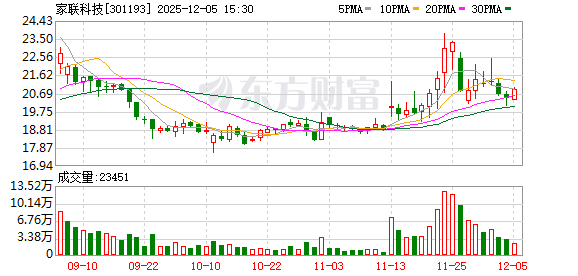
家联科技:公司3D打印耗材使用的原材料系经过公司自主改性技术改性后的PLA材料
Zheng Quan Ri Bao· 2025-12-05 15:49
Core Viewpoint - The company has developed a proprietary modified PLA material for 3D printing consumables, which significantly outperforms standard PLA in various applications [2] Group 1: Company Innovations - The company utilizes self-developed modification technology to enhance the properties of biodegradable materials [2] - The modified PLA material exhibits superior heat resistance, impact resistance, and adaptability for high-speed printing compared to general PLA materials [2] - The innovations allow the company to meet diverse production needs across different product categories, providing reliable, efficient, and environmentally friendly solutions for consumers [2]
消费级3D打印专题
2025-09-11 14:33
Summary of the Conference Call on Consumer-Level 3D Printing Industry Overview - The consumer-level 3D printing industry in China is experiencing strong export growth, with exports to the US accounting for 37% and Germany for 20% in the first half of 2024. The total export volume for the year is projected to reach 3.77 million units, generating revenue of 8.2 billion RMB, a year-on-year increase of 33% [1][5]. - The global market size for consumer-level 3D printing reached $19.8 billion in 2024, with an expected annual growth rate of 18.6% over the next 5 to 6 years [2]. Key Players - **拓竹科技 (Tao Zhu Technology)**: - Became the industry leader within three years by continuously iterating new models, building overseas brand presence, and creating a user co-creation community called Make World, which has over 1 million registered users [1][6]. - Reported revenue of 2.7 billion RMB in 2023, with a projected revenue exceeding 5.5 billion RMB and a net profit nearing 2 billion RMB in 2024 [3][9]. - **创想 3D (Chuangxiang 3D)**: - The second-largest consumer-level printer supplier globally and the largest consumer-level scanner supplier, currently pursuing an IPO in Hong Kong to expand market share [7]. Market Dynamics - The consumer-level 3D printing market is characterized by a shift towards professional applications, with B-end demand accounting for 60% and C-end demand for 40% [1][2]. - The industry benefits from improvements in equipment usability, speed, precision, yield, and cost reductions. For instance, the entry-level product price of Tao Zhu Technology dropped from 3,700 RMB in 2022 to 1,500 RMB in 2024 [4]. Growth Factors - Internal factors driving growth include advancements in technology (AI applications for real-time diagnostics and model generation) and significant cost reductions in both equipment and materials [4]. - External factors include the diversification of application scenarios, such as dental crowns in healthcare, small-batch figurines in cultural creativity, and jewelry supports in the jewelry industry [4]. Competitive Landscape - Domestic brands like Tao Zhu Technology and Chuangxiang 3D are rapidly increasing their global influence, surpassing established brands like Prusa in search volume on platforms like Google and Amazon [3][8]. - Tao Zhu Technology has maintained a market share exceeding 50% for five consecutive quarters, with a projected sales growth of 627% for the 2025 618 sales event [9]. Investment Opportunities - The upstream supply chain presents opportunities in consumables, particularly PLA materials, which are widely used and have strong repurchase attributes [13]. - Key components in the midstream supply chain include laser modules, motors, and scanners, with companies like 海正生材 (Haizheng Biomaterials) and 嘉联科技 (Jialian Technology) showing potential in PLA production [14][15][16]. Conclusion - The consumer-level 3D printing industry is poised for significant growth, driven by technological advancements, cost reductions, and expanding application scenarios. Domestic players are increasingly competitive on a global scale, presenting various investment opportunities across the supply chain.