PYUSD稳定币

Search documents
这家互联网巨头“悄悄”推出稳定币支付
Xin Lang Cai Jing· 2026-01-04 01:29
Core Viewpoint - Trip.com has launched a stablecoin payment feature for global users, supporting USDT and USDC, aimed at enhancing its overseas travel business and expanding its financial ecosystem [1][2][6]. Group 1: Stablecoin Payment Launch - Trip.com has quietly integrated stablecoin payments without a formal announcement, allowing users to pay for hotel bookings and flights using USDT and USDC across multiple blockchains including Ethereum, Tron, Polygon, and Solana [2][6]. - The payment process is simplified, requiring only a name and email for hotel reservations, thus reducing barriers for users without traditional banking access [1][6]. Group 2: Strategic Intent and Market Opportunity - The introduction of stablecoin payments is part of Trip.com's long-term financial strategy, which began with its 2013 alignment with American Express and continued with acquiring a payment license in 2020 [2][6]. - Over 80% of the global population lacks international credit cards or bank accounts, creating a significant market opportunity for seamless cross-border payments, particularly in emerging markets like Southeast Asia, Latin America, and Africa [2][6]. Group 3: Regulatory Challenges - Analysts note that while stablecoin payments provide a pathway for users to bypass traditional financial barriers, they face regulatory challenges including anti-money laundering, consumer protection, and asset reserve transparency [3][7]. - Trip.com has previously faced scrutiny over personal information handling and credit collection practices, highlighting the need for robust risk management as it innovates in payment solutions [3][7]. Group 4: Competitive Landscape - Trip.com is not alone in exploring stablecoin payments; major companies like PayPal, Meta, Ant Group, and Bank of America have also ventured into this space [4][8]. - PayPal has launched its own PYUSD stablecoin, while Stripe and Shopify have developed solutions to facilitate stablecoin transactions for merchants, indicating a growing trend in the industry [4][8].



外卖平台将取消超时罚款,韩国股市创历史新高 | 财经日日评
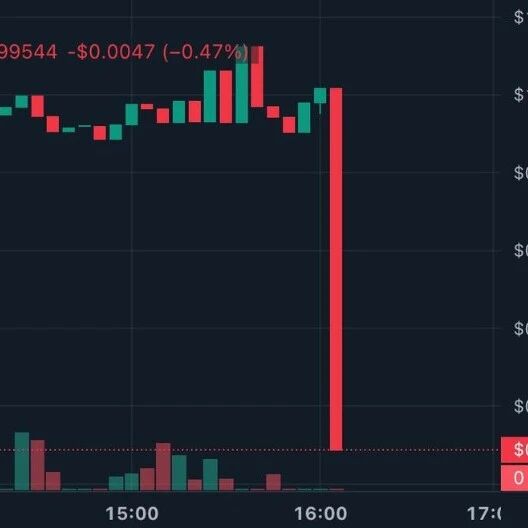
吴晓波频道· 2025-10-17 03:36
Financial Data Summary - In September, China's new social financing amounted to 3.53 trillion yuan, with new RMB loans of 1.29 trillion yuan and new RMB deposits of 2.21 trillion yuan [2] - The cumulative increase in social financing for the first three quarters of 2025 reached 30.09 trillion yuan, an increase of 4.42 trillion yuan year-on-year [2] - The M2-M1 spread narrowed significantly to 1.2% at the end of September, indicating a shift of deposits from time deposits to demand deposits for investment or consumption [3] U.S. Federal Reserve Insights - The probability of a rate cut by the Federal Reserve in October has risen to 97.3%, with expectations for a 25 basis point cut [4] - Recent comments from Fed officials lean towards a dovish stance, focusing on employment risks rather than inflation changes [5] - Fed Chair Powell indicated a potential halt in the reduction of assets, suggesting a strategy of maintaining slight rate cuts while adjusting market liquidity through balance sheet management [6] Delivery Industry Developments - Major food delivery platforms, including JD.com, Meituan, and Ele.me, are moving to eliminate penalties for delivery delays, shifting to a service score management system [7][8] - This change aims to reduce pressure on delivery personnel and improve their working conditions, marking a shift towards a more humane and regulated industry [8] AI Infrastructure Investment - An investment group led by BlackRock and NVIDIA announced a $40 billion acquisition of Aligned data centers, which are crucial for AI infrastructure [9] - The deal is expected to be the largest data center transaction in history, highlighting the growing demand for AI-related infrastructure [9][10] Payment Industry Regulation - The People's Bank of China has canceled 11 payment licenses this year, indicating a tightening regulatory environment in the payment sector [11][12] - The number of licensed third-party payment institutions has decreased to 164, with a focus on eliminating smaller, less compliant players [12] Cryptocurrency Market Incident - Paxos mistakenly minted 300 trillion PYUSD stablecoins, marking the largest token burn in cryptocurrency history, although it did not result in actual financial loss [13] - This incident underscores the regulatory challenges and risks associated with stablecoin issuance and the potential for market disruption [14] South Korean Stock Market Performance - The KOSPI index in South Korea has surpassed 3700 points, marking a 56% increase year-to-date, driven by foreign investment and strong performances from major companies [15] - The market's growth is attributed to various factors, including AI infrastructure development and government measures to enhance market transparency [15][16] Market Trends and Outlook - The current market environment is characterized by a lack of clear direction, with many growth sectors experiencing volatility and a need for new catalysts to break out of the current trading range [17][18]



300万亿美元!史上最大“乌龙指”
美股IPO· 2025-10-16 04:17
Core Viewpoint - The incident involving Paxos, which resulted in the minting and subsequent destruction of 300 trillion PYUSD stablecoins, highlights a significant operational error in the cryptocurrency market, leading to the largest token destruction in history [1][10]. Group 1: Incident Details - On October 15, Paxos minted 300 trillion PYUSD stablecoins, which are pegged to the US dollar at a 1:1 ratio, and then sent all of them to an inaccessible wallet for destruction within 22 minutes [2][4]. - The total value of the destroyed tokens is approximately 300 trillion USD, exceeding the combined GDP of all countries globally by more than double, according to IMF data [3][4]. Group 2: Market Impact - Following the incident, the decentralized lending protocol Aave temporarily froze PYUSD trading due to the unexpected high-volume transaction [4]. - Despite the incident, PYUSD maintained its dollar peg, with only a brief price drop of about 0.5% [6]. Group 3: Market Position - Currently, PYUSD has a market capitalization exceeding 2.3 billion USD, ranking sixth in the stablecoin market, behind Tether's USDt, USDC, Ethena USDe, Dai, and World Liberty Financial USD [8]. Group 4: Historical Context - This event set a record for the largest token destruction in cryptocurrency history, surpassing previous significant destruction events, such as OKX sending over 65 million OKB to an inaccessible address and the Bonk meme coin project destroying approximately 1.7 trillion BONK [11].