
Pacifico

Search documents
The Zacks Analyst Blog Duke Energy, Entergy, Constellation Brands, Coca-Cola and Johnson & Johnson
ZACKS· 2026-03-31 09:40
Core Viewpoint - The article emphasizes the importance of investing in defensive stocks amid recent market volatility, highlighting five specific stocks that are well-positioned for stability and growth in uncertain economic conditions [2][4][5]. Group 1: Market Conditions - U.S. stock markets experienced significant volatility in March due to concerns over the sustainability of the AI trade, ongoing geopolitical tensions, rising crude oil and gas prices, inflation expectations, and uncertainty regarding the Federal Reserve's interest rate policy [2]. - The Nasdaq Composite and Dow are in correction territory, trading below 10% from recent highs, while the S&P 500 has recorded its fifth consecutive weekly decline, trading below 8.7% from its recent peak [3]. Group 2: Stock Selection Criteria - Investment in defensive stocks is recommended to safeguard portfolio returns in the near term, focusing on sectors such as utilities, consumer staples, and healthcare [4]. - Stocks selected should be low-beta (beta >0<1) and regularly pay dividends [4]. Group 3: Featured Stocks - **Duke Energy Corp. (DUK)**: Plans to invest $103 billion from 2026-2030 to enhance its grid and expand renewable energy initiatives. DUK has a revenue growth rate of 3.3% and earnings growth rate of 6.3% for the current year, with a dividend yield of 3.28% and a beta of 0.50 [6][10][11]. - **Entergy Corp. (ETR)**: Aims to invest $41 billion from 2026-2029 for infrastructure upgrades and renewable expansion. ETR has a revenue growth rate of 6.8% and earnings growth rate of 12.8% for the current year, with a dividend yield of 2.33% and a beta of 0.64 [12][13]. - **Constellation Brands Inc. (STZ)**: Successfully transitioning to premium brands, with a revenue growth rate of 1.5% and earnings growth rate of 6.5% for the current year, alongside a dividend yield of 2.69% and a beta of 0.44 [14][16]. - **The Coca-Cola Co. (KO)**: Benefits from strong organic revenue growth and effective pricing strategies, with a revenue growth rate of 3.2% and earnings growth rate of 8% for the current year, a dividend yield of 2.80% and a beta of 0.35 [17][19]. - **Johnson & Johnson (JNJ)**: The Innovative Medicine unit shows growth despite exclusivity loss, with a revenue growth rate of 6.6% and earnings growth rate of 7% for the current year, a dividend yield of 2.16% and a beta of 0.34 [20][22].



Diageo vs. Constellation Brands vs. Ambev: Three Ways to Bet on the Global Drinks Trade
247Wallst· 2026-03-16 11:16
Core Insights - Diageo, Constellation Brands, and Ambev present distinct investment opportunities in the global drinks trade, with varying financial performances and strategic focuses [4][16]. Diageo - Diageo reported H1 FY2026 net sales of $10.46 billion, a decrease of 4.0% year-over-year, primarily due to a 7.4% decline in North America and a 13.0% drop in Asia Pacific [7][4]. - The company cut its dividend to address a leverage ratio of 3.4x, which exceeds its target range of 2.5-3.0x [7][4]. - Tequila brands, particularly Don Julio and Casamigos, experienced significant declines, with organic sales dropping 20.9% and 30.9% respectively [7][4]. - New CEO Sir Dave Lewis sees opportunities for enhancing competitiveness and broadening the portfolio, although the stock has fallen 26.48% over the past year [8][4]. Constellation Brands - Constellation's revenue for the quarter was $2.22 billion, down 9.8% year-over-year, but the organic decline was only about 2% after accounting for divestitures [9][4]. - The beer segment maintained a strong operating margin of 38.0%, despite facing aluminum tariff pressures [9][4]. - Growth drivers include Pacifico and Victoria, with depletions increasing over 15% and 13% respectively, while Modelo Especial remains the top-selling beer brand in the U.S. [9][4]. - The company is focusing on expanding its Mexican beer imports while managing tariff challenges [2][4]. Ambev - Ambev achieved a full-year 2025 EBITDA margin of 33.4%, marking a 50 basis point improvement and the third consecutive year of margin expansion [10][4]. - The company reported high-single-digit growth in premium and super-premium beer volumes, alongside a 70% growth in GMV for its BEES B2B platform [10][4]. - Ambev's digital distribution infrastructure is seen as a competitive advantage in the Latin American market [2][4]. - The company is trading at a forward P/E of around 14x with a dividend yield near 11%, indicating strong recent profit growth [16][4]. Comparative Analysis - Diageo's core bet is on the recovery of premium spirits, while Constellation focuses on Mexican beer imports, and Ambev emphasizes Latin American beer and digital distribution [11][4]. - Key risks for Diageo include balance sheet issues and U.S. consumer trends, for Constellation, tariff impacts on imports, and for Ambev, foreign exchange risks and inflation in Argentina [11][4]. - Bright spots for Diageo include growth in Guinness and ready-to-drink (RTD) products, while Constellation benefits from Pacifico and Victoria, and Ambev sees premium beer volume growth and BEES platform success [11][4].



Is Constellation Brands' Focus on Core Brands the Key to Success?
ZACKS· 2026-03-11 17:56
Core Insights - Constellation Brands, Inc. (STZ) is a leading player in the beer, wine, and spirits market, focusing on premiumization, brand strength, and disciplined portfolio management [1][5] - The company has a strong portfolio of consumer-driven brands, including Modelo Especial, Corona Extra, and Robert Mondavi Winery, positioning it well to capture growth opportunities [1][4] Strategy and Growth Drivers - The company's strategy centers on high-growth premium brands to strengthen market share, improve margins, and drive sustainable growth [2][5] - Key growth drivers include high-end Power Brands like The Prisoner Brand Family and Kim Crawford, with the beer segment benefiting from premiumization trends [3][9] - Constellation Brands is investing in capacity expansion in Mexico to support its brand growth [3][9] Market Position and Performance - The company emphasizes high-margin growth categories in the beverage alcohol industry, leveraging direct-to-consumer platforms and a strong global presence [4] - STZ's beer brands, including Modelo, Corona, and Pacifico, reinforce its leadership in the U.S. beer market [4][9] Financial Performance and Estimates - Constellation Brands' shares have gained 7.6% over the past six months, compared to the industry's growth of 9.7% [6] - The company trades at a forward price-to-earnings ratio of 12.09X, below the industry average of 15.17X [7] - The Zacks Consensus Estimate for STZ's fiscal 2026 earnings indicates a year-over-year decline of 15.5%, while fiscal 2027 shows an expected growth of 6.5% [10]

Sin Stock Investing: Are There Opportunities Beyond Ethical Debate?
ZACKS· 2026-03-05 17:00
Core Insights - Sin stocks represent shares in industries considered socially controversial, such as alcohol, tobacco, gambling, and cannabis, yet they generate steady demand and strong cash flows, making them a notable segment of the equity market [1] Investment Characteristics - Sin stock investing resembles traditional stock investing, where investors seek returns through capital appreciation and dividends from companies with loyal consumer bases, leading to stable sales even during economic downturns [2] - These industries are characterized by defensive characteristics, with consistent consumer demand for products like alcohol and cigarettes, translating into stable revenue streams and attractive dividend payouts [4] - High profitability and dividend potential are key attractions for investors, as these companies often enjoy strong pricing power and predictable cash flows, allowing significant returns to shareholders [5] ESG Considerations - The growing focus on ESG investing has led many institutional funds to avoid sin stocks, which can result in these stocks being undervalued, creating opportunities for investors prioritizing financial returns over ethical considerations [6] Sector Trends - The sin stock sectors are evolving due to changing consumer behavior, technology, and regulations, with trends such as product innovation in tobacco, including a shift towards reduced-risk products like vaping and heated tobacco [7] - Premiumization in the alcohol industry is notable, with consumers increasingly opting for premium and craft beverages, as well as low and no-alcohol options, allowing companies to maintain strong pricing power [8] - The digital transformation of gambling is reshaping the sector, with online betting and mobile gaming platforms expanding the market and attracting younger consumers [9] - Regulatory changes and higher "sin taxes" continue to influence profitability and stock performance, as governments impose higher taxes to discourage consumption while raising revenues [10] Company Highlights - Monarch Casino & Resort (MCRI) is positioned as a solid long-term investment due to its premium regional resort strategy, focusing on enhancing guest experiences and operational efficiency [12][13] - Philip Morris International (PM) is transforming towards a smoke-free future, supported by strong brands and a focus on reduced-risk products, positioning the company for long-term growth [14][15] - Constellation Brands, Inc. (STZ) holds a dominant position in the U.S. high-end beer category, emphasizing pricing discipline and operational flexibility to sustain earnings and shareholder returns [16][17]



Is Constellation Brands' Premiumization Strategy Paying Off?
ZACKS· 2026-02-19 15:11
Core Insights - Constellation Brands, Inc. (STZ) is benefiting from its premium-focused strategy, achieving an earnings beat in Q3 fiscal 2026 despite revenue pressure, highlighting the resilience of its high-end beer portfolio [1][9] Premiumization Strategy - The company is enhancing premiumization through price-pack architecture, including smaller 7-ounce formats to address affordability, with positive trends for Modelo Oro and Corona Premier following price adjustments [2] - Pacifico's distribution growth and market share gains reflect successful investments in differentiated, premium brands with strong social and on-premise momentum [2] Power Brands Growth - The accelerated growth of Power Brands, including The Prisoner Brand Family, Kim Crawford, and Meiomi, demonstrates the success of the premiumization strategy in the Wine and Spirits business [3] - The company is focusing on innovation and aligning with consumer trends to drive growth in its Power Brands [3] Macroeconomic Challenges - Macroeconomic pressures, particularly among Hispanic consumers, pose challenges for category growth, but the company's focus on distribution expansion, disciplined pricing, and targeted marketing is helping it outperform the broader beer category [4] Overall Performance - Despite near-term volatility, the premiumization strategy is reinforcing brand strength and supporting margins, positioning the company to capture opportunities during key consumption moments like major sporting events [5] Stock Performance - In the past three months, STZ shares have increased by 19.8%, compared to the industry's growth of 21.3%, with a current Zacks Rank of 3 (Hold) [6] - STZ trades at a forward price-to-earnings ratio of 12.63X, lower than the industry average of 16.57X [8] Earnings Estimates - The Zacks Consensus Estimate for STZ's fiscal 2026 earnings indicates a year-over-year decline of 15.5%, while fiscal 2027 earnings are expected to grow by 6.5% [10]
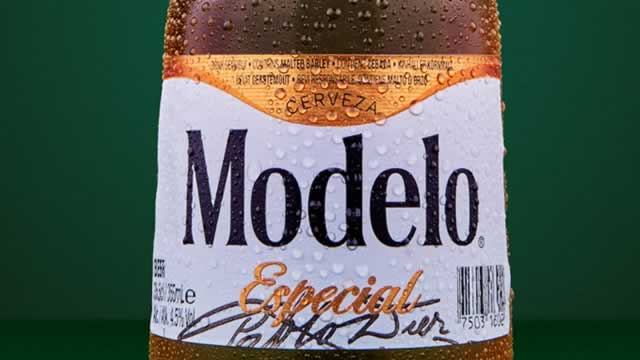
Constellation Brands taps former Suntory exec as CEO
Yahoo Finance· 2026-02-13 11:05
Core Insights - Constellation Brands appointed Nicholas Fink as the new president and CEO, effective April 13, succeeding Bill Newlands, who will remain as a strategic advisor during the transition [1][2][4] Leadership Transition - Bill Newlands has been with Constellation Brands for over a decade and has served as CEO since 2019, credited with reshaping the wine portfolio and growing Modelo to the top-selling beer in the U.S. [2] - Nicholas Fink has a background in the alcohol sector, having spent nine years at Suntory and a decade at Fortune Brands Innovation, bringing experience in leading multi-category businesses [3][4] Strategic Positioning - Fink's appointment is aimed at positioning Constellation for long-term growth in a highly competitive market, leveraging his understanding of consumer demands [4][5] - The company is focusing on enhancing its beer portfolio, particularly with the fast-growing brand Pacifico, which appeals to younger consumers [6][7] Financial Performance - In the most recent quarter ending November 30, Constellation Brands reported total revenue of $2.2 billion, reflecting a 10% decrease from the previous year, although its beer business outperformed the broader industry [7]
Constellation Brands Announces CEO Succession Plan
Globenewswire· 2026-02-12 21:16
Core Viewpoint - Constellation Brands has announced the appointment of Nicholas Fink as the new President and CEO, effective April 13, 2026, succeeding Bill Newlands, who will transition to a strategic advisor role [1][2][3]. Leadership Transition - Nicholas Fink has been a member of Constellation's Board of Directors since 2021 and is expected to bring a diversified leadership experience and a deep understanding of the company's business model [2]. - Bill Newlands will step down as President and CEO on April 13, 2026, after serving in this role since 2019, and will retire from the Board on the same date [1][4]. Fink's Background - Fink has a proven track record in the beverage alcohol industry, having served as CEO at Fortune Brands Innovations since January 2020, where he led the company through the COVID-19 pandemic and accelerated its digital transformation [2]. - His previous experience includes senior leadership roles at Suntory Global Spirits, where he was responsible for the Asia Pacific and South America regions [2]. Company Performance Under Newlands - Under Bill Newlands' leadership, Constellation Brands consistently ranked among the top growth leaders in the large consumer packaged goods (CPG) sector, with Modelo Especial becoming the 1 selling beer in U.S. dollar sales [4]. - Newlands oversaw the reshaping of the Wine & Spirits portfolio, focusing on higher-end, higher-margin brands aligned with consumer trends [4]. Future Outlook - Fink expressed enthusiasm about joining Constellation Brands and aims to build on the company's strong track record of industry leadership, focusing on brand development and innovation to meet evolving consumer needs [3][4].

ABInBev(BUD) - 2025 Q4 - Earnings Call Presentation
2026-02-12 14:00
FY & 4Q25 Results February 12, 2026 Legal disclaimer Certain statements contained in this report that are not statements of historical fact constitute forward-looking statements, notwithstanding that such statements are not specifically identified. In addition, certain statements may be contained in the future filings of the Company with the competent securities regulators or other authorities, in press releases, and in oral and written statements made by or with the approval of the Company that are not sta ...

Constellation Brands (STZ) Up 11.9% Since Last Earnings Report: Can It Continue?
ZACKS· 2026-02-06 17:30
Core Viewpoint - Constellation Brands reported its Q3 fiscal 2026 results, showing a decline in sales and earnings year over year, primarily due to weak consumer demand trends, despite surpassing analyst estimates for both metrics [2][3]. Financial Performance - Comparable earnings per share (EPS) for Q3 were $3.06, down 6% year over year, but exceeded the Zacks Consensus Estimate of $2.65. Reported EPS was $2.88 compared to $3.39 in the same quarter last year [3]. - Net sales fell 10% year over year to $2.22 billion, surpassing the Zacks Consensus Estimate of $2.18 billion. Organic net sales decreased by 2% year over year [3]. Segment Performance - The beer segment's sales decreased by 1% year over year to $2.01 billion, with shipment volumes down 2.2%. Depletions fell 3%, with declines in Modelo Especial (4%), Corona Extra (9%), and Modelo Chelada (2%), partially offset by growth in Pacifico (over 15%) and Victoria (over 13%) [4]. - The wine and spirits segment saw a significant decline of 51% year over year in sales, totaling $213.1 million, impacted by a 70.6% drop in shipment volumes due to divestitures and strategic pricing changes [5]. Margins and Income - Comparable loss for the company was $46.9 million, compared to a loss of $9.2 million in the prior-year quarter, attributed to weak operating income across beer, wine, and spirits [6]. - Operating income for the beer segment decreased by 1% year over year to $763.5 million, with an operating margin increase of 10 basis points to 38% due to favorable pricing [7]. - The wine and spirits segment reported an operating income of $33.7 million, down 65% from the previous year, with an operating margin contraction to 15.8% from 22.1% [8]. Financial Position - As of November 30, 2025, cash and cash equivalents stood at $152.4 million, long-term debt was $10.3 billion, and total shareholders' equity was $7.7 billion. The company generated an operating cash flow of $2.1 billion and an adjusted free cash flow of $1.5 billion in the first nine months of fiscal 2026 [9]. Future Expectations - Management projects an enterprise organic net sales decrease of 4-6% for fiscal 2026, with beer segment net sales expected to decline by 2-4% and wine and spirits segment net sales anticipated to drop by 17-20% [12]. - The company expects a reported operating income increase of 657-677% for fiscal 2026, while comparable operating income is projected to decline by 9-11% [13]. - Comparable EPS guidance for fiscal 2026 is set at $11.30-$11.60, with fiscal 2026 EPS expected to be $9.72-$10.02 [14]. Market Sentiment - There has been a downward trend in estimates, with the consensus estimate shifting down by 13.46% recently [16]. - Constellation Brands holds a Zacks Rank 3 (Hold), indicating expectations for an in-line return from the stock in the coming months [18].
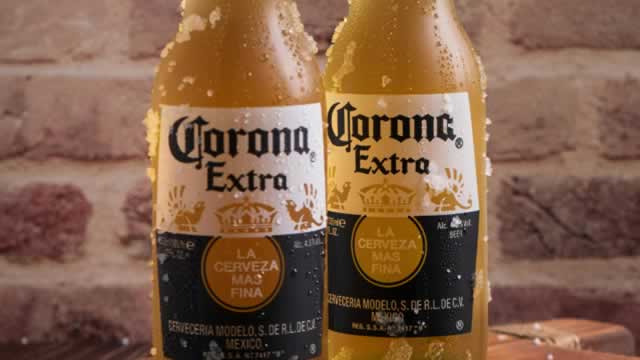
Aristotle Capital Value Equity Strategy Sold Constellation Brands (STZ) Despite Steady Business Rationale
Yahoo Finance· 2026-02-04 12:59
Core Insights - The U.S. equity markets reached new all-time highs in Q4 2025, with the S&P 500 Index increasing by 2.66% and the Bloomberg U.S. Aggregate Bond Index rising by 1.10% [1] - Value stocks outperformed growth stocks during this period, and the U.S. economy demonstrated resilience [1] - Artificial intelligence emerged as a significant theme, with over 300 S&P 500 companies mentioning "AI" in earnings calls, positively impacting mega-cap tech stocks [1] - Concerns were raised regarding AI revenue circularity, capital spending, and long-term investment returns [1] - The Composite returned 1.45% pure gross of fees (0.95% net of fees), underperforming the Russell 1000 Value Index's 3.8% gain and the S&P 500 Index's 2.66% gain [1] Company Analysis: Constellation Brands, Inc. (NYSE:STZ) - Constellation Brands, Inc. is a leading U.S.-based manufacturer of beer, wine, and spirits, with a market capitalization of $27.963 billion [2] - The stock closed at $160.62 per share on February 3, 2026, delivering a 14.33% return in the past month, but down 7.08% over the past twelve months [2] - The company was first invested in during Q4 2021, benefiting from its dominant share in the fast-growing Mexican imports segment of U.S. beer, supported by brands like Modelo, Corona, and Pacifico [3] - Despite the long-term strategic rationale remaining intact, the expansion of shelf space and distribution progressed more slowly than expected, and challenges in the Wine & Spirits segment delayed margin recovery [3] - As a result, the company was identified as the most appropriate candidate for sale to fund a new investment in Q1 2026 [3]