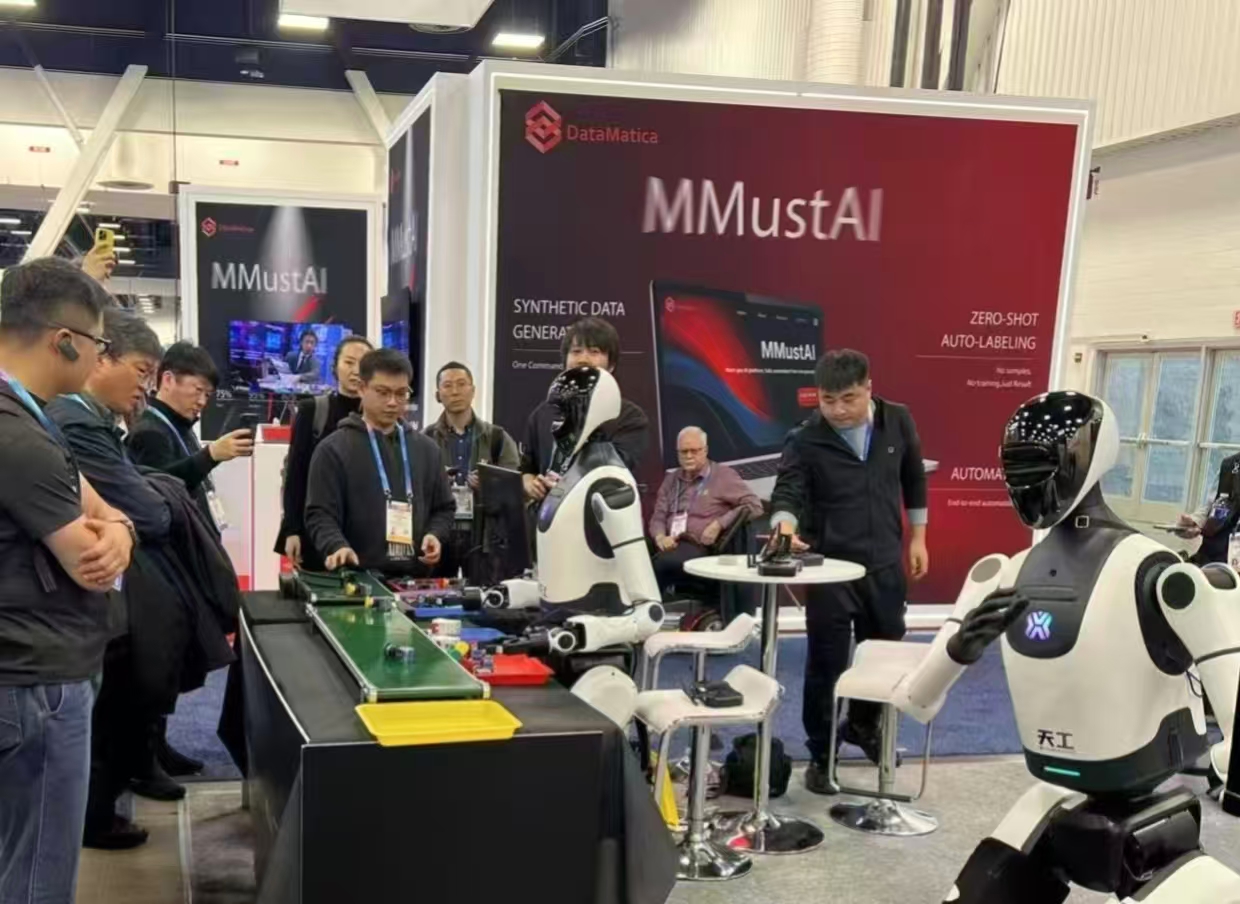
RealBOT轮式折叠机器人

Search documents
北京卫视春晚聚焦机器人走向“日常好用”
Xin Lang Cai Jing· 2026-02-19 17:12
Core Viewpoint - The 2026 Spring Festival Gala showcased a panoramic display of China's robotics industry, emphasizing the integration of advanced technology with traditional cultural elements, focusing on the practical applications of robots in daily life rather than just their movement capabilities [1][14]. Group 1: Industry Trends - The robotics industry is shifting from showcasing technical prowess to demonstrating practical applications, with a focus on how robots can be effectively utilized in everyday scenarios [1][14]. - The year 2026 is seen as a pivotal point for the industry, marking a transition from early-stage development to commercial viability, with competition now centered on achieving business closures rather than just technological advancements [14][15]. Group 2: Company Highlights - Ruiman, as a systems-level infrastructure platform company, collaborated with various robotics firms to integrate technology with cultural elements, showcasing robots performing household tasks like making dumplings during the Beijing TV Spring Festival Gala [3][6]. - Ruiman's RealBOT robot demonstrated advanced capabilities by performing complex tasks such as opening a refrigerator, pouring liquids, and mixing ingredients, highlighting the practical value of robots in home settings [6][8]. - The company has achieved significant production milestones, with an annual output capacity of over 100,000 integrated joint modules and an average operational time of 50,000 hours, indicating a leap in reliability and durability of robotic hardware [12][14]. Group 3: Technological Advancements - The integration of hardware, data, and remote operation networks has established a robust foundation for the embodied intelligence ecosystem, enabling real-time remote control capabilities and enhancing the operational efficiency of robots [12][15]. - Ruiman's training center has accumulated extensive real-world data, supporting the development of versatile action models for robots, which is crucial for their deployment in various industries [12][15]. Group 4: Market Outlook - The global market for humanoid robots is expected to see significant growth, with leading manufacturers projected to deliver thousands of units and consumer-grade robots anticipated to exceed sales of 100,000 units in 2026 [14]. - Ruiman's technology and products are already serving over 4,000 enterprise users globally, positioning the company to contribute to the large-scale commercialization of embodied intelligence [14].


2026春晚机器人哪家强?硬核技术对决引热议
Xin Lang Cai Jing· 2026-02-18 17:17
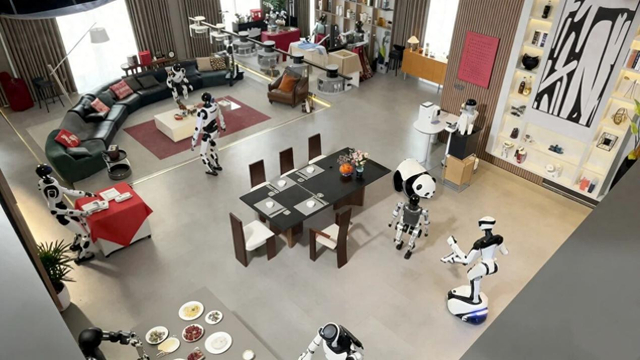
Group 1 - The core viewpoint of the articles highlights the transition of robotics in China from mere performance to practical applications, marking a significant step in the embodied intelligence industry [1][7] - The national Spring Festival Gala showcased a clear division of robotic capabilities, with CCTV focusing on high-performance stunts while local stations like Beijing TV emphasized real-life family scenarios, integrating technology with traditional festivities [3][7] - The participation of companies like Ruiman in the Beijing TV program demonstrated advanced robotic capabilities, such as the RealBOT performing various kitchen tasks, showcasing the potential of robots as household labor [5][7] Group 2 - The humanoid robot industry is accelerating its transition from "moving" to "using," with 2026 seen as a pivotal year for scaling from initial adoption to widespread commercial use [7] - Predictions indicate that leading manufacturers will achieve deliveries in the thousands this year, with consumer-grade bipedal robot sales expected to exceed 100,000 units [7] - The Spring Festival Gala not only validated technological capabilities but also indicated that embodied intelligence is rapidly permeating various industries and households, symbolizing a breakthrough in the sector [7]
揭秘北京卫视春晚机器人幕后,机器人把饺子馅酱油倒多了?实为剧情演绎
Xin Lang Cai Jing· 2026-02-18 04:58
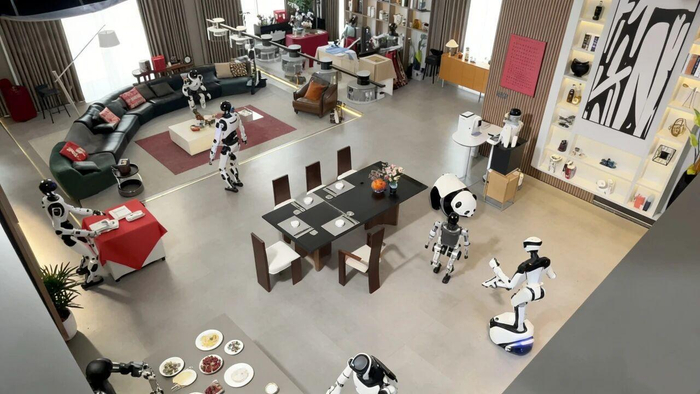
Core Viewpoint - The article highlights the performance of the RealBOT robot at the Beijing Satellite TV Spring Festival Gala, showcasing its advanced capabilities in a cooking demonstration, which combines hardware, data, and remote operation technology [1] Group 1: Robot Performance - The RealBOT robot, referred to as "New Year Chef," demonstrated its ability to open a refrigerator and prepare ingredients by applying a force of 14 kilograms to perform tasks smoothly [1] - The robot's cooking performance was executed through remote operation, emphasizing the integration of technology in real-time cooking scenarios [1] Group 2: Technical Capabilities - The robot's operation is supported by three key technological capabilities: hardware, data, and remote operation network, which collectively enhance its functionality [1] - The RealBOT showcased its reliability with a record of 50,000 hours of fault-free operation, underscoring its robustness in practical applications [1]
从“舞台秀”到“真干活”,北京卫视春晚演绎机器人走向“日常好用”丨新经济观察
Xin Lang Cai Jing· 2026-02-18 04:58
Core Viewpoint - The 2026 Spring Festival Gala showcased a panoramic display of China's robotics industry, emphasizing the practical applications of robots in daily life rather than just their movement capabilities [1][8] Group 1: Robotics Performance - The gala featured various performances, including high-skill actions like flips and martial arts, demonstrating the advanced capabilities of robots [2][3] - Robots showcased practical skills such as making coffee, sewing, and dumpling preparation, highlighting their utility in real-life scenarios [2][3] Group 2: Technological Advancements - The performance by the RealBOT robot illustrated its ability to perform complex kitchen tasks, showcasing its potential for household applications [3][5] - The underlying technology supporting these performances includes a combination of hardware, data, and a remote operation network, which enhances the robots' operational capabilities [5][8] Group 3: Industry Transformation - The event marked a shift in the robotics industry from mere demonstrations to practical applications in homes and factories, indicating a move towards commercial viability [7][8] - The industry is expected to transition from "1-10" to "10-100" in terms of scale, with a focus on achieving commercial closure rather than just technological innovation [8][9] Group 4: Market Outlook - The 2026 Global Embodied Intelligence Industry Investment Report predicts significant deliveries of humanoid robots and a surge in consumer robot sales [9] - Companies like Realman are positioned to support the global supply chain for embodied intelligence with substantial production capacities and a growing database of operational data [9]
睿尔曼亮相北京卫视春晚,化身“新春大厨”让机器人走向“日常好用”
Jin Rong Jie· 2026-02-18 03:21
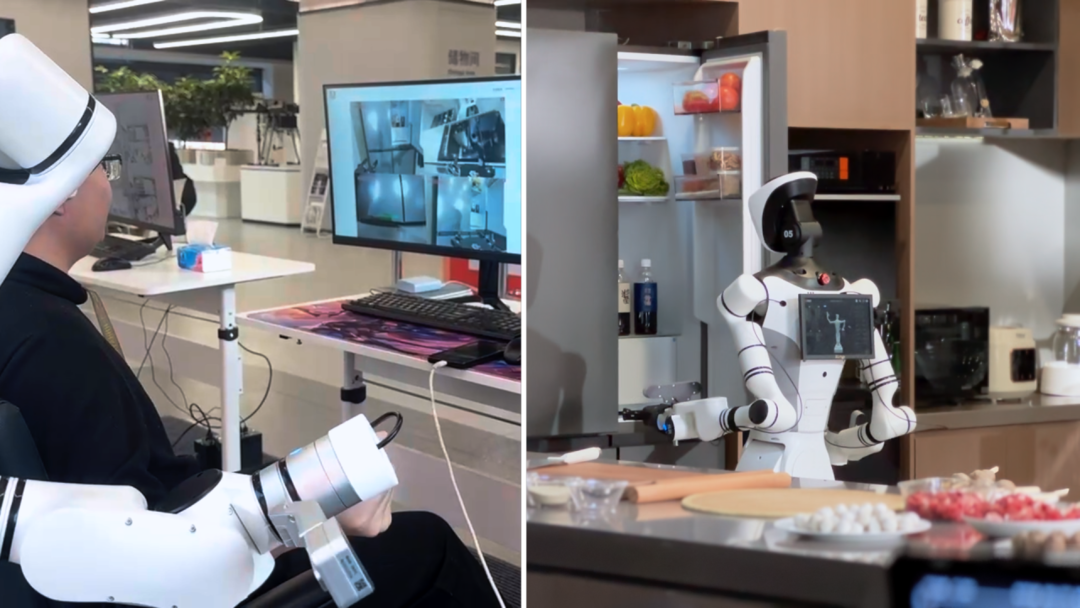
Core Insights - The 2026 Spring Festival Gala showcased a panoramic display of China's robotics industry, highlighting the integration of advanced technology with traditional cultural elements [1] - The focus has shifted from the robots' movement capabilities to their practical applications in daily life, demonstrating their potential to perform useful tasks [1][4] Group 1: Industry Developments - The robotics industry is transitioning from showcasing technical prowess to achieving practical utility in homes and workplaces, marking a significant shift in focus [14][16] - The 2026 Global Embodied Intelligence Industry Investment Report predicts that leading humanoid robot manufacturers will deliver thousands of units this year, with consumer-grade robots expected to exceed 100,000 units in sales [16] Group 2: Company Contributions - Ruiman, as a systems-level infrastructure platform company, collaborated with various robotics firms to demonstrate practical applications of robots in everyday scenarios during the Spring Festival Gala [3][6] - Ruiman's RealBOT robot showcased its capabilities by performing complex kitchen tasks, illustrating the practical value of robots in household settings [8][10] Group 3: Technological Advancements - Ruiman's technology, which includes hardware, data, and a remote operation network, supports the entire ecosystem of embodied intelligence, facilitating the transition from experimental demonstrations to scalable commercial applications [14] - The company has achieved a production capacity of over 100,000 integrated joint modules annually, with an average failure-free time (MTBF) of 50,000 hours, indicating a leap in reliability and durability [14] Group 4: Future Outlook - The robotics industry is expected to accelerate its growth, moving from initial stages to widespread adoption, with a focus on achieving commercial viability [16] - The successful performances at the Spring Festival Gala serve as a catalyst for the industry's development, showcasing the potential for technology to integrate deeply into everyday life [16]
刷屏的机器人,还困在「数据流水线」里
3 6 Ke· 2026-02-11 03:54
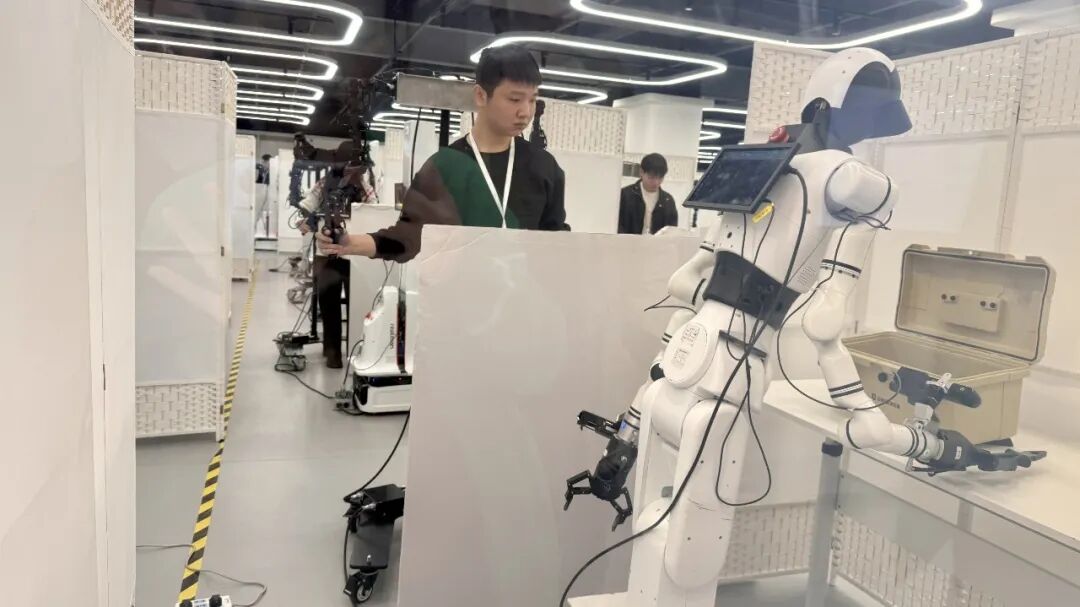
Core Insights - The robotics industry is experiencing a surge in interest and investment, with advanced robotic capabilities moving from experimental stages to practical applications [1][2] - Data collection and training centers are crucial for developing high-quality robotic data, which is essential for enabling robots to operate autonomously in the physical world [2][3] Data Collection and Quality - Data collection is a foundational step in training robots, where each completed action generates structured data that feeds into large models for training [2][4] - High-quality data is defined by its accuracy and relevance, with the industry recognizing the scarcity and value of "real machine data" collected in real-world environments [3][4] - The Beijing humanoid robot data training center exemplifies the focus on collecting high-quality data through controlled training environments [4][7] Data Gaps and Challenges - Despite the rapid establishment of data centers, there is a significant gap in the volume and quality of data required for training robots, with estimates suggesting a need for billions of data points to achieve effective learning [9][10] - The heterogeneity of data collected from different robotic systems poses challenges for data integration and reuse, complicating the training process [10][11] Technological Approaches - Various strategies are being explored to address data challenges, including using standardized robotic models for training, creating heterogeneous datasets, and leveraging human video data for training [11][12] - The concept of "Real2Sim2Real" is introduced, which aims to combine real-world data with simulated environments to enhance data collection efficiency [12][13] Practical Applications and Industry Development - Real-world applications of robotics are being developed, such as in automotive manufacturing, where robots can replace human workers in hazardous environments [17][18] - The establishment of data centers is seen as a critical infrastructure for the robotics industry, requiring a focus on data-driven, integrated systems that can adapt to various industrial needs [20][21] Future Directions - The success of data centers will depend on their ability to create a closed-loop system for data collection, model training, and application deployment [21][22] - The industry is moving towards creating a marketplace for robotic data, enabling broader access and utilization of high-quality datasets [22][24] - The complexity of deploying embodied intelligent robots is acknowledged, with comparisons drawn to the challenges faced in the autonomous driving sector [25][26]
机器人市场变天了,宇树智元争春晚流量,腾讯阿里字节打响「代理人战争」
3 6 Ke· 2026-02-02 02:01
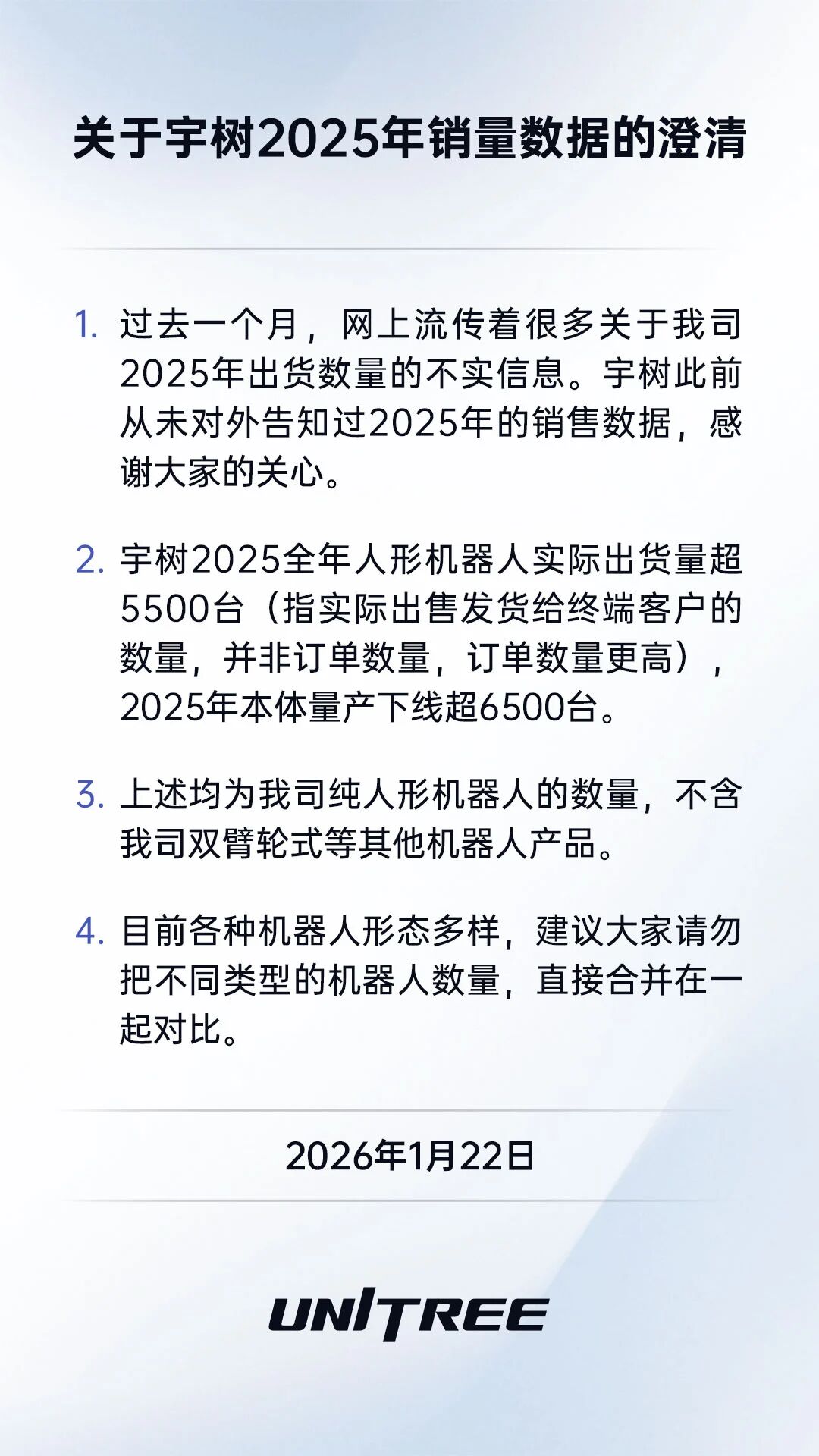
Group 1 - The core viewpoint of the article highlights the competitive landscape in the humanoid robot market, particularly between two leading brands, Zhiyuan and Yushu, which together hold a significant market share of 71% [1][4] - Omdia's data predicts that the global humanoid robot market will see an estimated shipment of 13,000 units in 2025, with Zhiyuan leading at over 5,100 units (39% market share) and Yushu following with 4,200 units (32% market share) [1] - Yushu has disputed the shipment data, claiming its actual shipment will exceed 5,500 units for 2025, emphasizing the challenges in accurately measuring shipments in the early-stage humanoid robot market [4][5] Group 2 - The article discusses the increasing visibility of various robot brands, with Yushu and Zhiyuan facing competition from new entrants like Magic Atom and Galaxy General, who are also vying for sponsorship opportunities at major events like the Spring Festival Gala [5][11] - Magic Atom and Galaxy General have secured sponsorships for the Spring Festival Gala, showcasing their focus on practical applications of robotics rather than just entertainment [9][11] - The article notes that established companies like RealMan are also ramping up their branding and product promotion efforts, indicating a broader trend of increased competition in the robotics sector [14] Group 3 - The involvement of internet giants in the humanoid robot and embodied intelligence sectors is highlighted, with companies like Meituan, Alibaba, and ByteDance investing in emerging startups [16][18] - The article suggests that the current market for humanoid robots is still in its early stages, with significant opportunities for growth and innovation as new companies emerge [16][24] - The competition is characterized by four main forces: hardware companies (like Zhiyuan and Yushu), smart appliance manufacturers, automotive companies, and startups backed by internet giants [24][25]
CES观察|能跑跳、能干活、能签单,中国人形机器人站上C位
Bei Ke Cai Jing· 2026-01-09 09:35
Core Insights - The CES 2026 showcased a significant dominance of Chinese companies in the robotics sector, with 149 out of 598 exhibitors being Chinese, accounting for nearly one-quarter of the total [1] - In the humanoid robot segment, 21 out of 38 exhibitors were from China, representing over half of the participants [1] - The event highlighted advancements in various applications of humanoid robots, including industrial, commercial, and home companionship [2][8] Group 1: Company Highlights - Companies like Yushu Technology and Zhiyuan Robotics demonstrated their capabilities in motion control and application scenarios, showcasing robots capable of dance and combat [4] - The Beijing Humanoid Robot Innovation Center made its debut, emphasizing the importance of showcasing the practical capabilities of humanoid robots to enhance international influence [8] - The company Lingqiao Intelligent presented its high-performance dexterous hand, significantly reducing costs to make it more accessible for research institutions and startups [10] Group 2: Technological Advancements - The event featured robots that integrated advanced AI capabilities, such as language interaction and autonomous sorting, demonstrating their practical applications in real-world scenarios [6][7] - Breakthroughs in tactile technology were showcased, with companies like Pasini Sensory Technology presenting advanced multi-dimensional tactile sensors [11] - The development of world models as data engines in embodied intelligence was highlighted, indicating a shift towards more sophisticated evaluation and reinforcement learning environments [11] Group 3: Market Expansion and Sales - The CES 2026 served as a critical platform for Chinese robotics companies to expand their global market presence, with several companies reporting immediate sales during the event [8] - Companies like Songyan Power are shifting their focus from product display to commercial implementation, targeting key regions for market expansion [8] - The event underscored the importance of a well-defined and efficient industrial ecosystem, indicating a maturation of the robotics industry [9][12]