
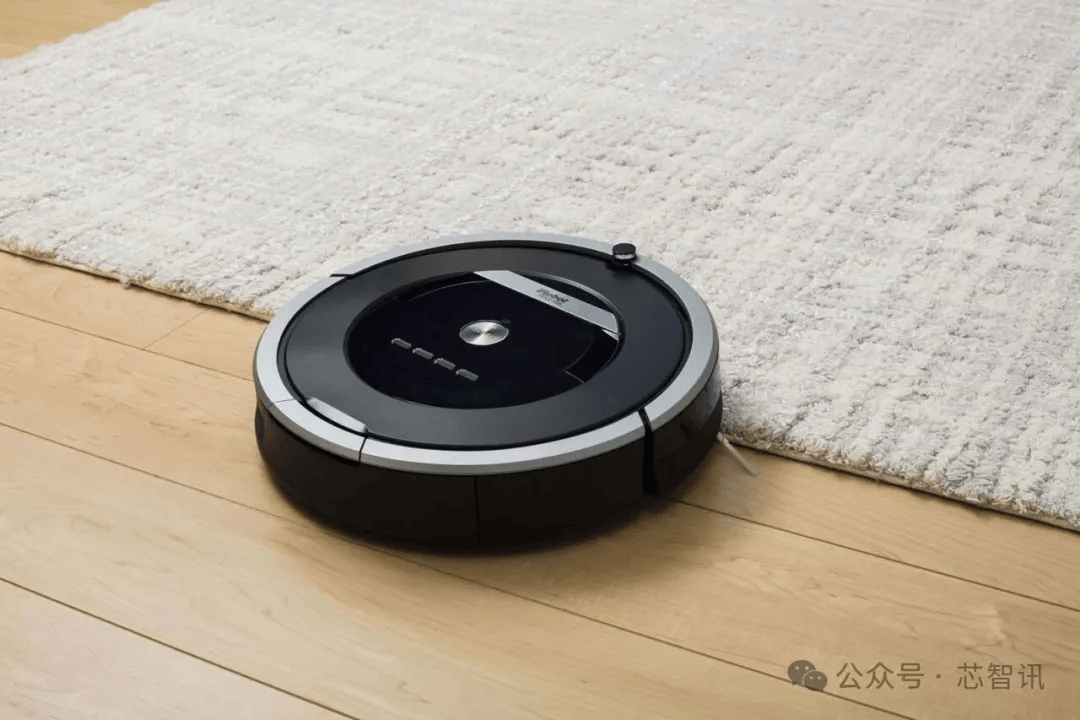
Roomba系列扫地机器人

Search documents
美国扫地机器人鼻祖破产,被中国代工厂“反向收购”了!
Sou Hu Cai Jing· 2025-12-17 17:14
Core Viewpoint - iRobot has filed for bankruptcy protection and will be acquired by its main contract manufacturer and creditor, Picea Robotics, leading to a significant drop in its stock price and market value [2][5]. Company Overview - iRobot was founded in 1990 by members of MIT's AI lab and is headquartered in Bedford, Massachusetts, with 274 employees [5]. - The company initially focused on defense and aerospace technology, later launching the Roomba series in 2002, which became a household name [5]. - iRobot's market value peaked at $3.56 billion in 2021 due to strong demand during the pandemic [5]. Financial Performance - iRobot's revenue declined by 24% in 2022 to $1.1834 billion, with a net loss of $286.3 million [5]. - In 2024, total revenue further dropped to $682 million, a 23.4% year-over-year decline, with a net loss of $145.5 million [6]. - By Q3 2025, revenue was only $146 million, down 24.6% from the previous year, with a significant loss of $9.9 million [6]. Market Position - iRobot once held over 80% of the U.S. market share for robotic vacuums, but its global market share has fallen to 7.9% [7][8]. - The company faces intense competition from Chinese brands, which have rapidly gained market share due to advantages in product innovation and cost control [6][7]. Bankruptcy Details - iRobot's bankruptcy filing was prompted by ongoing financial struggles, including a debt of $508 million and a significant loss of market share [9][10]. - The company has reached a restructuring support agreement with Picea Robotics, which will acquire 100% of iRobot's equity and relieve it of $191 million in loans and $162 million in overdue manufacturing fees [10][11]. - iRobot's cash and cash equivalents were only $24.8 million, with negative cash flow from operations of $104 million [10]. Future Outlook - iRobot anticipates that the bankruptcy process will not affect its application functionality, customer plans, or supply chain relationships [11]. - Picea Robotics, established in 2016, is a leading provider of mobile robot technology and has a strong production capacity, which may benefit iRobot post-acquisition [12].


明年将发债支持国补,摩尔线程回应拿钱理财
Xin Lang Cai Jing· 2025-12-16 04:45
Group 1 - The Ministry of Finance plans to issue 150 billion yuan of special long-term bonds in 2024 to support consumer subsidies for vehicle trade-ins and related appliances, with an additional 300 billion yuan expected in 2025 [1][17] - The "national subsidy" policy has positively impacted domestic consumption over the past two years, leading to a significant increase in sales, with over 25 trillion yuan in sales generated from trade-in programs benefiting over 360 million people [1][17] - The coverage of the "national subsidy" policy is expected to continue expanding, particularly for durable consumer goods like refrigerators and televisions [1][17] Group 2 - In November, the average sales prices of residential properties in 70 major cities showed a month-on-month decline, with first-tier cities down by 0.4% and second and third-tier cities down by 0.3% and 0.4% respectively [3][18] - The introduction of "home purchase interest subsidy" policies in several cities has led to a short-term increase in new home transactions, with some cities reporting over a 15% month-on-month growth in sales [3][18] - The real estate market is experiencing a downturn, with new home prices remaining relatively stable due to high-quality listings, while second-hand homes are seeing more aggressive price reductions [3][18] Group 3 - In November, the industrial added value for large-scale enterprises grew by 4.8% year-on-year, with a month-on-month increase of 0.44%, while the growth rate for the manufacturing sector was 4.6% [5][20] - High-tech manufacturing sectors, such as 3D printing and industrial robotics, showed significant growth, with production increases of 100.5% and 20.6% respectively [5][21] - The overall industrial growth rate has slowed, with traditional manufacturing sectors like cement and steel continuing to decline, indicating a need for structural adjustments in the economy [5][21] Group 4 - Vanke has faced challenges in extending a 2 billion yuan bond, with all proposed extension plans failing to meet the required approval threshold [7][22] - The company is in a precarious financial situation, with a potential default looming if an agreement with bondholders is not reached within the grace period [7][22] - Vanke's reliance on state-owned shareholders for support has diminished, raising concerns about its ability to navigate its financial difficulties independently [7][23] Group 5 - iRobot has filed for Chapter 11 bankruptcy protection, indicating severe financial distress despite being a pioneer in the robotic vacuum market [9][24] - The company has seen a significant decline in market share due to increased competition from lower-cost Chinese manufacturers and slow product innovation [9][25] - iRobot's financial situation is dire, with liabilities exceeding 500 million dollars and cash reserves dwindling to 24.8 million dollars [9][24] Group 6 - Samsung is reportedly in discussions with AMD regarding a potential partnership for 2nm chip manufacturing, aiming to enhance its position in the high-end semiconductor market [11][26] - Despite previous attempts, Samsung has struggled to gain a significant share in the high-end chip market due to issues with process maturity and yield rates [11][26] - The collaboration with AMD could provide Samsung with leverage in negotiations with other clients, particularly in the context of increasing demand for AI chips [11][26]


曾占据全球80%市场!扫地机器人鼻祖iRobot要破产了,背后中国公司强势崛起,包揽全球前五强,市值领先100多倍
Sou Hu Cai Jing· 2025-12-16 01:12
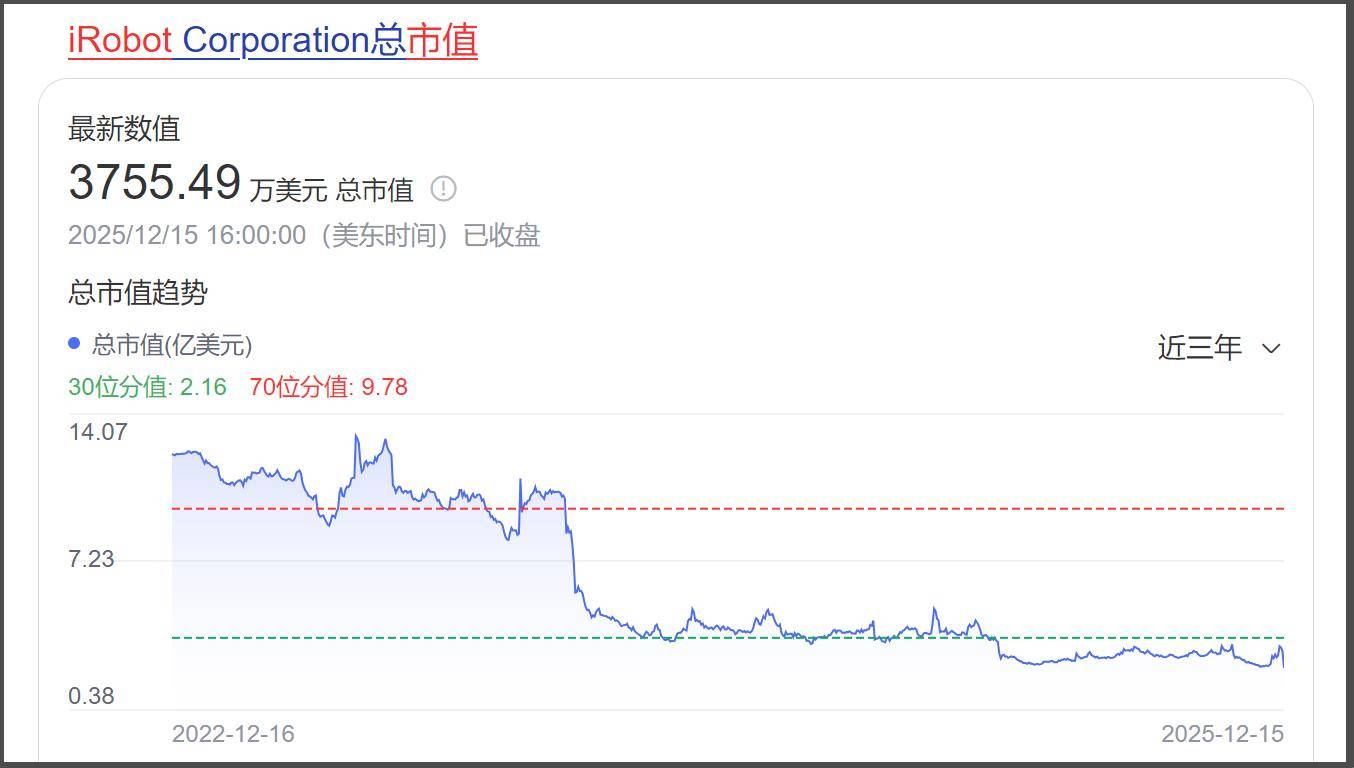
Core Viewpoint - iRobot has filed for Chapter 11 bankruptcy protection due to severe financial distress, losing its dominant market position and facing significant debt obligations [1][2]. Financial Situation - iRobot's liquidity crisis is evident, with cash and equivalents at only $24.8 million against total liabilities of $508 million, resulting in a negative equity of $26.8 million [2]. - For the first three quarters of 2025, iRobot reported revenues of $375 million, a decline of 26.47% year-over-year, and a net loss that surged 90% to $130 million [2]. - In Q3 alone, revenue was $145.8 million, down 24.6% from the previous year, shifting from a profit of $15.1 million to a loss of $9.9 million [2]. Market Position and Competition - iRobot, once holding over 80% of the global market share, has seen its share plummet to 7.9%, being pushed out of the top five rankings by Chinese competitors [3]. - Chinese brands have rapidly advanced in technology, with companies like Roborock and Ecovacs leading the market, capturing significant shares of 21.7% and 14.1% respectively [3]. - iRobot's pricing strategy has also hindered its competitiveness, with flagship products priced over $1,000, three times higher than similar Chinese products [3]. Company Valuation and Acquisition Attempts - iRobot's market capitalization has dwindled to $37.55 million, approximately 2.65 billion RMB, significantly lower than its Chinese counterparts, which are valued over 100 times more [6]. - An attempted acquisition by Amazon at $1.7 billion in 2022 failed due to regulatory scrutiny, leading to significant layoffs and the resignation of the CEO [4].
市场洞察:扫地机器人“长手”,如何看待行业新卖点?
Tou Bao Yan Jiu Yuan· 2025-08-18 12:48
Investment Rating - The report does not explicitly state an investment rating for the industry Core Insights - The Chinese robot industry is experiencing significant advancements, particularly with the introduction of "long-arm" robotic vacuum cleaners, which enhance cleaning capabilities and expand functionality beyond traditional floor cleaning [5][10][17] - The market for robotic vacuum cleaners is projected to reach a retail value of approximately 19.36 billion yuan in 2024, with a year-on-year growth of 41.1% [15][19] - The evolution of robotic vacuum cleaners has progressed through five technological iterations, culminating in the current 5.0 generation featuring robotic arms for enhanced functionality [9][11][10] Summary by Sections Market Overview - The Chinese robotic vacuum cleaner market is highly competitive, with the top five companies holding about 89% of the market share [15][17] - The average price of robotic vacuum cleaners has increased by 7.2% year-on-year, indicating a trend towards higher-end models [15] Technological Evolution - The development of robotic vacuum cleaners has undergone four previous iterations, with the latest iteration (5.0) introducing robotic arms that allow for more complex tasks such as object retrieval and enhanced cleaning capabilities [9][10][12] - The integration of AI and advanced motor technologies has made it feasible to incorporate robotic arms into vacuum cleaners, enhancing their functionality [16][27] Consumer Demand and Market Trends - There is a growing consumer demand for more sophisticated cleaning solutions, pushing manufacturers to innovate beyond basic cleaning functions [15][16] - The current market trend indicates a shift towards multifunctional devices that can perform both cleaning and auxiliary tasks, such as organizing items [27][29] Future Outlook - The report anticipates that the period from 2025 to 2026 will serve as a testing phase for high-end robotic vacuum cleaners with robotic arms, with a gradual transition towards more diverse service-oriented robots by 2030 to 2035 [29][30]