SAM 3D

Search documents
SMCI vs. META: Which AI Infrastructure Stock Has an Edge Now?
ZACKS· 2026-01-21 17:11
Core Insights - Super Micro Computer (SMCI) and Meta Platforms (META) are key players in the AI infrastructure supply chain, with SMCI focusing on high-performance servers and META acting as a hyperscale consumer of AI compute [1][2] Group 1: SMCI Overview - SMCI provides end-to-end AI rack-scale systems that integrate compute, networking, storage, and liquid cooling for AI data centers, utilizing advanced chips from NVIDIA and AMD [3] - The company has introduced Data Center Building Block Solutions (DCBBS) to facilitate rapid scaling for AI data centers, which is gaining traction [4] - SMCI is expanding its production facilities globally, diversifying into client, edge, and consumer AI markets, and aims for $36 billion in revenues by fiscal 2026, reflecting a 64% year-over-year growth [5][6] Group 2: SMCI Challenges - Rapid expansion has led to inventory accumulation, with first-quarter fiscal 2026 closing inventory at $5.7 billion, up from $4.7 billion, and a cash conversion cycle increase from 96 days to 123 days [7] - The company reported negative free cash flow of $950 million for the first quarter of fiscal 2026, with earnings growth estimates revised downward [7][8] Group 3: META Overview - META is heavily investing in AI infrastructure, including custom chips and large clusters to support its applications, with 79% of its total expenses in 2024 directed towards data centers and technical infrastructure [9][10] - The company is developing custom chips for AI workloads and consolidating smaller models into larger, more efficient ones, with significant capital expenditures projected between $70-$72 billion for 2025 [11][12] Group 4: META Growth Projections - META's AI scaling efforts include the development of a one-gigawatt Prometheus cluster and a five-gigawatt Hyperion cluster expected to launch in 2028, with revenue and earnings growth estimates for 2026 at 18% and 31%, respectively [12] - Recent earnings estimates for META have been revised upward, indicating positive market sentiment [12] Group 5: Stock Performance and Valuation - Over the past six months, shares of SMCI and META have decreased by 37% and 14.3%, respectively [13] - SMCI is trading at a forward Price to Sales ratio of 0.46X, while META is at 6.42X, both below their historical medians [15] Group 6: Conclusion - SMCI is experiencing rapid growth driven by AI infrastructure demand but faces challenges with working capital intensity and negative cash flow [16] - META's long-term investments in AI infrastructure and improved technology position it favorably against SMCI, with both companies currently holding a Zacks Rank 3 (Hold) [16]




万物皆可分割,Meta SAM 3D 能帮 AI 理解这个复杂又混乱的世界吗?|锦秋AI实验室
锦秋集· 2025-12-26 10:23
Core Viewpoint - The article evaluates Meta's SAM 3D AI model, highlighting its strengths in 3D understanding and generation, while also identifying significant limitations in complex real-world scenarios [3][7][57]. Group 1: Testing Scenarios - Round 1 focuses on SAM 3D's ability to infer human body structures under various conditions, revealing impressive capabilities in complex occlusion scenarios, such as accurately identifying individuals in Raphael's painting "The School of Athens" [9][10][11]. - However, in scenarios involving close physical contact, like arm wrestling, the model struggles to distinguish between overlapping body parts, leading to incorrect 3D representations [16]. - The model also fails to recognize non-standard body types, such as infants, particularly in mirrored images, indicating a reliance on adult body templates and a lack of understanding of proportions [19][21][23][29]. Group 2: Object Recognition and Segmentation - Round 2 assesses SAM 3D's semantic segmentation and labeling capabilities, particularly with stacked objects like delivery boxes and fruit platters. The model performs adequately with clear boundaries but falters when faced with reflective or obscured surfaces [35][37][40]. - The model exhibits significant confusion in categorizing similar objects, misidentifying fruits and failing to accurately label them, which impacts subsequent 3D generation [42]. Group 3: Architectural Understanding - The architectural testing phase evaluates SAM 3D's comprehension of rigid structures and spatial relationships. The model can reconstruct simple buildings but produces rough outputs lacking detail [44][50]. - When presented with complex architectural designs, such as the CCTV headquarters, the model recognizes basic topological features but fails to accurately represent intricate structures in 3D [53][56]. Conclusion - The evaluation concludes that while SAM 3D demonstrates advanced capabilities in understanding and generating 3D representations, it struggles with complex scenarios, indicating a gap between theoretical potential and practical application [57][60]. - The model's focus on semantic information rather than detailed visual aesthetics positions it for applications in robotics and augmented reality, rather than traditional artistic rendering [64].

3D打印,从制造到智造的跨越丨热门赛道
创业邦· 2025-12-05 00:16
Industry Overview - 3D printing is a technology that constructs physical objects layer by layer based on digital 3D models, utilizing materials such as metal powders, photopolymers, and engineering plastics [5] - The manufacturing paradigm is shifting from large-scale standardized production to agile manufacturing that supports complex structures and small-batch customization, with 3D printing being a representative technology of "digital manufacturing" [6] - 3D printing offers unique value in various fields, including aerospace, healthcare, and automotive, providing solutions for personalized customization and lightweight structural design [6][7] Advantages and Limitations - 3D printing has a material utilization rate exceeding 90%, significantly reducing waste compared to traditional subtractive manufacturing methods, which can waste up to 90% of raw materials [7] - The technology allows for the creation of complex lightweight structures that are difficult to achieve with traditional methods, which is particularly beneficial in aerospace for fuel savings and performance enhancement [12] - Despite its advantages, 3D printing faces limitations in material variety and production speed, and it is not intended to completely replace traditional manufacturing methods but rather to complement them [7] Industry Chain - The 3D printing industry chain consists of upstream materials and core components, midstream equipment manufacturing and services, and downstream applications across various industries [12][13] - Upstream, the core technologies are concentrated in materials, key hardware, and software, with titanium alloys being the most used material in China, accounting for 20.2% of raw material usage [12] - Midstream, industrial-grade equipment is developed for high-end needs, while consumer-grade devices cater to personal creators and small businesses, with China being the largest market for consumer-grade devices [13] Market Trends and Financing - The 3D printing market is expected to exceed 100 billion yuan by 2027, transitioning from prototype manufacturing to direct manufacturing of core functional parts [14] - Financing events in the 3D printing sector peaked at 72 in 2021 but declined to 53 in 2023, indicating a market adjustment and a shift from speculative hype to practical applications [14] Key Companies - Shenzhen Intelligent Pie Technology Co., Ltd. focuses on consumer-grade 3D printing equipment and has achieved significant sales, with revenue expected to exceed 2.5 billion yuan in 2025 [17][18] - Suzhou Xidimo 3D Printing Technology Co., Ltd. specializes in metal 3D printing and has developed large-scale SLM equipment, maintaining a leading position in the industry [21][22] - Divergent Technologies, Inc. utilizes AI-driven digital manufacturing systems for the automotive and aerospace sectors, achieving significant revenue growth and securing substantial financing for expansion [26][29] Recent Developments - Meta has launched a new imaging model that enhances 3D model generation from 2D images, showcasing advancements in AI and 3D printing technology [31][32] - A major 3D printing factory is being established in Shenzhen, which will become the largest in the world, marking a significant step for China in smart manufacturing [33] - Apple has revealed details about its use of 3D printing in Apple Watch production, highlighting material savings and environmental benefits [35]

申万宏源:AI赋能+技术突破+资金加码 持续看好消费级3D打印
智通财经网· 2025-11-26 06:52
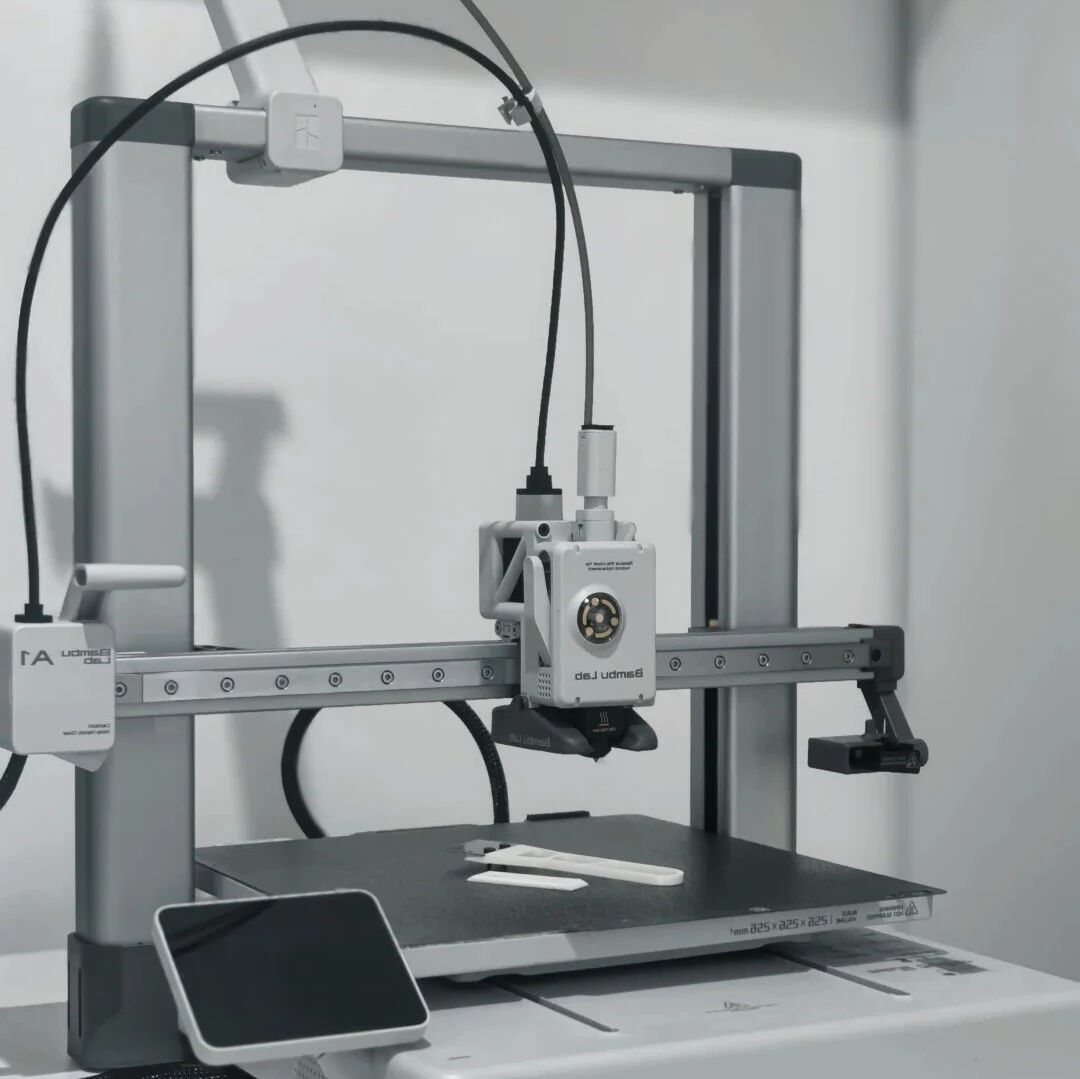
Core Viewpoint - The report from Shenwan Hongyuan highlights the maturation of 2D to 3D model conversion technology, which is expected to enhance the "playability" of consumer-grade 3D printing and stimulate demand in this sector [1] Group 1: AI Empowerment - The NanoBanana Pro version has improved image quality and resolution, significantly enhancing text rendering capabilities and supporting the fusion of 14 images to create new visuals, providing flexible and efficient tools for 3D printing creators [1] - Meta is leading the commercialization of multi-modal models with the release of SAM 3D, which can convert segmented image slices directly into 3D models, allowing for individual reconstruction of objects even in the presence of occlusions [1] Group 2: Technological Breakthroughs - Traditional 3D printers face inefficiencies with color/material switching, leading to waste and low success rates; several companies are innovating in smart multi-color printing technology [2] - Snapmaker's U1 model reduces the waiting time for switching tools from about two minutes to just five seconds, significantly saving material costs, having raised $2.022 million on Kickstarter [2] - TuoZhu Technology's system can accommodate up to six replaceable hot ends and supports the use of up to 24 materials in a single print, showcasing industry-leading heating technology [2] Group 3: Investment and Industry Ecosystem - DJI has invested in Shenzhen Intelligent Technology Co., holding a 5% stake, which specializes in SLA and FDM 3D printing technologies [3] - Meituan has become a shareholder in Shenzhen Fast Technology Co., indicating a trend of major companies investing in the consumer-grade 3D printing sector to enhance the industry ecosystem [3] Group 4: Demand Outlook - In the first three quarters of 2025, China exported 3.491 million 3D printers, nearing the total of 3.778 million units expected for the entire year of 2024 [4] - The export value of 3D printers from January to September 2025 reached 7.514 billion yuan, close to the projected 8.163 billion yuan for the full year of 2024, with expectations of reaching 10.7 billion yuan in 2025 [4] Group 5: Key Industry Players - Key components include Jiepu Te and Ruike Laser (lasers), Jinchengzi (control cards + galvanometers) [5] - 3D scanners include Sikan Technology and Obsidian Light [5] - Material suppliers include Haizheng Shengcai (raw materials) and Jialian Technology (filaments) [5] - Notable machine manufacturers include TuoZhu Technology (unlisted), Chuangxiang Sanwei (in IPO process), Anker Innovation, and Huina Technology [5]

分割一切并不够,还要3D重建一切,SAM 3D来了
具身智能之心· 2025-11-21 00:04
Core Viewpoint - Meta has launched significant updates with the introduction of SAM 3D and SAM 3, enhancing the understanding of images in 3D and providing advanced capabilities for object detection, segmentation, and tracking in images and videos [2][6][40]. Group 1: SAM 3D Overview - SAM 3D is the latest addition to the SAM series, featuring two models: SAM 3D Objects and SAM 3D Body, both demonstrating state-of-the-art performance in converting 2D images into detailed 3D reconstructions [2][4]. - SAM 3D Objects allows users to generate 3D models from a single image, overcoming limitations of traditional 3D modeling that often relies on isolated or synthetic data [11][15]. - Meta has annotated nearly 1 million real-world images, generating approximately 3.14 million 3D meshes, utilizing a scalable data engine to enhance the quality and quantity of 3D data [20][26]. Group 2: SAM 3D Body - SAM 3D Body focuses on accurate 3D human pose and shape reconstruction from single images, maintaining high-quality performance even in complex scenarios with occlusions and unusual poses [28][30]. - The model is interactive, allowing users to guide and control predictions, enhancing accuracy and usability [29]. - A high-quality training dataset of around 8 million images was created to improve the model's performance across various 3D benchmarks [33]. Group 3: SAM 3 Capabilities - SAM 3 introduces promptable concept segmentation, enabling the model to detect and segment specific concepts based on text or example image prompts, significantly improving its performance in concept recognition [40][42]. - The architecture of SAM 3 builds on previous advancements, utilizing components like the Meta Perception Encoder and DETR for enhanced image recognition and object detection capabilities [42][44]. - SAM 3 achieves a twofold increase in cgF1 scores for concept recognition and maintains near real-time performance for images with over 100 detection targets, completing inference in approximately 30 milliseconds on H200 GPUs [44].

Meta「分割一切」进入3D时代!图像分割结果直出3D,有遮挡也能复原
量子位· 2025-11-20 07:01
Core Viewpoint - Meta's new 3D modeling paradigm allows for direct conversion of image segmentation results into 3D models, enhancing the capabilities of 3D reconstruction from 2D images [1][4][8]. Summary by Sections 3D Reconstruction Models - Meta's MSL lab has released SAM 3D, which includes two models: SAM 3D Objects for object and scene reconstruction, and SAM 3D Body focused on human modeling [4][8]. - SAM 3D Objects can reconstruct 3D models and estimate object poses from a single natural image, overcoming challenges like occlusion and small objects [10][11]. - SAM 3D Objects outperforms existing methods, achieving a win rate at least five times higher than leading models in direct user comparisons [13][14]. Performance Metrics - SAM 3D Objects shows significant performance improvements in 3D shape and scene reconstruction, with metrics such as F1 score of 0.2339 and 3D IoU of 0.4254 [15]. - SAM 3D Body also achieves state-of-the-art (SOTA) results in human modeling, with MPJPE of 61.7 and PCK of 75.4 across various datasets [18]. Semantic Understanding - SAM 3 introduces a concept segmentation feature that allows for flexible object segmentation based on user-defined prompts, overcoming limitations of fixed label sets [21][23]. - The model can identify and segment objects based on textual descriptions or selected examples, significantly enhancing its usability [26][31]. Benchmarking and Results - SAM 3 has set new SOTA in promptable segmentation tasks, achieving an accuracy of 47.0% in zero-shot segmentation on the LVIS dataset, surpassing the previous SOTA of 38.5% [37]. - In the new SA-Co benchmark, SAM 3's performance is at least twice as strong as baseline methods [38]. Technical Architecture - SAM 3's architecture is built on a shared Perception Encoder, which improves consistency and efficiency in feature extraction for both detection and tracking tasks [41][43]. - The model employs a two-stage generative approach for SAM 3D Objects, utilizing a 1.2 billion parameter flow-matching transformer for geometric predictions [49][50]. - SAM 3D Body utilizes a unique Momentum Human Rig representation to decouple skeletal pose from body shape, enhancing detail in human modeling [55][60].

分割一切并不够,还要3D重建一切,SAM 3D来了
机器之心· 2025-11-20 02:07
Core Insights - Meta has launched significant updates with the introduction of SAM 3D and SAM 3, enhancing the understanding of images in 3D [1][2] Group 1: SAM 3D Overview - SAM 3D is the latest addition to the SAM series, featuring two models that convert static 2D images into detailed 3D reconstructions [2][5] - SAM 3D Objects focuses on object and scene reconstruction, while SAM 3D Body specializes in human shape and pose estimation [5][28] - Meta has made the model weights and inference code for SAM 3D and SAM 3 publicly available [7] Group 2: SAM 3D Objects - SAM 3D Objects introduces a novel technical approach for robust and realistic 3D reconstruction and object pose estimation from a single natural image [11] - The model can generate detailed 3D shapes, textures, and scene layouts from everyday photos, overcoming challenges like small objects and occlusions [12][13] - Meta has annotated nearly 1 million images, generating approximately 3.14 million 3D meshes, leveraging a scalable data engine for efficient data collection [17][22] Group 3: SAM 3D Body - SAM 3D Body addresses the challenge of accurate human 3D pose and shape reconstruction from a single image, even in complex scenarios [28] - The model supports interactive input, allowing users to guide and control predictions for improved accuracy [29] - A high-quality training dataset of around 8 million images was created to enhance the model's performance across various 3D benchmarks [31] Group 4: SAM 3 Capabilities - SAM 3 introduces promptable concept segmentation, enabling the model to identify and segment instances of specific concepts based on text or example images [35] - The architecture of SAM 3 builds on previous AI advancements, utilizing Meta Perception Encoder for enhanced image recognition and object detection [37] - SAM 3 has achieved a twofold improvement in concept segmentation performance compared to existing models, with rapid inference times even for images with numerous detection targets [39]