SU7 Pro

Search documents
小米集团-发布 SU7 改款车型;34 分钟内确认订单达 1.5 万辆,后续订单量将较初期峰值更趋稳定
2026-03-20 02:41
Summary of Xiaomi Corp. (1810.HK) Conference Call Company Overview - **Company**: Xiaomi Corp. (1810.HK) - **Industry**: Electric Vehicles (EV) and Consumer Electronics Key Highlights from the SU7 New Facelift Launch - **Launch Date**: March 19, 2026 - **Pricing**: - SU7: US$32.0k (Rmb219.9k) - SU7 Pro: US$36.4k (Rmb249.9k) - SU7 Max: US$44.2k (Rmb303.9k) - Prices are only Rmb4k higher than first-gen models despite comprehensive upgrades [1][11] - **Order Performance**: - 15,000 confirmed orders within the first 34 minutes, outperforming the first-gen SU7 which had 89,000 pre-orders in the first 24 hours [2] - Initial order momentum expected to be steadier compared to previous models due to improved consumer expectations and delivery policies [3] Consumer Experience and Order Volume - **Consumer Focus**: Enhanced purchase experience leading to more stable order volumes compared to initial spikes seen in previous models [3] - **Delivery Expectations**: Improved manufacturing capacity and delivery policies, including "ready-to-ship" vehicles within 1-5 weeks [3] Future Product Launches - **Upcoming Models**: - YU7 GT model expected to launch around mid-2026 - A full-size extended-range electric vehicle SUV anticipated in late Q3 2026 [4] Investment in AI - **Investment Commitment**: Rmb60 billion planned for AI over the next three years, with Rmb16 billion earmarked for 2026 [5] - **Strategic Positioning**: Xiaomi aims to leverage its "Human x Car x Home" ecosystem to capture growth in the global AI model industry [5] Financial Projections - **EV Volume Expectations**: Projected to reach 610,000 units in 2026, with 190,000 units for SU7, 380,000 for YU7, and 40,000 for the large-sized SUV model [21] - **Gross Profit Margin (GPM)**: Expected to decline to 17.9% in Q1 2026 and 20.7% in Q2 2026 due to increased consumer benefits and rising costs [23] Competitive Positioning - **Market Comparison**: The SU7 facelift model is positioned competitively against peers like Tesla and Xpeng in terms of size, driving dynamics, and range [19] - **Performance Enhancements**: Significant upgrades in powertrain performance, chassis control, and safety features compared to first-gen models [11][18] Risks and Challenges - **Market Risks**: - Intense competition in the smartphone and EV sectors - Potential pressure on gross margins due to rising costs and market dynamics [25] - **Execution Risks**: Concerns regarding the execution of brand premiumization and the EV business strategy [25] Investment Thesis - **Long-term Outlook**: Xiaomi is viewed as a leader in the physical AI space with strong ecosystem integration capabilities, positioning it well for future growth in the EV market [26] Price Target - **12-Month Target Price**: HK$41.00, representing a potential upside of 12.9% from the current price of HK$36.32 [28]

雷军直播回应争议:澄清营销标签、续航误解及多项质疑
Xin Lang Cai Jing· 2026-01-08 00:02
Core Viewpoint - Lei Jun addressed recent controversies surrounding Xiaomi's collaboration with "Universal Bear" and various criticisms directed at him and the company, emphasizing the importance of protecting users and maintaining a rational public discourse [1][6]. Group 1: Response to Controversies - The decision to penalize the relevant KOL was made after careful investigation and management discussion, as the KOL's behavior included long-term attacks on Xiaomi users, which the company cannot tolerate [1][6]. - Lei Jun acknowledged shortcomings in the public relations department's handling of the situation, attributing it to sustained negative public sentiment over the past eight to nine months [1][6]. - The public relations manager clarified that Xiaomi's marketing approach has evolved significantly since its early days, where direct communication was primarily through engineers without a dedicated marketing team [1][6]. Group 2: Marketing and Product Development - Lei Jun explained that the label of "marketing master" originated from a competitive context in 2013 or 2014, where Xiaomi's sales were highlighted, but he stressed that the company's success is rooted in product quality rather than marketing alone [2][7]. - The public relations manager responded to the claim regarding multiple meetings about a product design, stating that the actual number of discussions was at least 16, involving various aspects of product development [8]. Group 3: Technical Clarifications - Lei Jun clarified that the claim of "charging only once for 1300 kilometers" was taken out of context, as the Xiaomi YU7 standard version achieved this distance with only one charge under specific conditions [3][9]. - The CLTC range for the Xiaomi YU7 standard version is 835 kilometers, and the new SU7 Pro has a range of 902 kilometers, positioning them favorably within the electric vehicle market [9]. - The "wheel drop protection" technology is designed to enhance safety by allowing wheels to detach under certain conditions to protect the passenger cabin, a concept not unique to Xiaomi but part of established automotive safety practices [10].

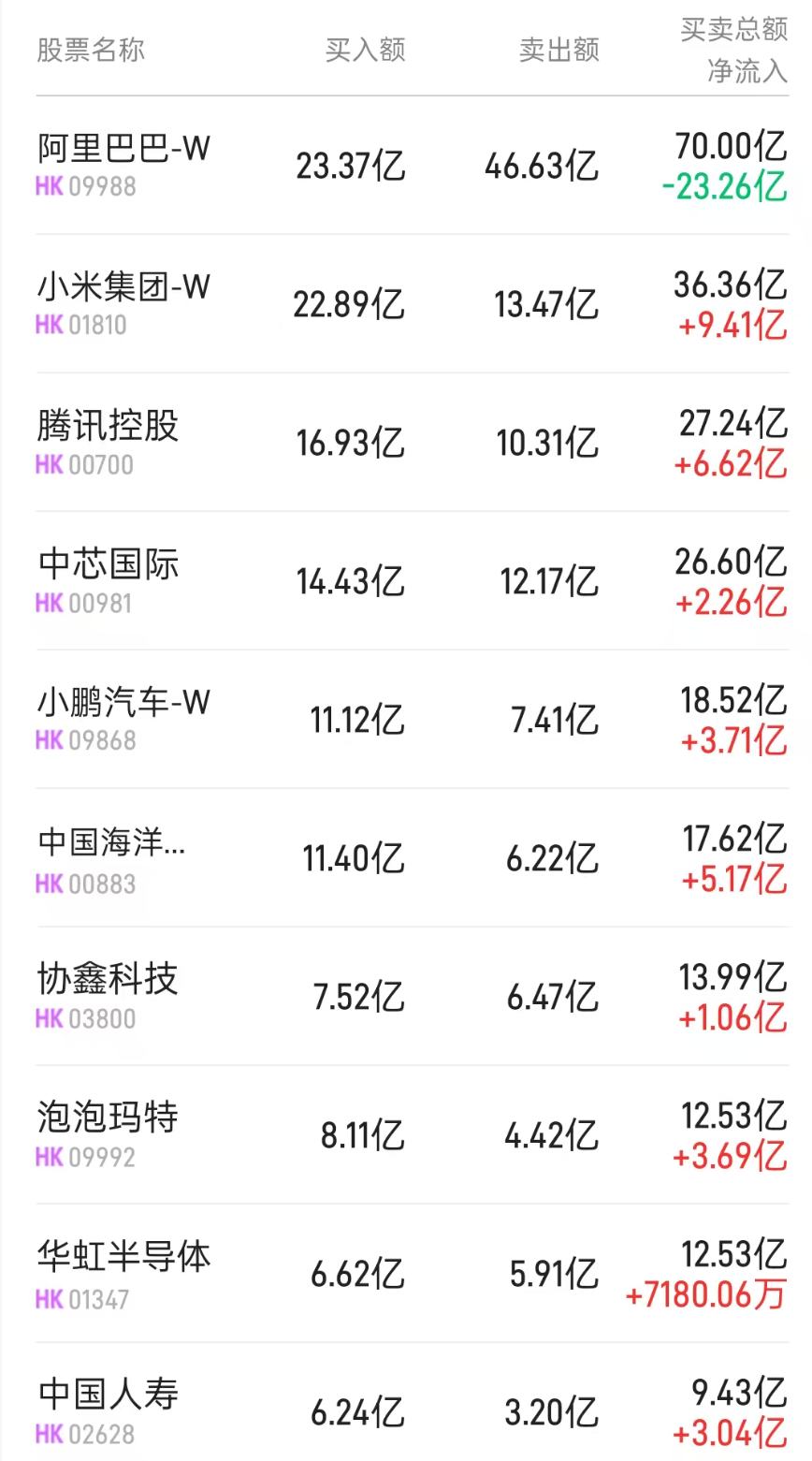
北水动向|北水成交净买入42.86亿 北水抢筹小米(01810)近16亿港元 抛售阿里巴巴(09988)超34亿
智通财经网· 2025-11-12 09:59
Core Viewpoint - The Hong Kong stock market experienced significant net inflows from northbound trading, with a total net buy of HKD 42.86 billion on November 12, 2023, indicating strong investor interest in certain stocks while others faced notable sell-offs [1]. Group 1: Net Buying and Selling Activities - The top net bought stocks included Xiaomi Group-W (01810), Xpeng Motors-W (09868), and Pop Mart (09992) [1]. - The stocks with the highest net selling included Alibaba-W (09988), Hua Hong Semiconductor (01347), and SMIC (00981) [1]. - Xiaomi Group-W saw a net buy of HKD 15.91 billion, attributed to positive reports on its manufacturing capabilities [4]. - Xpeng Motors-W received a net buy of HKD 7.17 billion, with an upgraded target price reflecting growth potential from new product launches [5]. - Pop Mart (09992) had a net buy of HKD 6.3 billion, supported by optimistic growth forecasts from analysts [5]. Group 2: Individual Stock Performance - Alibaba-W faced a net sell of HKD 34.33 billion, with concerns over its advertising and investment returns amid rising CAPEX [7]. - SMIC and Hua Hong Semiconductor experienced net sells of HKD 4.27 billion and HKD 9.84 billion, respectively, with analysts adjusting their ratings based on profit forecasts [7]. - China Life (02628) and Tencent (00700) recorded net buys of HKD 3.03 billion and HKD 1.57 billion, respectively, indicating continued investor confidence in these companies [7]. Group 3: Market Context and Analyst Insights - Analysts from Goldman Sachs and Morgan Stanley provided positive outlooks for Xiaomi and Xpeng, respectively, highlighting their operational improvements and growth strategies [4][5]. - The geopolitical situation in South America and OPEC+ decisions are influencing oil prices, which may impact companies like CNOOC (00883) that saw a net buy of HKD 4.11 billion [5]. - The solar industry remains under scrutiny, with recent statements from industry associations aiming to dispel negative rumors affecting companies like GCL-Poly Energy (03800) [6].