
Sealion 7

Search documents
东南亚出海解码:中国车企“卷”向东南亚,本土化成争夺新杠杆
3 6 Ke· 2026-02-02 08:22
Core Insights - Southeast Asia's automotive industry is entering a policy adjustment window from late 2025 to early 2026, with Thailand significantly reducing electric vehicle (EV) tax rates and Malaysia ending tax exemptions for imported pure electric vehicles, shifting from broad consumer subsidies to more refined industrial guidance [1][2]. Policy Adjustments - Southeast Asian automotive markets are revising their industrial incentive policies, aiming to use tax and access regulations to attract international capital and technology [2]. - Thailand's new vehicle consumption tax will reduce the tax rate for pure electric vehicles to 2% by 2026, with conditions for plug-in hybrid vehicles to include local manufacturing of batteries and advanced driver-assistance systems (ADAS) [2]. - Malaysia has ended the road tax exemption for imported pure electric vehicles, implementing a tiered tax system based on motor power, encouraging local production while maintaining consumer interest [4]. Market Dynamics - Indonesia shows significant potential, with electric vehicle sales projected to grow by 49% in 2025, accounting for over 15% of total new car sales, making it the fourth largest export market for Chinese electric vehicles globally [5]. - By the end of 2025, 16 Chinese automotive brands will have entered the Indonesian market, surpassing Japanese brands, although Japanese brands still dominate in new car sales with Toyota holding a 31.6% market share [7]. - In Malaysia, Chinese brands are leading the electric vehicle market, with seven out of the top ten pure electric vehicle models being Chinese, and BYD emerging as the top-selling brand [7][8]. Competitive Landscape - The competition is shifting from product export to a comprehensive localization strategy that includes manufacturing, research and development, sales, and ecosystem integration [9]. - Geely aims for an export target of 640,000 vehicles by 2026, expanding its presence in Thailand with plans for new showrooms and service centers [11]. - Chery is establishing Malaysia as a regional production and export hub, investing 2.2 billion ringgit in a new factory with a capacity of 100,000 vehicles per year [11]. Future Outlook - The future of the Southeast Asian automotive market will be determined by refined policy guidance, infrastructure development, and the depth of localization by automotive companies [12]. - Chinese automotive companies will need to deepen their full industry chain localization to consolidate and expand their market share, moving beyond initial advantages gained through product cost-effectiveness and early electric vehicle adoption [12].


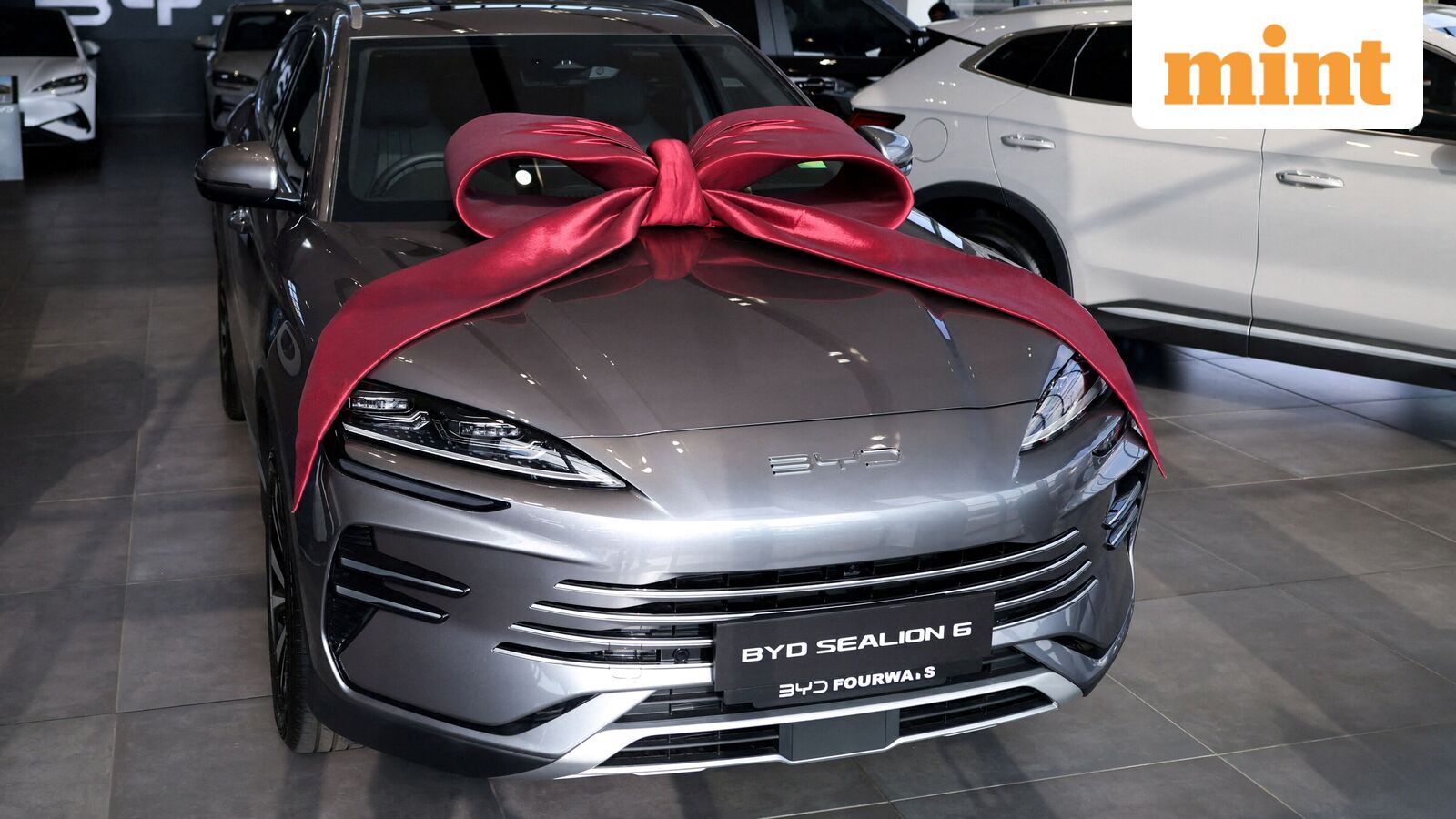
BYD could expand India operations as demand begins to outstrip supply
MINT· 2026-01-28 03:14
Core Viewpoint - BYD Co. is exploring options to expand its presence in India, including local assembly to meet the increasing demand for its electric vehicles, amidst regulatory challenges and a competitive market landscape [1][4]. Group 1: Expansion Plans - The company is considering local assembly of semi-assembled parts in India, which would be more cost-effective and easier to obtain regulatory approvals compared to a full assembly plant [2]. - BYD is working on obtaining local safety and regulatory certifications for additional models to navigate import quotas [1]. Group 2: Market Demand and Sales Performance - Strong demand for BYD vehicles in India has led to a reassessment of strategies to increase car availability, with dealers reportedly holding hundreds of bookings [3]. - BYD's sales in India surged approximately 88% last year, reaching around 5,500 cars, despite facing import duties of up to 110% on fully built models [6]. Group 3: Competitive Landscape - The Atto 3, priced at 2.5 million rupees ($27,255), competes in the premium segment of India's mass-market EVs, undercutting Tesla's pricing [8]. - The Sealion 7, which sold 2,200 units last year, is priced between 4.9 million to 5.5 million rupees, also positioned below Tesla's Model Y [8]. Group 4: Regulatory Challenges - BYD has approached Indian regulators to address concerns regarding import limits that could hinder growth, contrasting with Tesla's ongoing struggles against similar tariff barriers [9]. - The company is facing regulatory hurdles in one of the fastest-growing auto markets, reflecting a strategic shift to strengthen its position in India despite previous pushbacks from the Indian government [4]. Group 5: Strategic Importance - Diversifying beyond China has become crucial for BYD as domestic growth slows due to reduced EV subsidies and increasing competition [5]. - The company aims to boost deliveries to markets outside China by nearly 25% this year [5].
比亚迪拟今年在韩国销售超1万辆汽车,新增三款车型
Xin Lang Cai Jing· 2026-01-27 06:50
Core Viewpoint - BYD plans to sell over 10,000 vehicles in South Korea this year, representing a 64% increase compared to 2025 sales figures [1][4]. Group 1: Sales and Market Entry - 2025 marks the first operational year for BYD in South Korea, with a total of 6,107 passenger vehicles sold that year [2][5]. - This year is considered the first full entry into the South Korean passenger vehicle market for BYD, establishing a foundation for future growth [2][5]. Group 2: Product Offerings - Currently, BYD offers three models in South Korea: Atto 3 compact SUV, Seal mid-size sedan, and Sealion 7 mid-size SUV [2][5]. - The company plans to introduce three additional models this year: a rear-wheel drive version of the Seal, a Dolphin compact hatchback, and a DM-i model featuring BYD's plug-in hybrid technology [2][5]. Group 3: Retail Network Expansion - To boost sales, BYD aims to expand its retail network in South Korea to 35 showrooms and 26 after-sales service centers by the end of December [3][6]. - BYD officially joined the Korea Automobile Importers and Distributors Association (KAIDA) in March last year to strengthen its market position in South Korea [3][6].
Tesla’s India letdown spurs discounts on unsold Model Y SUVs
The Economic Times· 2026-01-15 01:11
Core Insights - Tesla is facing challenges in the Indian market, struggling to sell approximately 100 of the 300 Model Y vehicles imported four months ago, leading to discounts of up to Rs 2,00,000 ($2,200) on certain variants [1][14] - The company debuted in India in July, relying on brand power to drive sales despite high local import levies of 110% [2][14] - Global sales for Tesla fell in 2025 for the second consecutive year, resulting in a drop behind China's BYD Co. as the top seller of electric vehicles (EVs) [3][14] Market Dynamics - Increasing competition and reduced subsidies in various markets have diminished Tesla's market share in the US, Europe, and China [6] - Indian car buyers have not fully embraced Tesla due to limited visibility and high prices, with only about 600 bookings for the Model Y reported [8][14] - Competitors like BMW and BYD are gaining traction in India, with BMW's sales increasing nearly 200% last year due to the locally assembled iX1 model, while BYD's registrations rose 88% to over 5,400 cars [11][12] Consumer Behavior - Many prospective customers are opting for alternatives after test drives, choosing cheaper options like BMW's iX1 or feature-rich models like BYD's Sealion 7, both priced lower than the Model Y [7][14] - A significant portion of the 600 bookings for the Model Y has not converted into actual deliveries, with only 227 cars registered in India for all of 2025 [9][10][14] - Buyers who initially placed deposits are now hesitant to complete purchases of the lower-priced Model Y, while interest in a more expensive longer-range variant has not translated into timely deliveries [10][14] Strategic Moves - Tesla hired Sharad Agarwal, former head of Lamborghini India, to lead local operations and attract luxury car buyers [6][14] - The company had considered entering the Indian market for nearly a decade, making the decision shortly after a meeting between Elon Musk and Indian Prime Minister Narendra Modi [11][14]


BYD Group Becomes Global Automotive Partner of FC Internazionale Milano
Globenewswire· 2025-07-22 08:54
Core Insights - BYD Group has entered a three-year strategic partnership with FC Internazionale Milano, becoming the club's official Global Automotive Partner, marking a significant alliance between the automotive and professional football sectors [1][2]. Group 1: Partnership Details - The collaboration aims to enhance both brands' international presence and support joint growth strategies, with BYD providing approximately 70 vehicles to Inter's first-team players, coaching staff, and top management [2][4]. - A special Nerazzurri-themed edition of BYD's flagship model, the Sealion 7, will be the first vehicle available to the club, with plans for a limited edition release for fans and collectors [3][4]. Group 2: Brand Engagement and Strategy - BYD is preparing exclusive purchasing and leasing programs for Inter supporters globally, promising unique experiences tied to their favorite club [4]. - The partnership will serve as a cornerstone for BYD's premium brand DENZA's launch strategy in key European markets [4]. Group 3: Broader Impact - This agreement strengthens BYD's presence in football, following its sponsorship roles in UEFA Euro 2024 and the UEFA Under-21 Championship, reflecting the company's goal to connect with millions of fans and promote sustainable mobility [5].
