
T1100碳纤维

Search documents
如何抢占新兴产业未来产业赛道
Xin Lang Cai Jing· 2026-02-05 22:20
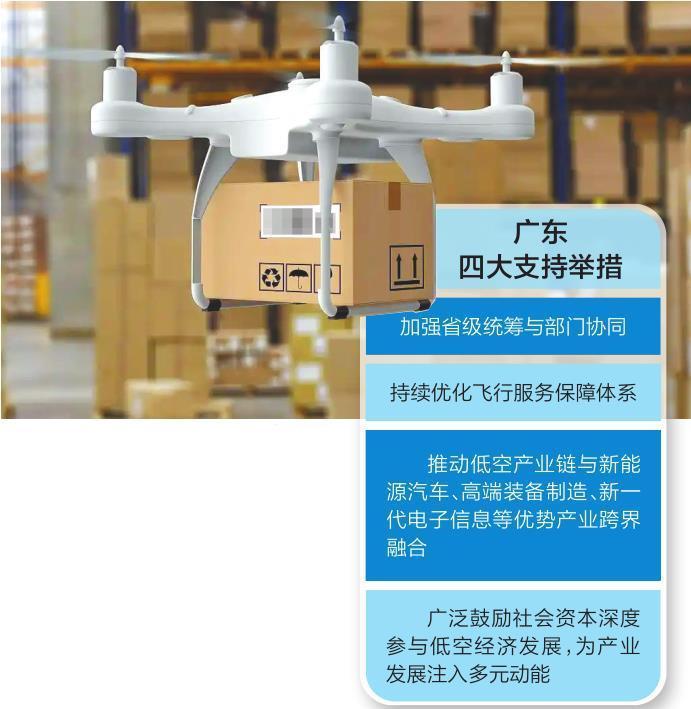
Core Insights - In 2026, China's emerging industries are expected to collectively enter a phase of mass production and ecological construction, with a focus on strategic emerging industries and localized development paths [6] Group 1: Low Altitude Economy - Guangdong is establishing itself as a benchmark for the low altitude economy, leveraging its complete industrial chain and policy framework, aiming for an industry scale exceeding 300 billion yuan by 2026 [7][8] - The province has over 15,000 low altitude industry chain enterprises, accounting for more than 30% of the national total, with over 2,000 drone manufacturing companies [7] - Guangdong is enhancing its infrastructure and policy environment to support low altitude logistics, medical rescue, and agricultural monitoring applications [8] Group 2: Embodied Intelligence - Shanghai is positioning itself as a global innovation hub for embodied intelligence, with plans to achieve significant breakthroughs in core algorithms and technologies by 2027 [9][11] - The city aims to support key projects financially and establish several high-quality incubators for the embodied intelligence sector [11] Group 3: New Energy Storage - Inner Mongolia is leading the development of new energy storage, focusing on attracting leading enterprises and building a comprehensive industrial chain [12][13] - The region has established a capacity to support 28.5 million kilowatt-hours of installed demand, with significant projects underway, including a large-scale energy storage project [13] Group 4: New Materials - Jiangsu is enhancing its new materials industry through a comprehensive innovation system, with 32 provincial key laboratories and 15 national enterprise technology centers established [14][15] - The province's advanced materials industry has surpassed 1 trillion yuan in output value, with significant clusters in Suzhou focusing on nanomaterials and advanced carbon materials [15] Group 5: Deep Sea and Aerospace Integration - Shandong is promoting the integration of deep sea and aerospace industries through a "chain leader" system, enhancing efficiency and fostering a collaborative industrial ecosystem [16][17] - The province is developing key technologies in both fields and establishing a unique layout for manufacturing and launching [17] Group 6: Quantum Technology - Anhui is building a global hub for quantum technology, with over 100 companies in the sector and a focus on practical applications through the "thousand scenarios" initiative [18][20] - The province has established a quantum future industry park and is providing comprehensive support for technology development and industry collaboration [20]

东映碳材,百吨级沥青基碳纤维项目启动
DT新材料· 2025-12-01 16:04
Core Viewpoint - Dongying Carbon Material Technology Co., Ltd. has officially launched the construction of its headquarters and a large-scale production line for asphalt-based carbon fiber, which is expected to be operational by mid-2026 [2]. Company Overview - Dongying Carbon Material was established in July 2017 and focuses on the niche of asphalt-based carbon fiber. The company has received various national and provincial support for its projects and has been recognized with several awards, including the National Science and Technology Progress Award [2]. Project Details - The project includes the establishment of a research and development center for asphalt-based carbon fiber, a production base with a capacity of hundreds of tons, and supporting office and comprehensive buildings. The first phase of construction will primarily focus on the production line and composite materials center [2]. - The production line is designed to enhance the company's capabilities in producing high-performance asphalt-based carbon fibers and composite materials [2]. Strategic Partnerships - Dongying Carbon Material has formed a joint venture with Sinopec Hunan Petrochemical to build a production line for intermediate asphalt and high-performance special asphalt, which will facilitate the expansion of its products into civilian markets [3]. - The collaboration aims to diversify applications of high-performance asphalt-based carbon fibers beyond defense sectors into consumer electronics, high-end manufacturing, and sports equipment [3].

人形机器人赛道爆发,铝产业成幕后大赢家?
Tai Mei Ti A P P· 2025-04-25 06:07
Group 1 - The humanoid robot industry is experiencing explosive growth, leading to a revolution in material science, with lightweight materials becoming a necessity [1][2] - The demand for aluminum in humanoid robots is surging, with 2023 global aluminum usage for humanoid robots reaching 128,000 tons, of which China accounts for 63% [2][3] - The shift from traditional aluminum manufacturing to high-end aluminum supply is evident, as the profit margin for aluminum used in robots can reach 42%, compared to less than 8% for construction aluminum [3][4] Group 2 - Collaborative efforts in the industry are emerging, such as the partnership between Jianmei Aluminum and Country Garden to develop a one-piece die-cast aluminum robot torso, reducing production costs by 40% [4] - The introduction of new standards for aluminum alloys for humanoid robots is expected to enhance material quality, with the new standard increasing grain size control precision fourfold [4] - Strategic investments in the aluminum sector for robotics have been significant, with 28 investments in 2023 averaging over 200 million yuan each [4] Group 3 - Challenges for the aluminum industry include performance limitations, as aluminum alloys have a fatigue life only 60% that of titanium alloys, and environmental regulations are tightening [5][6] - The emergence of magnesium alloy alternatives poses a competitive threat, with new alloys being developed that offer lower density and electromagnetic shielding properties [7] - The aluminum industry is at a crossroads, needing to balance technological innovation with cost control amidst increasing competition and environmental pressures [7][8] Group 4 - The humanoid robot industry is projected to grow at a compound annual growth rate of 60%, driving aluminum demand from thousands of tons to millions of tons [8][9] - The aluminum industry is evolving from a focus on volume to performance, with opportunities for growth in the humanoid robot sector potentially rivaling the automotive lightweighting trend [8][9]


