机器人轻量化

Search documents
模塑科技20260316
2026-03-17 02:07
Summary of Mould Technology Conference Call Company Overview - **Company**: Mould Technology - **Established**: 1988 - **Core Products**: Bumpers, door sills, wheel arches, and other exterior parts - **Market Share**: Approximately 15%-20% in the domestic market for bumpers, with plastic automotive products accounting for 85% of revenue [4][6] Key Industry Insights - **Binding with Tesla**: Mould Technology has a deep partnership with Tesla, with 40% of its revenue from Tesla and a gross margin exceeding 25% [2] - **Robotics Business**: The robotics segment is emerging as a second growth curve, with individual product values reaching up to 20,000 yuan. The company has secured contracts with major clients like Xpeng and others [2][3] - **Market Potential**: The global exterior market is expected to exceed 800 billion yuan by 2030, with the domestic market projected to reach over 200 billion yuan [8] Financial Performance - **Revenue Growth**: Revenue has shown steady growth from 2015 to 2023, with a slight dip expected in 2024-2025 due to market fluctuations. The main growth drivers are the new energy and Mexican operations [6] - **Profitability**: The company has improved its profitability significantly since divesting from unprofitable U.S. operations in 2021. The overseas profit for the first three quarters of 2025 was 380 million yuan, with a net profit margin of approximately 7.3% [6][14] - **Future Projections**: Expected net profit for 2026 is between 550 million to 600 million yuan, with a market valuation potential of 110-120 billion yuan based on core business performance [14] Operational Highlights - **Mexican Operations**: The Mexican plant has an annual production capacity of 1 million bumpers, with a potential output value of 2-3 billion yuan. The current revenue from this operation is only 1.4 billion yuan, indicating significant room for growth [7][8] - **Client Relationships**: The company has established strong relationships with major automotive manufacturers, which is crucial for securing long-term contracts and maintaining a competitive edge [11] Competitive Landscape - **Market Barriers**: The exterior parts industry has significant barriers including craftsmanship, cost control, and customer responsiveness. High automation in production processes and established relationships with major automotive brands are critical for success [10][11] - **Lightweight and Smart Trends**: The shift towards lightweight materials and smart features in vehicles is driving demand for plastic and exterior parts, with potential increases in vehicle value from 500 yuan to 2000-3000 yuan for integrated smart components [9] Future Outlook - **Robotics Market**: Mould Technology is well-positioned to capitalize on the growing robotics market, with expected significant revenue from this segment as it integrates into the supply chain for major robotics manufacturers [13][14] - **Valuation Potential**: The overall market valuation could reach 250-300 billion yuan, indicating a potential for significant investment returns as the company continues to expand its operations and product offerings [14]

模塑科技:深耕汽车外饰件,机器人打造二次成长曲线-20260316
Changjiang Securities· 2026-03-16 00:40
Investment Rating - The report assigns a "Buy" rating for the company, marking its first coverage [11][13]. Core Insights - The company demonstrates significant competitive advantages in the automotive exterior parts sector, with ongoing expansion into overseas markets and rapid improvement in profitability. It maintains a strong position in the domestic high-end market while increasing its market share in the new energy vehicle segment [3][11]. - The company has achieved a compound annual growth rate (CAGR) of 9.6% in revenue from 31.4 billion yuan in 2015 to 71.4 billion yuan in 2024. In the first three quarters of 2025, revenue reached 51.1 billion yuan, reflecting a year-on-year decline of 3.0% [7][40]. - The company is actively expanding its overseas operations, particularly in Mexico, where it has established a factory that significantly enhances its profitability. In 2024, the Mexican subsidiary achieved a net profit of 3.6 billion yuan, with a net profit margin of 25.4% [8][34]. - The automotive exterior parts market is projected to grow significantly, with an estimated market size of approximately 1,532 billion yuan in 2025, and the company is well-positioned to benefit from trends such as the substitution of steel with plastic and the advancement of smart technologies [9][27]. - The company is also entering the robotics sector, capitalizing on the trend of lightweight robots, and has already secured orders from robotics companies, indicating a promising second growth curve [10][11]. Summary by Sections Company Overview - The company has been a leading provider of automotive exterior parts in China for over 30 years, with a strong focus on quality and innovation [21][27]. Financial Performance - The company’s revenue has shown steady growth, with a significant increase in overseas revenue from 0.4 billion yuan in 2016 to 19.9 billion yuan in 2024, achieving a CAGR of 62.97% [40]. - In 2025, the company expects to achieve net profits of 4.5 billion yuan, 5.8 billion yuan, and 8.4 billion yuan for the years 2025, 2026, and 2027, respectively [11]. Market Expansion - The company has successfully penetrated the North American market, particularly in Mexico, where it has established partnerships with major automotive brands such as Tesla and BMW [8][11]. - The domestic market for automotive exterior parts is also expanding, with the company actively pursuing new energy vehicle clients, contributing to a projected sales total exceeding 5.3 billion yuan from new projects [9][11]. Robotics Sector - The company is strategically positioning itself in the robotics industry, leveraging its expertise in precision injection molding and material advantages to meet the growing demand for lightweight robotic components [10][11].
模塑科技(000700):深度报告:深耕汽车外饰件,机器人打造二次成长曲线
Changjiang Securities· 2026-03-15 06:32
Investment Rating - The report assigns a "Buy" rating for the company, marking its first coverage [12]. Core Insights - The company demonstrates significant competitive advantages in the automotive exterior parts sector, with continuous expansion in overseas markets and rapid improvement in profitability. It maintains a strong position in the domestic high-end market while entering the new energy sector to increase market share [3][10]. - The company has achieved steady revenue growth, with a compound annual growth rate (CAGR) of 9.6% from 31.4 billion yuan in 2015 to 71.4 billion yuan in 2024. In the first three quarters of 2025, revenue reached 51.1 billion yuan, reflecting a year-on-year decline of 3.0% [6][40]. - The company is actively expanding its presence in the new energy vehicle market, with revenue from this segment accounting for 30% in 2024. It has secured significant contracts with leading new energy vehicle manufacturers [8][10]. Summary by Sections Company Overview - The company has been a leading supplier of automotive exterior parts in China for over 30 years, with a focus on high-quality products and services [6][20]. - It has established a strong foothold in the overseas market, particularly in Mexico, where it has seen significant profitability improvements [7][68]. Financial Performance - The company's total revenue has grown from 31.4 billion yuan in 2015 to 71.4 billion yuan in 2024, with a CAGR of 9.6%. The overseas revenue has surged from 0.4 billion yuan in 2016 to 19.9 billion yuan in 2024, achieving a CAGR of 62.97% [6][40]. - In the first three quarters of 2025, the company reported a net profit of 3.8 billion yuan, corresponding to a net profit margin of 7.3% [6][52]. Market Expansion - The company is capitalizing on the shift from steel to plastic in automotive manufacturing, which is expected to enhance the value of individual vehicles. The domestic market for automotive exterior parts is projected to reach approximately 1,532 billion yuan by 2025 [8][10]. - The company has successfully penetrated the new energy vehicle market, with significant contracts from major players like Tesla and Xpeng, contributing to a projected total sales amount exceeding 5.3 billion yuan for new energy projects in 2025 [8][10]. Robotics Sector - The company is positioning itself in the robotics industry, leveraging its expertise in lightweight materials and precision injection molding. It has already received orders from robotics companies, indicating a promising growth trajectory in this new segment [9][10].
唯科科技-机器人轻量化观点汇报
2026-02-11 15:40
Summary of Weike Technology & Robotics Lightweight Perspective Report Company Overview - Weike Technology started in the small home appliance sector and has expanded into the automotive industry, now reaching global markets with overseas revenue accounting for 46% of total revenue. It is expected to equal domestic market revenue by 2025, indicating strong globalization momentum [1][3]. Financial Performance - The company has shown steady revenue growth with a compound annual growth rate (CAGR) of 19% from 2020 to 2024. In the first three quarters of 2025, revenue is expected to grow by 25% due to recovering overseas demand [1][6]. - The total gross margin remains above 30%, with precision mold business margins increasing and health product outsourcing margins returning to industry averages. The selling expense ratio is maintained below 3%, indicating improved profitability [1][7]. - Financial health is strong, with inventory and accounts receivable turnover days kept under 100 days, and operating cash flow gradually recovering post-pandemic [1][9]. Business Segments - The main business segments include mold production, injection molding, and health product outsourcing, with close interrelations between mold and injection molding operations [1][6]. - Significant contributions to net profit come from subsidiaries such as Shanghai Kebi (automotive parts injection) and Xiamen Weike Health (health appliances outsourcing), with projected revenues of approximately 200 million and 560 million yuan respectively in 2024 [1][4]. Market Position and Industry Insights - The global injection molding market exceeds $300 billion, with a fragmented competitive landscape. Key applications include packaging (30%), consumer electronics (29%), medical (8%), and transportation (17%) [10][11]. - Weike Technology's largest downstream market is home appliances (32%), followed by new energy vehicles (18%) and consumer electronics (11%) [12]. Future Growth and Projections - Revenue growth is projected at 30% and 25% for 2026 and 2027, respectively, with expected revenues of approximately 3 billion and 3.85 billion yuan. Injection products are anticipated to grow over 30% due to increased demand for new energy vehicle components [2][17]. - The company is targeting a stock price of 95 yuan, corresponding to a price-to-earnings (PE) ratio of around 34, indicating a potential upside of 25% [2][18]. Strategic Initiatives - Weike Technology is actively expanding into robotics and data center sectors, producing PICK-related products and collaborating with international firms like Nidec and Kollmorgen. The company is also involved in the MPO fiber optic connector business for data centers, which is expected to grow significantly [1][15]. - The company’s core competencies include advanced injection molding techniques, a well-structured supply chain, and a diversified market presence across automotive, electronics, and consumer goods [14][16]. Risks and Challenges - Potential risks include fluctuations in international trade tariffs, declining global demand for new energy and home appliances, and management challenges in overseas subsidiaries. Additionally, there are concerns regarding margin compression and underperformance in profitability [21].

福赛科技(301529):联合研究|公司点评|福赛科技(301529.SZ):福赛科技点评:全年业绩快速增长,期待新业务持续推进
Changjiang Securities· 2026-02-10 14:41
Group 1 - Investment Rating: Buy, maintained [6] - Expected net profit for 2025 is projected to be between 130 to 150 million yuan, representing a year-on-year increase of 33.6% to 49.0% [2][4] - The company is focused on the automotive interior sector, aiming to become an integrated solution provider while expanding its customer base and product categories, and accelerating overseas market development [2][12] Group 2 - The company is exploring the lightweight robotics sector, leveraging its advantages in technology, research and development, customer relationships, and globalization to establish a second growth curve [2][12] - The company has a global sales network covering East Asia, Europe, and North America, actively expanding its international client base including Tesla and Nissan [12] - The new factory in Mexico is expected to be operational by Q4 2025, enhancing production capacity [12] Group 3 - The projected net profit for 2025 is expected to be between 120 to 140 million yuan after deducting non-recurring items, with a year-on-year increase of 47.6% to 65.7% [4] - The company anticipates a net profit of 30 million yuan in Q4 2025, reflecting a year-on-year decrease of 31.3% and a quarter-on-quarter decrease of 27.7% due to short-term fluctuations in the US economy and exchange rate impacts [12] - The company aims to achieve net profits of 140 million, 200 million, and 230 million yuan for the years 2025, 2026, and 2027 respectively, with corresponding price-to-earnings ratios of 87.6X, 60.9X, and 51.1X [12]
模塑科技
2026-01-26 02:50
Summary of Conference Call on Magic Technology Company Overview - **Company Name**: Magic Technology - **Industry**: Automotive Parts, specifically focusing on plastic components and exterior parts like bumpers - **Position**: Leading private enterprise in the automotive bumper sector in China with over 30 years of experience in the industry [1][4] Key Insights and Arguments - **Market Position**: Magic Technology is positioned as a leading player in the automotive exterior parts market, benefiting from the domestic automotive supply chain's localization and the growth of new energy vehicles (NEVs) [1][2] - **Market Growth**: The automotive exterior parts market is expected to grow at a rate faster than the overall automotive market due to increasing demands for lightweight materials and smart automotive technologies [1][8] - **Competitive Landscape**: The competitive landscape is stabilizing, with leading companies like Magic Technology expected to gain market share as the industry matures [2][9] - **Client Base**: The company serves a diverse client base, including traditional automotive giants like BMW and Mercedes, as well as NEV manufacturers like Tesla [5][6] - **Revenue Trends**: Despite challenges from the pandemic, the company has maintained a solid revenue trend, with expectations for steady growth in profits, particularly from overseas markets [6][10] Additional Important Points - **Innovation in Robotics**: Magic Technology is exploring new growth opportunities in the robotics sector, leveraging its expertise in lightweight materials and manufacturing processes that are applicable to both automotive and robotic components [2][10][12] - **Production Capabilities**: The company has established a robust production network, including factories in various regions and overseas, which enhances its ability to meet client demands [4][9] - **Financial Projections**: The company is projected to achieve a profit of approximately 600 million by 2026, with significant potential for stock price appreciation based on current market valuations [13] Conclusion - Magic Technology is well-positioned for future growth in both the automotive and robotics sectors, with a strong focus on innovation and market expansion. The company’s strategic initiatives and solid client relationships are expected to drive sustained profitability and market share growth in the coming years [1][13]
模塑科技(000700):汽车保险杠领军企业,机器人轻量化开辟第二增长点
Guotou Securities· 2026-01-21 12:03
Investment Rating - The report assigns a "Buy-A" investment rating with a 12-month target price of 19.87 CNY, representing a dynamic P/E ratio of 32X for 2026 [4][6]. Core Insights - Moulding Technology is a leading player in the automotive bumper sector, holding a 13.5% market share in China as of 2022, and is expanding into the robotics sector to create a second growth curve [1][3]. - The global automotive bumper market is projected to reach 200.6 billion CNY by 2025, with a compound annual growth rate (CAGR) of 6.4% from 2022 to 2025, indicating steady growth in the industry [2][61]. - The company is leveraging its expertise in lightweight materials and injection molding processes to enter the robotics market, having secured small batch orders for humanoid robot outer covers [3][82]. Summary by Sections Company Overview - Moulding Technology has over 30 years of experience in the plastic parts sector and has established itself as a leader in the automotive bumper market, with significant partnerships with major automotive brands [1][14]. - The company has expanded its global footprint with production bases in Mexico and has begun to serve North American clients, including leading electric vehicle manufacturers [1][67]. Market Dynamics - The automotive bumper market is experiencing consolidation, with leading companies strengthening their market positions through technological advancements and supply chain efficiencies [2][64]. - The shift towards electric vehicles is expected to further solidify the competitive landscape, with Moulding Technology positioned to benefit from this trend [2][61]. Financial Performance - The company reported a total revenue of 7.136 billion CNY in 2024, with a net profit of 626 million CNY, reflecting a recovery in profitability despite a decline in revenue [9][30]. - The gross profit margin has improved significantly, reaching 19.58% in the first three quarters of 2025, driven by the profitability of its Mexican operations [33][41]. Growth Opportunities - The robotics sector presents a new growth avenue for Moulding Technology, with the company planning to utilize its existing technology in automotive parts to capture market share in this emerging field [3][73]. - The global automotive exterior parts market is expected to grow, with Moulding Technology aiming to increase its market share through product innovation and strategic partnerships [49][52].
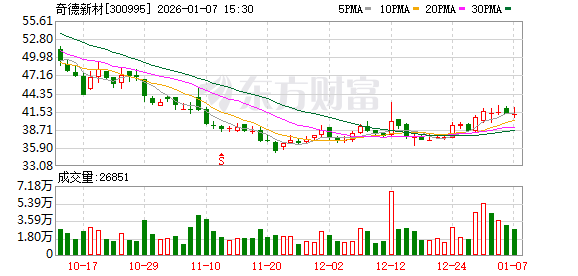
奇德新材:公司未来战略清晰
Zheng Quan Ri Bao· 2026-01-07 12:38
Core Viewpoint - The company is focusing on high-performance polymer composite materials for applications in robotics, emphasizing lightweight and high-strength characteristics [2] Group 1: Product Applications - The company's polymer composite materials, including polyamide and polyphenylene sulfide, can be used in robot shells, trunks, joints, and active components [2] - Carbon fiber is highlighted as a preferred alternative to metal materials for lightweight robotic shell solutions due to its high performance and aesthetic qualities [2] Group 2: Strategic Development - The company plans to actively participate in joint development with leading clients to achieve lightweight solutions while enhancing product aesthetics [2] - Future exploration will focus on multi-component solutions to replace metal, aiding in the lightweight upgrade of robots [2] Group 3: Market Position - The humanoid robot industry is still in its early development stage, with related business orders currently representing a very small proportion of the company's overall performance [2] - The company's strategic direction is clear, aiming to accelerate scene development in emerging fields such as new energy vehicles, low-altitude flight, and robotics [2]

镁合金:“镁”启轻量化新纪元,汽车与机器人共拓蓝海
2025-12-01 00:49
Summary of Magnesium Alloy Industry and Company Insights Industry Overview - Magnesium alloys are gaining traction in the automotive lightweighting sector due to cost advantages, being approximately 3,000 RMB/ton lower than aluminum prices, and technological advancements such as semi-solid die casting that enhance performance and extend mold life [1][2][3] - The demand for magnesium alloys in the new energy vehicle (NEV) market is projected to be a key growth driver, with an estimated total usage of 740,000 tons by 2030 if NEVs account for 70% of the market and 35% of parts utilize magnesium alloys, leading to a market size nearing 40 billion RMB and a compound annual growth rate (CAGR) exceeding 50% [1][3] Automotive Applications - Current applications of magnesium alloys in the automotive sector are limited due to price volatility and lower corrosion resistance, although recent price stabilization (around 18,000 RMB/ton) enhances competitiveness [2] - Technological improvements have increased the corrosion resistance, strength, and ductility of magnesium alloys, making them suitable for critical automotive components such as valve bodies, dashboard supports, and body frames, with potential weight reductions of 3 kg for dashboard supports and 7 kg for powertrain housings, alongside cost reductions of 20%-30% [2][3] Robotics Applications - The robotics industry has a clear demand for lightweight materials, with magnesium alloys offering advantages in shock absorption, thermal management, and strength-to-weight ratio, making them ideal for components like knee joints and structural parts [4] - Assuming a usage of 20 kg per robot and a market of 1 million units, the total demand could reach 2,000 tons, translating to a significant market size if priced at 6,000 RMB per unit [4] Market Size and Growth Potential - The current market size for magnesium alloys is approximately 66.7 billion RMB, with potential expansion to over 200 billion RMB if the market reaches 100 million units and processing costs decrease significantly [5] Competitive Landscape - Key players in the magnesium alloy die-casting sector include Baowu, Wanfeng, and Xinyuan Zhuomei, with Wanfeng and Xinyuan Zhuomei showing rapid growth [6][10] - Xinyuan Zhuomei is expected to experience a significant revenue increase in 2026, having secured a 4-year contract worth approximately 2 billion RMB, equating to an annual revenue of 500 million RMB [7] - Wanfeng has maintained stable revenue since 2020, with a net profit of 730 million RMB in the first three quarters of 2025, reflecting a nearly 30% year-on-year growth, primarily focusing on aluminum alloy wheels while developing new magnesium alloy products [8] - Baowu has increased production but faces profitability pressures, exploring new products like motor housings and integrated body structures [9] Future Outlook - The magnesium alloy industry is anticipated to enter a growth phase in the next two to three years, driven by applications in powertrains and other sectors, with companies like Xinyuan Zhuomei and Baowu poised to benefit [10] - Companies traditionally focused on aluminum alloys, such as Xusheng and Aikedi, are also entering the magnesium alloy market and may become significant players in the next three years [10]

镁合金或成机器人“王牌材料”?
机器人大讲堂· 2025-11-18 10:37
Core Insights - Xpeng Motors' CEO He Xiaopeng confirmed that the humanoid robot IRON will achieve mass production by the end of 2026, with technical integration testing starting in Q3 2025 and initial testing in stores and parks in 2024, aiming for sales to exceed 1 million units by 2030 [1] - Lightweight materials, particularly magnesium alloys, are identified as a key factor in the development of humanoid robots, offering significant advantages in weight reduction and performance [1][6] Lightweight Robots - The current mainstream humanoid robots weigh between 40-70 kg and have a limited battery life of 2-4 hours, necessitating a focus on reducing weight to enhance performance [3] - Reducing the weight of humanoid robots by 10% can lead to a 5.5% decrease in energy consumption and an equivalent increase in battery life [4] Material Innovations - The industry is exploring two main paths for lightweighting: structural optimization and material substitution, with the latter being the more feasible option currently [5] - Magnesium alloys are highlighted as superior to other lightweight materials due to their lower density (33% lighter than aluminum and 75% lighter than steel) and better damping and heat dissipation properties [6][8] Industry Trends - Leading companies like Tesla, UBTECH, and Yushutech are prioritizing lightweighting in their product iterations, establishing it as a consensus in the humanoid robot industry [7] - The cost of magnesium has become competitive, with magnesium ingot prices remaining below aluminum prices since September 2024, making it a viable option for mass production [11][12] Market Dynamics - China is the largest producer of magnesium, accounting for 95% of global output in 2024, providing a strong resource base for the magnesium alloy industry [15] - The demand for magnesium alloys in traditional industrial robots is projected to grow from 0.31 million tons in 2024 to 0.67 million tons by 2027, with a CAGR of 28% [18] Future Outlook - The application of magnesium alloys in humanoid robots is expected to expand from shells and bases to core components, enhancing performance and reducing weight significantly [18] - The overall market for magnesium alloys is anticipated to experience explosive growth, particularly in the humanoid robot sector, with demand projected to rise from 0.02 million tons in 2024 to 0.85 million tons by 2030, reflecting a CAGR of 93% [18]