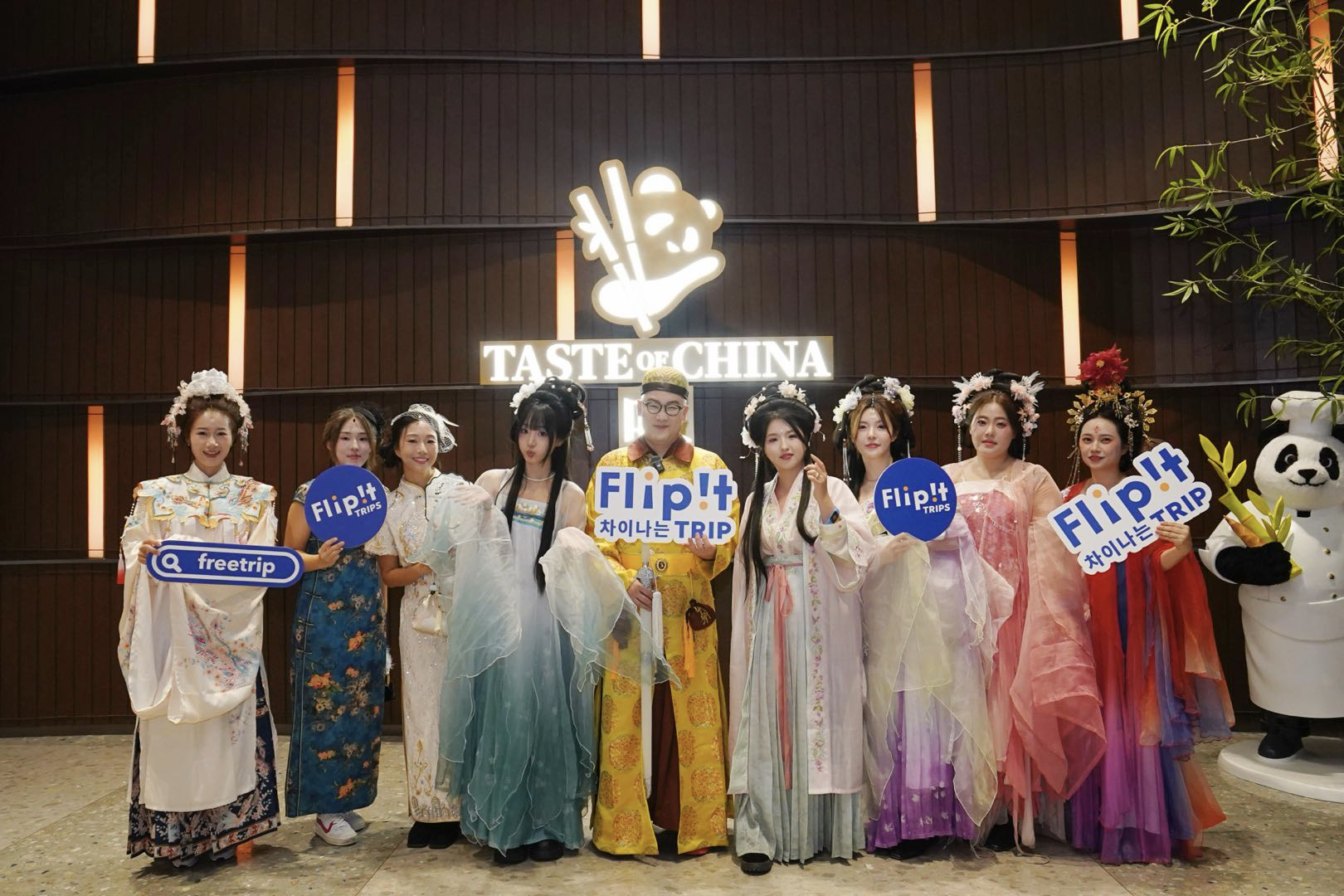
TASTE OF CHINA味沉浸式餐厅

Search documents
对话携程王韦:入境游红利,推动文旅市场三重“变革”
21世纪经济报道· 2025-12-26 14:24
Core Viewpoint - The article highlights the significant impact of visa facilitation policies on China's inbound tourism market, leading to a robust increase in foreign visitors and consumer spending, marking a transition from a "one-way flow" to a "two-way interaction" in the tourism industry [1][2]. Group 1: Inbound Tourism Growth - In 2025, the number of inbound foreign visitors reached 40.6 million, a year-on-year increase of 27.2%, with 240-hour visa-free transit visitors growing by 60.8% [1]. - In the first three quarters of 2025, visa-free inbound foreign visitors totaled 20.89 million, up over 50%, significantly boosting related project bookings by 300% [1]. - The optimization of the departure tax refund policy and the nationwide promotion of "buy and refund immediately" services have created a stimulating "golden combination" for consumer spending [1]. Group 2: Structural Changes in the Industry - Three structural "watersheds" have emerged in the tourism market: a shift in inbound tourism sources, a change in the role of platforms, and the integration of AI in demand creation [2][6]. - The engine of inbound tourism has shifted from primarily Asian markets to a rapid increase in visitors from Europe and America, indicating a broader global appeal of Chinese tourism [7]. - Platforms are evolving from mere sales channels to industry coordinators, utilizing technology to enhance operational efficiency and connect various stakeholders [8]. Group 3: Enhancing Visitor Experience - The focus has shifted from merely selling tickets and hotels to providing immersive experiences, reflecting a change in travelers' motivations [4]. - The introduction of AI in travel planning is transforming how itineraries are created, allowing for personalized and innovative travel experiences [8]. - The industry is addressing the "last mile" challenges by providing tools and support to local businesses, enabling them to better serve international tourists [9]. Group 4: Cultural and Product Innovation - The transformation of intangible cultural heritage into experiential products is crucial for attracting tourists and generating revenue [12]. - Innovative product offerings, such as immersive dining experiences that combine food, performance, and cultural elements, have proven effective in engaging global audiences [12]. - A tourism innovation fund has been established to reward successful cultural transformation cases, promoting the development of marketable cultural experiences [12]. Group 5: Global Service Integration - The trend of "Chinese tourism services going global" reflects the natural process of capability overflow, enhancing the global tourism experience for Chinese travelers [13]. - Chinese platforms are becoming co-builders of new global standards, promoting payment interoperability and service quality systems, which contribute to the overall upgrade of the tourism industry [13].



对话携程王韦:入境游红利,推动文旅市场三重“变革”
2 1 Shi Ji Jing Ji Bao Dao· 2025-12-26 08:21
Core Insights - The implementation of visa facilitation policies in 2025 has significantly boosted China's inbound tourism market, with a 27.2% year-on-year increase in foreign visitors, totaling 40.6 million [1] - The influx of visa-free travelers has led to a substantial increase in consumer spending, with a 300% rise in related project bookings and a 50% increase in the number of foreign visitors entering China in the first three quarters of 2025 [1] - The combination of optimized departure tax refund policies and "buy and refund immediately" services has created a stimulating effect on consumption [1] Group 1: Inbound Tourism Growth - The number of foreign visitors benefiting from 240-hour visa-free transit has increased by 60.8%, with major cities like Shanghai, Beijing, and Guangzhou seeing over 55% of inbound travelers enjoying this convenience [1] - By November 2025, over 12,000 departure tax refund stores were established, with a 285% increase in the number of foreign travelers processing refunds and nearly doubling the sales of tax refund products [1] Group 2: Structural Changes in the Industry - Three structural "watersheds" have emerged in the tourism market: a shift in inbound tourism sources, a change in the role of platforms, and the evolution of AI in demand creation [2][6] - The engine of inbound tourism has shifted from primarily Asian markets to a rapid increase in visitors from Europe and America, indicating a broader global appeal of Chinese tourism [6] - Platforms are evolving from mere sales channels to industry coordinators, utilizing technology to optimize operational efficiency across the tourism sector [6] Group 3: Service and Experience Enhancement - The dual flow of outbound and inbound tourism is enhancing service capabilities and quality standards, with a 15-point increase in user satisfaction for products adhering to new quality standards [5] - The industry is now required to provide immersive experiences rather than just selling tickets and accommodations, reflecting a shift in consumer expectations [4] Group 4: Addressing Industry Bottlenecks - The rapid growth in visitor numbers has outpaced the upgrade of the tourism supply chain, particularly affecting small hotels and local businesses that lack the tools to serve international tourists [8] - Initiatives are being implemented to empower local businesses, such as providing AI translation tools and optimizing transfer services at airports to enhance the overall travel experience [8] Group 5: Cultural and Product Innovation - The transformation of intangible cultural heritage into marketable experiences is crucial, with innovative product offerings like immersive dining experiences attracting global visitors [10] - A tourism innovation fund of 1 billion yuan has been established to reward successful cultural transformation cases, promoting the development of experiential and shareable cultural products [11] Group 6: Global Service Integration - The trend of "Chinese tourism services going global" reflects the natural process of capability overflow, enhancing the global experience for Chinese tourists and contributing to international tourism industry standards [11] - Chinese platforms are becoming co-builders of new global rules, promoting payment interoperability and service quality systems, which is essential for transitioning from a "tourism powerhouse" to a "service powerhouse" [11]
携程亮相第八届进博会,“免费城市半日游”项目已接待超万名游客
Bei Jing Shang Bao· 2025-11-05 13:12
Core Insights - The 8th China International Import Expo opened in Shanghai, with Ctrip Group participating as the "official travel service partner" to provide comprehensive services for overseas visitors [1][3] - Ctrip reported significant growth in inbound tourism, with ticket bookings and hotel nights for foreign tourists increasing over 100% compared to last year, and ticket sales rising over 300% [3] Group 1 - Ctrip has established a one-stop inbound tourism consultation center, offering over 10 comprehensive services for overseas visitors, emphasizing the concept of "first stop in China" [3] - The "free half-day city tour" initiative has been launched in Shanghai, Beijing, and Hong Kong, attracting over 10,000 tourists from more than 100 countries [3] - Ctrip introduced the "TASTE OF CHINA" immersive restaurant, combining digital art with culinary experiences to enhance visitors' understanding of Chinese culture [3] Group 2 - The Ctrip Global Partner Conference held in Chengdu gathered over 3,000 tourism industry elites from 74 countries and regions, setting a new record for participation [3] - Ctrip plans to continue increasing innovation investments, focusing on technology empowerment, product innovation, and global collaboration to enhance inbound tourism service experiences [3]
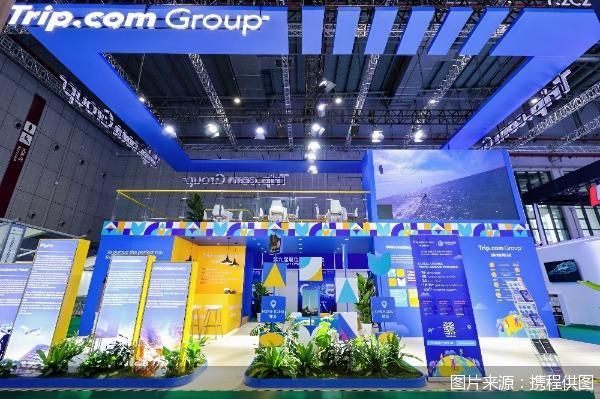
携程集团亮相第八届进博会,以多元创新赋能入境游高质量发展
Guo Ji Jin Rong Bao· 2025-11-05 05:50
Group 1 - The core theme of the news is the deep collaboration between Ctrip Group and the China International Import Expo, showcasing its innovative inbound tourism services and commitment to enhancing the travel experience for international visitors [1][5] - Ctrip Group is recognized as the "official travel service partner" for the expo, providing comprehensive services including flight bookings, hotel accommodations, and local experiences, highlighting its strength as a leading global travel service provider [1][3] - Inbound tourism continues to thrive, with Ctrip reporting over 100% growth in flight segments and hotel nights for foreign visitors compared to the previous year, and a remarkable 300% increase in ticket sales [1][3] Group 2 - The establishment of China's first one-stop inbound tourism consultation center aims to provide extensive services for overseas tourists, promoting a cross-industry collaboration model [3] - The "Go China" annual marketing campaign achieved over 500 million global exposures, while the new "FLiP !T Trips" initiative invites over a thousand international influencers to experience various local cultures [3] - Ctrip's "free city half-day tour" program has successfully hosted over 10,000 tourists from more than 100 countries, enhancing long-term travel interest [3][5] Group 3 - Ctrip Group's exhibition at the expo also emphasizes its multi-dimensional practices in ESG and corporate sustainability, focusing on carbon reduction in tourism, family-friendly travel services, and community inclusivity [5] - The company plans to continue investing in innovation, leveraging technology and global partnerships to enhance inbound tourism services and promote a more open and friendly image of China [5]