
TOPCon设备

Search documents
未知机构:长江电新晶科能源TOPCon龙头设备自动化程度高全球化优势显著-20260211
未知机构· 2026-02-11 01:45
Summary of Conference Call Notes Company Overview - The company discussed is JinkoSolar, a leader in the TOPCon technology segment of the photovoltaic (PV) industry, with a strong focus on automation and global operations [1][2]. Key Points and Arguments Industry Position and Capacity Expansion - JinkoSolar plans to build 100GW of solar capacity within three years, indicating aggressive growth and investment in the solar industry [1]. - The company has conducted extensive factory audits within the solar supply chain, showcasing its commitment to quality and operational excellence [1]. Patent and Technology Leadership - JinkoSolar holds over 4,400 patent applications and has received more than 3,000 patents, making it the leader in the industry in terms of patent ownership [1]. - The Shanxi facility is noted for its high level of automation, which significantly reduces land and labor costs [1]. Globalization and Cost Advantages - The company benefits from a more favorable integrated cost structure in Vietnam compared to domestic operations, and it has a 2GW module production capacity in the U.S. [1]. - JinkoSolar has extensive experience in overseas and North American production and operations, which enhances its competitive edge [1]. - The company anticipates that shipments to the U.S. will account for 5%-10% of total shipments in 2025, with plans to ensure this percentage through diversified channels in 2026 [1]. Technological Innovations - JinkoSolar is undergoing a transformation of its 40GW Tiger 3 module, which is priced 1 cent/W higher than conventional products. This includes the introduction of high copper paste on the back side, which is expected to reduce costs by 3 cents/W given current silver paste prices [1]. Energy Storage Integration - The company is beginning to establish a layout for integrated solar and storage solutions, with expectations to ship 6GWh of storage in 2025 and likely double that in 2026 [2]. - JinkoSolar currently has 5GWh of cell and 17GWh of pack production capacity, with 80% of shipments expected to be overseas and 5% in the U.S. in 2025 [2]. - With the anticipated growth in shipment scale, the company expects to achieve profitability in its energy storage business by 2026 [2].

捷佳伟创:公司目前在手订单以TOPCon为主,海外订单保持增长,海外订单占比持续提升
Mei Ri Jing Ji Xin Wen· 2026-02-07 07:17
Core Viewpoint - The company, Jiejia Weichuang, is experiencing growth in overseas orders, primarily driven by the upgrade of production lines in the industry, expansion in overseas markets, and the company's increased focus on new technology routes [1] Group 1: Company Orders - The current orders held by the company are mainly focused on TOPCon technology [1] - The development of overseas markets is contributing positively to the company's order growth [1] - The proportion of overseas orders is continuously increasing [1]
光伏设备是太空卫星电源系统,更是AI电力设备
2026-01-26 02:50
Summary of Conference Call on Photovoltaic Equipment Industry Industry Overview - The conference focused on the photovoltaic (PV) equipment industry, particularly in relation to space satellite power systems and AI power devices [1] - The discussion highlighted the recent surge in the PV sector, driven by developments from companies like SpaceX and Tesla, which are planning to build significant solar capacity both in space and on the ground [2][3] Key Points and Arguments SpaceX and Tesla Developments - SpaceX is reportedly planning to construct 100 GW of solar capacity for space applications, which has positively impacted the stock prices of related companies [2] - The technology being explored includes P-type heterojunction cells due to their better radiation resistance and thinner silicon wafers, which are crucial for weight reduction in space applications [3][4] - The choice of technology differs between domestic and international players, with SpaceX favoring crystalline silicon due to lower launch costs associated with their reusable rockets [4][5] Market Dynamics - The PV equipment sector has seen a significant increase in stock prices, with a reported 60% rise since late November, driven by optimism surrounding space-related solar projects [10][11] - The anticipated demand from Tesla for an additional 10 GW of capacity has further fueled market enthusiasm, with potential orders expected in the second quarter of the year [6][7] Long-term Projections - The long-term vision includes both SpaceX and Tesla aiming for 100 GW each, which could reshape the PV market and create new demand narratives beyond just space applications [7][11] - The potential for AI-driven power solutions is highlighted, suggesting that PV and energy storage could become essential for AI infrastructure, expanding the market's scope [10][20] Important but Overlooked Content - The conference emphasized the importance of the ground-based 100 GW project, which is expected to have a significant impact on the PV market, potentially leading to a re-evaluation of company valuations [11][19] - The discussion also touched on the supply chain implications, including the need for materials and auxiliary components, which could see increased demand as the industry evolves [18][19] - Companies like Maiwei and Aotewi were identified as key players due to their strong market positions and technological capabilities in the PV equipment sector [14][15] Conclusion - The overall sentiment is optimistic regarding the PV equipment industry, with expectations of continued growth driven by both space and ground-based solar initiatives [20][21] - The potential for AI integration into the energy supply chain is seen as a transformative trend that could significantly enhance the industry's growth trajectory [20][21]


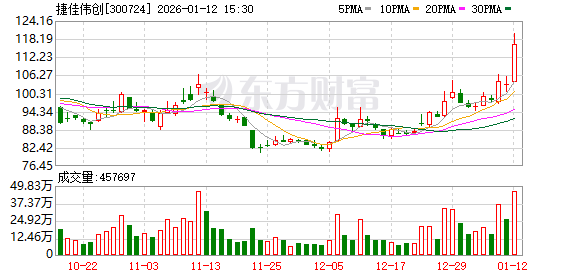
捷佳伟创:公司目前在手订单以TOPCon为主,海外订单和钙钛矿设备订单保持增长
Mei Ri Jing Ji Xin Wen· 2026-01-12 09:18
Group 1 - The company has reported that its current orders are primarily focused on TOPCon technology, indicating a strategic emphasis on this area [2] - Industry upgrades, expansion in overseas markets, and the company's increased investment in new technology routes are expected to positively impact order volumes [2] - The company has noted that both overseas orders and orders for perovskite equipment continue to grow [2]

光伏HJT设备,2026年将继续爆发
Ge Long Hui· 2025-12-19 10:51
Core Insights - The U.S. photovoltaic (PV) market is experiencing a dual turning point of "demand explosion + capacity return" in 2025, driven by AI computing power expansion and a declining interest rate cycle, leading to a projected installation capacity of over 60GW in 2025 with a compound annual growth rate of 20% [1][2]. Demand Side - The U.S. renewable energy generation share is low at approximately 10%, significantly below the global average of 30%, indicating substantial room for energy structure transformation [2]. - The demand for PV is catalyzed by the electricity gap created by AI data centers and manufacturing recovery, as these centers operate continuously and require stable power sources, making PV a preferred clean energy option [2]. - The arrival of a declining interest rate cycle has amplified demand potential, as the internal rate of return (IRR) for PV projects is highly correlated with interest rates, leading to lower financing costs and increased investment willingness from developers [2]. Policy Support - The U.S. government is promoting domestic PV production through a combination of "manufacturing subsidies + trade protection," establishing a solid foundation for local capacity expansion [2]. - Although the Investment Tax Credit (ITC) for distributed projects will gradually phase out after 2027, subsidies for manufacturing remain strong, with 4 cents per cell and 7 cents per module, reducing cost pressures for domestic manufacturers [2]. Domestic Capacity and Challenges - The planned domestic PV capacity in the U.S. is set to reach 60-70GW, with approximately 40GW already in production for modules, but only single-digit capacity for cells, highlighting a significant supply gap [3]. - The U.S. PV manufacturing faces challenges such as high labor, energy, and compliance costs compared to China, necessitating the adoption of more efficient and lower-cost technologies like HJT (Heterojunction Technology) [3][4]. HJT Technology Advantages - HJT technology requires only four core processes, resulting in lower operational costs (OPEX) of $5.4-5.5 million per GW, compared to $7.2 million for TOPCon technology, with a cost difference of 2 cents per watt [4]. - Even without government subsidies, HJT can achieve a profit of 1.6 cents per watt, indicating sustainable profitability post-subsidy reduction [5]. Patent Landscape - HJT technology has a patent advantage, as its core patents expired in 2015, allowing U.S. companies to expand capacity without the risk of patent litigation, unlike TOPCon and BC technologies [8]. - Several U.S. companies have announced HJT capacity expansion plans, totaling over 30GW, expected to materialize between 2026 and 2028, providing certainty for the supply chain [8][9]. Equipment Supply Chain - The surge in HJT capacity in the U.S. will benefit Chinese equipment manufacturers, who dominate the global HJT equipment market with over 70% market share, providing a competitive edge in terms of cost and service [10]. - U.S. companies prefer Chinese equipment due to significant cost advantages (60%-70% cheaper than overseas options) and faster service response times, which are crucial for meeting rapid production ramp-up needs [10]. Investment Opportunities - The expansion of domestic PV capacity and the adoption of HJT technology create clear investment themes focused on "equipment leaders + technology support," balancing performance certainty with growth potential [11]. - Key players include: - Maiwei Co., which leads in HJT equipment with over 70% market share, benefiting from U.S. capacity expansion [11]. - Aotwei, a leader in module packaging equipment, with ongoing demand from the 40GW of installed capacity [11]. - Gaomei Co., a core supplier of HJT wafer cutting equipment, benefiting from technology upgrades and U.S. capacity expansion [11]. Auxiliary Investment Themes - The demand for low-temperature silver paste and TCO targets will rise with HJT technology, driving exports of related materials [12]. - Companies producing photovoltaic glass and encapsulants are well-positioned to meet the supply chain needs of U.S. module production, leveraging global presence and cost advantages [12].


300724,高管股东集体减持
Di Yi Cai Jing Zi Xun· 2025-09-07 12:16
Core Viewpoint - The stock price of Jiejia Weichuang (300724.SZ) continues to reach new highs, while shareholders and executives are frequently announcing plans to reduce their holdings, indicating a potential divergence between stock performance and insider selling [2][3]. Shareholder Actions - On September 5, Jiejia Weichuang announced a new reduction plan, with shareholder Li Shijun intending to cash out approximately 320 million yuan, bringing his total cash-out since November 2021 to over 600 million yuan, potentially nearing 1 billion yuan if this latest plan is fully executed [2][4]. - Other executives, including two vice presidents, also plan to reduce their holdings, with total cash-out amounts reaching approximately 2.33 billion yuan from various shareholders in recent months [5][4]. Stock Performance - As of the latest close, Jiejia Weichuang's stock price was 106.7 yuan, reflecting a year-to-date increase of over 70%, with a 37% rise in the last two weeks [3][4]. - The stock price remains strong despite the ongoing insider selling, attributed to a rebound in the photovoltaic industry and stabilization of prices across the supply chain [2][3]. Financial Performance - In the first half of the year, Jiejia Weichuang achieved revenue of 8.372 billion yuan, a year-on-year increase of 26.4%, and a net profit of 1.83 billion yuan, up 49.26%, marking the best performance since its IPO [6][7]. - The second quarter alone saw revenue of 4.273 billion yuan, with a year-on-year growth of 5.66%, and a net profit of 1.122 billion yuan, reflecting significant year-on-year increases of 73.22% [6][7]. Industry Context - The photovoltaic industry is undergoing a deep adjustment phase, with production growth rates for battery cells and modules remaining below 15% in the first half of the year, while exports have begun to recover [6][8]. - Jiejia Weichuang is a leading supplier of TOPCon technology and is expanding into semiconductor and lithium battery equipment, positioning itself well amid ongoing technological advancements in the industry [6][9]. - The company is expected to face both opportunities and challenges, with structural demand driven by new photovoltaic technologies and potential price competition due to capacity expansion [7][9].

捷佳伟创高管股东集体减持,暗示股价加速赶顶?
Di Yi Cai Jing· 2025-09-07 09:33
Core Viewpoint - The recent stock price surge of Jiejia Weichuang contrasts sharply with the ongoing share reduction plans by major shareholders, particularly Li Shijun, who plans to cash out approximately 320 million yuan, bringing his total cash-out to nearly 1 billion yuan over four years [1][2][4]. Company Summary - Jiejia Weichuang's stock price reached a new high, with a year-to-date increase exceeding 70%, and a 37% rise in the last two weeks [2]. - Li Shijun, a co-founder and significant shareholder, has been reducing his stake since November 2021, with cumulative cash-outs totaling approximately 668 million yuan [3][4]. - The company reported a revenue of 8.372 billion yuan for the first half of the year, a year-on-year increase of 26.4%, and a net profit of 1.83 billion yuan, up 49.26% [6]. - The company is a leading supplier of TOPCon solar cell technology and has diversified into semiconductor and lithium battery equipment [5][6]. Industry Summary - The photovoltaic industry is experiencing a structural demand driven by new technologies, particularly N-type products, with global solar installation forecasts for 2025 revised upward to 570-630 GW [7]. - The industry faces challenges such as capacity clearing and the impact on supply-demand dynamics, with recent price increases reflecting effective production control measures [7]. - Jiejia Weichuang plans to increase R&D investment to maintain its technological edge and expand into overseas markets to mitigate risks associated with reliance on a single market [7].
捷佳伟创(300724):国内光伏抢装加快验收节奏,Q2营收和利润同比大幅增长
Changjiang Securities· 2025-09-02 23:30
Investment Rating - The investment rating for the company is "Buy" and is maintained [6]. Core Views - The company reported significant growth in revenue and profit for the first half of 2025, with revenue reaching 8.372 billion yuan, a year-on-year increase of 26.41%, and net profit attributable to shareholders of 1.83 billion yuan, up 49.26% year-on-year [2][4]. - In Q2 2025, the company achieved revenue of 4.273 billion yuan, reflecting a year-on-year growth of 5.66% and a quarter-on-quarter increase of 4.23%. The net profit for Q2 was 1.122 billion yuan, marking a year-on-year increase of 73.22% and a quarter-on-quarter rise of 58.47% [2][4]. Revenue Summary - The revenue growth in H1 2025 was primarily driven by the continuous acceptance of orders, with the revenue from process equipment and automation equipment accounting for 83% and 12% of total revenue, respectively, remaining consistent with the previous year [8]. - The domestic and overseas revenue contributions were 76% and 24%, respectively, indicating an increase in overseas market expansion [8]. Profitability Summary - The gross margin for H1 2025 was approximately 30%, a decrease of 2 percentage points year-on-year. The gross margins for process and automation equipment were around 28%, showing reasonable year-on-year changes [8]. - In Q2 2025, the gross margin improved to about 32%, with a significant quarter-on-quarter increase of 4 percentage points. The net profit margin for Q2 reached 26%, reflecting a substantial quarter-on-quarter increase of 9 percentage points [8]. Future Outlook - The company plans to strengthen its overseas market expansion by establishing subsidiaries in countries such as Japan, Singapore, and Malaysia, while also enhancing product safety certification coverage to improve competitiveness in international markets [8]. - The company aims to accelerate the mass production of new products and comprehensively layout high-efficiency technology routes, including TOPCon, HJT, XBC, perovskite, and perovskite tandem technologies, while actively exploring the semiconductor and lithium battery equipment sectors [8].