
TPU v8

Search documents
博通_拉斯维加斯见闻…CES 投资者会议中与半导体解决方案集团总裁交流的要点
2026-01-10 06:38
Summary of Broadcom Inc. Conference Call Company and Industry - **Company**: Broadcom Inc (Ticker: AVGO) - **Industry**: U.S. Semiconductors Core Points and Arguments 1. **Investor Concerns**: Investors have expressed worries about rising competition and customer-owned tooling (COT) potentially impacting Broadcom's AI-dominant position. However, the company believes these concerns are overblown and unlikely to dethrone them in the ASIC space anytime soon [2][11]. 2. **Technological Advantages**: Broadcom claims to have unique technological, scale, and supply chain advantages, particularly in their XPU roadmaps. They are positioned to keep pace with NVIDIA's innovation in the AI space, which is seen as a critical factor for success [2][3][12]. 3. **TPU Shipping Projections**: Broadcom anticipates shipping "many millions" of TPUs in 2026, with hundreds of thousands of TPU v8 units expected to ship monthly by year-end. The previously mentioned $73 billion order number is now considered "significantly higher" [4][15]. 4. **Financial Outlook**: The company remains bullish on its AI story, with current valuations providing an attractive entry point. The stock is rated as Outperform with a price target of $475 [5][16]. 5. **Supply Chain Management**: Broadcom is actively managing its supply chain, working with all HBM vendors and ensuring that they have dedicated substrate supply. They are focused on a limited number of large LLM customers, which allows for tighter management of resources [14]. Additional Important Information 1. **Innovations in Chip Technology**: Broadcom is innovating with 3D chip stacking and 400G serdes, which are expected to provide significant performance advantages over competitors. They have also built a substrate factory in Singapore to secure supply and manage costs effectively [3][13]. 2. **Financial Metrics**: - **Adjusted EPS**: Expected to grow from $6.82 in FY2025 to $14.86 in FY2027, indicating a strong CAGR [8]. - **Market Cap**: Approximately $1,576.38 billion [6]. - **Performance**: The stock has shown a 45% increase over the past 12 months [6]. 3. **Risks**: Potential risks to the price target include unexpected weakness in AI demand, share losses at key customers, and failure to execute on merger synergies [27]. This summary encapsulates the key takeaways from the conference call, highlighting Broadcom's strategic positioning, financial outlook, and the competitive landscape within the semiconductor industry.

HBM4,三星逆袭?
半导体行业观察· 2026-01-02 03:33
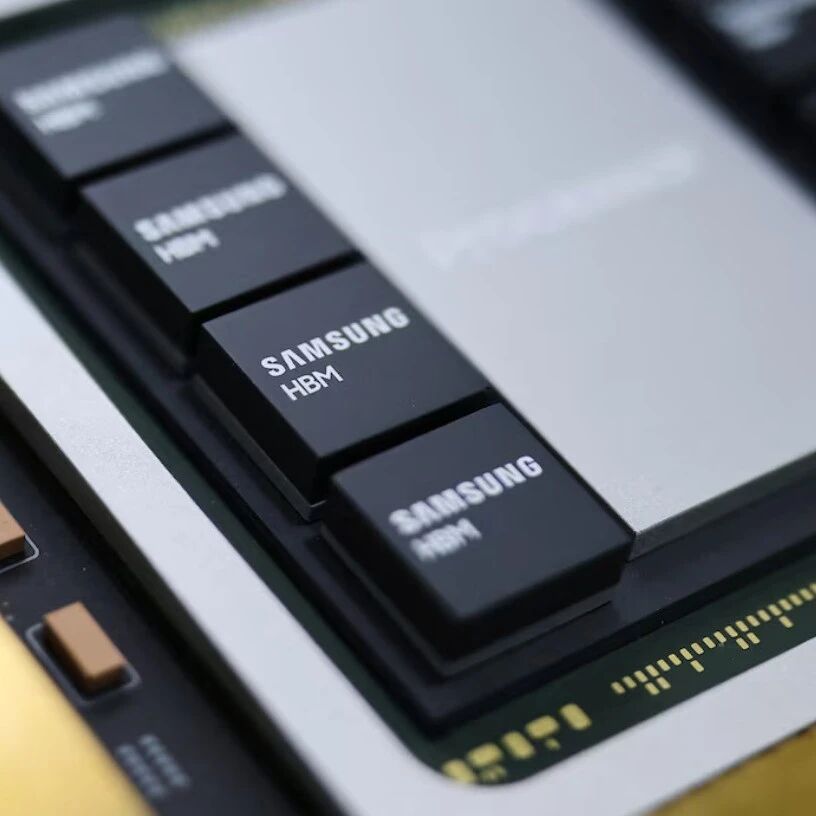
Core Viewpoint - Samsung Electronics is focusing on its next-generation high bandwidth memory (HBM) chips, specifically HBM4, which has received positive feedback from clients, indicating a strong competitive edge in the AI chip market [1]. Group 1: Market Position and Competition - Samsung is in discussions with Nvidia to supply HBM4, aiming to regain its position in the AI chip sector, where it currently holds 35% market share compared to SK Hynix's 53% as of Q3 2025 [1]. - Investors are closely monitoring Samsung's ability to narrow the market gap through the production of HBM4 chips, with mass production targeted for 2026 [1]. Group 2: Performance and Testing - Samsung's HBM4 achieved record speeds during technical tests conducted by Broadcom, outperforming competitors and demonstrating superior thermal management capabilities [3]. - The performance validation for Google's TPU v8 indicates that Samsung's HBM4 meets the high-performance requirements needed for AI applications, with commercial production expected in 2026 [3][4]. Group 3: Strategic Partnerships - The collaboration between Samsung and Broadcom, initiated in 2023, is expected to strengthen as Samsung's HBM4 testing results enhance their alliance, particularly with Google's plans to offer TPU to external clients [3][4]. - Analysts suggest that Broadcom may benefit significantly from the growing AI revenue generated by Alphabet, as the TPU becomes increasingly vital to Alphabet's growth strategy [4].

三星HBM4,传获芯片巨头认证
半导体芯闻· 2025-12-31 08:56
Core Insights - Samsung Electronics' sixth-generation high-bandwidth memory (HBM4) achieved a record operational speed during technical tests led by Broadcom, outperforming competitors in performance validation for Google's eighth-generation AI accelerator, TPU v8 [1][2] - The HBM4 reached a speed of 11 Gbps during system-in-package (SiP) testing, marking it as the leader among the top three memory manufacturers, with superior thermal management ratings [1] - The results from the HBM4 tests are expected to strengthen the partnership between Samsung and Broadcom, as Google plans to offer TPU to external customers, potentially increasing Samsung's HBM supply significantly by 2026 [1] Industry Context - A senior industry executive noted that Samsung's record speed in Broadcom's tests demonstrates its competitive edge in integrating wafer foundry services with advanced packaging solutions, positioning Samsung favorably for securing Google supply chain orders in the coming year [2] - Alphabet Inc.'s latest "Gemini 3" chatbot has received positive reviews, with its in-house developed TPU becoming a crucial asset for supporting AI models [2] - Melius Research analyst Ben Reitzes highlighted that Google and Broadcom have been collaborating on custom ASICs since 2016, now reaching the seventh generation, with TPU being a significant player in AI workloads alongside Nvidia's GPUs [2]

IP 设计服务展望:2026 年 ASIC 市场动态
2025-05-22 05:50
Summary of Conference Call Notes Industry Overview - The conference call focuses on the ASIC (Application-Specific Integrated Circuit) market dynamics, particularly involving major players like AWS, Google, Microsoft, and META, with projections extending into 2026 and beyond [1][2][5]. Key Company Insights AWS - AWS has resolved issues with Trainium 3 and continues to secure orders from downstream suppliers. The development of Trainium 4 has commenced, with expectations for a contract signing soon [2][5]. - The specifications for AWS's TPU chips are significantly higher than competitors, with TPU v6p and TPU v7p expected to have ASPs of US$8,000 and higher, respectively [2]. Google - Google is progressing steadily with its TPU series, with TPU v6p featuring advanced specifications including multiple compute and I/O dies. The company is anticipated to become a top customer for GUC due to its rapid ramp-up in CPU development [2][10]. - The revenue from Google's 3nm server CPU is expected to contribute to GUC's revenue sooner than previously anticipated, moving from Q4 2025 to Q3 2025 [10]. Microsoft - Microsoft is working on its Maia v2 ASIC, with a target of ramping 500,000 chips in 2026. However, the project has faced delays, pushing the tape-out timeline from Q1 2025 to Q2 2025 [3][4]. - The allocation of chips has shifted, with expectations of 40-60k chips for MSFT/GUC and 400k chips for Marvell in 2026 [3]. META - META is transitioning from MTIA v2 to MTIA v3, with expectations of ramping 100-200k chips for MTIA v2 and 200-300k chips for MTIA v3 in 2026 [2]. Non-CSPs - Companies like Apple, OpenAI, and xAI are entering the ASIC server market, with many expected to tape out in 2H25 and ramp in 2H26. These companies are likely to collaborate with Broadcom for high-end ASIC specifications [7][8][9]. Financial Projections - GUC's FY25 revenue is expected to exceed previous forecasts, driven by contributions from Google and crypto projects. However, concerns remain about FY26 growth without crypto revenue, with a projected 50% YoY growth in MP revenue [10][11]. - The revenue contribution from various ASIC projects in 2026 includes significant figures such as US$16,756 million from TPU v6p and US$2,616 million from Trainium 3 [18]. Additional Insights - The competitive landscape for ASIC design services is intensifying, with Broadcom and MediaTek entering the fray alongside existing players like Marvell and GUC [4][15]. - The potential impact of geopolitical factors on HBM2E clients was discussed, highlighting the resilience of Faraday in the face of possible restrictions [14]. Conclusion - The ASIC market is poised for significant growth, driven by advancements in technology and increasing demand from both CSPs and non-CSPs. Key players are adapting their strategies to navigate challenges and capitalize on emerging opportunities in the sector [1][5][7].


