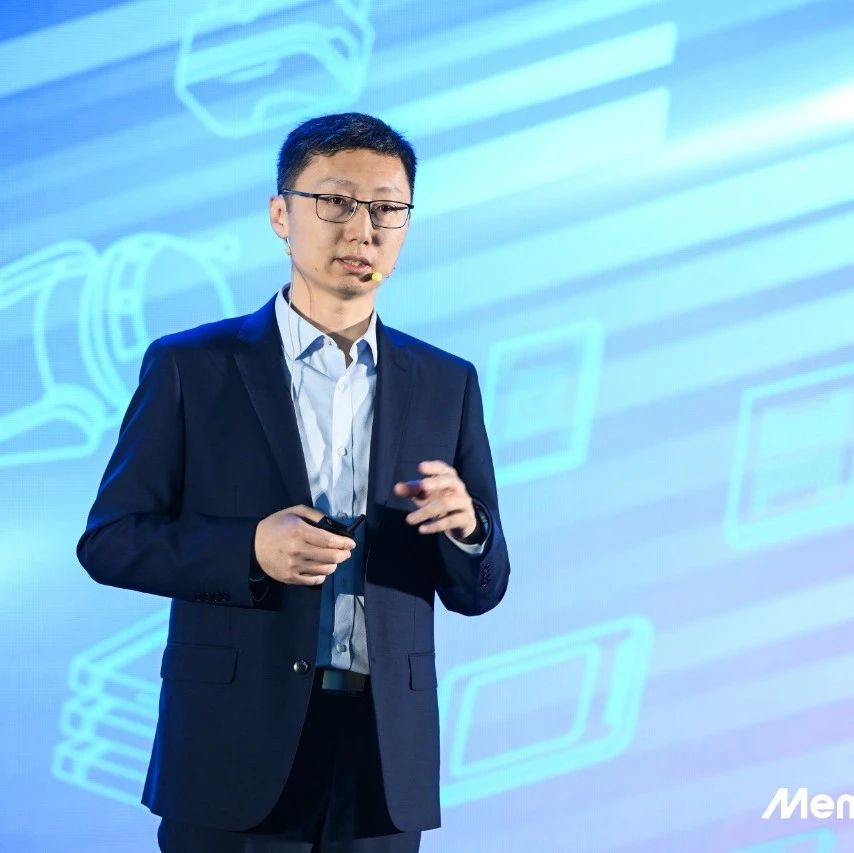
Xtacking架构

Search documents
东方证券:英伟达(NVDA.US)推出推理上下文内存存储平台 AI存储需求持续扩张
智通财经网· 2026-01-07 07:37
Core Viewpoint - NVIDIA has introduced a context memory storage platform at CES 2026, aimed at creating a new memory layer optimized for AI inference, bridging GPU memory and traditional storage [1][2]. Group 1: NVIDIA's New Platform - The context memory storage platform is a POD-level AI-native storage infrastructure designed to support long-term AI operations by optimizing data access and management [2]. - The platform includes hardware and software components such as BlueField-4 for data management, Spectrum-X Ethernet for high-performance networking, and various software tools to enhance system efficiency [2]. Group 2: Shift in AI Inference Bottlenecks - The bottleneck in AI inference is shifting from computation to context storage, necessitating a restructured AI storage architecture to handle increased context data from complex tasks [3]. - There is an expectation that the demand for storage chips will grow significantly as AI evolves from simple chatbots to more complex collaborative entities requiring extensive context capacity [3]. Group 3: Domestic Storage Industry Opportunities - The ongoing supply-demand imbalance in storage, coupled with limited expansion from overseas storage giants, presents a historic opportunity for domestic storage manufacturers to increase their market share [4]. - Companies like Changxin Technology and Yangtze Memory Technologies are making significant advancements in DRAM and NAND technologies, respectively, which could lead to substantial production capacity increases post-IPO [4]. Group 4: Related Companies - Key domestic semiconductor equipment companies include Zhongwei Company, Jingzhida, and Beifang Huachuang, among others [5]. - Companies involved in packaging and testing include Deep Technology and Huicheng Shares [6]. - Firms focusing on AI storage solutions and benefiting from storage technology iterations include Zhaoyi Innovation and Lianyun Technology [6].


美国万万没想到,100%中国国产化长江存储,正在“狂扁”美国科技
Sou Hu Cai Jing· 2026-01-01 06:07
Core Viewpoint - The emergence of Yangtze Memory Technologies Co. (YMTC) has significantly disrupted the NAND flash memory market, challenging established players like Micron Technology and showcasing the effectiveness of domestic innovation in the face of U.S. restrictions [1][3][30]. Group 1: Company Development - YMTC has rapidly evolved from its establishment in 2016 to become a key player in the global NAND flash memory market, leveraging domestic resources to overcome U.S. sanctions [3][19]. - The company has successfully launched its fifth-generation 3D TLC NAND products in 2025, featuring a stacking layer count equivalent to 294 layers, despite facing comprehensive restrictions [19][30]. Group 2: Technological Innovation - YMTC's Xtacking architecture represents a significant innovation, allowing the separation of control circuits and storage units on different wafers, leading to increased storage density, faster read/write speeds, and reduced production cycles [11][30]. - This innovative approach has compelled even competitors like Samsung to seek licensing agreements, indicating the architecture's competitive edge [13]. Group 3: Legal and Market Dynamics - Micron's legal strategy has involved invoking national security concerns to avoid disclosing core technology documents in court, reflecting a defensive posture in the face of YMTC's legal challenges [5][7]. - The ongoing legal battles have expanded beyond the U.S., with YMTC filing lawsuits in Europe and targeting Micron and its distributors, indicating a shift in the competitive landscape [23][25]. Group 4: Market Impact - The decline in Micron's market share and the resulting price drops for consumers highlight the benefits of increased competition, as consumers gain access to more affordable high-capacity storage solutions [27][30]. - The shift in market dynamics suggests that the era of unilateral control by established players is coming to an end, with new rules likely emerging in the semiconductor industry [32].


从追赶到领跑:长江存储Xtacking重塑存储价值
半导体芯闻· 2025-03-17 10:42
Core Viewpoint - The global information technology industry is undergoing a fourth revolution centered around artificial intelligence (AI), which poses unprecedented challenges to the underlying hardware infrastructure, particularly in storage technology [1]. Group 1: AI's Impact on Storage Technology - The demand for storage technology driven by AI is primarily focused on three aspects: high performance, large capacity, and low power consumption, requiring storage manufacturers to find a delicate balance among these factors [3]. - Yangtze Memory Technologies Co. (YMTC) has introduced the Xtacking architecture, which separates storage cells from logic circuits, achieving breakthroughs in I/O speed (3.6 Gbps) and single die capacity (2 Tb) [3][4]. Group 2: Xtacking Architecture Advancements - The Xtacking technology has evolved to its fourth generation, with significant improvements in I/O speed from 800 MT/s to 3.6 GT/s, representing over a fourfold increase [4]. - Three NAND products based on Xtacking 4.0 were showcased, including a 512 Gb TLC flash chip with a 50% increase in I/O speed and over 40% improvement in storage density [4][5]. - The 1 Tb TLC flash chip also achieved 3.6 GT/s I/O speed and a 36% increase in storage density, gaining widespread market recognition since its mass production [5]. - The QLC flash chip under Xtacking 4.0 has a single die capacity of 2 Tb, with a 147% increase in data throughput and a 33% improvement in lifespan compared to previous generations [5]. Group 3: Product Line and Market Coverage - YMTC's product solutions encompass three main lines: embedded products, consumer products, and enterprise products, catering to various applications from IoT devices to cloud computing [9]. - The embedded product line includes flagship products like UC420, UC341, and UC260, designed for high-end AI smartphones and offering significant performance improvements and energy efficiency [10]. - In the PC segment, flagship products like PC550 and PC450 utilize PCIe 5.0 and PCIe 4.0 interfaces, respectively, achieving high performance while maintaining low power consumption [11]. - The upcoming enterprise-grade SSD PE511, based on Xtacking 4.0, is expected to offer a 100% performance increase and larger capacity options, enhancing operational efficiency in data centers [12]. Group 4: Future Outlook - YMTC's growth trajectory underscores the importance of innovation as the sole path to breakthroughs, with a focus on making storage faster, smarter, and more ubiquitous in the AI era [15]. - As AI evolves towards embodied intelligence and general artificial intelligence (AGI), storage technology is poised to become a core hub in the intelligent world, with Chinese companies likely to lead the global storage industry into a new cycle of value growth [15].