
smart精灵3号

Search documents
限量1000辆仍「滞销」,smart销量已连续两年下跌
Di Yi Cai Jing· 2026-01-26 06:01
Core Insights - Smart's sales are struggling despite the backing of Mercedes-Benz, with a significant decline in retail sales over the years [3][7] - The introduction of limited edition models and price reductions have not successfully reversed the downward trend in sales [6][7] Group 1: Sales Performance - The smart精灵1号马年开运版, launched on January 1, 2023, has not sold out, with 1,000 units produced and a starting price of 139,900 yuan, which is 15,000 yuan lower than the standard version [1] - Smart's retail sales for 2025 are projected to be just over 30,000 units, a decline of over 7% from the previous year, with an average monthly sales of less than 2,567 units [2][7] - In 2024, smart's retail sales were 33,280 units, indicating a year-on-year decline of over 21.3% [7] Group 2: Market Position and Strategy - Smart was established in 1994 by Daimler and Swatch, originally achieving annual sales of up to 150,000 units, but has faced challenges in recent years [3][5] - The brand's strategy includes a shift to electric vehicles, with the launch of the smart精灵1 in 2022, but sales have not met expectations [5][6] - Smart's marketing efforts have included appointing a new CMO to enhance management capabilities in China, but the effectiveness of these changes remains uncertain [5][6] Group 3: Competitive Landscape - The market for light luxury electric vehicles, which smart targets, has not developed as anticipated, with competitors like MINI also facing sales difficulties [12][13] - The automotive market is becoming increasingly competitive, with significant price reductions being necessary to attract buyers [13] - The overall retail market for new energy vehicles has seen a decline, with a reported 38% drop in sales year-on-year [11]

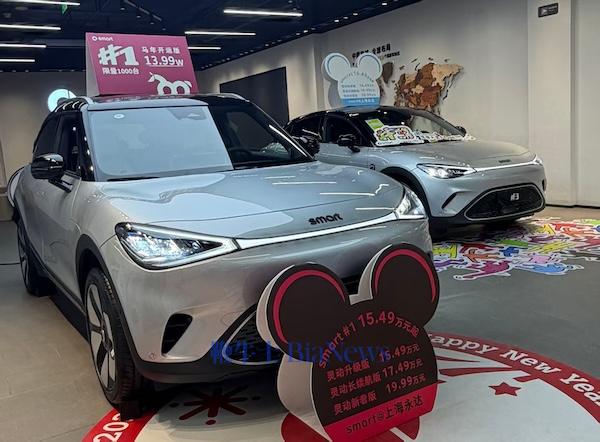
限量1000辆仍“滞销”,smart销量已连续两年下跌
第一财经· 2026-01-26 04:39
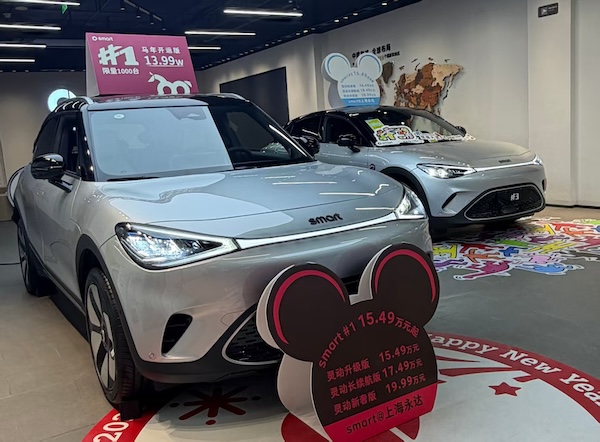
Core Viewpoint - Smart's sales continue to decline despite its backing from Mercedes-Benz, with significant challenges in the Chinese market and a failure to establish a strong brand identity [3][6][8]. Sales Performance - The smart EQ fortwo "Year of the Horse" limited edition, launched on January 1, 2026, has not sold out, with only 1,000 units available at a starting price of 139,900 yuan, which is 15,000 yuan lower than the standard model [3]. - Smart's sales target for 2025 was initially set at 120,000 units but was later revised down to 80,000 units. However, actual sales were only around 30,799 units, reflecting a decline of over 7% from the previous year [3][8]. - In 2024, smart's retail sales totaled 33,280 units, indicating a year-on-year decline of over 7% despite the introduction of the smart EQ fortwo [4][8]. Market Position and Strategy - Smart was established in 1994 as a joint venture between Daimler and Swatch, focusing on compact microcars. However, it faced production halts in various markets from 2017 to 2019 [6]. - In 2022, smart launched its first pure electric vehicle, the smart EQ fortwo, but sales have not met expectations. In 2023, the retail sales were 42,292 units [7]. - To improve sales, smart has made significant management changes and price reductions, with the smart EQ fortwo's starting price dropping to 154,900 yuan in April 2024 [7][8]. Expansion and Challenges - Despite declining sales, smart is expanding its retail presence, with a 25% increase in global store count to 688 by 2025, including a 43% increase in China [10][11]. - The brand's focus on the "light luxury electric small car" market has not developed as anticipated, with competitors like MINI also facing sales difficulties [14][15]. - The automotive market is becoming increasingly competitive, with a significant drop in retail sales for both traditional and electric vehicles in early 2026 [13][16].
限量1000辆仍“滞销”,smart销量已连续两年下跌
Di Yi Cai Jing· 2026-01-26 03:51
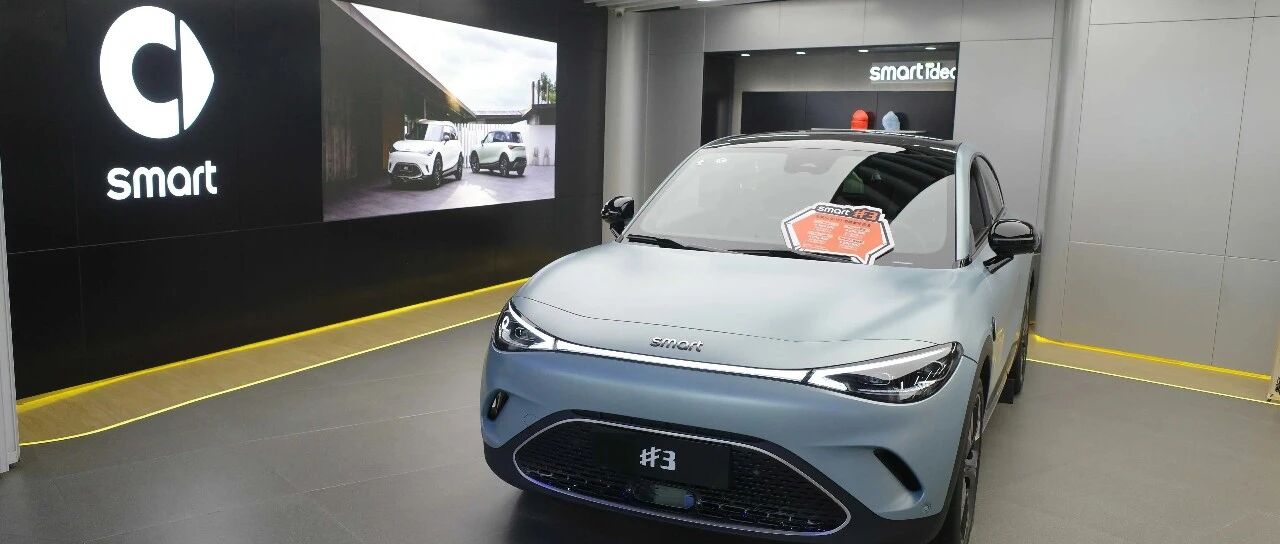
Core Viewpoint - The luxury electric vehicle brand smart is facing significant sales challenges in the Chinese market, despite its association with the prestigious Mercedes-Benz brand. The brand's sales have been declining for several years, and recent efforts to boost sales through new models and price reductions have not yielded the expected results [4][5][6]. Group 1: Sales Performance - The smart brand's retail sales for 2025 are projected to be just over 30,000 units, with an average monthly sales figure of less than 2,567 units, ranking 66th in the market [2]. - In 2024, smart's cumulative retail sales were 33,280 units, indicating a year-on-year decline of over 7% despite the introduction of the new smart精灵5号 model [2]. - The smart精灵1号, which is the brand's main sales model, sold 20,836 units last year, while the smart精灵3号 and smart精灵5号 sold 4,451 and 5,512 units respectively [7]. Group 2: Market Strategy and Challenges - Smart's initial sales target for 2025 was set at 120,000 units but was later revised down to 80,000 units due to underperformance [1]. - The brand has been expanding its retail presence, with a 25% increase in global store count expected in 2025, reaching 688 stores, including a 43% increase in China [8]. - Despite the expansion, the average sales per store are projected to be only around 100 units, highlighting the challenges in achieving significant sales growth [8]. Group 3: Competitive Landscape - The market for luxury electric vehicles, particularly in the small car segment, remains underdeveloped, with competitors like MINI also facing sales difficulties [10][11]. - The overall market for new energy vehicles is experiencing increased competition and declining sales, with a reported 38% year-on-year drop in new energy vehicle retail sales in early 2026 [9]. - The shift in consumer preferences towards value and technology over brand prestige is impacting traditional luxury brands like smart and MINI, as the importance of brand image diminishes in the electric vehicle era [12].
从“免征”调整为“减半征收” 新能源汽车购置税退坡进入倒计时
Zhong Guo Jing Ying Bao· 2025-10-31 15:23
Core Insights - The ongoing competition among automakers in the new energy vehicle (NEV) sector has led to a "purchase tax subsidy war" as companies aim to capture market share before the upcoming tax policy changes in 2026 [1][2][3] Group 1: Purchase Tax Policy Changes - Starting January 1, 2026, the purchase tax for NEVs will shift from exemption to a 50% reduction, with the maximum tax reduction amount decreasing from 30,000 yuan to 15,000 yuan [1][4] - The new policy will require plug-in hybrid vehicles to have a pure electric range of at least 100 kilometers to qualify for tax exemptions, which is a significant increase from the previous requirement of 43 kilometers [2][7] Group 2: Automaker Responses - Sixteen automakers, including Xiaomi, Li Auto, and Tank, have introduced "cross-year purchase tax subsidy plans" to incentivize customers to place orders before the policy change [1][3][4] - These subsidy plans are primarily aimed at new and popular models, with companies offering to cover the tax difference for vehicles delivered in 2026 [4][5] Group 3: Market Impact and Sales Projections - The new tax policy is expected to boost NEV sales in the short term, with projections indicating that total vehicle sales in China could exceed 34 million units in 2025, an increase of 1 million from earlier estimates [6] - The impending policy changes may lead to a surge in sales of lower-range electric vehicles as automakers push to clear inventory before the new regulations take effect [2][6] Group 4: Industry Transformation - The tightening of tax exemption criteria is seen as a move towards creating a more competitive environment between NEVs and traditional fuel vehicles, promoting technological upgrades within the industry [7][9] - The new technical requirements for NEVs are expected to accelerate the elimination of outdated production capacities and drive companies to enhance their research and development efforts [8][9]