
Zhong Yang Ji Wei Guo Jia Jian Wei Wang Zhan

Search documents
学纪知纪明纪守纪丨善用法治思维和法治方式正风肃纪反腐
Zhong Yang Ji Wei Guo Jia Jian Wei Wang Zhan· 2025-10-29 00:20
Core Viewpoint - The article emphasizes the importance of deeply understanding and implementing Xi Jinping's rule of law thought to enhance the standardization, legalization, and normalization of disciplinary inspection and supervision work [5][9]. Group 1: Learning and Implementation - The study and implementation of Xi Jinping's rule of law thought is fundamental for disciplinary inspection and supervision agencies, serving as a basic skill and compulsory course [5]. - Continuous learning and practical application of Xi Jinping's rule of law thought are essential for improving the quality and efficiency of disciplinary inspection and supervision work [6][9]. Group 2: Enhancing Legal Awareness - Strengthening legal awareness among disciplinary inspection and supervision personnel is crucial, with a focus on integrating legal thinking into daily operations [7][8]. - Training programs should cover the entire disciplinary inspection and supervision process, ensuring that personnel are well-versed in legal requirements [6][8]. Group 3: Integration of Discipline and Law - The integration of discipline and law is necessary to achieve unified political, disciplinary, and social effects, with a focus on ensuring that disciplinary actions are in line with legal standards [13][15]. - Disciplinary inspection agencies must adhere to both party regulations and national laws, ensuring that their actions are legally sound and politically aligned [12][14]. Group 4: People-Centric Approach - A people-centered approach is fundamental, with a commitment to addressing corruption and misconduct that directly affects the public [9][16]. - Disciplinary inspection and supervision work should focus on resolving prominent issues that the public is concerned about, ensuring that the outcomes are felt by the community [10][16]. Group 5: Continuous Improvement - There is a need for ongoing improvement in the legal capabilities of disciplinary inspection and supervision personnel, with practical training and real-case simulations being emphasized [6][8]. - The establishment of effective internal control mechanisms and streamlined processes is essential for enhancing the quality of disciplinary inspection and supervision work [14][19].

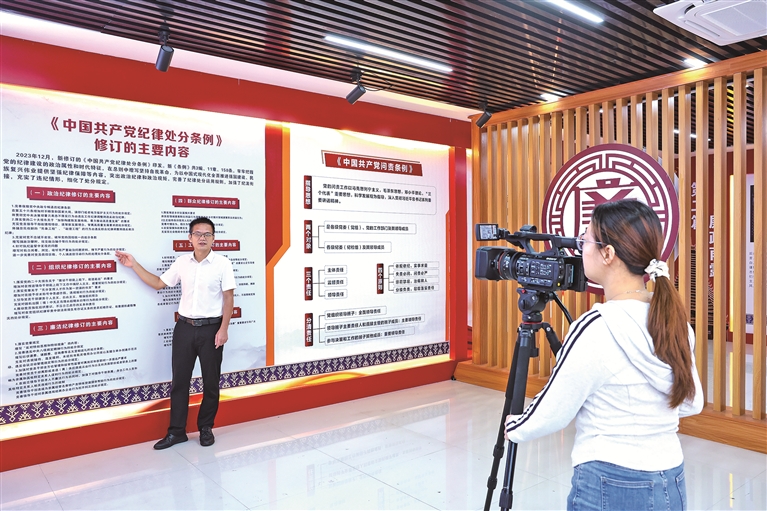
三堂会审丨准确认定单位受贿和私分国有资产罪
Zhong Yang Ji Wei Guo Jia Jian Wei Wang Zhan· 2025-10-29 00:20
Core Viewpoint - The article discusses the legal implications of a case involving a state-owned enterprise in Nanjing, where officials engaged in corrupt practices by collecting management fees from construction companies, leading to charges of bribery and misappropriation of state assets [3][5][6]. Summary by Sections Basic Case Facts - Zhang, a former official at a state-owned enterprise, was involved in collecting over 100 million yuan in management fees from construction companies from 2010 to 2023, which were used for the unit's daily operations and employee bonuses [5][6]. Investigation Process - The investigation began in May 2024, leading to Zhang's detention and subsequent charges of bribery, unit bribery, and misappropriation of state assets. The case was transferred to the local prosecutor's office in November 2024, and Zhang faced disciplinary actions, including expulsion from the party [7][8]. Legal Analysis of Unit Decision-Making - The article examines whether the actions taken by Zhang and his colleague constituted a unit decision. It concludes that their collective agreement to charge management fees represented the unit's overall intent, as it was supported by other leaders and employees [9][10][11]. Distinction Between Bribery and Embezzlement - The article outlines the differences between unit bribery and embezzlement, emphasizing that the former involves collective decision-making by the unit, while the latter is an individual act of misappropriation. In this case, the actions were classified as unit bribery due to the nature of the decision-making process [14][15]. Misappropriation of State Assets - The article discusses the classification of the management fees as state assets and the implications of distributing part of these funds to employees. It argues that the actions of Zhang and his colleagues constituted misappropriation of state assets, as the funds were derived from unit bribery and distributed under the guise of bonuses [16][17][18]. Conclusion on Legal Charges - The article concludes that the actions of the state-owned enterprise and its officials violated both unit bribery and misappropriation laws, warranting separate legal penalties for each offense due to the distinct legal interests they infringe upon [19][20].
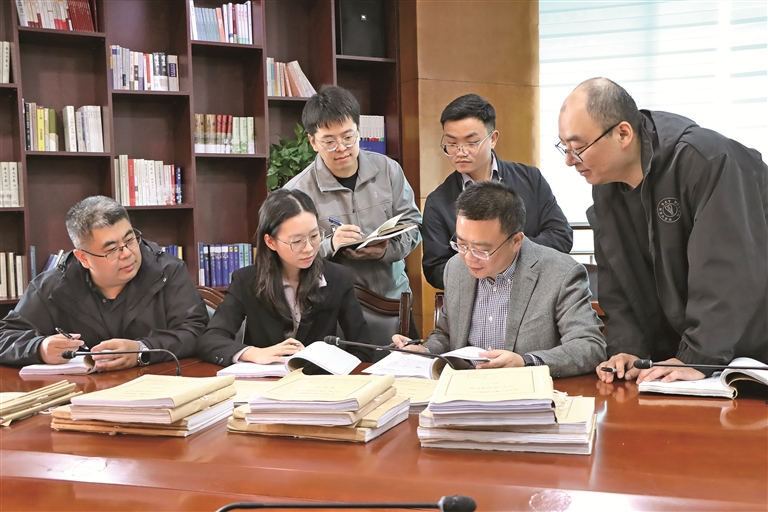
深化系统整治 构建办案治理监督教育有效闭环
Zhong Yang Ji Wei Guo Jia Jian Wei Wang Zhan· 2025-10-29 00:20
系统整治涉及领域点多面广,需要统筹联动、协作配合、同向发力,形成合力。成都市纪委监委把压实 责任作为系统整治的关键,推动形成"党委主责、政府主抓、纪委监督、部门落实、群众评价"的工作格 局。 二十届中央纪委四次全会强调,深化运用群众点题机制,指导各地选择民生痛点难点因地制宜开展整 治,让群众可感可及。四川省成都市纪委监委坚持系统思维,聚焦物业服务管理、建筑垃圾处置、集 体"三资"产权交易、中介服务等民生领域突出问题开展系统整治,深挖侵害群众利益背后的作风和腐败 问题,扎实推进以案促改促治,构建起办案、治理、监督、教育的有效闭环。 坚持统筹谋划,形成系统整治合力 深化举一反三,找准问题症结精准发力 一是党委带头扛起责任。市委、市政府主动扛起责任,由市委主要领导专题调度,分管市领导根据职责 分工谋划部署专项工作,督促各行业系统扎实开展突出问题整治。市纪委监委综合运用明责、谈责、述 责、评责工作法,压紧压实全市各级党组织和党员干部政治责任,定期向市委报告工作进展,拧紧责任 链条。 二是纪委靠前做好监督。市纪委监委建立"主要领导亲自抓、分管副书记专门抓、班子成员具体抓"的工 作推进机制,建立机动检查组,对群众反映强烈 ...
利用影响力受贿还是斡旋受贿
Zhong Yang Ji Wei Guo Jia Jian Wei Wang Zhan· 2025-10-29 00:20
Core Viewpoint - The article discusses the legal distinctions between two forms of bribery in China: "intermediary bribery" and "influence bribery," highlighting the nuances in their definitions and applications under the law [1][2][3]. Group 1: Legal Definitions - Intermediary bribery occurs when a state worker uses their position to facilitate benefits for a third party, while influence bribery involves close associates of state workers leveraging their relationships to gain benefits [1][2]. - The key difference lies in the nature of the relationship between the parties involved; intermediary bribery is strictly between state workers, whereas influence bribery can involve non-state workers as well [1][3]. Group 2: Case Analysis - The case presented involves two individuals, A and B, who have a professional relationship and a history of working together, leading to a request for assistance in a project that resulted in a bribe [2][4]. - There are differing opinions on how to classify the actions of A, with some arguing for ordinary bribery, others for influence bribery, and a third perspective supporting intermediary bribery based on the nature of A's position and actions [3][4]. Group 3: Judicial Interpretation - The Supreme People's Court has clarified that "using one's position" can include both direct authority and indirect influence through professional relationships [4][5]. - The analysis of the case suggests that A's actions were primarily influenced by their official position rather than personal relationships, supporting the classification of the behavior as intermediary bribery [5][6].
将廉洁文化建设深度融入企业治理
Zhong Yang Ji Wei Guo Jia Jian Wei Wang Zhan· 2025-10-29 00:20
Core Viewpoint - The emphasis on strengthening the construction of a clean culture in the new era is highlighted, with a focus on anti-corruption and building a clean political environment as a major political task for the party [1] Group 1: Strengthening Ideological Foundation - The company prioritizes ideological and political education to enhance self-awareness against corruption through layered and categorized education [2] - It integrates the study of Xi Jinping's thoughts into political tasks and conducts various educational activities to instill a sense of integrity among employees [2] - The company emphasizes disciplinary education by incorporating knowledge of the Communist Party's disciplinary regulations into learning plans [2] Group 2: Innovative Methods for Cultural Penetration - The company explores localized and scenario-based methods to enhance the penetration of clean culture [3] - Activities such as "clean family letters" and family discussions are organized to extend supervision beyond work hours [3] - The company promotes the signing of integrity commitments tailored to job responsibilities to embed integrity requirements into job descriptions [3] Group 3: Cultivating a Clean Ecosystem - The company implements a "six-entry" approach to embed clean culture requirements into various governance aspects [4][5] - It emphasizes the importance of leadership in promoting clean culture within the company [4] - The company focuses on risk prevention by integrating supervision mechanisms into business processes and project management [5]
中央纪委国家监委通报2025年1至9月全国纪检监察机关监督检查、审查调查情况
Zhong Yang Ji Wei Guo Jia Jian Wei Wang Zhan· 2025-10-29 00:09
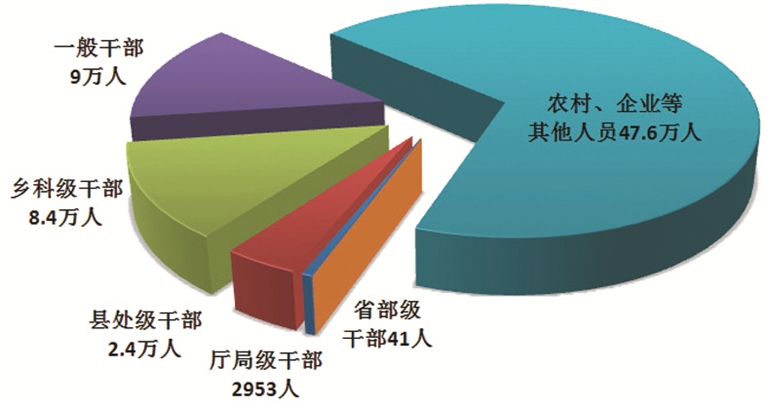
Summary of Key Points Core Viewpoint - In the first nine months of 2025, China's disciplinary inspection and supervision agencies received a total of 3.144 million complaints, with 996,000 being accusations. A total of 789,000 cases were filed, indicating a significant level of enforcement and accountability within the system [1]. Group 1: Complaints and Investigations - A total of 3.144 million complaints were received by the disciplinary inspection and supervision agencies [1] - Among these, 996,000 were classified as accusations [1] - The agencies processed 1.976 million problem clues [1] Group 2: Case Filings and Disciplinary Actions - 789,000 cases were filed, including 90 provincial and ministerial level officials, 3,704 departmental level officials, 31,000 county level officials, and 106,000 township level officials [1] - Disciplinary actions were taken against 677,000 individuals, with 502,000 receiving party disciplinary actions and 220,000 receiving administrative penalties [1] - Specific disciplinary actions included 41 provincial and ministerial level officials, 2,953 departmental level officials, 24,000 county level officials, and 84,000 township level officials [1] Group 3: Application of "Four Forms" - The "Four Forms" approach was applied to 1.376 million individuals, with 688,000 receiving criticism and education (50% of total), 556,000 receiving second form actions (40.4%), and 66,000 each for the third and fourth forms (4.8% each) [3] - This indicates a structured approach to handling disciplinary issues within the agencies [3] Group 4: Bribery Investigations - A total of 25,000 bribery cases were filed, with 3,127 individuals being referred to the procuratorate [4]
重庆市渝中区政协原二级巡视员彭洪森接受纪律审查和监察调查
Zhong Yang Ji Wei Guo Jia Jian Wei Wang Zhan· 2025-10-28 11:09
(重庆市纪委监委) 中央纪委国家监委网站讯 据重庆市纪委监委消息:重庆市渝中区政协原二级巡视员彭洪森涉嫌严重违 纪违法,已主动投案,目前正接受重庆市纪委监委纪律审查和监察调查。 ...
中国中纺集团有限公司原党委书记、董事长刘云被开除党籍和公职
Zhong Yang Ji Wei Guo Jia Jian Wei Wang Zhan· 2025-10-28 11:09
中央纪委国家监委网站讯 据中央纪委国家监委驻中粮集团纪检监察组、甘肃省纪委监委消息:日前, 中央纪委国家监委驻中粮集团纪检监察组、甘肃省监委对中国中纺集团有限公司原党委书记、董事长刘 云严重违纪违法问题进行了立案审查调查。 (中央纪委国家监委驻中粮集团纪检监察组、甘肃省纪委监委) 经查,刘云理想信念缺失,背离初心使命,违反政治纪律,搞利益交换"小圈子";违反中央八项规定精 神和廉洁纪律,违规接受管理服务对象宴请并收受礼品礼金;违反组织纪律,违规录用人员并从中获 利;利用职务便利为他人在承揽工程项目、签订服务订单等方面提供帮助,并收受巨额财物;利用职务 便利,侵吞公款。 刘云身为国有企业领导干部,严重违反党的政治纪律、中央八项规定精神、组织纪律和廉洁纪律,构成 严重职务违法并涉嫌受贿、贪污犯罪,性质严重,影响恶劣,应予严肃处理。依据《中国共产党纪律处 分条例》《中华人民共和国监察法》《中华人民共和国公职人员政务处分法》等有关规定,经中粮集团 有限公司党组研究,决定给予刘云开除党籍处分;经中央纪委国家监委驻中粮集团纪检监察组研究,决 定给予其开除处分;收缴其违纪违法所得。甘肃省监委将其涉嫌犯罪问题移送检察机关依法 ...
交通银行原党委委员、副行长侯维栋接受中央纪委国家监委纪律审查和监察调查
Zhong Yang Ji Wei Guo Jia Jian Wei Wang Zhan· 2025-10-28 10:12
中央纪委国家监委网站讯 交通银行原党委委员、副行长侯维栋涉嫌严重违纪违法,目前正接受中央纪 委国家监委纪律审查和监察调查。 ...

江西省新余市政府原一级巡视员、新余高新技术产业开发区党工委原书记喻国杰被开除党籍
Zhong Yang Ji Wei Guo Jia Jian Wei Wang Zhan· 2025-10-28 10:05
喻国杰严重违反党的政治纪律、组织纪律、廉洁纪律、工作纪律和生活纪律,构成严重职务违法并涉嫌 受贿、滥用职权犯罪,且在党的十八大后不收敛、不收手,性质严重,影响恶劣,应予严肃处理。依据 《中国共产党纪律处分条例》《中华人民共和国监察法》《中华人民共和国公职人员政务处分法》等有 关规定,经江西省纪委常委会会议研究并报中共江西省委批准,决定给予喻国杰开除党籍处分;按规定 取消其享受的待遇;收缴其违纪违法所得;将其涉嫌犯罪问题移送检察机关依法审查起诉,所涉财物一 并移送。 (江西省纪委监委) 中央纪委国家监委网站讯 据江西省纪委监委消息:经中共江西省委批准,江西省纪委监委对新余市政 府原一级巡视员、新余高新技术产业开发区党工委原书记喻国杰严重违纪违法问题进行了立案审查调 查。 经查,喻国杰丧失理想信念,背弃初心使命,对组织不忠诚、不老实,搞迷信活动,对抗组织审查;无 视中央八项规定精神,接受可能影响公正执行公务的宴请和旅游活动安排,违规组织用公款支付的宴 请;将应当由本人支付的费用交由他人支付;违反组织原则,在组织函询时不如实说明问题,在干部选 拔任用工作中为他人谋取利益;廉洁底线失守,违规收受礼品、礼金;干预和插手 ...