Zhong Guo Dian Li Bao

Search documents
能源高质量发展专家谈⑪ | “一带一路”能源合作为全球能源绿色转型注入强劲动力
Zhong Guo Dian Li Bao· 2025-09-10 06:44
Core Viewpoint - The global consensus on green and low-carbon energy transition is emphasized, with China's commitment to leading this transformation through the Belt and Road Initiative, aiming for high-quality development and sustainable energy cooperation [1][2]. Group 1: High-Quality Energy Cooperation - During the "14th Five-Year Plan" period, China has focused on enhancing international cooperation in green energy, achieving significant progress in energy governance and security [2]. - China has established a series of important documents to guide energy cooperation, including the "Belt and Road Green Energy Cooperation Action Plan (2024-2029)," which outlines specific quantitative indicators for cooperation [2]. Group 2: Collaborative Energy Solutions - China adopts a tailored approach to energy cooperation, leveraging its strengths in planning, technology, and manufacturing to provide practical solutions for partner countries [3]. - The country respects the energy development choices of partner nations, facilitating the adaptation of Chinese experiences to local contexts, thereby enhancing the effectiveness of cooperation [3]. Group 3: Global Energy Governance - China actively participates in global energy governance reforms and promotes multilateral cooperation through various regional platforms, enhancing collaboration in renewable energy among emerging economies [4]. - The country engages in significant multilateral mechanisms, proposing initiatives to shape fair and equitable global energy governance [4]. Group 4: Socioeconomic Benefits - China implements projects that translate green energy development into tangible benefits for partner countries, addressing energy poverty and enhancing economic vitality [5]. - Notable projects include the "Bright Village" initiative in the Philippines and solar energy projects in Afghanistan and Kiribati, which improve local living conditions [5]. Group 5: Energy Security and Resilience - Energy security is prioritized in the Belt and Road energy cooperation, with China establishing multiple oil and gas cooperation zones and ensuring stable energy supply channels [6]. - The country emphasizes risk prevention in energy cooperation, guiding enterprises to enhance their awareness of investment risks [6]. Group 6: Green Development and Investment - China has committed to not building new coal power projects abroad and has invested over $160 billion in Belt and Road countries, with green energy investments surpassing traditional energy [7]. - Key projects like the Karot Hydropower Station in Pakistan and floating solar projects in Indonesia have significantly improved clean energy supply capabilities [7]. Group 7: Market-Driven Cooperation - Chinese energy companies leverage their advantages to engage in green energy investment and development in partner countries, fostering a collaborative ecosystem [8][9]. - The integration of state-owned and private enterprises is encouraged to enhance market vitality and avoid resource wastage [9]. Group 8: Policy and Governance Framework - China aims to establish a governance framework for energy cooperation that emphasizes collaboration, rule-making, and shared outcomes [10]. - The country promotes policy alignment and standard cooperation with partner nations to facilitate green energy planning and project management [10]. Group 9: Future Directions - The top-level design of green energy cooperation is crucial for sustainable development, focusing on international collaboration and technology integration [11][12]. - Enterprises are encouraged to adopt international strategies and localize operations to enhance their impact in partner countries [12]. Group 10: Knowledge and Capacity Building - High-level think tanks play a vital role in supporting energy cooperation by providing strategic research and facilitating policy communication [13]. - Efforts are made to enhance the capacity of partner countries in energy governance through training and knowledge sharing [13].
电力规划设计总院党委书记胡明:“一带一路”能源合作为全球能源绿色转型注入强劲动力
Zhong Guo Dian Li Bao· 2025-09-09 09:38
Core Viewpoint - The global consensus on green and low-carbon energy transition is emphasized, with China's commitment to leading this transformation through the Belt and Road Initiative, aiming for high-quality development and sustainable energy cooperation [1][7]. Group 1: High-Quality Energy Cooperation - During the 14th Five-Year Plan, China has focused on enhancing international cooperation in green energy, achieving significant progress in energy governance and establishing a new cooperative framework [1]. - China has established the "Belt and Road" energy cooperation partnership, creating key documents that outline specific tasks and quantitative indicators for green energy cooperation [2]. Group 2: New Energy Cooperation Landscape - China adopts a tailored approach to energy cooperation, leveraging its strengths in planning, technology, and manufacturing to provide practical solutions for energy transition in partner countries [3]. - The country respects the energy development choices of partner nations, facilitating the adaptation of Chinese experiences to local contexts, enhancing the effectiveness of cooperation [3]. Group 3: New Platforms for Cooperation - China actively participates in global energy governance reforms and has established various regional cooperation platforms to enhance collaboration in renewable energy among emerging economies [4]. - The country engages in multiple international frameworks, proposing initiatives to shape fair and inclusive global energy governance [4]. Group 4: Achievements in Energy Cooperation - China implements projects that translate green energy development into tangible benefits for partner countries, addressing energy poverty and enhancing economic vitality [5]. - Notable projects include the "Bright Village" initiative in the Philippines and solar energy projects in Afghanistan and Kiribati, which improve local energy access [5]. Group 5: Practical Experience in Energy Cooperation - The Belt and Road Initiative has become a popular international cooperation platform, with China focusing on safety, transformation, market-driven approaches, and improving people's livelihoods [7]. - China has established five major oil and gas cooperation zones and multiple import channels to ensure energy security for partner countries [8]. Group 6: Green Development and Investment - China has committed to not building new coal power projects abroad and has invested over $160 billion in Belt and Road countries, with green energy investments surpassing traditional energy [9]. - Key projects like the Karot Hydropower Station in Pakistan and floating solar projects in Indonesia have significantly enhanced local clean energy supply [9]. Group 7: Market-Driven Energy Cooperation - Chinese energy companies are encouraged to engage in green energy investment and development, fostering collaboration between state-owned and private enterprises [10]. - The focus is on creating a synergistic ecosystem that enhances market vitality and avoids resource wastage through complementary advantages [10]. Group 8: Focus on Accessibility and Welfare - The emphasis is on improving energy accessibility and enhancing the welfare of people in partner countries through tailored green energy cooperation [11]. - China aims to address energy accessibility issues in remote areas, ensuring that green energy benefits reach all segments of society [11]. Group 9: Open and Inclusive Governance - China promotes a governance model that emphasizes cooperation, shared rules, and outcomes in green energy collaboration [12]. - The establishment of a unique international cooperation mechanism aims to enhance policy alignment and deepen international energy governance [12]. Group 10: Future Directions for Green Energy Cooperation - The focus is on top-level design and international governance to ensure the sustainable development of green energy cooperation [13]. - Enterprises are seen as key players in driving green energy cooperation, with a focus on localized strategies and collaboration across the energy value chain [14]. Group 11: Empowering Through Think Tanks - High-level think tanks are crucial for facilitating policy communication and enhancing mutual understanding in green energy cooperation [15]. - Efforts include conducting strategic research and promoting international exchanges to build a skilled workforce for energy transition [15].

月度用电量破万亿,意味着什么?
Zhong Guo Dian Li Bao· 2025-09-09 09:17
Core Insights - In July, China's total electricity consumption reached 1.02 trillion kilowatt-hours, marking the first time it has surpassed the trillion-kilowatt-hour threshold in a month, reflecting strong economic resilience and vitality [1][15][22] - The significant increase in electricity consumption is attributed to both the ongoing economic recovery and extreme high temperatures, which have driven up cooling demands [8][11][29] Electricity Consumption Milestone - The milestone of exceeding one trillion kilowatt-hours in monthly electricity consumption is seen as a landmark event, indicating the robust growth of China's electricity demand over the past two decades [1][2] - The electricity consumption in July was driven by two main factors: sustained high temperatures leading to increased air conditioning loads and a recovering economy boosting overall electricity demand [1][8] Economic and Industrial Analysis - The second industry accounted for 58% of total electricity consumption in July, with a year-on-year growth of 4.7%, while the third industry saw a 10.7% increase, indicating a shift towards high-quality economic development [2][17] - High-tech and equipment manufacturing sectors showed significant growth, reflecting the vitality of manufacturing upgrades and the transition towards a more digital and intelligent economy [2][10][25] Energy System Resilience - China's energy system successfully maintained stable electricity supply without rolling blackouts, demonstrating its global leadership in terms of system scale, technical capabilities, and reliability [3][19] - The implementation of market-oriented reforms has enhanced the efficiency of electricity resource allocation, supporting the stability of electricity supply at the trillion-kilowatt-hour level [3][5] Future Challenges and Recommendations - The core challenge for the future electricity system is to address the instability of renewable energy sources while ensuring grid stability and real-time balance [4][12] - Recommendations include enhancing the construction of new energy infrastructure, improving demand-side management, and promoting energy efficiency among consumers [4][12][13] Growth Projections - It is anticipated that electricity consumption will continue to grow, with projections indicating that total electricity consumption may exceed 10 trillion kilowatt-hours by 2025, driven by economic stability and seasonal heating demands [13][30] - The ongoing transition towards a new energy system will require continuous policy support, market mechanism improvements, and technological innovations to meet the evolving electricity demand [30][29]
国网河南电力打造运行监测场景提升台区治理水平
Zhong Guo Dian Li Bao· 2025-09-09 08:29
在传统运维模式下,尤其是多山地区,电压不稳定、三相电流不平衡等台区异常治理高度依赖人工巡检 和台区经理经验判断,异常信息获取时间较为滞后,制约处理工作质效。2023年底,河南电力组织国网 河南三门峡供电公司在山地较多的三门峡市开展"基于量测中心的台区运行监测场景"建设及试点应用工 作。 9月1日,国网河南省电力公司数字化创新孵化项目"基于量测中心的台区运行监测场景"完成试点应用, 将结合实际在其他地市推广使用。 试点期间,该场景向台区经理推送各类异常数据时间最快为5分钟,平均时间少于15分钟,有效缩短异 常信息响应、处置时间,减少异常发生次数和时长。支撑台区异常时长同比压减41.10%,台区治理水 平、供电服务质量进一步提升,客户用电体验持续改善。 三门峡供电数字化部主任秦复兴介绍,他们利用河南电力企业级实时量测中心汇聚的10千伏配电变压 器、400伏低压用户和分布式光伏电压、电流、功率等实时量测数据,先后构建台区重过载等5个通用预 警等级模型;同时借助该中心大数据集群算力,实现对低电压、三相不平衡等7项关键运行指标的实时 监测、在线分析和预警。 接下来,河南电力将在持续优化场景功能的同时,依托应用实践和典型 ...
山西大同东500千伏输变电工程开工
Zhong Guo Dian Li Bao· 2025-09-09 07:56
Core Points - The Dazhong East 500kV transmission and transformation project officially commenced on September 8, with a total investment of 876.72 million yuan and a designed transmission capacity of 5 million kilowatts [1] - This project is a key initiative for Shanxi Province in 2025 and 2026, serving as an important channel for the construction of the Dazhong "wind-solar-fire-storage and source-network-load-storage integration" base [1] - The project is expected to be operational by November 2026, facilitating the delivery and consumption of high-quality wind and solar energy from Dazhong, while significantly reducing carbon dioxide emissions [1] Project Details - The total length of the transmission line is 185.345 kilometers [1] - The project has achieved a 100% completion rate for the required 31 path agreements [1] - Local companies and design units have signed a "responsibility letter for pre-signing and construction tasks," and project leadership groups have been established in the two counties involved [1] Management and Compliance - The Shanxi Electric Power Construction Company has adhered to legal and regulatory requirements throughout the project [1] - A framework agreement for permanent land compensation has been signed, and compensation standards for demolition have been established [1] - An expert group was formed to proactively identify and resolve issues during the project's early stages, enhancing management efficiency and quality for the construction phase [1]
我国自主研制首台套,投用!
Zhong Guo Dian Li Bao· 2025-09-09 07:24
Core Viewpoint - The successful deployment of China's first domestically developed pumped storage power station air compressor "VM160" marks a significant breakthrough in breaking foreign technological monopolies in this field, promoting the advancement of domestic key energy technology equipment towards high-end, green, and intelligent upgrades [1][3]. Group 1: Development and Significance - The "VM160" air compressor was installed at the Guangdong Meizhou pumped storage power station and has achieved international leading standards after passing scientific achievement appraisal [1][3]. - Pumped storage power stations play a crucial role in stabilizing the integration of renewable energy sources like wind and solar power into the grid, especially as their penetration in the new power system continues to rise [3][4]. - Historically, the air compressor market for pumped storage stations in China has been dominated by foreign brands, leading to high procurement and operational costs, long spare parts procurement cycles, and a lack of technological autonomy [3][4]. Group 2: Research and Development Process - The research and development of the domestic air compressor began in June 2021, involving collaboration among several companies, with a focus on addressing the "bottleneck" issues posed by foreign technologies [3][4]. - The development process included selecting a technical route, structural performance design, equipment manufacturing, and product engineering applications, emphasizing the need for high performance and optimization for large-scale development [4][5]. - The team adopted a "medium-pressure oil-free" technology route, eliminating the need for lubricating oil in the air compression process, thus reducing environmental pollution [4][5]. Group 3: Performance and Economic Impact - The newly developed air compressor achieves a gas pressure of 8.5 MPa and a compression speed of 11.5 cubic meters per minute, with structural strength equivalent to the pressure of 425 cars stacked on a square meter [5][6]. - Compared to imported models, the domestic air compressor shows superior key performance indicators, with noise levels, cylinder body vibration, and motor vibration reduced by approximately 14%, 32%, and 72% respectively [7]. - The estimated economic benefit from replacing imported compressors with the domestic model over a 30-year usage period could reach up to 81 million yuan [7]. - By 2030, China's pumped storage capacity is expected to exceed 120 million kilowatts, nearly doubling the current scale, indicating a significant acceleration in industry development [7].


可再生能源实现大规模高比例市场化高质量跃升发展
Zhong Guo Dian Li Bao· 2025-09-09 03:36
Core Viewpoint - Since the "14th Five-Year Plan," China's renewable energy sector has achieved significant advancements in scale, proportion, marketization, and quality, supporting energy security and green transformation while providing a model for global energy transition [1][3][16] Large-Scale Leap - The total installed capacity of renewable energy in China has reached a historic milestone, with wind and solar power installations increasing from "tens of millions" to "hundreds of millions" of kilowatts, achieving 2.9 million kilowatts and 3.5 million kilowatts of new installations in 2023 and 2024 respectively [3][4] - By July 2023, China's total renewable energy installed capacity surpassed 2.1 billion kilowatts, accounting for nearly 60% of the national total, with wind and solar power making up 1.68 billion kilowatts, surpassing thermal power installations [3][4] Base Development - Large-scale wind and solar base construction has been prioritized in desert and arid regions, with significant projects like the Xinjiang Gobi base contributing to the integration of large-scale renewable energy into the grid [4] - Distributed solar installations have also surged, with a total of 497 million kilowatts installed by July 2025, representing over six times the capacity at the end of 2020 [4] High Proportion Leap - Renewable energy's share in China's energy consumption has significantly increased, with renewable electricity generation reaching 3.47 trillion kilowatt-hours in 2024, which is 2.5 times that of 2020 [7][8] - The proportion of non-fossil energy in total energy consumption is projected to rise to 19.7% by 2024, an increase of approximately 4 percentage points from 2020 [8] High-Quality Leap - China has established itself as a global leader in renewable energy technology, with significant advancements in hydropower, offshore wind, and solar energy, leading to a competitive advantage in the international market [10][11] - The cost of wind and solar energy has decreased by approximately 60% and 80% respectively over the past decade, facilitating global adoption of renewable energy [11] Market-Oriented Development - A comprehensive policy framework has been established to support the development of renewable energy, including new regulations and guidelines to enhance market participation and ensure high-quality growth [13][14] - The green certificate system is being expanded, with significant growth in the issuance and trading of green certificates, reflecting the increasing recognition of renewable energy's environmental value [15] Future Outlook - Looking ahead, China aims to continue advancing its renewable energy sector, striving for peak carbon emissions by 2030 and carbon neutrality by 2060, while enhancing the role of renewable energy as a primary energy source [16]
车网互动能有怎样的想象空间?
Zhong Guo Dian Li Bao· 2025-09-09 03:34
Core Insights - The article discusses the ongoing high-temperature weather in some regions and the role of Vehicle-to-Grid (V2G) technology in balancing electricity supply and demand during peak summer periods [1] - Despite the potential of V2G technology, its widespread adoption faces challenges such as the need for unified technical standards, business model development, and policy mechanisms [1] V2G Technology Applications - V2G technology allows electric vehicle owners to save on charging costs by charging during off-peak hours and discharging during peak hours, creating a price differential that can generate income [3][4] - In Shandong Province, a dual pricing system has been introduced, with off-peak electricity prices as low as 0.222 yuan per kilowatt-hour and peak discharge prices exceeding 1 yuan per kilowatt-hour [3] Economic Benefits and User Experience - An electric vehicle owner in Shandong reported earning 78 yuan after discharging 167.5 kilowatt-hours in July, indicating potential profitability for users [4] - Concerns about battery lifespan due to frequent charging and discharging were addressed, with experts suggesting that current battery designs allow for ample cycles without significant degradation [4] Expansion of V2G Applications - V2G applications are expanding beyond private charging stations to include public charging stations, public transport, logistics, and heavy-duty vehicles [6][7] - The establishment of national pilot projects aims to provide models for the large-scale application of V2G technology and explore its role in urban power grid management [7][8] Challenges to Large-Scale Development - The warranty issues related to frequent participation in V2G interactions may deter vehicle owners, as current policies may affect vehicle warranty periods [11] - The high initial costs of V2G charging stations, which are 2-3 times that of regular charging stations, pose a barrier to investment from operators [12] Strategies for Growth - To encourage broader participation in V2G, it is essential to create value for vehicle owners, including both economic and social benefits [13] - Differentiated promotional strategies for various charging scenarios, such as private and public charging stations, are recommended to stimulate user engagement [13] Future Projections - With the advancement of pilot projects, it is anticipated that by 2027, the number of vehicle owners capable of regular V2G discharging will reach millions, with V2G becoming a standard feature in new vehicles by 2030 [13]
“人工智能+”能源有了行动指南!
Zhong Guo Dian Li Bao· 2025-09-09 03:34
Core Viewpoint - The implementation of the "Artificial Intelligence + Energy High-Quality Development" initiative aims to accelerate the integration of artificial intelligence with the energy sector, supporting high-quality development and safety in the energy industry by establishing clear development goals for 2027 and 2030 [1][4]. Group 1: Development Goals - By 2027, a preliminary integration system of energy and artificial intelligence will be established, with significant breakthroughs in core technologies and widespread applications across various energy sectors [4]. - By 2030, the overall technology and application of artificial intelligence in the energy sector will reach a world-leading level, with a well-established mechanism for collaborative development of computing power and electricity [5]. Group 2: Key Tasks and Focus Areas - The initiative outlines a framework focusing on "application scenario empowerment + key technology supply," aiming to enhance the innovative application of artificial intelligence in the energy sector [7]. - It identifies eight key areas for the application of "Artificial Intelligence +" in traditional and emerging energy sectors, including electricity, oil, gas, and coal [7][8]. - A total of 37 key tasks for the integration of artificial intelligence and energy have been planned, covering over a hundred specific scenarios across various energy types [8]. Group 3: Technical Challenges and Solutions - The initiative addresses technical challenges such as data isolation, fragmented computing power, and high energy consumption in computing, proposing three key areas for technological breakthroughs: data foundation, computing power support, and model capability enhancement [8]. - It emphasizes the need to establish high-quality data sets, ensure the security of energy data, and create a collaborative development mechanism for computing power and electricity [8]. Group 4: Implementation and Coordination - The National Energy Administration will focus on strengthening organizational implementation, enhancing collaboration between industry, academia, and research, and accelerating the transformation of results to ensure the smooth progress of the initiative [9].
孟加拉国500兆瓦新能源项目群二期投运
Zhong Guo Dian Li Bao· 2025-09-09 03:27
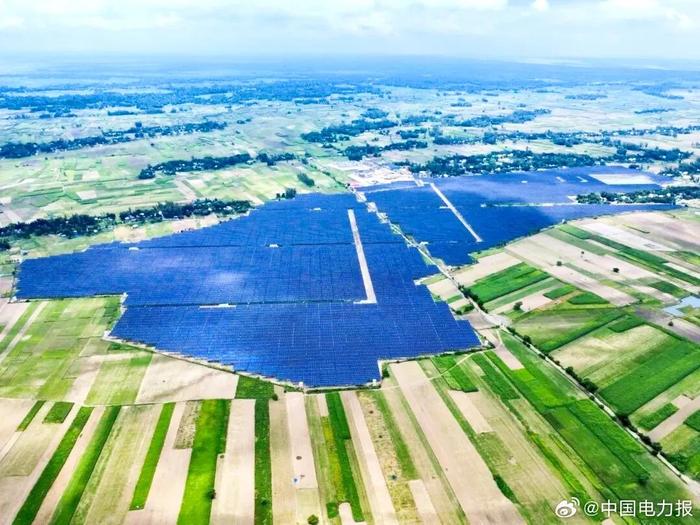
【孟加拉国最大规模新能源项目群正式运营】近日,由中国电建集团福建省电力勘测设计院有限公司联 合总承包建设的孟加拉国帕布纳64兆瓦光伏电站项目,成功获得商业运营许可,正式转入商业运营阶 段。该项目是孟加拉国最大规模新能源项目群——500兆瓦新能源发电项目群的二期项目,项目投运 后,每年可产生约1.1亿千瓦时的清洁电力,相当于节约4.3万吨标准煤,减少二氧化碳排放约11万吨。 (王可)#电力快讯# @中国电建 ...