Benzinga

Search documents
Palantir's Moat Is Just 'Obstruction of Data Transfer' Michael Burry Says
Benzinga· 2026-02-17 17:33
Core Viewpoint - Burry argues that Palantir's competitive advantage lies in a sophisticated vendor lock-in strategy rather than superior technology, as evidenced by the NYPD's inability to transfer data easily after using Palantir's platform [1][2]. Group 1: NYPD Controversy - The NYPD claims that Palantir refused to provide data in a transferable format, preventing access to analytical insights generated by their own investigators [2]. - This dispute highlights Palantir's business strategy of creating switching costs by making data transfer difficult [3]. Group 2: Intellectual Property vs. Data Ownership - Palantir asserts that while customers own raw data, the organization and visualization of that data through its software is its intellectual property [4]. - The friction arises from the distinction between raw data ownership and the insights derived from it [4]. Group 3: Implications for Investors - If Burry's critique is valid, Palantir's long-term valuation may be jeopardized due to its fragile moat based on obstruction, which could lead to dissatisfaction among clients [6]. - The trend towards data portability and open architectures may challenge Palantir's proprietary model, potentially resulting in diminishing returns [6]. Group 4: Support and Competition - Supporters argue that Palantir's deep integration and unique data handling capabilities make extraction difficult, which is a byproduct of software complexity [7]. - The NYPD has successfully developed its own replacement for Palantir's services, indicating that the company may soon face increased competition [8].



What's Going On With Micron Stock Tuesday?
Benzinga· 2026-02-17 17:31
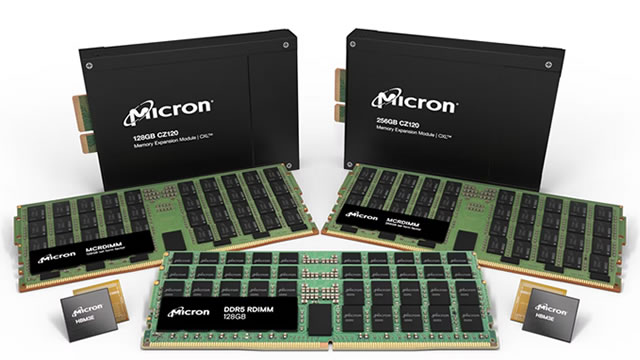
Micron Technology Inc (NASDAQ:MU) shares are trading lower Tuesday afternoon, even as another Wall Street firm boosted expectations for the memory maker. Here’s what investors need to know.Micron Technology stock is facing resistance. Why is MU stock trading lower?Needham Sees Double-Digit Upside For MicronNeedham on Tuesday raised its price target on Micron to $450 from $380 while reiterating a Buy rating, implying about 11% upside from current levels.Nvidia HBM4 Setback Still Weighs On SharesAnalysts link ...

Advance Auto Parts Analysts Raise Their Forecasts After Better-Than-Expected Q4 Earnings
Benzinga· 2026-02-17 17:11
Group 1 - The company reported fourth-quarter adjusted earnings per share of 86 cents, exceeding the analyst consensus estimate of 42 cents [1] - Quarterly sales reached $1.973 billion, surpassing the Street view of $1.952 billion [1] Group 2 - For fiscal 2026, the company expects adjusted earnings of $2.40 to $3.10 per share, compared to analysts' estimate of $2.66 [2] - The company forecasts sales between $8.485 billion and $8.575 billion, while the estimate stands at $8.668 billion [2] - Following the earnings announcement, Advance Auto Parts shares dipped 2.8% to trade at $57.19 [2] Group 3 - BMO Capital analyst maintained the stock with a Market Perform rating and raised the price target from $55 to $60 [3] - Truist Securities analyst maintained the stock with a Hold rating and increased the price target from $48 to $57 [3] - RBC Capital analyst maintained the stock with a Sector Perform rating and raised the price target from $57 to $63 [3]


Why Short Interest In The Nvidia-Heavy XLK Just Tripled While QQQ Bears Flee
Benzinga· 2026-02-17 17:07
Shares sold short in XLK have jumped from roughly 6.5 million in November to over 18 million by late January, nearly tripling in just two months, according to Benzinga Pro data.Nvidia Concentration Is Driving Targeted ShortingThis makes XLK a cleaner and more efficient vehicle for hedge funds looking to hedge or bet against the AI-heavy leadership that has powered the market's gains.Hedge Funds Are Hedging Leadership, Not Tech ItselfThe sharp rise in XLK short interest alongside falling QQQ shorts suggests ...




These Analysts Boost Their Forecasts On Magna International Following Upbeat Q4 Results
Benzinga· 2026-02-17 17:06
Core Viewpoint - Magna International, Inc. reported stronger-than-expected fourth-quarter results, with adjusted earnings per share of $2.18, surpassing analyst expectations of $1.79, and quarterly sales of $10.84 billion, which is a 2% year-over-year increase, exceeding the anticipated $10.495 billion [1] Group 1: Financial Performance - The company expects fiscal 2026 adjusted earnings per share to be between $6.25 and $7.25, compared to analysts' estimate of $5.99 [1] - Magna International lowered its fiscal 2026 sales outlook to a range of $41.9 billion to $43.5 billion, down from a previous forecast of $48.8 billion to $51.2 billion, while analysts were expecting $42.141 billion in sales [2] Group 2: Capital Allocation and Market Reaction - The CEO indicated that capital spending is expected to remain below historical levels, which will lead to strong Free Cash Flow that will be used for share repurchases under the current buyback authorization [3] - Following the earnings announcement, Magna International shares dipped 3.1% to trade at $66.65 [3] Group 3: Analyst Ratings and Price Targets - Analysts have adjusted their price targets for Magna International after the earnings announcement, with Evercore ISI Group maintaining an In-Line rating and raising the price target from $52 to $66 [4][5] - Barclays analyst maintained an Equal-Weight rating and increased the price target from $58 to $67 [5]


Palo Alto Networks Q2 Preview: 10th Straight Double Beat Expected — Will That Reverse Stock Slump?
Benzinga· 2026-02-17 17:06
Core Viewpoint - Analysts expect Palo Alto Networks to report Q2 revenue of $2.58 billion, an increase from $2.26 billion, and earnings per share of 76 cents, down from 81 cents in the same quarter last year [1][2] Financial Performance - The company has beaten analyst estimates for revenue for nine consecutive quarters [1] - Analysts anticipate earnings per share to decline, marking a potential shift in performance metrics [1] - Company guidance indicates expected revenue between $2.57 billion and $2.59 billion and earnings per share between 93 to 95 cents [2] Analyst Ratings - Analysts have been lowering their price targets ahead of the quarterly results, with several firms maintaining their ratings but adjusting targets downward [3][8] - Mizuho lowered its price target from $220 to $205 while maintaining an Outperform rating [8] - Other firms like BTIG, DA Davidson, JPMorgan, and Barclays also adjusted their price targets downward while maintaining their ratings [8] Strategic Moves - Palo Alto Networks announced plans to acquire Koi, an agentic endpoint security company, to address new challenges in cybersecurity [4][5] - The acquisition is part of a broader strategy to enhance the company's offerings in the AI era, as traditional security measures may not suffice against modern threats [4][7] - The company has recently completed other acquisitions, including Chronosphere and CyberArk, which may not fully impact the upcoming quarterly results [5][6] Market Sentiment - Shares of Palo Alto Networks have decreased by 22.6% over the last year, with current stock price at $161.24, down 3.4% on the day [10] - Investors are looking for strong guidance and performance in the upcoming earnings report to restore optimism [9]


Year of the Horse is Bullish for Stocks—Nvidia's CEO Agrees - NVIDIA (NASDAQ:NVDA)
Benzinga· 2026-02-17 16:52
Wall Street loves a good narrative, but it turns out the best market predictor might not be a Fed chair—it might be a stable. As Tuesday marks the beginning of the year of the Horse, investors are leaning into a quirky but historically consistent trend: the Chinese Zodiac's four-legged alpha.NVDA stock is moving. See the chart and price action here. The Four-Legged FactorData suggests that the stock market has a distinct preference for animals that walk on all fours, as Ryan Detrick, chief market strategist ...

OLB Group Stock Skyrockets On PayPal Partnership
Benzinga· 2026-02-17 16:47
Core Viewpoint - OLB Group's stock is experiencing significant upward momentum, attributed to a new partnership with PayPal that enhances its payment solutions for merchants [1][10]. Group 1: Partnership and Integration - OLB has entered a partnership with PayPal, allowing integration of PayPal's checkout and wallet solutions into its SecurePay gateway and other platforms [2]. - This partnership will provide OLB merchants access to various PayPal services, including PayPal Checkout, Venmo, Pay Later, and PayPal Credit, along with fraud protection and cross-border payment tools [2][3]. - The integration aims to simplify merchant onboarding, consolidate settlement and reporting, and expand access to buyers in over 200 markets [3]. Group 2: Market Performance and Stock Analysis - OLB stock is currently trading 12.5% above its 20-day simple moving average (SMA) but is 20.8% below its 100-day SMA, indicating short-term strength but longer-term challenges [5]. - Over the past year, OLB shares have decreased by 34.65%, and they are closer to their 52-week lows than highs [5]. - The stock's current price action shows a significant increase of 137.32%, reaching 99 cents, with key resistance at $1.50 and support at 75 cents [10]. Group 3: Industry Context - The overall market is experiencing fluctuations, with fintech stocks like OLB benefiting from a shift in consumer behavior towards digital solutions amid economic pressures [7]. - OLB Group operates as a diversified fintech e-commerce merchant services provider and Bitcoin crypto mining enterprise, focusing on integrated business solutions for merchants across the U.S. [8]. - The company's offerings include a cloud-based business management platform that provides turnkey solutions for both online and brick-and-mortar retail businesses [9].


AMC Stock Hovers Around All-Time Low Ahead Of Earnings: What Investors Need To Know
Benzinga· 2026-02-17 16:25
Core Insights - AMC Entertainment is facing significant downward pressure on its stock, with recent filings indicating a need for equity flexibility and a focus on refinancing its debt load [2][4][5]. Financial Performance - Preliminary financial results for 2025 show fourth-quarter revenue of approximately $1.29 billion and a net loss of around $127 million, with cash and equivalents decreasing to $428.5 million from the previous year [3]. - The company is pursuing a $2.5 billion refinancing package, which includes a new $750 million term loan, aimed at replacing existing debt and managing its post-pandemic financial obligations [4]. Stock Performance - AMC's stock has decreased by 66.62% over the past 12 months and is currently trading close to its 52-week lows, reflecting ongoing challenges [5]. - As of the latest data, AMC shares were trading at $1.24, near its all-time low of $1.21 [11]. Technical Indicators - The stock is trading 1.64% above its 20-day simple moving average (SMA) and 2.44% below its 100-day SMA, indicating a mixed technical outlook [5]. - The MACD status remains neutral, suggesting indecisive momentum in the stock [6]. Analyst Consensus - The stock carries a Hold rating with an average price target of $5.04, with key resistance at $1.50 and support at $1.00 [9]. - EPS estimates indicate a loss of 19 cents, with revenue estimates revised down to $1.27 billion [10].


Celanese Likely To Report Lower Q4 Earnings; These Most Accurate Analysts Revise Forecasts Ahead Of Earnings Call
Benzinga· 2026-02-17 15:46
Core Viewpoint - Celanese Corporation is expected to report a decline in earnings and revenue for its fourth quarter compared to the previous year [1][2]. Financial Performance - Analysts predict Celanese will report quarterly earnings of 91 cents per share, a decrease from $1.45 per share in the same quarter last year [1]. - The consensus estimate for quarterly revenue is $2.25 billion, down from $2.37 billion a year earlier [1]. Dividend Information - On February 11, Celanese declared a quarterly dividend of 3 cents per share [1]. Stock Performance - Celanese shares increased by 0.1% to close at $58.85 on the previous Friday [2].