
CNBC

Search documents
Shares of KFC and Pizza Hut Indian operator Devyani jump on merger with rival franchisee Sapphire
CNBC· 2026-01-02 06:10
Core Viewpoint - The merger between Devyani International and Sapphire Foods India aims to consolidate operations for Yum! Brands' franchises in India, enhancing growth potential and operational efficiencies [2][3][4]. Group 1: Merger Details - Devyani International plans to merge with Sapphire Foods India, with a transaction value reported at $934 million [2]. - Under the merger terms, Devyani will issue 117 shares for every 100 shares of Sapphire [3]. - The merger is expected to be completed within 12 to 15 months, pending regulatory and shareholder approvals [3]. Group 2: Market Impact - Following the announcement, shares of Devyani International rose by 5.3%, while shares of Sapphire Foods India fell by 6.4% [1][3]. - The merger is anticipated to accelerate KFC's expansion in India and revitalize Pizza Hut, which currently lags behind Domino's [3]. Group 3: Financial Projections - Devyani International expects annual synergies of approximately 2.1 billion to 2.2 billion rupees (around $23 million to $25 million) starting from the second full year post-merger [5]. Group 4: Strategic Importance - Yum! Brands views India as a high-priority market with significant growth potential, indicating that the merger will create greater value for shareholders through improved supply chain operations [4]. - India ranks third in the concentration of Yum! Brand stores globally, following the U.S. and China [7].



Baidu's semiconductor unit Kunlunxin files for Hong Kong listing amid AI chip boom in China
CNBC· 2026-01-02 05:08
Core Viewpoint - Baidu plans to spin off its AI chip subsidiary, Kunlunxin, and list it in Hong Kong to attract sector-specific investors and expand financing options amid a push for semiconductor self-sufficiency in China [1][3]. Group 1: Spin-off Details - Baidu has confidentially filed a listing application on the Hong Kong Stock Exchange, with details of the offering, including size and structure, still undecided [2]. - The spin-off will require regulatory approvals, including from China's securities watchdog, and there is no guarantee that the spin-off will proceed [2]. Group 2: Strategic Rationale - The spin-off aligns with Baidu's strategy to highlight Kunlunxin's standalone potential and attract investors focused on the semiconductor sector [3]. - Kunlunxin will remain a subsidiary of Baidu after the spin-off [3]. Group 3: Industry Context - The move occurs amid escalating U.S.-China tech tensions, with both countries imposing restrictions on access to advanced AI chips [4]. - Beijing is encouraging domestic chip purchases and has mobilized billions in public funds for development, with several Chinese chipmakers, including Moore Threads and Biren Technology, announcing plans to list [4].


Asia-Pacific markets set to start 2026 on a mixed note
CNBC· 2026-01-01 23:49
Market Overview - Asia-Pacific markets are expected to open mixed as the new year begins, with some Asian markets still closed for the holidays, including Japan and mainland China [2] - U.S. stock futures showed positive movement in early Asian hours, with S&P futures up by 0.15%, Nasdaq-100 futures climbing 0.12%, and Dow Jones Industrial Average futures increasing by 0.16% [3] U.S. Market Performance - On New Year's Eve, all three major U.S. indexes experienced a pullback, with the S&P 500 dipping 0.74%, the Nasdaq Composite falling 0.76%, and the Dow Jones Industrial Average losing 0.63% [3] - Despite the pullback, the S&P 500 achieved a year-to-date gain of 16.39% [3] - The Nasdaq Composite saw a significant increase of 20.36% for the year, driven by enthusiasm in AI, while the Dow rose by 12.97% [4] Economic Indicators - Singapore is set to release its fourth quarter GDP figures, with Prime Minister Lawrence Wong announcing a stronger-than-expected 4.8% economic expansion for the full year of 2025 [2]

Stellantis resurrects $100,000 Ram TRX V-8 pickup truck amid industry deregulation
CNBC· 2026-01-01 15:00
Core Insights - Stellantis is reviving the V-8-powered Ram 1500 SRT TRX pickup truck, which will be available late in 2026 for approximately $100,000, as part of a U.S. sales turnaround plan [1][2][5] Group 1: Product Details - The 2027 Ram 1500 SRT TRX features a supercharged 6.2-liter "Hellcat" engine producing 777 horsepower and 680 foot-pounds of torque, making it the "fastest and most powerful production gas pickup truck in the world" with a 0-60 mph time of 3.5 seconds and a top speed of 118 mph [2][4] - The starting price for the TRX is $99,995, excluding a $2,595 destination fee, bringing the total to $102,590, compared to the initial TRX price of $71,690 in 2020 [4] Group 2: Strategic Direction - The return of the TRX aligns with CEO Tim Kuniskis's turnaround strategy, which includes over 25 announcements aimed at revitalizing Stellantis's U.S. sales, which have declined significantly in recent years [3][5] - Kuniskis has shifted the company's focus back to V-8 engines, reversing previous plans to phase them out due to stricter fuel economy regulations that have since been relaxed [5][6] Group 3: Sales Performance - Stellantis's U.S. sales fell from the fourth to the sixth position among automakers from 2021 to 2024, with a 6% decrease in sales through the third quarter of the previous year, and an expected total of 1.25 million sales for the year, down 4.4% from 2024 [6][7] - The company aims to capture market share in a challenging environment, as auto sales are projected to remain flat or decline in 2026 [7][8] Group 4: Other Brand Strategies - Jeep is also undergoing a turnaround strategy, with plans to reposition pricing, models, and features to address years of declining sales since 2018 [9][10] - The Jeep reset plan aims to streamline the product lineup and improve profitability, with new models like a resurrected Cherokee and an all-electric Recon expected to contribute to growth [11][12]


A 5 million percent return in 60 years leaves Warren Buffett's legacy unmatched
CNBC· 2026-01-01 14:31
Core Insights - Warren Buffett has transitioned the CEO role to Greg Abel after leading Berkshire Hathaway for over six decades, raising questions about the future of the company and its unique investment strategies [2][5] - Under Buffett's leadership, Berkshire Hathaway achieved a compounded annual gain of 19.9% from 1964 to 2024, significantly outperforming the S&P 500's 10.4%, resulting in an overall return exceeding 5.5 million percent [3] - The company's investment strategy focused on using insurance float for low-cost capital, acquiring businesses with durable cash flows, and allowing time for growth, leading to significant stakes in companies like Coca-Cola and American Express [4] Leadership Transition - Greg Abel will take over responsibilities for Berkshire's annual shareholder letters, a tradition started by Buffett that has become essential reading for investors [7] - Buffett's reduced public presence is noted, but he will continue to provide a Thanksgiving message, maintaining some level of influence [7] - The annual shareholder meeting, known as "Woodstock for Capitalists," has been a key event for investors, fostering Buffett's role as a trusted voice in the market [8] Company Culture and Strategy - Berkshire Hathaway has maintained a unique culture, avoiding stock splits and earnings guidance, which has cultivated a long-term oriented shareholder base [10] - The company held a record $381.6 billion in cash at the end of September, reflecting its financial strength and Buffett's cautious approach in a high-valued market [11] - There are concerns regarding the future of Berkshire's $300 billion equity portfolio, as no clear successor with a comparable track record in public equities has emerged [12] Market Perspective - Buffett has advised shareholders to not confuse market volatility with failure, emphasizing that stock prices may fluctuate significantly but the company will recover [13]

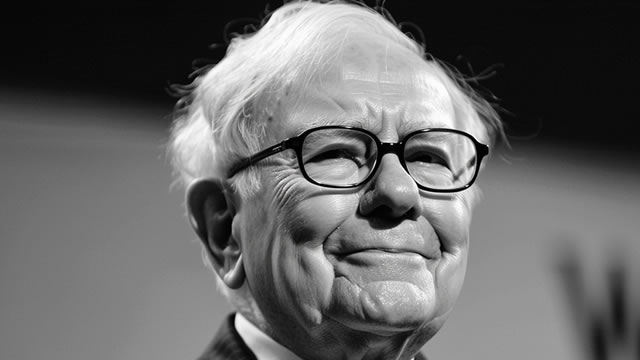
End of an era: Warren Buffett serves last day as Berkshire Hathaway's CEO
CNBC· 2026-01-01 14:08
Core Insights - Warren Buffett's tenure as CEO of Berkshire Hathaway has concluded after 60 years, transitioning to a role as chairman of the board while Greg Abel takes over as CEO [1][2][3] Company Strategy and Management - Buffett's investment strategy, utilizing insurance premiums as "float," has transformed Berkshire from a struggling textile mill into a $1 trillion conglomerate, contributing to his net worth exceeding $150 billion [2] - Greg Abel, who has been with Berkshire since 2000, is expected to maintain the company's decentralized management style while introducing more discipline compared to Buffett's approach [3][6] - Abel's leadership is anticipated to be supported by Buffett's significant voting control, which may provide stability during the transition [5] Performance and Market Reaction - Berkshire's stock underperformed the S&P 500 in Buffett's final year, with A shares dropping from an all-time high of $809,350 to a low of $692,600, a decline of 14.4% [9][10] - The stock partially rebounded to $754,800, marking a 10.9% increase for 2025, while the S&P 500 gained 16.4% during the same period [10][11] Financial Metrics - As of September 30, Berkshire's cash reserves stood at $381.7 billion, reflecting a 10.9% increase from June 30, with a net cash balance of $354.3 billion after adjustments [17]

Novo Nordisk enters 2026 on the defense as it faces a ‘must-win' battle in the U.S. market
CNBC· 2026-01-01 06:00
Core Viewpoint - Novo Nordisk is transitioning from a market leader to an underperformer, particularly in its weight loss business, and is striving to regain investor confidence as it approaches 2026 [1][2]. Company Performance - Novo's stock has faced its worst year since its inception on the Copenhagen stock exchange, attributed to guidance cuts, competition from Eli Lilly, leadership changes, and the influx of cheaper generic drugs in the U.S. market [2]. - The approval of Wegovy, an oral weight loss pill, has provided a temporary boost, increasing shares by nearly 10% as investors hope it will help Novo compete against rivals [3][4]. Product Development - Wegovy's approval as the first oral GLP-1 treatment for weight loss is seen as a significant milestone, with analysts acknowledging its potential to recover lost market share [4]. - Wegovy in pill form has demonstrated an average weight loss of 16.6% over 64 weeks, compared to Eli Lilly's orforglipron, which averages 12.4% over 72 weeks [8]. Competitive Landscape - Eli Lilly is expected to receive FDA approval for its own weight loss pill, orforglipron, by the second quarter of 2026, intensifying competition in the market [5]. - Eli Lilly's Zepbound has gained significant market share, positioning it as a leading treatment for weight loss injections, surpassing Novo's Wegovy [10]. Market Strategy - Novo's strategy emphasizes treating obesity as a disease rather than just focusing on weight loss, which may not resonate with the U.S. market's preferences for immediate weight loss results [11][13]. - The company is also focusing on the direct-to-consumer market, which is crucial for future sales growth, especially as it faces pressure from U.S. drug pricing policies [15][18]. Regulatory and Pricing Challenges - The Trump administration's deal with Novo and Lilly aims to lower prices for GLP-1 medications, which could enhance Novo's competitiveness against cheaper alternatives [17][18]. - Novo's leadership changes and strategic decisions are under scrutiny, with investors looking for signs of improvement in U.S. operations [20][21]. Future Outlook - The approval of a higher dose of Wegovy could align with market demands for greater weight loss efficacy, potentially enhancing Novo's competitive position [14]. - Long-term competition is expected to increase as other pharmaceutical companies advance their weight loss drug candidates, indicating a need for Novo to innovate and diversify its treatment options [24].



Google wraps up best year on Wall Street since 2009, beating megacap peers as AI story strengthens
CNBC· 2025-12-31 21:06
Core Viewpoint - Google achieved its strongest performance since 2009, with Alphabet's stock rising 65% in 2025, outperforming other tech giants [2][3] Stock Performance - Alphabet's stock saw a significant increase of 65% for the year, surpassing gains from 2021, with shares hitting a low in April before rebounding over 100% [2] - Among tech companies valued over $1 trillion, Alphabet was the largest gainer, while Broadcom and Nvidia followed with gains of 49% and 39% respectively [2] AI Developments - Google faced skepticism regarding its ability to maintain dominance in the AI era, particularly with competitors like OpenAI's ChatGPT [2] - The Gemini app, launched to compete with ChatGPT, gained traction, surpassing 5 billion images generated and topping the Apple App Store [4] - Google expanded its AI talent pool by acquiring key personnel from the AI startup Windsurf for $2.4 billion [5] Legal and Regulatory Environment - A U.S. District Judge ruled against severe consequences for Google in an antitrust case, allowing the company to retain its Chrome browser and continue paying for default search engine placements [6][7] Market Position and Growth - Gemini's usage share increased to approximately 18%, while ChatGPT's share dropped to about 68% [8] - Analysts believe Google's AI investments are positively impacting its core search business, with expectations for a 15% revenue growth in Q4 2025 [10][11] Financial Outlook - Alphabet raised its capital spending forecast for 2025 to $93 billion, with projections for 2026 exceeding $114 billion [12] - Google's cloud business signed more deals over $1 billion in 2025 than in the previous two years combined, indicating strong demand [12] Analyst Sentiment - Despite potential risks from OpenAI's financial obligations, analysts maintain a buy rating on Alphabet's stock, raising the price target to $400, approximately 28% above its recent closing price [13] - Analysts predict a market shakeout similar to 2000, with Google positioned to lead among fewer dominant competitors [14]


Economist Mark Zandi sees the Fed surprising with three rate cuts in first half of 2026
CNBC· 2025-12-31 17:02
Core Viewpoint - The Federal Reserve is expected to lower interest rates aggressively in early 2026 due to labor market weakness, inflation uncertainty, and political pressure, according to Moody's Analytics chief economist Mark Zandi [1][2]. Group 1: Labor Market and Economic Conditions - The job market is still flagging, particularly in early 2026, which will lead to insufficient job growth and rising unemployment, prompting the Fed to cut rates [2]. - Zandi anticipates three cuts of a quarter percentage point each before mid-year 2026, contrasting with market expectations of only two cuts later in the year [1][3]. Group 2: Federal Reserve's Outlook - Current market pricing indicates a first cut not until at least April 2026, with a second cut likely around September, while Fed officials are even more cautious, expecting only one cut throughout the year [3][4]. - The Fed's individual officials' expectations suggest a tepid pace for any potential reductions, with recent minutes indicating that the decision for a cut was a close call [4]. Group 3: Political Influence - The potential for President Trump to reshape the Fed's hierarchy adds uncertainty, as he currently has three appointees on the board and is likely to appoint another loyalist soon [5][6]. - Trump's advocacy for lower interest rates may lead to increased political pressure on the Fed, especially with midterm congressional elections approaching [7].
Nike shares move higher on big insider purchases by CEO Elliott Hill, director Tim Cook after down year
CNBC· 2025-12-31 13:56
Core Insights - Nike shares experienced a 3% increase in premarket trading following insider purchases, indicating potential confidence in the company's future performance [1] - Apple CEO Tim Cook significantly increased his stake in Nike by acquiring approximately 50,000 shares, representing a nearly 90% rise in his holdings [1] - Other board members also increased their investments, with Robert Holmes Swan adding around 8,700 shares, a 24% increase, and Nike CEO Elliott Hill acquiring about 16,400 shares valued at $1 million, resulting in a personal stake growth of over 7% [2]

