CNBC

Search documents
How the EV pullback is affecting factories and jobs in the South
CNBC· 2026-02-01 12:00
Core Insights - The majority of electric vehicle (EV) investments in the U.S. have historically favored Republican-led districts, particularly in the Southeast, raising questions about the future of these investments as the industry shifts focus away from EVs [1][2]. Investment Overview - Automakers and battery manufacturers have invested over $200 billion in EV and battery manufacturing in the U.S. from 2000 to 2024, with 84% of battery investments and 62% of EV manufacturing investments directed towards Republican-led districts [2]. - These investments were projected to create over 200,000 jobs, with 77% of these jobs located in Republican districts [2]. Regional Focus - Nearly 40% of the total investment in EVs and batteries has been allocated to the Southeastern U.S., which has been a manufacturing hub for the automotive industry for over 50 years [3]. Impact of Federal Policies - The removal of federal incentives for EVs under the Inflation Reduction Act has led to a significant decline in sales, prompting companies to pivot towards other vehicle types to mitigate losses [4][6]. Hyundai's Strategic Moves - Hyundai Motor Group, previously a leading EV seller in the U.S., has seen a 50% drop in EV sales by the fourth quarter following the end of federal incentives [6]. - The company has made a historic $12.6 billion investment in the Hyundai Metaplant in Georgia, which is expected to create approximately 8,500 jobs by 2031 [7][8]. - Hyundai plans to increase production capacity at the Metaplant by investing an additional $2.7 billion, targeting an annual output of 500,000 vehicles, with a mix of 30% EVs and 70% hybrids and gas vehicles [10]. Industry Challenges - Analysts estimate that U.S. automakers may face at least $100 billion in write-downs on EV investments, indicating that these investments may not yield the anticipated profits [11]. - Major automakers like Ford and General Motors have already announced significant financial charges related to their EV businesses, with Ford reporting a $19.5 billion charge and GM a $7.6 billion charge [12]. Market Projections - EV sales forecasts have drastically decreased from initial projections of 50% of new car sales by 2030 to a current estimate of only 17% [14][15]. - Bosch, a major automotive supplier, has had to adjust its investment strategies in light of these changing projections, moving employees from its EV motors division to other departments [16].

AstraZeneca is listing in New York, as Big Pharma balances the huge U.S. market with China's tempting innovation
CNBC· 2026-02-01 07:49
Core Insights - AstraZeneca is set to list on the New York Stock Exchange, aiming to strengthen its investment presence in the U.S., its largest market [1][10] - The company is making significant investments in China, including a $15 billion commitment through 2030, to enhance manufacturing and R&D capabilities [4][10] - AstraZeneca's strategy reflects a broader trend in the pharma industry, where companies are increasingly looking to China for innovation as patents on blockbuster drugs expire [2][3] Investment and Partnerships - AstraZeneca's investment in China will cover the entire value chain from drug discovery to manufacturing, highlighting its commitment to Chinese innovation [5] - The company has partnered with Hong Kong-listed CSPC Pharmaceuticals to bolster its obesity portfolio, involving an upfront payment of $1.2 billion and potential additional payments of $17.3 billion based on milestones [6][7] - This partnership is part of a growing trend of licensing deals between Big Pharma and Chinese biotechs, with 57 such deals reported in 2025 [14] Market Dynamics - The U.S. market presents pricing challenges that are pressuring Big Pharma, making the Chinese market increasingly important for revenue and research [2][3][10] - AstraZeneca's commitment to China is underscored by its recent actions, despite facing regulatory scrutiny in the past [12][13] - The Chinese biopharma sector is evolving rapidly, with a focus on next-generation therapeutics and efficient clinical trial processes, positioning it as a potential leader in biotechnology [15][16]


Bitcoin dips below $78,000 as market digests silver sell-off, Trump's Fed chair pick
CNBC· 2026-01-31 19:59
Core Viewpoint - The cryptocurrency market experienced significant declines, particularly Bitcoin, Ethereum, and Solana, following President Trump's announcement of Kevin Warsh as his choice for the next Federal Reserve chairman, which strengthened the U.S. dollar and raised concerns about the appeal of cryptocurrencies as alternative currencies [1][2]. Group 1: Cryptocurrency Market Performance - Bitcoin fell below $78,000, down 7.6% [1] - Ethereum decreased by approximately 11% to $2,382.57 [1] - Solana dropped 13% to $101.91 [1] Group 2: Federal Reserve Leadership Impact - Trump's selection of Kevin Warsh to lead the Fed is expected to bolster the U.S. dollar, potentially diminishing Bitcoin's attractiveness as an alternative currency [2] - If confirmed, Warsh would replace Jerome Powell, whose term ends in May [3] - Trump's criticism of Powell has been ongoing since 2018, particularly regarding interest rate policies [3] Group 3: Broader Market Context - The decline in cryptocurrencies follows a sharp selloff in spot silver, marking the worst day for the market since March 1980, with spot silver down 28% at $83.45 an ounce [3][4] - Silver futures fell 31.4% to settle at $78.53 [4]

Here is what caused the wild swings in our 34-stock portfolio last week
CNBC· 2026-01-31 18:24
Market Overview - The S&P 500 closed lower on Friday but was slightly higher for the week, with a 0.34% gain for the week and a 1.37% gain for January, briefly topping 7,000 for the first time ever [1] - The Nasdaq was flat for the week and gained 0.95% for January [1] Tech Earnings - Meta Platforms reported earnings that exceeded estimates, leading to a nearly 9% increase in its stock, while Microsoft saw an 8% drop due to disappointing results from its cloud computing business [1] - Apple broke an eight-week losing streak with a strong quarter driven by a 23% increase in iPhone sales, but concerns over memory shortages impacted its stock [1] - GE Vernova and Corning reached all-time highs, with Corning's stock rising after a $6 billion deal with Meta [1] Non-Tech Companies - Starbucks shares fell over 6% despite a promising quarter and a bullish Investor Day, indicating potential for a buying opportunity if the decline continues [1] - Honeywell shares reached an all-time high following a strong earnings report and news of accelerated aerospace spinoff plans, gaining nearly 3% for the week [1] - Dover's stock fell over 2% due to profit-taking after a strong earnings report, while Danaher and Boeing closed lower for the week [1] Software Sector - The software sector faced significant sell-offs, with Salesforce dropping 7% and ServiceNow falling 10% despite better-than-expected results [1] - Concerns over AI-driven disruptions led to a revaluation of SaaS companies, compressing price-to-earnings ratios [1] - Cybersecurity stocks like Palo Alto Networks and CrowdStrike also declined, but were viewed as buying opportunities [1] Federal Reserve Developments - The Federal Reserve held interest rates steady after three consecutive rate cuts, with Chairman Jerome Powell noting solid economic activity and stabilization in the unemployment rate [1] - President Trump nominated Kevin Warsh to succeed Powell, which is seen as a more hawkish move, impacting gold and silver prices negatively [1]



American Express challenges Apple for No. 1 slot in Berkshire's portfolio
CNBC· 2026-01-31 14:23
Core Viewpoint - Warren Buffett expresses optimism about stock market declines, viewing them as opportunities for long-term investment rather than reasons for panic [2][10]. Group 1: Market Reaction - The stock market was projected to drop by approximately 3% due to fears surrounding the coronavirus pandemic [1]. - Buffett indicates that he prefers to buy stocks when prices are lower, likening it to buying food at a discount [2][9]. - He notes that historical market declines have often presented good buying opportunities, suggesting that investors should not be deterred by short-term fluctuations [10][12]. Group 2: Long-term Investment Perspective - Buffett emphasizes that stocks should be viewed as businesses, and investors should focus on the long-term outlook rather than daily market movements [5][14]. - He asserts that the 10 to 30-year outlook for American businesses remains unchanged despite current market conditions [5][14]. - The company plans to continue buying stocks as long-term investments, reinforcing the idea that short-term market news should not dictate investment decisions [11][14].



Activist Dan Loeb dusts off his poison pen as he seeks a board refresh at CoStar Group
CNBC· 2026-01-31 14:09
Company Overview - CoStar Group provides online real estate marketplaces, information, and analytics in both commercial and residential property markets, operating through segments such as CoStar Portfolio, Information Services Portfolio, Multifamily Portfolio, LoopNet Portfolio, and Other Marketplaces Portfolio [1] - Approximately 95% of the company's revenue comes from its core commercial real estate (CRE) franchises, including CoStar Suite and Apartments.com, which benefit from high barriers to entry and strong pricing power [4] Recent Developments - Third Point, an activist hedge fund, has called for significant changes at CoStar, including replacing a majority of the board and aligning management compensation with total shareholder return [3][8] - The firm plans to nominate a new slate of directors following the expiration of standstill restrictions [3] Financial Performance - CoStar has invested around $5 billion in its residential real estate (RRE) segment, Homes.com, which generated only $60 million in revenue for 2024 and is projected to generate $80 million in 2025 [5] - The RRE business has negatively impacted the company's overall performance, with shares underperforming the S&P 500 by over 45 percentage points since a previous agreement [7] Governance Issues - Despite governance changes, including the addition of new directors, management has continued to pursue unsuccessful RRE initiatives, leading to disappointing financial results [6] - CEO Andrew Florance received approximately $37 million in total compensation in 2024, despite the company's poor performance, raising concerns about accountability [8] Strategic Outlook - Third Point believes that the CRE business has significant untapped pricing power and potential for revenue growth, projecting EBITDA margins above 50% in the medium term [9] - The company’s under-levered balance sheet allows for share repurchases, further enhancing shareholder value creation opportunities [9]


Big Food gets leaner with divestitures and breakups as consumers turn away from packaged snacks
CNBC· 2026-01-31 13:00
Core Viewpoint - Kraft Heinz is planning to split into two separately traded companies, reversing its 2015 merger, amid a broader trend in the food industry where companies are divesting underperforming brands due to changing consumer preferences and regulatory pressures [1][2][18]. Industry Trends - The consumer products industry is experiencing a significant shift, with nearly half of M&A activity in 2024 coming from divestitures, as companies like Unilever and Keurig Dr Pepper also pursue similar strategies [3][2]. - The trend of breaking up is not limited to consumer packaged goods; industrial companies and legacy media firms are also undergoing similar transformations [4]. Market Dynamics - There is increasing pressure on packaged food and beverage companies due to lower demand and shrinking sales volumes, prompting them to divest underperforming brands to regain investor confidence [5][11]. - Consumers are shifting their purchasing habits towards fresh produce and protein, leading to declining sales for traditional grocery items [7]. Regulatory Environment - Regulatory scrutiny on processed foods is intensifying, influenced by health initiatives and the rise of medications that reduce appetite for sugary and salty snacks [8]. Competitive Landscape - Major consumer packaged goods companies are losing market share to upstart brands and private-label products, with only about 35% of their portfolios in high-growth categories compared to over half for private-label brands [9][10]. Financial Performance - Kraft Heinz has seen a 73% decline in its stock price since its merger, attributed to aggressive cost-cutting measures that neglected brand investment [19]. - The merger of Keurig Green Mountain and Dr Pepper Snapple Group in 2018 is cited as an example of a poorly conceived deal, leading to a significant rise in shares but still underperforming compared to the S&P 500 [15][14]. Strategic Moves - Kraft Heinz has appointed Steve Cahillane, former CEO of Kellogg, to lead the new entity focused on high-growth brands post-split [23]. - The divestiture trend is expected to continue, with companies like General Mills and Nestle also announcing sales of non-core brands to concentrate on their main offerings [25]. Acquisition Landscape - Smaller acquisitions are becoming more common, with deals under $2 billion representing a growing share of consumer products transactions, as larger deals face regulatory hurdles [26][27].

Amazon asks FCC for extension for Leo satellite internet service
CNBC· 2026-01-31 01:26
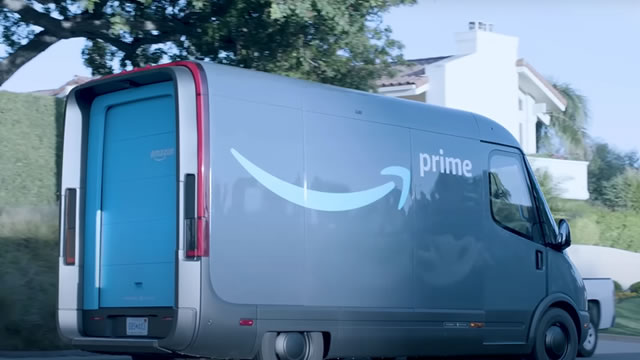
Core Viewpoint - Amazon is seeking a 24-month extension from the FCC to meet its satellite deployment deadline due to delays caused by external factors, aiming to compete with SpaceX's Starlink [3][4][9]. Group 1: Satellite Deployment and Network Plans - Amazon has committed at least $10 billion to develop its satellite network, now branded as Amazon Leo, which aims to provide internet services from space [2]. - The company has launched over 150 satellites since April and plans to deploy approximately 700 satellites by July 30, moving towards becoming the second-largest satellite constellation in orbit [7]. - Amazon has booked more than 100 launches and recently secured 10 additional launches with SpaceX and 12 with Blue Origin [5]. Group 2: Challenges and Delays - The company cites a shortage of rocket availability, manufacturing disruptions, and limitations on spaceport capacity as reasons for the delays in satellite deployment [3][6]. - Amazon's request for an extension is also based on the extended development timelines of next-generation launch vehicles, which have exceeded initial projections [6]. Group 3: Competitive Landscape - Amazon Leo's primary competitor is SpaceX's Starlink, which has over 9,000 satellites and approximately 9 million customers, while OneWeb operates with more than 600 satellites [8]. - Amazon has initiated an "enterprise preview" of Leo to select users ahead of a broader commercial launch [8]. Group 4: Regulatory Considerations - The company argues that denying the extension would undermine the FCC's goals of expanding spectrum access and promoting rapid deployment, noting that similar extensions have been granted in the past [9]. - Amazon emphasizes that an extension would facilitate ongoing deployment efforts, while strict enforcement of deadlines could disrupt its plans [10].


Amazon wraps controversial week ahead of 'Melania' premier, fourth-quarter earnings
CNBC· 2026-01-30 23:44
In this articleAMZNMovie posters for the documentary "Melania" featuring U.S. first lady Melania Trump are displayed in a New York City subway station, in New York, U.S., Jan. 14, 2026. Jeenah Moon | ReutersIt was a turbulent week for Amazon.From a bungled email prematurely announcing another massive round of layoffs to scrutiny around the company's $75 million investment in a documentary about the first lady, Amazon heads into its quarterly earnings report next week surrounded by a deafening level of outsi ...
Cramer’s week ahead: Earnings from Eli Lilly, Alphabet and Amazon. Plus, jobs data
CNBC· 2026-01-30 23:17
分组1 - The stock market is poised for a potential rebound if major companies report strong earnings next week, following a week of declines in the S&P 500 [1] - Disney is set to report earnings on Monday, with ongoing discussions about CEO succession; the company's performance has been stagnant, leading to a decision to exit its position in November [2] - Key earnings reports on Tuesday include Pfizer, Pepsi, Merck, Advanced Micro Devices (AMD), and Chipotle, with AMD's performance being particularly scrutinized for insights into the AI sector [3] - Western Digital will host an innovation day on Tuesday to showcase advancements in data storage, which is critical after a significant drop in its stock despite a strong quarterly report [4] 分组2 - Eli Lilly will report on Wednesday, with attention on potential new trial results for its GLP-1 portfolio, which may impact stock movements more than quarterly results [5] - Alphabet's upcoming report is considered highly significant for the market, with a shift in narrative positioning it as a strong contender among tech stocks [6] - Amazon will report earnings on Thursday, facing challenges with stock momentum despite the company's strong fundamentals [6] - The January employment report on Friday may show weaker-than-expected job gains and wage inflation, potentially supporting lower bond yields and benefiting stocks [6]