CNBC

Search documents
Buy low, sell high: How we navigated the wild week on Wall Street
CNBC· 2026-01-24 18:26
Market Overview - The stock market experienced volatility due to President Trump's tariff threats against eight European countries, leading to the S&P 500 and Nasdaq's worst performance since October [1] - Following Trump's announcement of a framework for a future deal regarding Greenland, both indices rebounded, but ended the holiday-shortened week down 0.4% and 0.1% respectively [1] Earnings Reports - Procter & Gamble reported mixed results, beating earnings expectations but missing revenue targets, attributed to the impact of the government shutdown [1] - Capital One also delivered mixed results, beating sales expectations but missing on earnings due to higher expenses; the company remains optimistic about long-term growth following recent acquisitions [1] Investment Actions - The company bought shares of Alphabet after a dip, which ended the week down 0.6% [1] - Profits were taken on Dover as it reached an all-time high, realizing a 13% gain on shares bought in May 2024 [1] - Qnity Electronics was trimmed after a significant year-to-date increase of 17.7%, reflecting a cautious approach despite positive outlooks [1]


Trump threatens to impose 100% tariff if Canada makes deal with China
CNBC· 2026-01-24 15:23
Core Viewpoint - President Trump threatens to impose a 100% tariff on Canadian goods if Canada finalizes a trade deal with China, indicating a strong stance against perceived trade maneuvers that could undermine U.S. tariffs [1][2]. Group 1: U.S.-Canada Trade Relations - Trump warns that a trade deal between Canada and China would result in a 100% tariff on all Canadian goods entering the U.S. [1] - The U.S. has previously raised tariffs on Canadian goods to 35% as of August 2025, with certain products like steel and autos still subject to duties under the Canada-U.S.-Mexico Agreement (CUSMA) [4]. - The new tariff threat follows Trump's withdrawal of an invitation for Canada to join his "Board of Peace," which was announced after Prime Minister Carney's speech at the World Economic Forum [5][6]. Group 2: Canada-China Trade Deal - Canada and China have reached a preliminary agreement to reduce trade barriers, allowing up to 49,000 Chinese electric vehicles into Canada at a tariff rate of 6.1%, while China would lower tariffs on Canadian canola seed to approximately 15% [3]. - Trump's previous comments indicated support for Carney's efforts to negotiate a trade deal with China, highlighting a shift in his stance [4].

New Berkshire CEO Abel quickly signals troubled Kraft Heinz stake could be toast
CNBC· 2026-01-24 13:59
Core Viewpoint - The company overpaid for Kraft, impacting its long-term potential despite operational success [2][8] Financial Performance - Kraft Heinz generates approximately $6 billion in pretax profits on $7 billion of tangible assets, indicating a strong business model [2][8] - The profitability of Kraft Heinz has improved compared to previous operations [3] Brand Dynamics - Amazon and Costco have established strong private-label brands, with Costco's Kirkland brand generating $39 billion, surpassing Kraft Heinz's total brand value of $26 billion [4][5] - The power dynamics between retailers and brands have shifted, with retailers like Amazon, Walmart, and Costco gaining more influence [7][8] Investment Philosophy - The company emphasizes the importance of purchasing good businesses at reasonable prices, moving away from the strategy of acquiring declining businesses at bargain prices [9]


Activist Engaged Capital is poised to shake up the board at BlackLine. How it may unfold
CNBC· 2026-01-24 13:54
Core Viewpoint - Engaged Capital is actively pushing for BlackLine's board to evaluate a recent acquisition offer from SAP SE, emphasizing the need for a strategic alternatives process to assess shareholder interests and potential value creation [2][5][6]. Group 1: Engaged Capital's Involvement - Engaged Capital, founded by Glenn Welling, holds a 2.02% stake in BlackLine and has a history of successful small-cap investments with an average return of 20.56% [1]. - The firm has initiated a proxy fight by nominating four director candidates for BlackLine's board at the 2026 Annual Meeting, including individuals with significant experience in technology and finance [2][7]. Group 2: BlackLine's Business Overview - BlackLine operates in the financial accounting solutions sector, primarily offering Software as a Service (SaaS) with high gross margins of 80% and a strategic partnership with SAP SE, which accounts for approximately 30% of its revenue [3]. - The company experienced rapid growth prior to the COVID-19 pandemic, with revenue compounding at over 20% annually, but has since faced a decline in growth rates and stock price, dropping to around $61 in December 2022 [3][4]. Group 3: Recent Developments and Strategic Context - SAP SE reportedly made an acquisition offer of $66 per share for BlackLine in June 2025, representing over a 30% premium to the 60-day trading average at that time, but BlackLine rejected the offer [4][5]. - Engaged Capital's push for a strategic review comes amid concerns about BlackLine's declining growth and the need for the board to act in the best interests of shareholders, particularly given the strategic relationship with SAP [5][6]. Group 4: Board Dynamics and Proxy Fight Considerations - The upcoming proxy fight will be influenced by the impending departure of board member Tom Unterman, creating a vacancy that Engaged Capital can leverage [8]. - Engaged Capital is likely to gain support from Clearlake Capital, which holds a 9.6% stake in BlackLine, and there are indications of shareholder discontent with the current management [8].


Investors came to Davos for AI. They left talking about Greenland
CNBC· 2026-01-24 12:12
Group 1: Optimism in Technology - The mood at Davos was notably optimistic regarding artificial intelligence, with discussions on "world models" and "physical AI" indicating a shift from hype to production, supported by significant capital availability [2][3] - Elon Musk's presentation on Tesla's vision for robotaxis and AI development reset the atmosphere, with predictions of widespread driverless robotaxis in the U.S. by the end of 2026 and AI potentially surpassing human intelligence this year [8][10] Group 2: Geopolitical Concerns - Conversations at Davos frequently shifted from technological advancements to geopolitical issues, including tariffs and the acquisition of Greenland, highlighting a growing sense of uncertainty in global investment rules [6][7][17] - Finance ministers emphasized the need for reassurance amidst geopolitical tensions, with South Africa's finance minister noting that the primary risk to the economy is the geopolitical situation [14][16] Group 3: Diverging Perspectives - The conference showcased two contrasting narratives: one focused on technological innovation and the other on navigating geopolitical uncertainty, often occurring within the same discussions [18] - Industry leaders like Joe Kaeser of Siemens Energy framed AI as an industrial opportunity, emphasizing Europe's potential in data and computing power to drive innovation [11][12]

Meta's Reality Labs cuts sparked fears of a 'VR winter'
CNBC· 2026-01-24 12:00
Core Insights - Meta is shifting its focus from virtual reality (VR) to artificial intelligence (AI) and smart glasses, raising concerns about the future of the VR industry [1][3][4] - The company recently laid off 10% of its Reality Labs employees, primarily affecting VR-related projects, resulting in approximately 1,000 job cuts [2][4] - Meta's Reality Labs has incurred over $70 billion in cumulative losses since late 2020, indicating significant financial challenges in the VR sector [4] Company Actions - Meta's layoffs are part of a broader strategy to redirect investments from VR to AI and wearable devices, such as the Ray-Ban Meta smart glasses [3][4] - The company introduced the $799 Meta Ray-Ban Display glasses at its annual Connect conference, marking a departure from its traditional focus on VR hardware [5][6] - Meta's tech chief Andrew Bosworth emphasized that the company is not abandoning VR but is adjusting its investment strategy due to slower-than-expected growth in the VR market [6] Industry Trends - Market research firm IDC reported a significant transition in the Extended Reality (XR) device segment, with VR and mixed-reality headset shipments expected to drop by 42.8% to 3.9 million units in 2025 [9] - In contrast, AI-powered smart glasses are projected to grow by 211.2% year-over-year, reaching 10.6 million units shipped in 2025 [9] - The VR headset market is characterized as niche, appealing primarily to a small segment of video gamers, with average consumers showing little interest in bulky headsets [10] Developer Perspectives - VR developers express concern over the future of the industry, noting that while Meta is not completely abandoning VR, a significant shift is underway [5][6] - Some developers believe that Meta's focus on Horizon Worlds has hindered third-party developers' visibility and opportunities within the VR ecosystem [12][13] - The enterprise VR market is showing slow but positive growth, as companies recognize the return on investment associated with deploying VR headsets [16]


Musk's $1 trillion pay package renews focus on soaring CEO compensation
CNBC· 2026-01-24 12:00
Core Insights - Elon Musk's pay package, potentially valued at up to $1 trillion, underscores the ongoing rise in CEO compensation despite stagnating worker pay and mixed shareholder rewards [2][3] - Musk's wealth, exceeding $660 billion, positions him as the richest individual globally, with his Tesla pay package reinstated and a potential SpaceX IPO on the horizon [3] - CEO compensation has surged by 1,094% over the past 50 years, contrasting sharply with a mere 26% increase in typical worker compensation [4] CEO Compensation Trends - The median total compensation for S&P 500 CEOs reached $17.1 million in 2024, marking a nearly 10% increase from 2023, with CEOs earning 192 times more than the average employee [5] - Stock awards constitute 72% of CEO pay packages in 2024, with their median value increasing by 15% that year [7] - Musk's pay package is entirely based on stock awards tied to performance milestones, with no base salary included [8][9] Performance and Pay Correlation - There is a weak correlation between CEO pay and company performance, as indicated by a 2021 MSCI study, which found that average-performing CEOs earned only 4% less than top performers [10][12] - The shift from stock options to stock awards aims to align CEO incentives with long-term company performance, although the effectiveness of this strategy remains debated [13] Employee Compensation Considerations - Some economists suggest increasing stock awards for employees to bridge the compensation gap between employees and CEOs, with Employee Stock Ownership Plans (ESOPs) being one potential solution [14][15] - Employee-owned businesses reportedly exhibit higher productivity and lower turnover rates, contributing to overall competitiveness [15][16]
Cramer's week ahead: Earnings from Meta, Microsoft and Apple. Plus, a Fed meeting
CNBC· 2026-01-23 23:50
Earnings Reports - Nucor, described as the "best steel company in the world," will report earnings on Monday, with expectations that rate cuts may spur economic growth despite a lackluster mid-quarter update in December [1] - Boeing and General Motors will release results on Tuesday, with Boeing shares having rallied significantly, leading to cautious expectations for further gains [2][3] - A busy earnings day on Wednesday will feature reports from Corning, Danaher, Starbucks, GE Vernova, Meta Platforms, and Microsoft, all of which are holdings in Cramer's Charitable Trust [4] Company Insights - Danaher is expected to have its first strong quarter in years due to a resurgence in biotech orders [6] - Starbucks is considered "wildly overbought," requiring exceptionally strong earnings to maintain upward momentum, but is still viewed positively for the long term [6] - Microsoft shares are under pressure due to AI-driven disruption risks, which are seen as a false concern [7] - GE Vernova's results are anticipated to be underwhelming due to high expectations, while Corning is favored for long-term growth due to AI-related benefits [5] Market Context - Honeywell will report on Thursday, with potential for a disappointing stock reaction as investors await the company's breakup later this year [8] - Apple is set to post results after eight weeks of decline, attributed to concerns over rising memory costs affecting margins, but the recommendation remains to "own it, don't trade it" [9] - The Federal Reserve's interest rate decision is expected to remain unchanged, with potential market-moving news regarding Fed Chair Jerome Powell's replacement [10]


Nvidia director Persis Drell resigns with $26 million worth of stock after decade on board
CNBC· 2026-01-23 23:02
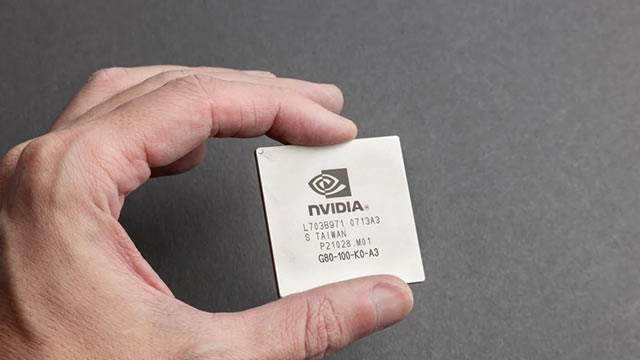
Core Insights - Nvidia director Persis Drell has resigned after over a decade on the board to pursue a new professional opportunity, with no indication of disagreement with the company [1][2] - Drell is the first board member to leave since Ellen Ochoa's resignation in June, leaving the board with 10 directors [2] - Nvidia's stock has increased over 22,000% since the end of 2015, making it the most valuable company globally due to the AI boom [3] Company Details - Drell owned approximately 143,000 Nvidia shares valued at about $26 million and received around $344,000 in compensation last year, including nearly $259,000 in stock awards [2] - Drell has a long academic career at Stanford, serving in various leadership roles, including dean of the engineering school and provost [3] - Drell sold about 40,000 shares of Nvidia last year [3]

The future of shopping has arrived — and Google wants to run it
CNBC· 2026-01-23 17:56
Core Insights - Alphabet's Google is transitioning to "agentic commerce," where AI not only suggests purchases but also executes them, fundamentally changing the online retail experience [1] - The Universal Commerce Protocol (UCP) was introduced to facilitate autonomous AI agents in managing complex shopping tasks, enhancing the customer experience and retailer participation [1] - Google is leveraging its vast user data and AI capabilities to position itself as a leader in the evolving AI commerce landscape, moving from a reactive to an offensive strategy [2] Company Developments - Google unveiled the UCP at the National Retail Federation conference, designed to streamline shopping processes such as discount codes and payment processing [1] - The UCP was developed in collaboration with major retailers like Wayfair, Shopify, Walmart, Etsy, and Target, aiming to enhance the shopping journey through AI integration [1] - The Gemini AI model has gained significant traction, with over 650 million monthly users and 2 million business users shortly after launch, indicating strong market acceptance [1] Competitive Landscape - OpenAI's ChatGPT has entered the agentic commerce space with its Instant Checkout feature, which allows users to make purchases directly within the chat interface [1] - Amazon's generative AI shopping agent, Rufus, provides product comparisons and recommendations but does not complete transactions, highlighting a gap in its capabilities compared to Google's offerings [1] - Analysts believe Google's extensive user data and established ecosystem give it a competitive edge in the AI commerce sector [1] Market Outlook - Analysts have a bullish outlook on Alphabet, with price targets set at $310 and $330, reflecting confidence in the company's AI momentum and retail partnerships [1] - The upcoming fiscal 2025 fourth-quarter report is anticipated to provide further insights into Alphabet's AI strategy and future plans for 2026 [2] - The introduction of UCP is seen as a pivotal moment that could redefine retail search and commerce, moving towards a "Chat-Then-Buy" model [1]