TechCrunch

Search documents
TikTok agrees to deal to cede control of U.S. business to American investor group
TechCrunch· 2025-12-19 00:56
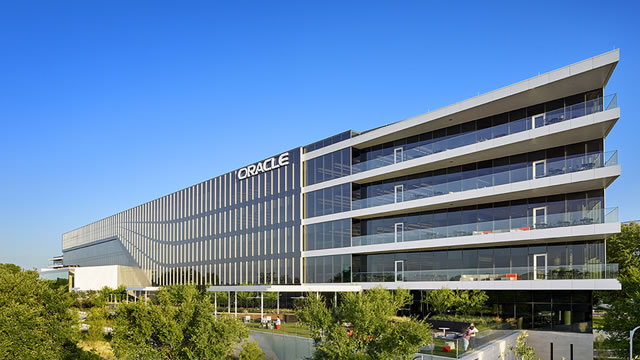
Core Insights - TikTok has reached an agreement to transfer a significant portion of its U.S. operations to a group of American investors, concluding a prolonged conflict with the federal government [1][5] Group 1: Deal Structure - The new partnership is termed "TikTok USDS Joint Venture LLC," with major American investors including Oracle, Silverlake, and MGX, who will collectively own 45% of the U.S. operations [2] - ByteDance will retain a nearly 20% share in the new entity, which will manage the app's operations, including data protection and content moderation [2] - Oracle has been designated as the trusted security partner responsible for auditing compliance with national security terms upon completion of the transaction [2] Group 2: Timeline and Background - The deal is set to close on January 22, 2026 [3] - The arrangement reflects language from a previous executive order by President Trump, which also aimed to transfer TikTok's U.S. operations to American investors [4] - The U.S. government has consistently pushed for the separation of TikTok's U.S. business from its Chinese parent company, citing national security concerns [5]


Apple becomes a debt collector with its new developer agreement
TechCrunch· 2025-12-18 23:56
Core Changes in Developer Agreement - Apple has updated its developer license agreement to allow the company to recoup unpaid funds by deducting them from in-app purchases processed on behalf of developers [1][3] - The new agreement enables Apple to collect fees from developers who use external payment systems, requiring them to report those payments back to Apple [1][3] Financial Implications for Developers - The updated agreement gives Apple a mechanism to collect what it believes are correct fees if a developer underreports earnings [2][3] - Apple can recoup funds from in-app purchases, including digital goods, services, subscriptions, and one-time fees for paid applications [3][4] Legal and Regional Considerations - The changes will affect developers in regions like the EU, US, and Japan, where local laws may require varying fees or commissions [3][5] - In the U.S., the legality of Apple's commission collection is still under dispute, with a recent federal appeals court ruling allowing for some commission collection [3] Payment Collection Rights - Apple has the right to collect unpaid amounts from any affiliates, parents, or subsidiaries related to the account that owes money, potentially impacting other apps from the same developer or parent company [6] - The agreement allows Apple to collect owed amounts "at any time," which could lead to unexpected deductions for developers [4][6] Additional Modifications - The updated agreement includes new sections on age assurance technology, specific terms for iOS apps in Japan, and requirements for voice-based assistants activated via the iPhone [7][8] - Apple is introducing restrictions on recordings made without user awareness, although it is not outright banning such recordings [8][9]


Instacart to pay $60M to settle FTC claims it deceived consumers
TechCrunch· 2025-12-18 21:07
Core Viewpoint - Instacart will pay $60 million in refunds to settle allegations from the U.S. Federal Trade Commission (FTC) regarding misleading advertising practices that resulted in consumers paying higher fees and being denied refunds [1][4]. Group 1: Misleading Advertising Claims - The FTC alleged that Instacart's claims of "free delivery" are misleading, as customers are still required to pay a mandatory service fee that can add up to 15% of their total order [1]. - The delivery platform's "100% satisfaction guarantee" was deemed false by the FTC, as it implies full refunds for unsatisfied customers, which is not typically honored in cases of late deliveries or poor service [2]. - Instacart was accused of hiding the refund option in the "self-service" menu, leading consumers to believe they could only receive credits for future orders instead of refunds [3]. Group 2: Membership Enrollment Issues - The FTC stated that Instacart failed to clearly disclose terms related to the Instacart+ membership enrollment process, particularly that consumers would be charged after a free trial without their informed consent [4]. Group 3: Ongoing Investigations - The settlement occurs amid scrutiny over Instacart's AI-powered pricing tool, which has been reported to cause price discrepancies for the same items at the same stores. The FTC has initiated an investigation into this pricing tool [7].


Rivian rolls out new ‘Universal Hands-Free' driving feature
TechCrunch· 2025-12-18 15:57
Core Insights - Rivian has introduced an update for its second-generation R1 electric vehicles, featuring a new "Universal Hands-Free" driving software that allows hands-free driving on over 3.5 million miles of roads in the U.S. and Canada [1][2] Group 1: Software Update and Features - The "Universal Hands-Free" feature significantly expands Rivian's driver assistance capabilities, increasing from 135,000 miles of highways to over 3.5 million miles of roads [2][3] - The updated software includes additional features such as a new digital key for second-generation R1 vehicles and the "Kick Turn" feature for quad-motor variants [5] Group 2: Future Developments - Rivian plans to develop a new autonomy computer with custom silicon for its upcoming R2 SUV, set to debut in 2026, which aims to achieve full autonomy [4] - The company has outlined plans to enable point-to-point autonomous driving, although this feature is not expected to be available until 2026 [3]


Apple opens up its App Store to competition in Japan
TechCrunch· 2025-12-18 15:02
Core Insights - Apple is allowing alternative app stores and external payment processing for digital goods in Japan due to the enforcement of the Mobile Software Competition Act (MSCA) [1] - The changes in Japan are part of a broader trend where Apple is being compelled to adapt its App Store practices in response to antitrust regulations in various regions, including the EU's Digital Markets Act (DMA) [2] - Apple has implemented a complex fee structure to maintain App Store revenue while complying with legal requirements [4] Regulatory Changes - The MSCA in Japan mandates that Apple must allow alternative app stores and payment processing options [1] - In the U.S., a court ruling related to a lawsuit from Epic Games has also pressured Apple to modify its in-app payment system [3] Fee Structure - The new App Store commission rates include: - 10% for transactions from specific programs and auto-renewable subscriptions after the first year [5] - 21% for sales of digital goods or services using alternative payments [5] - 5% for payments processed by Apple In-App Purchase [6] Developer Reactions - Epic Games' CEO Tim Sweeney criticized Apple's fee structure, stating that Fortnite will not return to iOS in Japan due to the 21% fee on third-party in-app purchases [7] - Sweeney expressed concerns about Apple's approach, comparing it unfavorably to other game store providers like Microsoft [8] Developer Agreement - Developers must agree to the updated Apple Developer Program License Agreement, which includes the new options for Japan, by March 17, 2026 [9]

Trump Media is merging with fusion power company TAE Technologies in $6B+ deal
TechCrunch· 2025-12-18 14:59
Company Overview - Trump Media and Technology Group (TMTG) is merging with TAE Technologies, a company focused on fusion power, in an all-stock transaction valued at over $6 billion [1] - TMTG is the parent company of Truth Social, a microblogging platform launched after former President Trump was banned from major social media platforms [2] - TMTG went public last year through a merger with a special-purpose acquisition company (SPAC) and reported a loss of $54.8 million on revenue of $972,900 for the quarter ended September 30, 2025 [2] Financial Position - TMTG has amassed $3.1 billion in assets, primarily through cryptocurrency investments and partnerships, despite low revenue generation from its platforms [3] Fusion Power Initiative - TMTG's acquisition of TAE Technologies aims to establish America's global energy dominance, with plans to construct the world's first utility-scale fusion power plant (50 MWe) next year and additional plants expected to be 350-500 MWe [4] - TAE Technologies has raised nearly $2 billion since its inception, with a recent funding round of $150 million from investors including Google and Chevron [8] - TAE has faced challenges in making its fusion designs work but is also developing a division focused on life sciences, selling a particle accelerator for cancer treatment [9] Industry Context - The fusion power sector is competitive, with other companies like Commonwealth Fusion Systems and Helion also pursuing the goal of integrating fusion power into the grid by the early 2030s [6] - Successful fusion startups could provide gigawatts of clean energy using hydrogen isotopes from seawater, with the process involving heating and compressing these isotopes to create plasma [7]


Instacart's AI-driven pricing tool attracted attention — now the FTC has questions
TechCrunch· 2025-12-18 02:23
Core Insights - The Federal Trade Commission (FTC) is investigating Instacart's AI-powered pricing tool, Eversight, due to concerns over significant price discrepancies for identical groceries, with some customers paying up to 23% more than others [1][2] Group 1: Regulatory Scrutiny - The FTC has issued a civil investigative demand to Instacart regarding its pricing practices, indicating a formal inquiry into the company's pricing strategies [1] - The investigation is prompted by a study revealing that shoppers experience varying prices for the same products, raising questions about the fairness of these pricing mechanisms [2] Group 2: Pricing Strategies - Dynamic pricing, while common in various industries such as airlines and hotels, is under scrutiny in the grocery sector, where consumers may find it less acceptable due to the necessity of food [3][4] - Instacart claims that its price tests are randomized and not based on individual customer data, but the distinction may not alleviate consumer concerns in a challenging economic environment [2][4] Group 3: Market Context - The use of AI-driven pricing strategies is becoming increasingly prevalent, but the current economic climate, where consumers are feeling financial pressure, makes such practices particularly contentious [4]

Adobe hit with proposed class-action, accused of misusing authors' work in AI training
TechCrunch· 2025-12-18 00:44
Core Viewpoint - Adobe's extensive use of AI technology has led to a lawsuit claiming the company used pirated books to train its AI model, SlimLM, raising concerns about copyright infringement in the tech industry [1][2]. Group 1: Lawsuit Details - A class-action lawsuit has been filed by author Elizabeth Lyon, alleging that Adobe utilized pirated versions of her books to train the SlimLM program [2]. - The lawsuit claims that SlimLM was pre-trained on the SlimPajama dataset, which is derived from the RedPajama dataset that includes copyrighted works [3][4]. - The Books3 dataset, which contains 191,000 books, has been a focal point in legal disputes regarding the use of copyrighted material in AI training [4]. Group 2: Industry Context - The tech industry is facing increasing legal challenges related to the use of copyrighted materials in AI training datasets, with several companies, including Apple and Salesforce, being implicated in similar lawsuits [4][5]. - The case against Anthropic, which resulted in a $1.5 billion settlement for using pirated works, highlights the potential for significant financial repercussions in these legal battles [5].

YouTube will stream the Oscars — exclusively — beginning in 2029
TechCrunch· 2025-12-17 19:42
Core Insights - YouTube has secured exclusive streaming rights for the Oscars starting in 2029, ending ABC's long-standing association with the event since 1976 [1][3] - The deal will allow YouTube to broadcast the Oscars live and for free to over 2 billion viewers globally, marking a significant shift in how major awards shows are distributed [3][4] - This partnership aims to expand the Academy's reach and access to its programming, including red carpet coverage and behind-the-scenes content, enhancing viewer engagement [4][5] Industry Impact - The acquisition signifies a landmark shift in the television landscape, as it is the first time a major awards show will transition entirely from traditional broadcast TV to streaming [3][7] - Oscar viewership has declined from a peak of 55 million in 1998 to around 20 million in recent years, prompting the Academy to seek innovative ways to attract audiences [3] - YouTube's involvement is expected to inspire a new generation of film enthusiasts and creators, aligning with the platform's goal of promoting creativity and storytelling [5]


Meta is pausing its dream of sharing Quest's Horizon OS with third-party headset makers
TechCrunch· 2025-12-17 19:32
Core Viewpoint - Meta has paused its program to share Meta Horizon OS with third-party device makers to focus on developing first-party hardware and software for the VR market [1][2]. Group 1: Program Details - The program aimed to create a new generation of hardware for VR users to engage with Meta's digital worlds [1]. - Initially announced in April, the program included partnerships with companies like Asus, Microsoft's Xbox, and Lenovo to develop hardware compatible with Meta Horizon OS [3]. - There have been few updates on the program since its announcement, with a spokesperson indicating ongoing collaboration with business partners to expand Horizon OS into more devices [4]. Group 2: Shift in Focus - Horizon OS was designed to provide mixed reality experiences and enhance social presence through advanced tracking technologies [5]. - Recently, Meta's interest in the metaverse has waned as the company shifts focus towards AI, with reports indicating potential budget cuts of up to 30% for the metaverse group within Reality Labs [6]. - Meta confirmed plans to redirect investments from the metaverse towards AI glasses and wearables, reflecting a strategic pivot in its technology development priorities [6].