The Guardian

Search documents
Tesla board awards $30bn of shares to Elon Musk
The Guardian· 2025-08-04 13:07
Core Viewpoint - Tesla's board has approved a $30 billion share award to CEO Elon Musk following a court ruling against a previous pay deal, emphasizing the need to honor the original agreement made in 2018 [1][2][3] Group 1: Share Award Details - Musk will purchase 96 million shares for $2 billion at the price set in the 2018 pay package, which is currently under legal review [1] - The award is described as a "good faith" payment after a previous $56 billion pay deal was rescinded by a judge in 2024 [2] - The share award is based on a recommendation from a special committee of the board, which includes Tesla chair Robyn Denholm and Kathleen Wilson-Thompson [2][5] Group 2: Impact on Tesla's Brand and Sales - Musk's political involvement has negatively impacted Tesla's brand and sales, raising concerns among shareholders [4][6] - A survey indicated a significant drop in customer loyalty, with Tesla-owning households' likelihood of purchasing another Tesla falling from 73% in June 2024 to 49.9% in March [7] Group 3: Future Focus and Strategy - Tesla is shifting its focus towards robotaxis and humanoid robots, positioning itself more as an AI and robotics firm rather than just an automaker [8] - The award is intended to incentivize Musk to remain focused on Tesla's mission and gradually increase his voting power, which is seen as crucial for the company's direction [9] Group 4: Market Reaction - Tesla shares have experienced a nearly 20% decline this year but rose more than 2% in premarket trading following the announcement of the share award [10]


US Boeing defense workers slated to strike after rejecting latest offer
The Guardian· 2025-08-03 20:04
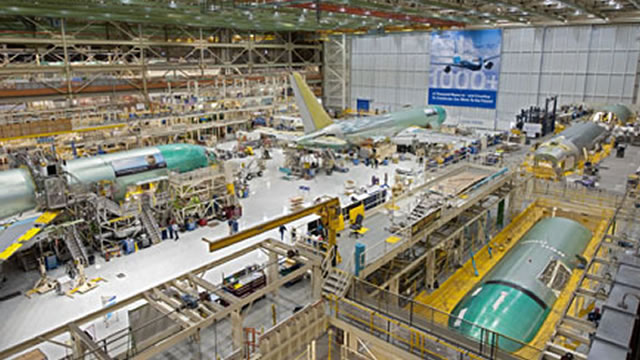
Core Points - More than 3,200 unionized workers at Boeing's St Louis facility rejected the latest contract offer and will strike starting midnight on Monday [1] - The rejected offer included minor compensation changes benefiting senior members and maintained current overtime policies, with an average annual wage increase proposed from $75,000 to $102,600 [2] - Boeing's vice-president expressed disappointment over the rejection, highlighting a 40% average wage growth in the offer and readiness for a strike with contingency plans in place [3] Company Operations - This strike marks the first at Boeing's St Louis defense hub since 1996, coinciding with the expansion of manufacturing facilities for the new US Air Force fighter, the F-47 [4] - Boeing's CEO indicated that the planned strike would be smaller than the previous year's 30,000-worker strike, which resulted in a $661 million charge related to the KC-46 tanker development [4][5] - Boeing holds contracts for several major Defense Department programs, including the F-47 and F-15EX fighters, T-7 training jet, and the Air Force One recapitalization effort [5]

Uber loses UK supreme court appeal over tax on rival apps
The Guardian· 2025-07-29 09:56
Uber appealed to the supreme court, which on Tuesday unanimously dismissed the US company's case. In a separate case, the Estonian ride-hailing and food delivery startup Bolt this year defeated an appeal by the UK tax authority HMRC about on what it has to pay VAT on at 20%. HMRC has since been granted permission to challenge the ruling that Bolt is only liable for VAT on its margin, rather than the full cost of the trip, at the court of appeal. Uber's rival taxi operators will not have to pay 20% VAT on th ...


From Krispy Kreme to GoPro, has meme-stock trading frenzy returned?
The Guardian· 2025-07-26 16:00
Core Viewpoint - The resurgence of meme stocks is driven by retail traders, reminiscent of the 2021 craze, with potential for even larger rallies as they mobilize online and disregard Wall Street skepticism [1][6]. Group 1: Retailer Performance - Retailers such as Kohl's, GoPro, Wendy's, and Krispy Kreme experienced significant stock rallies, with Kohl's up 32%, GoPro up 66%, and Krispy Kreme up 41% over the week [6]. - American Eagle Outfitters saw a 10% increase in shares after actress Sydney Sweeney was announced as the face of its marketing campaign [3]. Group 2: Market Dynamics - The current market environment, characterized by high trading volumes and speculative behavior, is conducive to meme stock rallies, similar to the conditions during the Covid era [6][10]. - The meme-stock phenomenon is often detached from traditional economic fundamentals, with investors supporting brands for emotional or ideological reasons rather than financial metrics [7][10]. Group 3: Community Influence - The wallstreetbets forum empowers retail traders to share research and ideas, leading to a decentralization of financial analysis and investment power [5]. - The community's influence is evident as retail traders push stock prices significantly, demonstrating the power of collective action [5]. Group 4: Cultural Impact - The meme culture surrounding stocks, such as Wendy's, illustrates how humor and social media can drive investment decisions, often independent of market fundamentals [8][10]. - The evolving landscape of finance, including the rise of blockchain and AI trading, reflects a shift in how retail traders engage with the market [4].





Coca-Cola to launch Coke with cane sugar after Trump claims credit
The Guardian· 2025-07-22 13:50
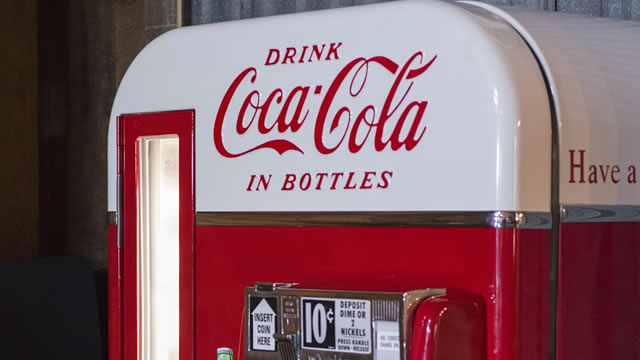
Coca-Cola has laid out plans to launch a product made with US cane sugar this year, days after Donald Trump claimed the company had agreed to replace high-fructose corn syrup. The announcement came Tuesday in Coca-Cola's earnings report. It confirmed a 16 July post on Trump's Truth Social platform in which the president said Coca-Cola "agreed" to use "REAL Cane Sugar in Coke in the United States". "This will be a very good move by them – You'll see," Trump's post said. "It's just better!" The drink maker's ...

Chevron closes $55bn Hess takeover after winning Exxon legal battle
The Guardian· 2025-07-18 16:17
Core Viewpoint - Chevron has successfully completed its $55 billion acquisition of Hess, gaining access to a significant oil discovery in the Stabroek Block off the coast of Guyana, following a legal victory over Exxon Mobil [1][2]. Group 1: Acquisition Details - The acquisition is one of the largest energy deals in the past decade, aimed at improving Chevron's performance [2]. - The Stabroek Block is estimated to hold over 11 billion barrels of oil, making it one of the fastest-growing oil provinces globally [2]. Group 2: Legal Context - Exxon and CNOOC, Hess's partners in Guyana, had previously filed arbitration disputes claiming pre-emptive rights to purchase Hess's stake, which delayed the acquisition for over a year [3]. - The International Chamber of Commerce (ICC) ruled against Exxon and CNOOC, with no appeals process available [4]. Group 3: Integration Plans - Chevron was preparing for the integration of Hess even while awaiting the arbitration verdict, with IT teams from both companies meeting regularly [5]. - Employees of Hess were informed about the option to request severance packages post-acquisition [5]. Group 4: Market Reaction - Following the news of the acquisition, shares of both Chevron and Exxon experienced a slight decline in morning trading [6].


Zuckerberg and Meta officers settle claim they lost company billions by violating privacy laws
The Guardian· 2025-07-17 15:16
Core Points - Meta Platforms and its current and former directors, including Mark Zuckerberg, have agreed to settle claims seeking $8 billion for alleged damages related to privacy violations [1][3] - The settlement details were not disclosed, and the trial was adjourned before entering its second day [2] - Shareholders aimed to hold the defendants liable for fines and legal costs incurred by the company, including a $5 billion FTC fine in 2019 for failing to protect user data [3][4] Group 1 - The lawsuit involved allegations that Meta's board members failed to oversee compliance with a 2012 FTC agreement and that Zuckerberg and Sandberg operated Facebook as an illegal data harvesting entity [7] - The case was linked to the Cambridge Analytica scandal, which highlighted significant data privacy issues and led to the record FTC fine [7][10] - An expert witness testified about weaknesses in Facebook's privacy policies, although he did not confirm any violations of the 2012 agreement [8] Group 2 - The trial was expected to include testimonies from notable figures, including former board members Peter Thiel and Reed Hastings [6] - The settlement has been criticized for lacking public accountability, as it prevents a thorough examination of the company's practices [5][12] - Meta has claimed to have invested billions into user privacy protections since the FTC fine in 2019 [10]


Meta shareholders sue Zuckerberg, Thiel and Sandberg for $8bn over FTC fines
The Guardian· 2025-07-16 19:14
Core Points - An $8 billion trial against Meta Platforms shareholders has commenced, focusing on allegations that the company illegally harvested Facebook user data, violating a 2012 agreement with the FTC [1][5] - The trial features testimony from key figures including Mark Zuckerberg, Sheryl Sandberg, and other board members, with the plaintiffs claiming misleading privacy disclosures [2][3] - The case stems from the Cambridge Analytica scandal, which led to a $5 billion FTC fine against Facebook for data protection violations [4][5] Group 1: Trial Details - The trial is presided over by Chief Judge Kathaleen McCormick in a non-jury setting, with significant testimonies expected from high-profile defendants [2][3] - The plaintiffs are seeking reimbursement for the FTC fine and other legal costs, estimated to exceed $8 billion [5] - The defendants have characterized the allegations as "extreme" and assert that Facebook took measures to comply with the FTC agreement [6][7] Group 2: Legal Context - This lawsuit is notable as it is the first of its kind to go to trial, alleging that board members failed to oversee their company effectively [7] - Known as a Caremark claim, such lawsuits are challenging to prove under Delaware corporate law, although recent trends show an increase in these claims being allowed to proceed [8] - The trial follows recent changes in Delaware corporate law aimed at making it more difficult for shareholders to challenge deals with controlling shareholders [9][10] Group 3: Additional Allegations - Plaintiffs also allege that Zuckerberg sold Facebook shares anticipating a decline in stock value due to the Cambridge Analytica scandal, profiting at least $1 billion [12] - Defendants plan to present evidence that Zuckerberg did not engage in insider trading and followed a stock-trading plan designed to prevent such actions [12]

Nvidia becomes first company to reach $4tn in market value
The Guardian· 2025-07-09 14:22
Core Insights - Nvidia has become the first public company to reach a $4 trillion market value, driven by a significant rise in demand for artificial intelligence technologies [1] - The company's market value has more than tripled in about a year, surpassing both Apple and Microsoft in growth rate [2] - Nvidia's market value represents approximately 7.3% of the S&P 500 index, highlighting its substantial impact on the market [3] Company Performance - Nvidia's stock price increased by approximately 2.4% to $164, reflecting ongoing investor confidence [1] - The company rebounded about 74% from its April lows, indicating a strong recovery despite challenges such as US export controls on advanced chips to China [3] Market Context - The S&P 500 has reached an all-time high, influenced by optimism around trade agreements and the performance of tech stocks [4] - Analysts predict that other tech giants, including Microsoft, will soon join Nvidia in the $4 trillion market valuation club, emphasizing the ongoing AI revolution [4][5]

Tesla shares dive as investors fear new Elon Musk political party will damage brand
The Guardian· 2025-07-07 09:19
Group 1 - Tesla shares are experiencing a significant decline, with a drop of over 7% in pre-market trading, potentially reducing the company's value by approximately $70 billion [1] - If the shares fall as projected, Elon Musk's personal wealth could decrease by more than $9 billion, bringing his net worth to about $120 billion, while Tesla's market valuation is just under $1 trillion [2] - The decline in Tesla's stock is attributed to Musk's political activities and his relationship with Donald Trump, which has created consumer backlash and investor concerns about Musk's focus on the company [3][4] Group 2 - Analysts express alarm over Musk's announcement of forming a new political party, suggesting it diverts attention from Tesla's business during a critical period [3][4] - Trump's criticism of Musk's political ambitions, labeling them as "ridiculous," adds to the negative sentiment surrounding Tesla's stock performance [5][6] - Musk's statement about the formation of the America party indicates a shift towards political engagement, which may further concern Tesla investors about his commitment to the company [6]