The Motley Fool

Search documents
Is Netflix a Buy Right Now? Why the Streaming Giant is Spooking Investors.
The Motley Fool· 2026-01-25 02:21
Group 1: Netflix's Financial Performance - Netflix reported Q4 2025 revenue of $12 billion, an 18% year-over-year increase, with net income up 29% from the previous year and an operating margin of 31% [6] - The company has over 325 million subscribers globally, indicating strong market presence, particularly with opportunities for international expansion [5] - Ad revenue doubled in 2025 to $1.5 billion, with expectations to double again in 2026, highlighting a significant growth engine for the company [6] Group 2: Warner Bros. Discovery Acquisition - Netflix announced intentions to acquire Warner Bros. Discovery for $82.7 billion, which could strengthen its position in the streaming market but raised investor concerns about the financial strain and execution risks [2][8] - The acquisition represents a strategic shift from in-house content creation to purchasing established entities, potentially expanding Netflix's content library significantly [8] - Netflix revised its offer for Warner Bros. to an all-cash proposal amid a competitive bidding war with Paramount Skydance Corporation, which is attempting a hostile takeover [3][4] Group 3: Market Reaction and Investor Sentiment - Despite beating earnings expectations, Netflix's shares have fallen 10% since the start of the year, indicating investor anxiety regarding the Warner Bros. acquisition [1][7] - Concerns about the cost and potential antitrust scrutiny related to the acquisition are causing nervousness among investors, overshadowing the company's strong fundamentals [8][10] - Analysts suggest that buying Netflix shares near its 52-week low may only be advisable for those bullish on the Warner Bros. deal, given the associated risks [10]



Alphabet Stock Has Soared More Than 70% In 6 Months. Is It Too Late to Buy Shares?
The Motley Fool· 2026-01-25 02:16
Core Viewpoint - Alphabet's stock performance and growth in cloud services, particularly driven by AI demand, present a potentially attractive investment opportunity despite significant capital expenditures [1][2][12]. Growth Trends - Alphabet's third-quarter revenue increased by 16% year over year to $102.3 billion, surpassing the 14% growth in Q2 [4]. - Google services revenue grew 14% year over year to $87.1 billion, with notable contributions from Google Search, subscriptions, platforms, devices, and YouTube ads [5]. - Google Cloud revenue surged by 34% year over year to $15.2 billion, building on a 32% growth in Q2, with operating income rising to $3.6 billion from $1.9 billion a year earlier [6]. Backlog and Demand - Google Cloud's backlog reached $155 billion, reflecting a 46% sequential increase and an 82% year-over-year growth [7]. - The demand for AI is not only driven by external customers but also from within Alphabet's operations, with significant user engagement in AI features like Google Search and the Gemini app [11]. Capital Expenditures - Alphabet's capital expenditures in Q3 were approximately $24 billion, up from $13.1 billion in the same quarter last year, with a revised outlook for 2025 capital spending between $91 billion and $93 billion [8][9]. - The majority of this spending is directed towards technical infrastructure to support the growing demand for AI [9]. Valuation Considerations - Alphabet's current price-to-earnings ratio is around 32, with a forward ratio of 29, suggesting that while shares are not cheap, they may still represent a good entry point for investors [13].


IGIB vs. AGG: Which iShares Bond ETF is Better?
The Motley Fool· 2026-01-25 01:58
Core Viewpoint - The bond market is expected to continue strengthening in 2025, with two specific ETFs, IGIB and AGG, providing potential investment opportunities for exposure to the U.S. investment-grade fixed-income market [1]. Cost & Size Comparison - IGIB has an expense ratio of 0.04% and AGG has a slightly lower expense ratio of 0.03% - As of January 24, 2026, IGIB's 1-year return is 4.65% while AGG's is 3.2% - IGIB offers a dividend yield of 4.58%, compared to AGG's 3.88% - The assets under management (AUM) for IGIB is $17.6 billion, while AGG has a significantly larger AUM of $136.78 billion [2][3][4]. Performance & Risk Comparison - Over the past five years, IGIB experienced a maximum drawdown of -20.64%, while AGG had a drawdown of -17.83% - The growth of a $1,000 investment over five years would result in $883 for IGIB and $857 for AGG [5]. Portfolio Composition - AGG has a 22-year track record and tracks the total U.S. investment-grade bond market with 13,067 holdings, 74% of which are AA-rated bonds [6]. - IGIB focuses on U.S. dollar-denominated investment-grade corporate bonds with maturities of 5 to 10 years, with 44.29% of its holdings in A bonds and 49.18% in BBB bonds [7]. Investment Implications - Despite IGIB's higher dividend yield, AGG pays a higher monthly dividend due to its higher price - AGG's focus on higher-rated bonds makes it a less risky investment, while IGIB carries more risk due to its lower-rated bonds but offers higher potential yields [8][9]. - The choice between these ETFs depends on whether investors prefer a high-risk/high-reward strategy or a more conservative approach [10].

Should You Buy Coinbase Stock Before February 12?
The Motley Fool· 2026-01-25 01:30
Core Viewpoint - Coinbase is positioned for growth in 2026, driven by clearer U.S. crypto regulations and increasing institutional adoption of cryptocurrencies [1] Financial Performance - In Q3, Coinbase reported $1.9 billion in revenue, $801 million in adjusted EBITDA, and $433 million in net income [2] - The subscription and services segment generated $747 million, accounting for nearly 40% of total revenue [2] - Management anticipates Q4 subscription and services revenue to be between $710 million and $790 million, indicating a shift towards more stable revenue streams [3] Business Mix Improvement - Coinbase Institutional is a key custodian for U.S. spot Bitcoin and Ethereum ETFs, handling nine out of eleven Bitcoin ETFs and eight out of nine Ethereum ETFs in 2024 [4] - Major institutional clients like BlackRock and Pantera Capital are utilizing Coinbase Prime, leading to increased custody and brokerage fees [4] New Revenue Sources - The Ethereum Layer-2 network, Base, is emerging as a significant revenue source, processing transactions faster and at lower costs [5][6] - Coinbase earns revenue through sequencer fees on the Base network and benefits from additional services used by developers and users [7] Growth Opportunities - Derivatives trading, which constitutes 80% of total crypto trading volume, represents a substantial growth opportunity [8] - The acquisition of Deribit, a leading crypto options platform, contributed $52 million to revenue in Q3, with plans to integrate various trading options [8] Valuation Insights - Coinbase's stock trades at approximately 36.1 times forward earnings, reflecting a premium valuation justified by a diversified revenue mix [9] - The revenue is increasingly derived from recurring sources rather than solely from spot trading, although the stock remains sensitive to market conditions [9] Investment Consideration - Long-term investors confident in cryptocurrency adoption may consider a small stake in Coinbase ahead of its upcoming earnings report [10]


CEO Ryan Cohen Just Bought $10 Million of GameStop Stock. Is it Time to Give This Meme Stock Another Look?
The Motley Fool· 2026-01-25 01:00
Core Insights - GameStop has seen significant insider buying from CEO Ryan Cohen, who purchased 500,000 shares at an average cost of approximately $21.12, totaling over $10.5 million, indicating bullish sentiment towards the company [3] - The company is attempting to pivot its strategy as its traditional brick-and-mortar video game business declines, while also exploring new avenues such as collectibles and cryptocurrency [2][4] Financial Performance - GameStop's hardware business has experienced a 5% decline, while its software revenue has plummeted by 27% year-over-year; however, the collectibles segment has seen a remarkable 55% revenue growth [4] - The company has improved its operating cash flow and reported diluted earnings per share of $0.67, a significant improvement from the previous year [5] - GameStop's current market capitalization stands at $10 billion, with a trading multiple of approximately 2.3 times revenue and close to 22 times forward earnings [7][8] Market Position and Analyst Outlook - Only one Wall Street analyst covers GameStop, projecting nearly $1 of EPS in 2026 and total revenue of $4.16 billion, indicating potential year-over-year growth [8] - Despite improvements, the earnings multiple appears high for a company still stabilizing its revenue, particularly in its largest business segment [9]


The Most Undervalued Chip Stock to Own in 2026
The Motley Fool· 2026-01-25 00:45
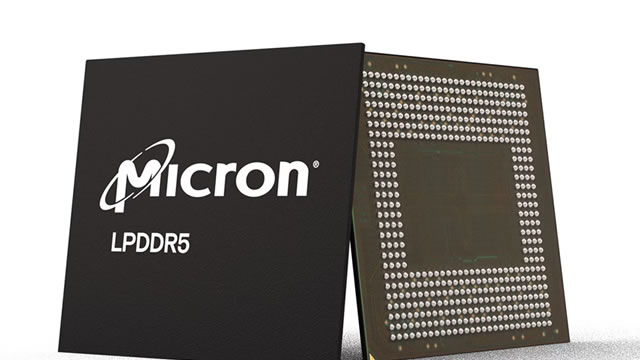
Core Viewpoint - The memory shortage is expected to persist until 2027, creating significant opportunities for semiconductor companies, particularly Micron Technology, which is currently undervalued compared to its peers despite strong growth prospects [1][9]. Industry Overview - There is a notable mispricing in the semiconductor industry, with investors favoring companies like Nvidia with higher P/E ratios, while undervaluing Micron Technology despite its faster earnings growth [2][4]. - The cyclical nature of the memory market contributes to Micron's lower valuation, but the demand for memory in AI chips is driving substantial growth for the company [3][5]. Company Performance - Micron's shares are trading at a forward P/E of 11, significantly lower than Nvidia's 24 and AMD's 35, indicating an attractive valuation [4]. - Wall Street analysts forecast Micron's earnings to grow at an annualized rate of 50% over the next few years, surpassing AMD's 45% and Nvidia's 36% [5]. - Earnings are projected to surge 294% this year to $32.67 per share, followed by a 27% increase next year to $41.54 per share, driven by rising memory prices and demand for GPUs [6][7]. Market Dynamics - Revenue for Micron increased by 57% year over year last quarter, with earnings rising by 175%, indicating strong momentum [7]. - The memory shortage is expected to be exacerbated by Nvidia's upcoming Rubin chips, which will require higher memory bandwidth, benefiting Micron [9]. Future Outlook - The current demand for advanced memory products appears sustainable, with management indicating strong customer commitments for high-bandwidth memory through 2026 [10]. - The low valuation of Micron relative to its earnings suggests potential for further upside in the coming years [10].

Here's Why I Wouldn't Touch Rigetti Computing With a 10-Foot Pole
The Motley Fool· 2026-01-25 00:31
Core Viewpoint - Rigetti Computing is experiencing significant challenges in the quantum computing sector, particularly regarding accuracy and technology advancement, despite a recent rise in stock price and some positive analyst ratings [1][8]. Company Performance - Rigetti's stock price has seen a notable increase of over 45% in 2025 and more than 10% in 2026, but current market sentiment suggests caution [1][2]. - The current stock price is $23.45, with a market capitalization of $7.7 billion [2]. Technology and Competitiveness - Rigetti's quantum computing systems are reported to be over 1,000 times faster than those of competitor IonQ, but the company struggles with accuracy, achieving a two-qubit gate fidelity of only 99.5%, compared to IonQ's 99.99% [2][4]. - The company has not advanced to Stage B of the Quantum Benchmarking Initiative by DARPA, indicating a setback in its technological standing [5]. Challenges in Quantum Computing - Quantum computing systems, including those from Rigetti, are highly error-prone due to the instability of qubits, which are susceptible to external factors like vibrations and temperature changes [3]. - Rigetti's delay in launching its new 108-qubit Cepheus-1-108Q system is aimed at improving its error rate, highlighting ongoing challenges in achieving reliable performance [5]. Analyst Sentiment - Some analysts have expressed optimism about Rigetti, with Rossenblatt Securities initiating coverage with a "buy" rating and B. Riley upgrading the stock following an $8.4 million order from India's Centre for Development of Advanced Computing [7]. - Despite these positive mentions, the overall assessment suggests that Rigetti remains significantly behind its competitors in the quantum computing race [8].


1 ETF Could Turn $500 Monthly Into a $800,000 Portfolio That Pays $24,000 in Annual Dividend Income
The Motley Fool· 2026-01-25 00:30
Core Insights - The Schwab U.S. Dividend Equity ETF (SCHD) offers a pathway to potentially reach $800,000 through consistent investments over time, emphasizing the importance of patience in investing [1][5]. Investment Rationale - SCHD tracks the Dow Jones U.S. Dividend 100 Index, focusing on companies with financial stability and strong cash flow, which results in a portfolio of reliable, established businesses rather than high-growth, volatile firms [3]. - The ETF's top five holdings include Lockheed Martin (4.63%), Chevron (4.19%), Merck & Co. (4.11%), Home Depot (4.07%), and Bristol Myers Squibb (4.05%), showcasing a focus on sectors like energy and industrials [3]. Performance Metrics - Since its inception in October 2011, SCHD has averaged annual total returns of 12.6%, with projections indicating that a monthly investment of $500 could grow to over $800,000 in approximately 25 years, assuming a consistent 12% annual return [5][6]. - The ETF has maintained an average dividend yield of around 2.8% since inception and 3.2% over the past decade, suggesting that an $800,000 investment could yield $24,000 annually [6].

Is TJX Companies the Smartest Off-Price Retail Stock to Buy and Hold?
The Motley Fool· 2026-01-25 00:22
Core Insights - TJX Companies has demonstrated strong resilience in the off-price retail sector despite macroeconomic challenges [1][3] - The company's effective inventory acquisition strategy allows it to provide name-brand products at lower prices, which has supported customer traffic and sales growth [2][3] Financial Performance - TJX stock has appreciated approximately 24% over the past year, with same-store sales increasing by 5% year-over-year in fiscal Q3 [2][3] - Gross margin improved to 32.6% from 31.6%, indicating effective cost management [2] Market Position - While other retailers are experiencing declining traffic and margins, TJX's sourcing strategies and infrastructure have proven advantageous [3][6] - The company is well-positioned to capitalize on the difficulties faced by competitors in the retail industry [6] Valuation Metrics - TJX has a market capitalization of $170 billion and trades at about 33 times this year's expected earnings [5] - The stock's dividend yield is approximately 1.1%, which may not be attractive for income-focused investors [5][6]


This ETF Could Be a Great Contrarian Artificial Intelligence (AI) Buy Right Now
The Motley Fool· 2026-01-25 00:05
Core Insights - Artificial intelligence (AI) is viewed as a potential growth catalyst for businesses, with generative AI expected to enhance productivity and reduce overhead costs [1] - There is a prevailing belief among investors that a single powerful AI tool could replace multiple enterprise software packages, leading to a decline in share prices for many software stocks [2] Group 1: ETF Performance and Components - The iShares Expanded Tech-Software Sector ETF (IGV) has experienced an 18% decline from its peak last fall, yet revenue growth among its components remains strong, indicating a net positive impact from AI [3] - The ETF includes major companies benefiting from AI excitement, such as Microsoft, Palantir Technologies, and Oracle, which together represent about 25% of the ETF's value [4] - Other top holdings like Salesforce, Intuit, and Adobe have faced negative impacts on their earnings multiples due to fears of AI displacing their software [5] Group 2: AI Integration and Market Sentiment - Concerns regarding the displacement of enterprise software by generative AI applications are considered exaggerated, as specialized software remains essential for specific tasks [6] - Most software providers are actively integrating AI capabilities into their products, enhancing competitiveness and increasing revenue per seat [8] - Companies like Microsoft and Palantir have seen significant sales growth from integrating generative AI into their offerings, with Palantir's AI Platform rapidly expanding its use cases [9] Group 3: Investment Opportunities - For investors seeking exposure to the software industry, the iShares ETF offers a straightforward investment option, especially as the current narrative around AI may shift towards tangible financial results [10]