QYResearch

Search documents
行业聚焦:全球工业温度控制器市场头部企业份额调研(附Top10 厂商名单)
QYResearch· 2025-09-12 05:35
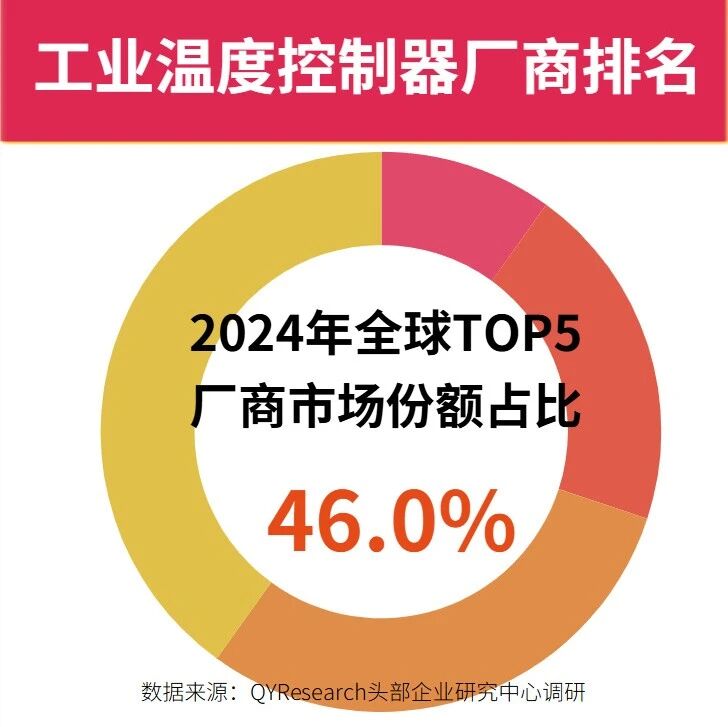
Core Viewpoint - The industrial temperature controller market is experiencing growth driven by increasing automation, quality control, and energy efficiency demands across various industries, with a projected market size of $1.39 billion by 2031 and a CAGR of 4.2% from 2025 to 2031 [3][4]. Market Overview - Industrial temperature controllers are essential devices for maintaining preset temperature levels in industrial processes, widely used in sectors such as plastic manufacturing, food processing, HVAC systems, chemical production, and packaging [2]. - The market is benefiting from the rising complexity of manufacturing systems and the need for precise temperature control, particularly in pharmaceuticals, food and beverage, semiconductors, petrochemicals, and automotive manufacturing [2][3]. Technological Integration - The integration of smart technologies in industrial environments is reshaping the functionality of temperature controllers, with many modern devices supporting remote monitoring, cloud connectivity, and real-time data analysis [3]. - The trend towards energy efficiency and sustainability is prompting companies to upgrade to more efficient control systems to reduce energy consumption and operational costs [3]. Regional Insights - The Asia-Pacific region, particularly China, Japan, South Korea, and India, is experiencing rapid market growth due to accelerated industrialization and ongoing investments in manufacturing infrastructure [3]. - North America and Europe, as mature markets, focus more on equipment modernization and compliance with stringent regulatory standards [3]. Market Share and Key Players - According to QYResearch, the top five manufacturers in the global industrial temperature controller market hold approximately 46.0% market share, with key players including Omron, RKC Instruments, Xiamen Yudian, Watlow, and Honeywell [8][18]. - Multi-loop controllers are the leading product type, accounting for about 36.9% of the market share, while industrial manufacturing is the largest downstream market, representing approximately 36.2% [9][11]. Driving Factors - The demand for process automation is rising, particularly in manufacturing, chemicals, food and beverage, and pharmaceuticals, driving the need for precise temperature control [13]. - Increasingly stringent quality and safety regulations from government agencies necessitate strict temperature control in critical processes, especially in medical, food processing, and semiconductor industries [13]. - The rapid development of the Industrial Internet of Things (IIoT) enhances the value of temperature controllers in smart factories through remote control and data-driven decision-making [13]. Challenges - High initial investment costs for advanced temperature control systems may hinder adoption among small and medium-sized enterprises [14]. - The complexity of integrating temperature control technology into older equipment or complex production lines poses deployment challenges [14]. - Limited awareness of temperature control precision and automation value in some emerging markets restricts market penetration [14]. Opportunities - The fusion of smart temperature control with AI and machine learning offers predictive control and self-calibration, providing new directions for product upgrades and differentiation [17]. - The push for green manufacturing and carbon emission control is expected to create growth opportunities for temperature control systems that support sustainability [17]. - Rapid industrial development in emerging economies such as Southeast Asia, Africa, and Latin America presents significant market potential for temperature controller manufacturers [17].

行业聚焦:全球二维码解决方案市场头部企业份额调研(附Top10 厂商名单)
QYResearch· 2025-09-12 05:35
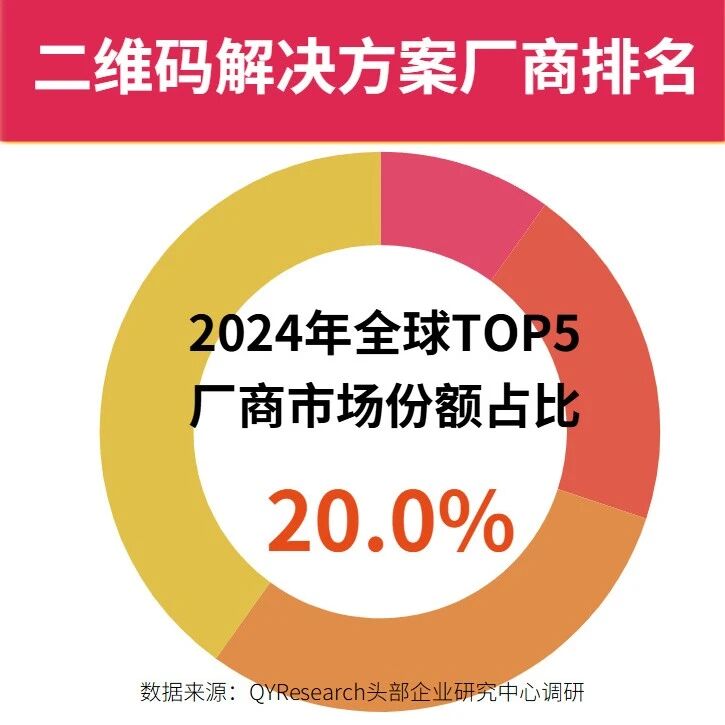
Core Viewpoint - The global QR code solutions market is projected to reach $2.56 billion by 2031, with a compound annual growth rate (CAGR) of 11.4% in the coming years [2]. Market Overview - QR code solutions encompass a comprehensive system or tools designed for the effective creation, management, decoding, and utilization of QR codes, including software applications, APIs, and hardware components [2]. - The market is utilized across various applications such as marketing, inventory management, ticketing, and identity verification [2]. Market Size and Growth - According to QYResearch, the global QR code solutions market is expected to grow significantly, reaching $2.56 billion by 2031, with a CAGR of 11.4% [2]. Key Players - Major manufacturers in the global QR code solutions market include Bitly, QR TIGER, DENSO WAVE, Flowcode, Adobe, and others, with the top five companies holding approximately 20.0% market share in 2024 [7]. Market Segmentation - The market is segmented by product type and application, with various uses in retail, restaurants, hotels, logistics, and more [17]. Driving Factors - **D1: Mobile Penetration**: The widespread adoption of smartphones globally has increased the usage of QR codes, making it easier for businesses to implement QR code solutions [11]. - **D2: Marketing and Interaction**: QR codes provide an effective way for businesses to engage with customers and enhance marketing efforts, allowing consumers to access exclusive content and promotions [11]. - **D3: Usability and Convenience**: QR codes are easy to generate, distribute, and scan, simplifying processes in various settings such as restaurants and retail [11]. Challenges - **C1: Security Risks**: QR codes can be exploited for phishing attacks, posing a significant risk due to user unawareness and lack of native scanning protection [12]. - **C2: Low User Awareness in Some Regions**: While QR codes are widely used in Asia, their adoption is slower in regions like North America, Europe, and parts of Africa due to unfamiliarity and privacy concerns [12]. - **C3: Lack of Standardization**: The existence of multiple formats and platform functionalities leads to compatibility and interoperability issues [12].
行业聚焦:全球光学编码器IC市场头部企业份额调研(附Top5 厂商名单)
QYResearch· 2025-09-12 05:35
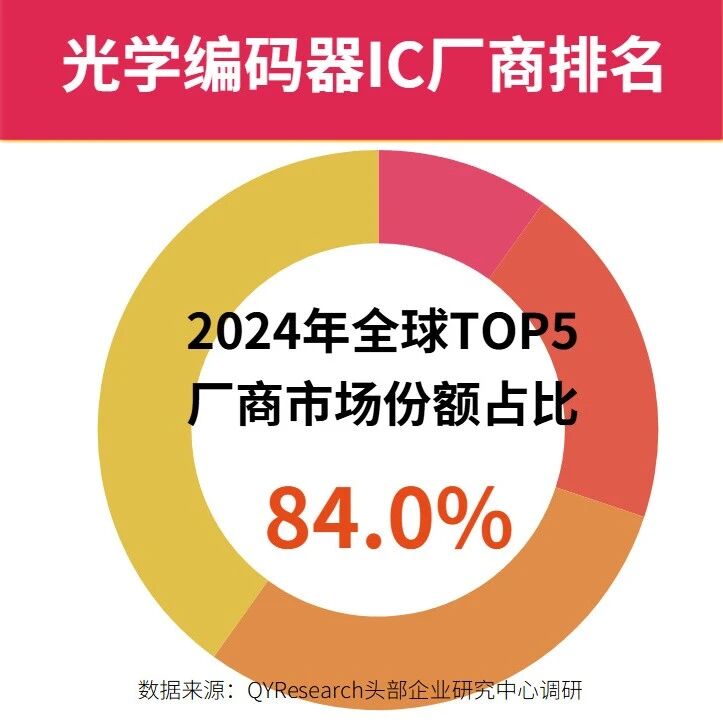
Core Insights - The optical encoder IC market is projected to reach $290 million by 2031, with a compound annual growth rate (CAGR) of 6.6% in the coming years [2][8]. Market Overview - Optical encoders are popular in the motion control market, consisting of an LED light source and photodetectors on either side of a code disk [2]. - The market is primarily divided into two types: transmissive and reflective optical encoders [2]. Key Manufacturers - Major manufacturers in the global optical encoder IC market include Broadcom, Nisshinbo Micro Devices, SEIKO NPC, IC-Haus, PREMA Semiconductor, and Hamamatsu [7][16]. - The top five manufacturers are expected to hold approximately 84.0% of the market share in 2024 [7]. Market Drivers - Strong policy support for semiconductor development, including China's "14th Five-Year Plan" and the U.S. and EU chip acts, which collectively invest nearly $100 billion [8]. - The demand for high-precision motion control in industrial automation, driven by advancements in Industry 4.0 and smart manufacturing [8]. - Growth in the manufacturing sector in the Asia-Pacific region, particularly in China, Japan, and South Korea, which boosts demand for optical encoder chips [9]. Market Challenges - High technical barriers in developing ultra-high-resolution optical encoder ICs due to the complexity of precision optical alignment and signal processing [10]. - Environmental sensitivity and reliability issues in harsh industrial environments, which can affect performance [13]. - Increasing competition from alternative technologies such as magnetic and capacitive encoders, which offer higher durability and simpler assembly [14].
全球与中国表面贴装设备(SMT)市场现状及未来发展趋势
QYResearch· 2025-09-12 05:35
Core Viewpoint - The SMT (Surface Mounter Technology) market is experiencing strong growth driven by the increasing demand for miniaturized, high-performance electronic products, particularly in sectors like 5G, IoT, and electric vehicles [4][10]. Market Overview - In 2024, global SMT sales are projected to reach approximately 71,000 units, with an average price of $72,300 per unit [4]. - The global SMT equipment market size is expected to reach $5.595 billion by 2025 and $7.483 billion by 2031, with a CAGR of 4.96% from 2025 to 2031 [5]. Regional Insights - Asia-Pacific, particularly China, Japan, South Korea, and Taiwan, dominates the SMT equipment market due to large-scale electronic manufacturing [4][7]. - North America and Europe are increasing investments in advanced SMT production lines for electric vehicles, aerospace, and medical devices [4]. Market Trends - The SMT equipment market is witnessing robust growth due to the demand for compact, high-performance electronic products [9]. - Automation is a key trend, with the adoption of smart SMT systems integrating sensors, data analytics, and real-time monitoring [9]. Market Drivers - The shift towards smaller, lighter, and more powerful electronic devices, such as smartphones and IoT devices, is driving the demand for advanced SMT solutions [10]. - The transition to electric vehicles and advanced driver-assistance systems (ADAS) is increasing the need for high-reliability and compact PCB components, further boosting SMT equipment demand [10]. Competitive Landscape - Major SMT equipment manufacturers include Fuji, ASM Pacific Technology, and Panasonic, with Japanese companies holding significant market share in the high-end segment [7]. - Domestic manufacturers in China, such as Beijing Borey and Beijing Torch, primarily compete in the low-end market [7]. Supply Chain Dynamics - The SMT equipment relies on precision components and materials, with suppliers including Keyence (sensors), Omron (automation components), and Murata (materials) [11]. - Downstream users of SMT equipment include EMS providers like Foxconn and OEMs such as Apple, Samsung, and Intel, which utilize SMT production lines for various electronic products [11].

行业聚焦:全球导热界面材料用填料市场头部企业份额调研(附Top10 厂商名单)
QYResearch· 2025-09-11 03:43
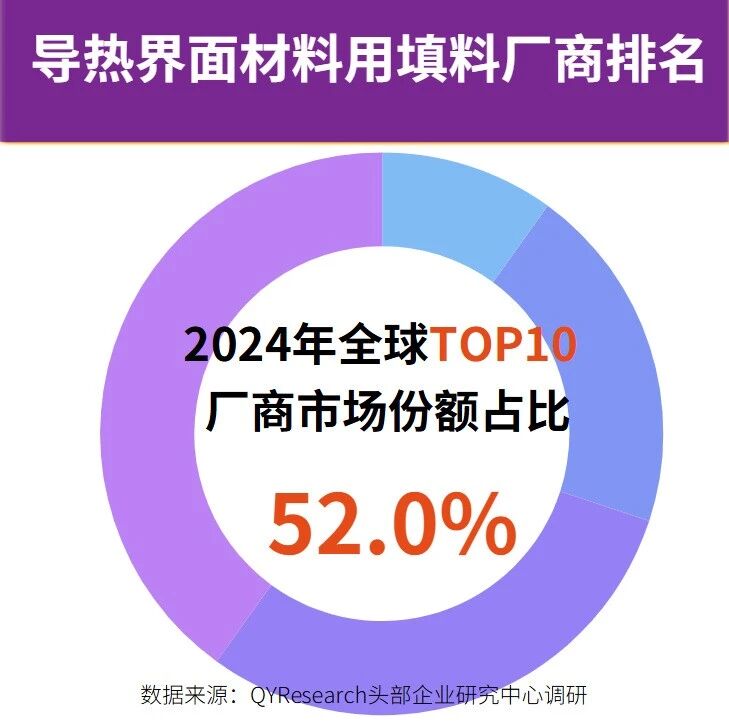
Core Insights - The global thermal interface materials (TIM) filler market is projected to reach $610 million by 2031, with a compound annual growth rate (CAGR) of 7.5% over the coming years [1]. Market Overview - The leading manufacturers in the global TIM filler market include Tokuyama, Baidu High-tech, Admatechs, Denka, Kingo New Materials, Resonac, 3M, Nippon Steel, Jinyi New Materials, and Toyo Aluminium. The top ten manufacturers are expected to hold approximately 52.0% market share in 2024 [5]. - Spherical alumina is currently the most significant product type, accounting for about 43.8% of the market share [8]. - In terms of application, consumer electronics represent the largest demand source, holding approximately 28.9% of the market share [10]. Key Drivers - The ongoing electrification of vehicles, including electric vehicles (EVs), hybrid electric vehicles (HEVs), and plug-in hybrid electric vehicles (PHEVs), is a primary driver for the demand for thermal fillers. Efficient thermal management is crucial for battery packs, onboard chargers, inverters, and electronic control units [13]. - The expansion of global data infrastructure, including data centers, AI accelerators, high-performance computing (HPC), and edge computing, is another significant factor driving market growth. These environments require high-performance TIMs to manage intense heat loads [13]. Challenges - The high cost of quality thermal fillers, particularly aluminum nitride, hexagonal boron nitride, and surface-treated spherical alumina, limits their application in high-end sectors like EV power modules and data centers [15]. - The lack of global standardization and performance benchmarking for filler materials poses challenges for product consistency and supplier evaluation [15]. - Environmental and regulatory constraints in the filler supply chain are becoming increasingly prominent, necessitating investments in cleaner processes and stricter waste control, which may raise production costs [15]. Industry Opportunities - The rapid development of high-power electronic devices and miniaturized components is reshaping the TIM filler market. The demand for fillers that not only provide high thermal conductivity but also possess processability, electrical insulation, and mechanical compliance is on the rise [16]. - Spherical alumina remains the dominant filler type due to its balance of thermal conductivity, flowability, and cost, widely used in consumer electronics, automotive electronics, and LED modules [17].
中国演出用光纤连接器市场现状研究分析与发展前景预测报告
QYResearch· 2025-09-11 03:43
演出用光纤连接器是专为舞台演出、演唱会、广播电视及大型活动场景设计的高性能光纤连接器,具有高速传输、抗干扰、耐用、防水 防尘等特性,广泛应用于音视频信号传输、灯光控制系统和多媒体数据链路,确保在复杂环境下实现稳定、高质量的光纤通信连接。 QYRESEARCH 中国演出用光纤连接器市场规模及发展趋势 2024 年,中国演出用光纤连接器市场规模达到了 3.52 亿元,预计 2031 年将达到 7.85 亿元,年复合增长率( CAGR )( 2025-2031 )为 10.77% 。随着国内演出市场对高质量信号传输和系统稳定性的要求不断提升,光纤连接器作为音视频系统、舞台灯控、数据网络的重要 组件,需求呈快速增长态势。 从产品类型及技术方面来看,多芯连接器的一个连接头内可同时容纳多根光纤芯,具有更高的集成度和布线密度,市场增长较快, 2024 年市场规模达到 1.95 亿元,占据 55.46% 的份额,预计 2031 年将达到 3.52 亿元,年复合增长率( CAGR )( 2025-2031 )为 12.12% 。 在光纤连接器产品中,多芯连接器凭借其突出的技术优势成为市场增长的核心驱动力。其核心价值在于单个连接 ...

行业聚焦:全球弹性联轴器市场头部企业份额调研(附Top10 厂商名单)
QYResearch· 2025-09-11 03:43
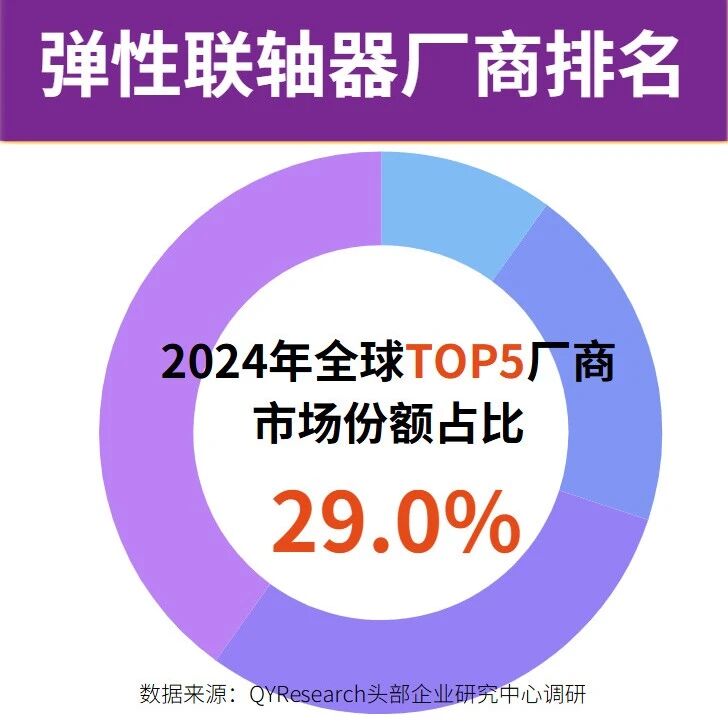
Core Viewpoint - The global elastic coupling market is experiencing continuous growth driven by the demand for reliable power transmission systems across various industries, which help reduce maintenance costs and improve operational efficiency. The market is expected to expand further by 2024 due to increasing needs for maintenance cost reduction and system stability [2][3]. Market Overview - The global elastic coupling market size is projected to reach USD 2.07 billion by 2031, with a compound annual growth rate (CAGR) of 4.4% in the coming years [3]. - The market is characterized by a diverse range of applications, including pumps, compressors, conveyor systems, and electric motors, where effective vibration damping and torque transmission are crucial [2]. Key Drivers - Increased demand for reliable torque transmission systems as industries enhance mechanical efficiency and lifespan [15]. - Automation in manufacturing sectors such as automotive, electronics, and textiles is driving the need for high-performance power transmission components [15]. - Advancements in material technology, particularly in elastomer materials like rubber and polyurethane, are expanding the performance range of elastic couplings [15]. - Industrialization and infrastructure expansion in emerging economies, particularly in the Asia-Pacific region, are expected to boost demand for elastic couplings [15]. - Energy efficiency and cost reduction benefits provided by elastic couplings are further driving their demand in energy-saving industries [15]. Market Challenges - Elastic couplings may have limited capabilities in high-torque applications compared to other types of couplings, which could hinder their use in heavy industries like mining [16]. - Material wear due to heat, chemicals, and mechanical stress may degrade the performance of elastic couplings over time [18]. - Competition from other coupling types, such as gear couplings or fluid couplings, may limit the market share of elastic couplings in specific high-torque or high-precision applications [18]. - Sensitivity to vibrations in extreme environments may restrict the use of elastic couplings in certain industries [18]. Opportunities for Development - Development of customized solutions tailored for specific applications, especially those requiring higher load capacities or resilience to extreme conditions, presents significant market opportunities [20]. - The growing focus on sustainability and green initiatives is increasing the demand for elastic couplings made from eco-friendly or recyclable materials [20]. - The renewable energy sector, including wind, solar, and hydroelectric power, offers vast market opportunities for elastic couplings due to their ability to withstand varying loads and harsh working conditions [21]. - Expansion into emerging markets in Asia-Pacific, Africa, and Latin America is expected to provide important growth opportunities as the demand for reliable power transmission solutions increases [21]. - Integration with smart technologies, such as sensors and IoT, can enhance monitoring and predictive maintenance capabilities, improving operational efficiency and reducing downtime in various industrial applications [21].
行业聚焦:全球地震隔震系统市场头部企业份额调研(附Top10 厂商名单)
QYResearch· 2025-09-11 03:43
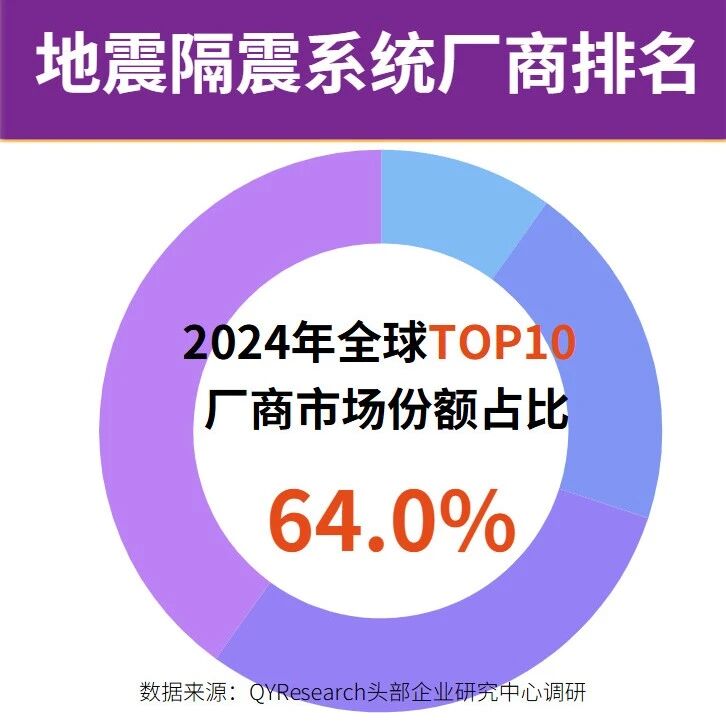
地震隔震系统是指在建筑物或结构基础与上部结构之间设置具有一定柔性和耗能能力的装置(如橡胶支座、铅芯橡胶支座、摩擦摆支座等),通过改变结构 的动力特性,将地震作用在上部结构上的能量传递减弱,从而有效降低地震反应,减少结构与设备的损伤。 地震隔震系统 全球市场总体规模 根据 QYResearch 最新调研报告显示,预计 2 03 1 年全球 地震隔震系统 市场规模将达到 5.20 亿美元,未来几年年复合增长率 CAGR 为 4.56% 。 全球 地震隔震系统 市场前十强生产商排名及市场占有率(基于 2024 年调研数据;目前最新数据以本公司最新调研数据为准) 根据 QYResearch 头部企业研究中心调研,全球范围内地震隔震系统生产商主要包括 OILES CORPORATION, Kawakin Holdings, Yunnan Quakesafe Seismic, Nippon Steel Engineering, Maurer SE, Kurashiki Kako, SWCC SHOWA, Times New Materials, Earthquake Protection Systems and Brid ...
行业聚焦:全球自攻衬套市场头部企业份额调研(附Top10 厂商名单)
QYResearch· 2025-09-10 06:15
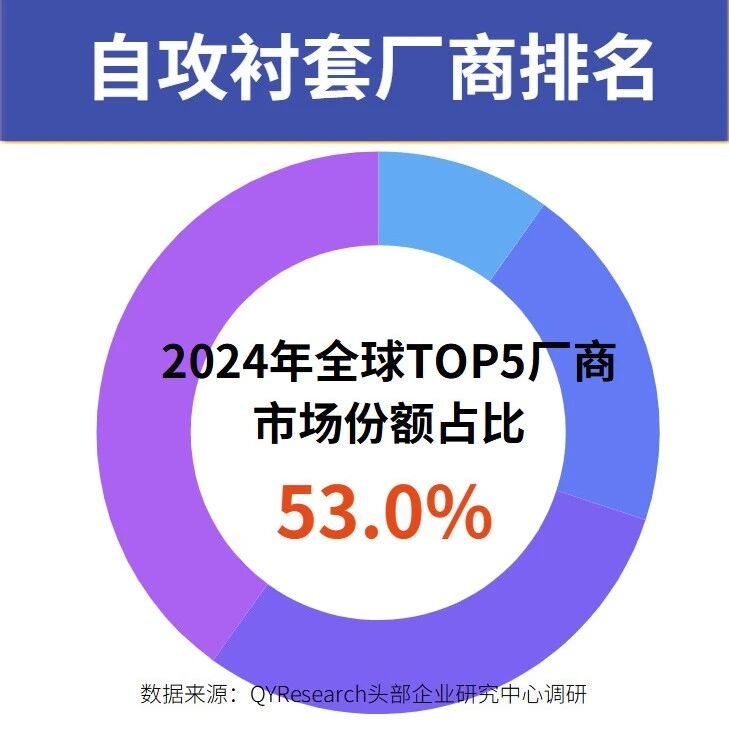
Core Insights - The global self-tapping sleeve market is projected to reach USD 140 million by 2031, with a compound annual growth rate (CAGR) of 4.5% in the coming years [1] Market Overview - Self-tapping sleeves are specialized fasteners used to create threads in pre-drilled holes, providing secure threaded connections [1] - The automotive industry is the largest downstream market, accounting for approximately 40.6% of the demand [9] - The slotted type is the most significant product segment, holding about 61.9% market share [7] Key Players - Major manufacturers in the global self-tapping sleeve market include Kerb-Konus, STANLEY Engineered Fastening, Böllhoff, Tappex, SPIROL, and others [6] - The top five manufacturers are estimated to hold around 53.0% of the market share in 2024 [6] Market Drivers - The demand for self-tapping sleeves is driven by the increasing requirements for fastening performance in various sectors, particularly in automotive, electrical equipment, consumer electronics, and industrial machinery [12] - Trends towards lightweight, modular, and repairable manufacturing are enhancing the application of self-tapping sleeves [12] - Green manufacturing and recycling initiatives are also contributing to market growth, as self-tapping sleeves are reusable and extend the lifespan of base materials [12] Demand Trends - The application of self-tapping sleeves is diversifying, with increased use in lightweight composite materials and high-strength plastics in the automotive sector [17] - The consumer electronics sector is driving demand for compact and quick-assembly solutions, leading to a rise in the need for small and high-precision sleeves [17] - Other sectors such as home appliances, industrial equipment, and medical devices are also showing increased demand for reliable fastening solutions [17]
行业聚焦:全球白车身结构胶市场头部企业份额调研(附Top10 厂商名单)
QYResearch· 2025-09-10 06:15
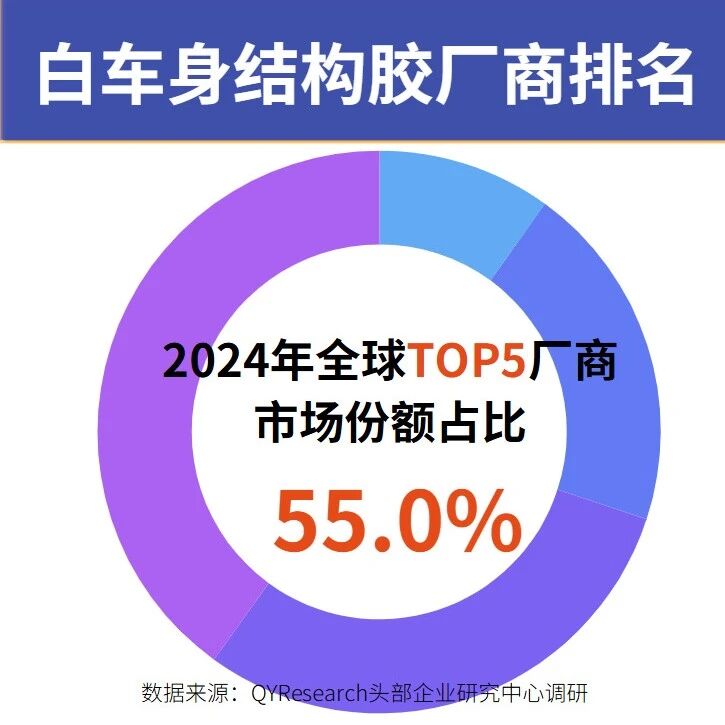
Core Viewpoint - The white body structural adhesive is crucial in modern automotive manufacturing, enhancing vehicle strength, rigidity, and safety while meeting the increasing demands for lightweight, energy-efficient, and environmentally friendly designs [1][2]. Market Overview - The global market for white body structural adhesives is projected to reach $1.9 billion by 2031, with a compound annual growth rate (CAGR) of 2.9% in the coming years [2]. - The epoxy resin type dominates the market, accounting for approximately 65.9% of the total share, while passenger vehicles represent the largest application segment, holding about 80.5% of the market [8][10]. Key Drivers - The trend towards automotive lightweighting is driving the use of aluminum, high-strength steel, and composite materials, thereby increasing the demand for structural adhesives [12]. - The rapid expansion of electric and hybrid vehicle platforms is creating a greater need for adhesive connections that do not require welding [12]. - Stricter collision safety standards necessitate high-strength, fatigue-resistant adhesives to enhance vehicle stability [12]. - Improvements in noise, vibration, and harshness (NVH) performance are supported by structural adhesives, contributing to overall vehicle comfort [12]. - Increased automation in manufacturing processes facilitates the widespread adoption of structural adhesives among mainstream OEMs [12]. Market Challenges - Long curing times and high thermal treatment requirements complicate production processes and demand higher control capabilities from automotive manufacturers [12]. - Sensitivity to surface pre-treatment can lead to unstable adhesion and interface aging in multi-material connections [12]. - Traditional connection methods, such as spot welding and riveting, are still preferred by some OEMs, limiting the adoption of adhesive technologies [12]. - High material costs and lengthy validation periods for high-performance structural adhesives can slow down the commercialization of new materials [12]. Regional Insights - Europe leads in the application of structural adhesives, driven by a strong focus on electric vehicle development, lightweight design, and collision safety [2]. - North America follows closely, particularly in the demand for structural performance in larger vehicles like trucks and SUVs [2]. - The Asia-Pacific region, especially China, shows significant growth potential due to supportive policies for new energy vehicles and advancements in manufacturing technology [2]. Competitive Landscape - Major global manufacturers of white body structural adhesives include Henkel, Sika, DuPont, H.B. Fuller, and Sunstar, with the top five companies holding approximately 55.0% of the market share in 2024 [7]. - The market is characterized by a strong presence of epoxy resin products, which are essential for various automotive applications [9].