QYResearch

Search documents
定制化研究的设计艺术:QYResearch如何为客户量身打造调研方案?
QYResearch· 2026-01-26 05:59
Group 1 - The core viewpoint emphasizes the need for customized research solutions rather than generic templates, focusing on understanding client needs through strategic alignment and scenario breakdown [1][2][3][4] Group 2 - QYResearch employs a combination of research methods, integrating quantitative, qualitative, secondary data, and expert interviews to create tailored research solutions [5][6][7][8] - The company prioritizes practical execution of research findings, ensuring that insights are actionable and relevant to business decisions [9] Group 3 - QYResearch is transitioning from project-based research to long-term partnerships, offering real-time report updates and structured research frameworks to build a comprehensive intelligence system for clients [10][11][12][13]


半导体用真空闸阀市场洞察:市场规模及增长趋势(附龙头企业名单)
QYResearch· 2026-01-23 05:40
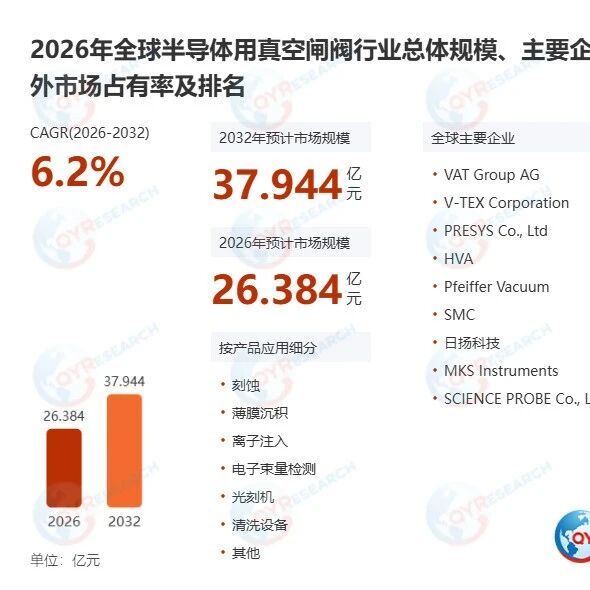
Core Viewpoint - The semiconductor vacuum gate valve is a critical component in semiconductor manufacturing, providing low leakage and low particle contamination isolation between vacuum chambers, with a projected global market size of $558 million by 2032 and a CAGR of 6.24% [6][18]. Market Overview - The global market for semiconductor vacuum gate valves is expected to reach $558 million by 2032, with a CAGR of 6.24% [6]. - Major manufacturers include VAT Group AG, V-TEX Corporation, PRESYS Co., Ltd, HVA, and Pfeiffer Vacuum, which collectively hold approximately 80.1% of the market share [10]. - The primary demand source is vertical furnaces, accounting for about 41% of the market share [13]. Product Types - The product categories include: 1. Chamber/load lock gate valves for chamber doors and isolation [2]. 2. Slit/transmission gate valves for wafer transfer interfaces [2]. 3. All-metal sealed gate valves suitable for ultra-high vacuum and high-temperature environments [2]. Market Drivers - The growth of the semiconductor vacuum gate valve market is driven by the expansion of the global semiconductor industry and advancements in process technologies, particularly in 5G, AI, and IoT, which increase the demand for high-purity vacuum environments [18]. - The trend towards "vacuumization" in semiconductor manufacturing processes, such as EUV lithography, necessitates a higher number of vacuum chambers, thus increasing the demand for high-performance vacuum gate valves [18]. - The development of 3D stacking technology, requiring enhanced corrosion resistance and durability in vacuum gate valves, is another significant driver [18]. Challenges - The industry faces technical challenges, including the need to meet extreme cleanliness standards, as even particles as small as 0.3 microns can affect wafer yield [21]. - The valves must have a long service life, with isolation valves requiring over 200,000 cycles and control valves up to 3 million cycles, which poses high demands on materials [21]. - The lack of specific technical standards for semiconductor vacuum valves and reliance on imported high-end components also hinder domestic manufacturers [22]. Policy Environment - In China, the government supports the vacuum valve industry through tax incentives and the "14th Five-Year Plan," recognizing it as a key component [23]. - Local governments are promoting industry clusters and standardization efforts to accelerate domestic replacement [23]. - In contrast, developed regions like the US and Europe focus on funding for R&D and maintaining high environmental and safety standards to sustain their market leadership [23].
WAT测试设备市场洞察:市场规模及增长趋势(附龙头企业名单)
QYResearch· 2026-01-23 05:40
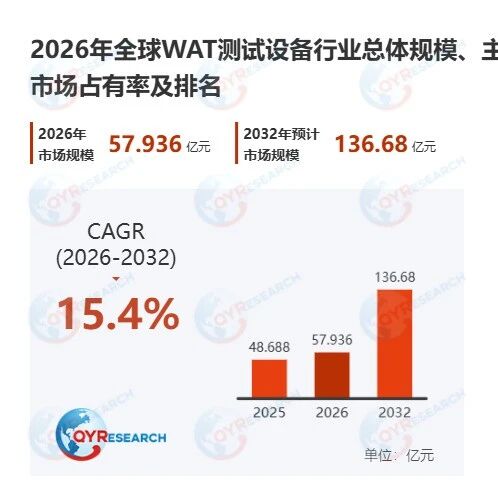
Core Viewpoint - WAT (Wafer Acceptance Test) equipment is essential in the semiconductor manufacturing process, focusing on the electrical health of the process rather than final chip functionality, serving as a critical foundation for process release, comparison, and production line monitoring [2]. Market Size - The global WAT testing equipment market is projected to reach USD 609 million in 2024 and grow to USD 1.689 billion by 2031, with a compound annual growth rate (CAGR) of 15.38% from 2025 to 2031 [4]. Market Share - Major manufacturers of WAT testing equipment include Keysight, Tektronix, and Guangli Micro. In 2024, the top two companies are expected to hold approximately 91.53% of the market share [7]. Industry Chain Structure - The WAT testing equipment industry relies heavily on high-precision electronic measurement and system integration capabilities. The upstream includes high-precision signal sources, measurement units, probe stations, low-noise amplifiers, and software systems for testing control and data analysis. Midstream manufacturers must integrate precision hardware, measurement algorithms, and automation software to ensure high repeatability and stability in complex process environments [9]. Competitive Landscape - The global WAT testing equipment market features a coexistence of "leading comprehensive measurement manufacturers" and specialized suppliers. Keysight Technologies dominates the market due to its precision measurement technology and comprehensive hardware and software ecosystem. Tektronix has traditional advantages in high bandwidth and high-speed signal testing, while specialized firms like Semitronix and Semight focus on high precision, customization, and localized service capabilities [9]. Downstream Customers - Key customers include foundries, IDM manufacturers, and companies producing logic chips, memory, power devices, and RF devices. WAT testing is performed repeatedly at critical points in wafer manufacturing for early defect identification, process drift monitoring, and yield optimization. The data from these tests is crucial for quality assurance and process stability [10]. Industry Development Trends - WAT testing equipment is evolving from "single-point measurement tools" to "process data platforms," increasingly integrating with manufacturing execution systems and yield management systems. Vendors with high-precision hardware, mature software architecture, and deep process understanding will continue to strengthen their market position in advanced processes and high-end manufacturing scenarios [10].

全球与中国4N级高纯铁市场现状及未来发展趋势
QYResearch· 2026-01-23 05:40
Core Viewpoint - The article discusses the development and market potential of high-purity iron (4N and 5N grades), highlighting advancements in production technology and the growing demand across various industries, including renewable energy, electronics, and aerospace [3][16][19]. Product Definition and Statistical Scope - High-purity iron is categorized based on purity levels: industrial pure iron (2N-3N), high-purity iron (4N, 99.99%), and ultra-pure iron (5N-6N). 4N high-purity iron is characterized by a total impurity content of no more than 0.01% and is produced through advanced refining techniques [2][5]. - 4N high-purity iron is essential for applications in soft magnetic alloys, magnetic shielding materials, and high-end electronic components, balancing electromagnetic performance and chemical stability [2][3]. Market Analysis - The global market for 4N high-purity iron is projected to reach $27.82 million in 2024, with an expected compound annual growth rate (CAGR) of 12.40% from 2025 to 2031, potentially reaching $59.64 million by 2031 [7]. - China's market for 4N high-purity iron is anticipated to be $3.64 million in 2024, accounting for approximately 13.08% of the global market, and is expected to grow to $12.74 million by 2031, increasing its global share to 21.36% [11]. Production and Consumption Insights - North America and Japan are the primary production regions for 4N high-purity iron, holding over 75% of the market share in 2024 [14]. - The Asia-Pacific region is the largest consumer market, expected to account for 37.26% of the market share in 2024, followed by North America and Europe [15]. Industry Trends and Developments - The demand for ultra-pure iron is rising due to advancements in high-end manufacturing sectors such as renewable energy, semiconductors, and aerospace, with 4N and 5N grades becoming increasingly important [16]. - Technological advancements in purification and processing, including vacuum melting and electro-refining, are enabling stable production of 5N grade iron, with Chinese companies transitioning from experimental to large-scale manufacturing [16][19]. Competitive Landscape - Major global players in the 4N high-purity iron market include Allied Metals, TOHO Zinc, and Hebei Longfengshan Group, with the top three companies holding a market share of 73.47% in 2024 [11][20]. - The industry is characterized by high market concentration, and competition is expected to intensify in the coming years as domestic manufacturers enhance their capabilities [11][16]. Future Outlook - The ultra-pure iron industry is expected to evolve towards higher purity levels and stricter impurity control, driven by emerging fields such as semiconductor manufacturing and quantum computing [18]. - Chinese enterprises are anticipated to shift from a "follower" to a "peer" position in the 5N ultra-pure iron market, supported by policy initiatives and technological advancements [19].

QYResearch观察:初创企业正在如何颠覆传统的工业自动化设备市场?
QYResearch· 2026-01-23 05:40
Core Viewpoint - The industrial automation equipment market is undergoing a structural change driven by emerging startups that are redefining value creation through innovative approaches rather than direct competition with established players [1][10]. Group 1: Changes in Demand - The shift in manufacturing customer needs is the fundamental reason startups can penetrate the industrial automation market, moving from a focus on equipment procurement to prioritizing efficiency, long-term stability, and controllability [3][4]. - The traditional view of automation as a tool for replacing labor and enhancing basic capacity is being reassessed, with a new emphasis on the operational efficiency of automation systems under complex conditions [3][4]. Group 2: Startup Strategies - Startups are adopting a strategy of bypassing the main battlefield of complete automation systems and instead focusing on key capability nodes that significantly impact overall efficiency [4][5]. - These key nodes include high-precision motion control modules, industry-specific machine vision capabilities, and quickly deployable control software, allowing for significant improvements without large-scale modifications to existing production lines [4][5]. Group 3: Shift in Value Focus - The core competitiveness of these startups is shifting from mechanical design and manufacturing capabilities to building systematic and sustainable automation capabilities that integrate mechanics, control, perception, and software [6]. - As automation capabilities are encapsulated as modules and continuously operated in real production lines, their value transforms from one-time equipment delivery to reusable and upgradeable "capability assets" [6]. Group 4: Business Model Innovation - The change in business models is another critical aspect of how startups are disrupting the traditional industrial automation market, moving from project-based revenue to a more sustainable income structure [7]. - This includes separating hardware and software pricing, introducing subscription-based control systems, and providing long-term maintenance and system upgrade services, which enhance customer lifecycle and revenue predictability [7]. Group 5: Evolving Relationships - The relationship between traditional manufacturers and startups is being restructured, with both parties finding new roles in the market [9]. - Traditional manufacturers maintain advantages in large-scale manufacturing and global delivery, while startups focus on demand discovery and efficiency enhancement, leading to potential collaborations [9]. Group 6: Capital Market Perspective - From a capital market perspective, the disruption in the industrial automation equipment sector is characterized by a slow-variable-driven structural change rather than rapid market share shifts [10]. - Investors are increasingly focusing on whether startups can build difficult-to-replicate system capabilities and maintain a sustainable pricing model based on real data and iterative improvements [10]. Group 7: New Growth Logic - The industrial automation equipment market is not experiencing a short-term technological revolution but is gradually forming a new growth logic driven by manufacturing upgrades [11]. - The changes brought by startups are pushing the industry from "equipment pricing" to "capability pricing," with companies that understand both manufacturing trends and new business logic poised for greater growth [11].

2025全球汽车座椅腰部调节系统行业Top5 生产商排名及市场占比
QYResearch· 2026-01-22 05:57
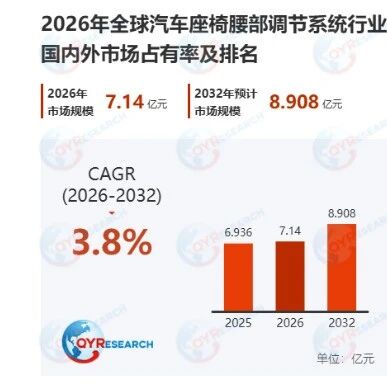
Core Viewpoint - The automotive seat lumbar adjustment system is evolving from a high-end feature to an essential comfort module in vehicles, driven by increasing consumer demand for comfort during long drives and the rise of smart cabins in electric vehicles [2][10]. Market Overview - The global market for automotive seat lumbar adjustment systems is projected to reach $131 million by 2032, with a compound annual growth rate (CAGR) of 3.8% from 2026 to 2032 [2][17]. - The top three manufacturers are expected to hold approximately 38.0% of the market share by 2025 [6]. Industry Chain Analysis - The system consists of core components such as actuators and control units, utilizing pneumatic or electromechanical solutions for lumbar support [7]. - Key upstream suppliers include Parker Hannifin, Bosch, and TE Connectivity, which provide essential components that influence the system's performance and cost structure [7]. - The midstream phase focuses on system integration and functionality, requiring a balance between support effectiveness and long-term stability [8]. Application and Customer Base - The lumbar adjustment system is increasingly used in both passenger and commercial vehicles, becoming a vital feature in mid to high-end models and long-distance driving scenarios [9]. - Major customers include Toyota, Volkswagen, Ford, General Motors, BMW, Mercedes-Benz, and several Chinese automakers [9]. Industry Development Opportunities - The main drivers for the industry include the upgrade of automotive consumption and the growing demand for driving comfort, with the lumbar support feature expanding from high-end to more mainstream vehicles [10]. - Technological advancements in pneumatic control precision and sensor technology are creating favorable conditions for performance optimization and cost control [10]. Industry Challenges - The industry faces challenges related to increased system complexity and cost pressures, requiring high levels of system integration and quality control [11]. - The long verification cycles for stability and durability pose challenges for smaller suppliers in terms of financial investment and engineering capabilities [11]. Future Trends - The lumbar adjustment system is expected to evolve towards higher precision, greater intelligence, and deeper integration with other cabin features, enhancing personalized comfort experiences [12]. - Modular design and automated assembly are anticipated to improve consistency and production efficiency, leading to broader application across various vehicle models [12].
全球及中国纸浆模塑餐具行业研究及十五五规划分析报告
QYResearch· 2026-01-22 05:57
Core Viewpoint - The pulp molded tableware industry is experiencing significant growth driven by increasing consumer awareness of environmental issues, government regulations on single-use plastics, and the expansion of the food service and delivery sectors. The market is projected to grow from $1.065 billion in 2020 to $1.815 billion by 2024, with a compound annual growth rate (CAGR) of 14.25% from 2020 to 2025, and further growth expected to reach $2.644 billion by 2031 with a CAGR of 7.13% from 2025 to 2031 [3][10]. Industry Overview - The global pulp molded tableware market was valued at $1.065 billion in 2020 and is expected to reach $1.815 billion by 2024, indicating a CAGR of 14.25% from 2020 to 2025. By 2031, the market is projected to grow to $2.644 billion, with a CAGR of 7.13% from 2025 to 2031 [3][10]. Growth Drivers - Key drivers for the growth of the pulp molded tableware industry include: - Increasing consumer demand for biodegradable and recyclable tableware as environmental awareness rises [6]. - Government regulations banning single-use plastics and promoting green procurement policies [6]. - The rapid growth of the food service and delivery sectors, particularly fast food chains and delivery services, which create stable demand [6]. - Optimizations in pulping and molding technologies that lower production costs and enhance product performance [7]. Regional Market Characteristics - In 2024, China is projected to be the largest production base for pulp molded tableware, with a production value of $1.116 billion, accounting for 61.5% of the global market. North America will have a production value of $648 million [7]. - The North American market is expected to maintain steady growth, with a consumption scale of $1.108 billion, representing 61.05% of the global market share, driven by strict environmental regulations [7]. - The European market will have a consumption scale of $389 million, accounting for 21.42% of the global market, supported by plastic substitution policies and heightened environmental awareness [7]. - The Asia-Pacific region will have a consumption scale of $281 million, representing 15.50% of the global market, with China, Japan, and Southeast Asia being key growth drivers [7]. Industry Trends - The pulp molded tableware industry is expected to see several trends: - Continued policy-driven growth due to global bans on single-use plastics and biodegradable alternatives [10]. - Ongoing product technology upgrades focusing on heat resistance, oil resistance, and diverse designs [10]. - Increased automation and smart manufacturing processes to enhance capacity and optimize supply chains [10]. - Expansion into high-value niche markets, including premium food, industrial, and consumer packaging [10]. - A balanced approach to global trade and localization, addressing both export and domestic demand [10]. Industry Characteristics - The competition in the pulp molded tableware industry is shifting from downstream price competition to upstream fiber resource control, with leading companies establishing production facilities near raw material sources [11]. - The production model is transitioning from labor-intensive to automated and continuous manufacturing, significantly reducing reliance on manual labor [11]. - The focus of technical research is on enhancing core performance characteristics such as heat resistance, oil resistance, and leak-proofing [11]. - The industry is moving towards high-end applications, with improved aesthetics and quality, allowing for penetration into premium markets [12]. Favorable Factors - The global push for carbon neutrality and sustainable development has led to stricter regulations on single-use plastics, benefiting the pulp molded tableware industry [13]. - The demand for disposable tableware in fast food, delivery, and retail sectors is substantial, with biodegradable options becoming mainstream [13]. - The use of renewable plant fibers as raw materials supports sustainability and aligns with circular economy principles [13]. - Technological advancements in production are enhancing product consistency and capacity utilization [13]. Unfavorable Factors - The industry faces risks from fluctuations in raw material costs, which can account for 60%-70% of production costs, making profitability sensitive to price changes [14]. - International trade risks, including tariffs and regulatory changes, can impact competitiveness in overseas markets [14]. - High entry barriers exist for high-end clients due to stringent certification requirements, which can be costly and time-consuming [14]. - Potential overcapacity and increased competition may lead to price wars, compressing overall industry margins [14].

2025全球汽车照明用 LED 驱动器行业Top5 生产商排名及市场占比
QYResearch· 2026-01-22 05:57
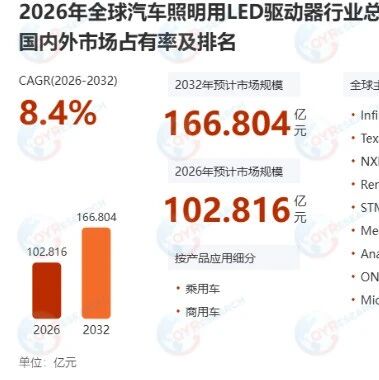
汽车照明用 LED 驱动器是一类用于精确控制车内外照明系统电流与电压的车规级功率管理器件,其核心作用 是在宽温度范围和复杂汽车电气环境下,保持照明亮度的一致性、高能效表现以及长期运行可靠性。通过对 LED 工作状态的稳定调节, LED 驱动器为汽车照明系统提供基础电气支撑,广泛应用于前照灯、尾灯、日行 灯以及智能氛围照明等场景,是实现汽车照明系统智能化与高安全性的关键基础器件之一。 据 QYResearch 调研团队最新报告"全球汽车照明用 LED 驱动器市场报告 2026-2032 "显示,预计 2032 年全球 汽车照明用 LED 驱动器市场规模将达到 24.5 亿美元,未来几年年复合增长率 CAGR 为 8.4% 。 全球 汽车照明用 LED 驱动器 市场前 10 强生产商排名及市场占有率(基于 2025 年调研数据;目前最新数据 以本公司最新调研数据为准) 根据 QYResearch 头部企业研究中心调研,全球范围内汽车照明用 LED 驱动器生产商主要包括 Infineon Technologies , Texas Instruments , NXP 等。 2025 年,全球前三大厂商占有大约 36. ...
QYResearch的全球数据网络,为何能成为跨国企业的"标配"?
QYResearch· 2026-01-22 05:57
Core Viewpoint - In an era of high uncertainty in the global business environment, multinational companies face profound changes, requiring strategic decisions that are systematic and long-term rather than short-term gambles [1][9]. Group 1: Data and Research Methodology - QYResearch recognizes that the biggest challenge for companies in the globalization era is not the availability of data, but the credibility of the data they choose to trust [3]. - The fragmentation of research methods and statistical standards leads to multiple versions of market sizes and growth forecasts, which can amplify uncertainty and delay decision-making for multinational companies [3][4]. - QYResearch aims to create a unified, comparable, and verifiable global research system, ensuring consistency in market definitions, industry boundaries, data models, and forecasting logic across different regions [4]. Group 2: Industry Understanding and Value - QYResearch emphasizes that valuable research must go beyond surface-level market sizes to understand the underlying logic of industry operations, covering every critical link in the supply chain [5]. - This comprehensive perspective allows companies to identify not only where the market is but also where value and risks lie, as well as their position within the industry [5]. Group 3: Long-term Data Reliability - Valuable data is not a one-time delivery but an asset that can be continuously verified, corrected, and accumulated over time, which is crucial for the long-term strategic decisions of multinational companies [6]. - QYResearch has established a mechanism for long-term tracking and rolling updates, ensuring that research conclusions evolve in sync with real-world changes [6]. Group 4: Global Data Network and Client Trust - As QYResearch's global client base grows, its data network undergoes continuous validation from diverse companies, fostering a common language for communication and decision-making [7]. - The research results are widely cited in industry analyses and international media, enhancing the maturity of the research system and increasing client trust in the long-term reliability of the data [7]. Group 5: Strategic Infrastructure - In a world where uncertainty is the norm, long-term understanding becomes increasingly important, and QYResearch focuses on building a stable global data network to provide a consistent perspective in a complex environment [9]. - The global data network of QYResearch serves as a foundational infrastructure for corporate strategy, providing a solid, clear, and trustworthy basis for important decisions [8].

全球及中国纸袋机行业研究及十五五规划分析报告
QYResearch· 2026-01-21 05:29
Core Viewpoint - The paper bag machine industry is experiencing steady demand expansion, product structure upgrades, and significant regional differentiation, driven by global plastic restrictions and increasing consumer awareness of sustainable packaging [2][6][15]. Group 1: Industry Overview - The paper bag machine is specialized equipment that processes paper into various types of paper bags, widely used in food, retail, and industrial packaging [1]. - The global paper bag machine market was valued at approximately $359.48 million in 2020 and is projected to reach $513.35 million by 2024, with a compound annual growth rate (CAGR) of 9.32% during this period [6]. - By 2031, the market is expected to grow to $867.50 million, with a CAGR of 7.79% from 2025 to 2031 [7]. Group 2: Demand and Supply Analysis - The food and beverage sector remains the core application area for paper bag machines, with increasing reliance on disposable eco-friendly packaging in industries like baking, coffee, and fast food [2][12]. - The market is seeing a shift towards higher quality, consistency, and load-bearing capacity of paper bags, particularly in mid-to-high-end retail and brand consumption [2][12]. - China has emerged as a major production base for paper bag machines, excelling in cost and delivery advantages for mid-speed and standardized models, while European manufacturers lead in high-speed and automated technology [2][13]. Group 3: Technological Trends - The industry is transitioning from traditional mechanical drives to servo control, electrical automation, and modular design, improving stability and efficiency [3][15]. - Future developments will focus on high-speed, automated, and intelligent features, with multi-servo drives and online detection becoming standard in mid-to-high-end machines [4][15]. Group 4: Future Development Trends - The paper bag machine market is expected to evolve from a phase of merely replacing plastic bags to one of structural upgrades and high-end expansion, driven by stricter food safety regulations and the growing importance of packaging aesthetics [4][15]. - The competition will shift from price-based to performance, reliability, and comprehensive solution capabilities, with manufacturers that understand downstream applications gaining a competitive edge [5][16]. Group 5: Policy Environment - Ongoing environmental and plastic restriction policies in Europe, China, and emerging economies are providing long-term support for the paper bag and machine industry by promoting recyclable and biodegradable packaging materials [17]. - Policies favoring high-end equipment manufacturing and smart manufacturing will benefit paper bag machines with automation and energy-saving features [17].