QYResearch

Search documents
全球PE-XC管行业总体规模、主要企业国内外市场占有率及排名
QYResearch· 2025-09-17 04:03
Core Viewpoint - The PE-XC pipe industry is transitioning from a technology maturity phase to a market expansion phase, with significant growth potential driven by its unique properties and environmental benefits [2][4]. Industry Overview - PE-XC pipes, a subset of the PEX market, utilize high-energy electron beam irradiation for cross-linking, resulting in superior mechanical properties and long-term stability [2]. - The global PE-XC pipe market is projected to grow from $23.1 million in 2024 to $30.6 million by 2031, with a CAGR of 4.59% from 2025 to 2031 [4]. Regional Development - Europe is the leading market, holding 45.76% of the global share in 2024, with a market size of $10.6 million [4]. - North America shows a dual market structure, with PE-Xa dominating residential applications while PE-XC is gaining traction in commercial sectors [4]. - China's PE-XC market is characterized as cost-sensitive, with a projected market size of $1.848 million in 2024, expected to reach $2.635 million by 2031 [4]. Environmental Demand - The non-chemical cross-linking process of PE-XC pipes results in no chemical residues and low VOC emissions, aligning with green building certifications [5][6]. Competitive Positioning - Despite higher production costs compared to PE-Xb or PE-RT, PE-XC is positioned as a high-end technical alternative suitable for strict temperature-controlled environments and green buildings [7]. Application Expansion - The application of PE-XC pipes is expanding beyond traditional plumbing to include data center cooling systems, solar thermal utilization, and medical gas delivery [12]. Market Drivers - The growth of the global green building market, which is increasing at 12% annually, is driving demand for high-end piping solutions [14]. - The rising demand for low-temperature water heating systems globally is a key driver for PE-XC pipe development [16]. Product Advantages - PE-XC pipes exhibit excellent temperature stability, flexibility, and heat resistance, making them ideal for embedded heating circuits in various flooring types [19]. - The use of electron beam irradiation technology enhances the environmental appeal of PE-XC pipes, making them attractive for low-emission building materials [20][21]. Infrastructure and Production - The expansion of electron beam irradiation services in key regions is facilitating easier production of PE-XC pipes [22]. - Modular production models allow extrusion companies to outsource cross-linking steps, lowering capital expenditure barriers for market entry [23]. Challenges - Economic fluctuations significantly impact the PE-XC pipe market, with demand rising during economic expansions and potentially declining during downturns [24]. - The market faces quality issues due to some small manufacturers reducing irradiation doses and using inferior materials, affecting industry credibility [26]. - The presence of alternative products like PE-Xa and PE-Xb, which offer price advantages, poses a competitive threat to PE-XC [28]. Conclusion - The PE-XC pipe industry is poised for growth, driven by environmental benefits, expanding applications, and increasing demand in high-end construction, despite facing challenges from competition and economic fluctuations [4][14][24].

行业聚焦:全球热灌装PET瓶生产线市场头部企业份额调研(附Top10 厂商名单)
QYResearch· 2025-09-17 04:03
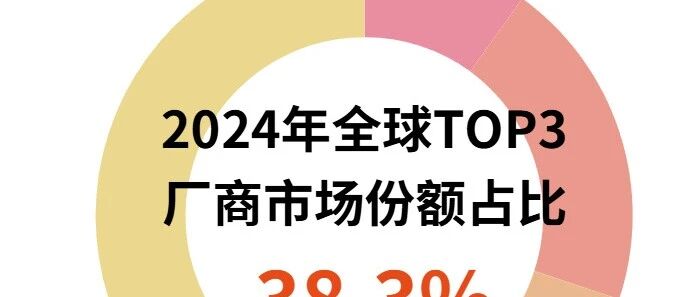
Core Insights - The global market for hot-filling PET bottle production lines is projected to reach $2.03 billion by 2031, with a compound annual growth rate (CAGR) of 6.9% over the coming years [1]. Market Overview - The hot-filling PET bottle production line is designed for manufacturing PET bottles that can withstand high-temperature liquid filling, typically in the range of 85°C to 95°C [1]. - The production line integrates various processes including preform injection, stretch blow molding, sterilization, filling, capping, and packaging for continuous automated operation [1]. Key Players - Major manufacturers in the global hot-filling PET bottle production line market include Krones, Tetra Laval, and KHS, with the top three companies holding approximately 38.3% market share in 2024 [6]. - Krones reported a total revenue of €5.294 billion in 2024, a 12.1% increase from the previous year, with an EBITDA of €537.1 million and a profit margin of 10.1% [8]. - Tetra Laval's net sales reached €12.82 billion in 2024, with its subsidiary Sidel being a leader in hot-filling technology, having installed over 1,000 hot-filling production lines globally [9]. - KHS achieved sales of €1.654 billion in 2024, emphasizing its commitment to sustainability and innovation in its production processes [10]. Industry Challenges - The hot-filling PET bottle production line industry faces challenges such as rapid technological updates and high R&D costs, necessitating continuous investment in new filling and sterilization technologies to meet market demands for efficiency and sustainability [10]. Industry Opportunities - The growing consumer demand for healthy beverages like juices and teas continues to drive market demand for hot-filling PET bottle production lines, presenting significant opportunities for manufacturers [11]. - The ability to handle recycled PET (rPET) and provide customized, flexible production lines will be key competitive advantages in meeting diverse market needs [11]. Industry Trends - The trend in hot-filling PET bottle production lines is moving towards high integration and modularization, with future lines expected to be more compact and energy-efficient [12]. - Digitalization and automation are core trends, enabling real-time monitoring, fault diagnosis, and predictive maintenance to enhance production efficiency and reliability [12].
行业聚焦:全球牛代乳品市场头部企业份额调研(附Top10 厂商名单)
QYResearch· 2025-09-16 03:55
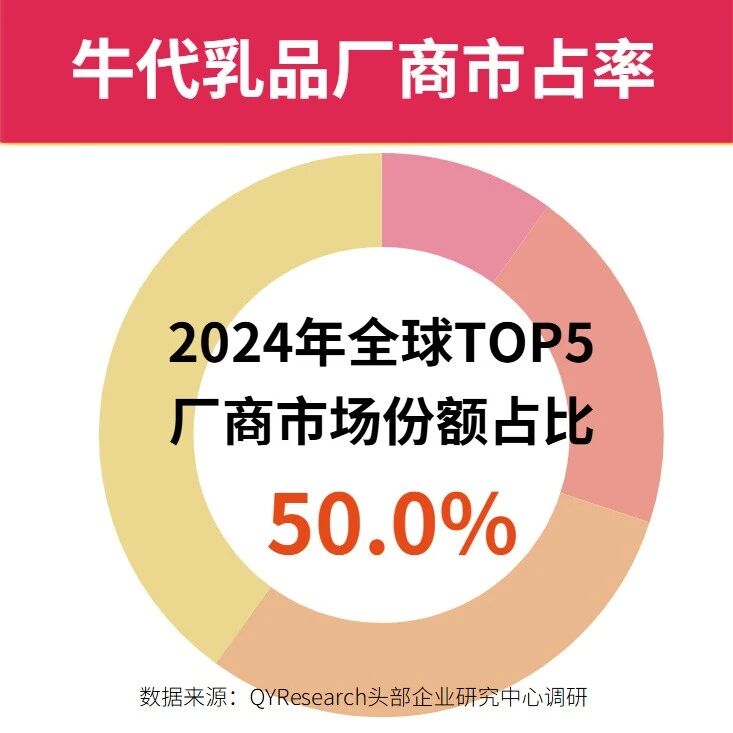
Core Viewpoint - The global calf milk replacer (CMR) market is projected to reach USD 5.54 billion by 2031, with a compound annual growth rate (CAGR) of 6.4% in the coming years [1]. Market Overview - CMR is designed specifically for calves and serves as an artificial milk substitute, primarily composed of whey powder, milk protein, plant protein, lactose, fats, minerals, vitamins, and enzymes [1]. - The market is segmented into milk-based and plant-based replacers [1]. Market Size and Growth - According to QYResearch, the global CMR market is expected to grow significantly, with a forecasted market size of USD 5.54 billion by 2031 [1]. Key Players - Major global CMR manufacturers include Nutreco, Land O' Lakes, Cargill, VanDrie, ADM, Lactalis, Alltech, CHS, Actus Nutrition, and Kalmbach Feeds [6]. - The top five manufacturers are estimated to hold approximately 50% of the market share in 2024 [6]. Market Drivers - The growth in global population and increased demand for meat and dairy products are driving the scale of livestock farming, which in turn raises the nutritional management requirements for calves [9]. - Advances in biotechnology, fermentation technology, and microencapsulation are diversifying and enhancing the functionality of CMR products [9]. - The adoption of digital management tools and smart feeding devices is integrating CMR with IoT and data analytics, enabling precise nutrition delivery and real-time health monitoring [9]. - Emphasis on animal welfare and health management in modern farming practices is increasing the demand for high-quality CMR with functional formulations [9]. Market Challenges - The prices of key raw materials for CMR, such as whey powder and plant proteins, are subject to fluctuations due to various factors including global dairy market conditions and climate change [10]. - The industry faces strict regulations regarding product safety and quality, which can impact market entry and compliance costs [14]. - Increased competition in the CMR market, particularly in the mid-to-low-end segments, is intensifying market dynamics [14].
行业聚焦:全球铝碳酸镁咀嚼片市场头部企业份额调研(附Top10 厂商名单)
QYResearch· 2025-09-16 03:55
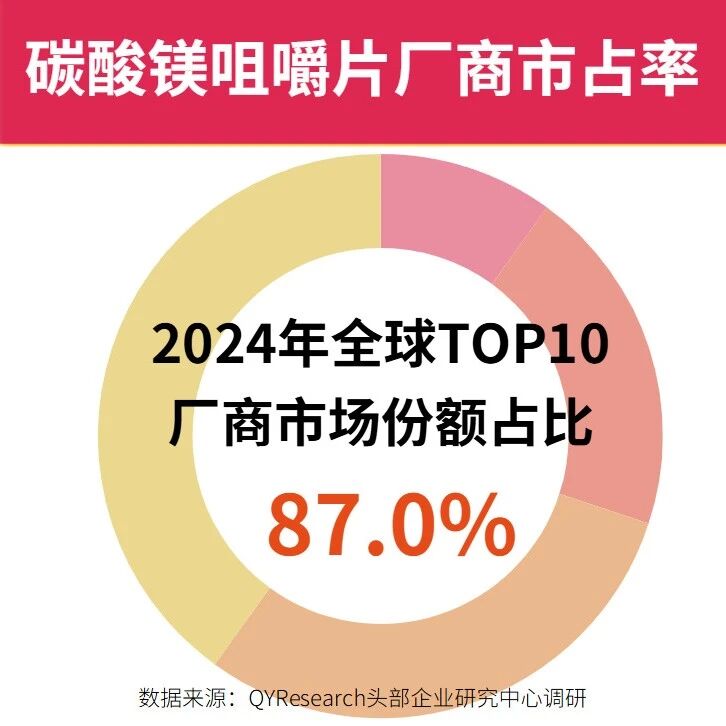
Core Insights - The article discusses the market for aluminum magnesium carbonate chewable tablets, highlighting its expected growth and key market players. The global market size is projected to reach $310 million by 2031, with a compound annual growth rate (CAGR) of 6.5% over the coming years [1]. Market Overview - The global market for aluminum magnesium carbonate chewable tablets is dominated by original research drugs, which hold approximately 38.3% market share [6]. - The top 10 manufacturers account for about 87.0% of the market share in 2024, indicating a concentrated market [6]. Application Segmentation - Hospitals and clinics represent the largest downstream market, accounting for around 41.2% of the demand [10]. Market Drivers - The increasing public awareness of health issues related to excessive stomach acid and gastroesophageal reflux is driving demand for convenient and safe formulations [13]. - The chewable tablet form is favored for its convenience, aligning with modern lifestyles [13]. - Pharmaceutical companies are investing in process optimization, flavor improvement, and packaging upgrades, enhancing consumer acceptance [15]. - Inclusion of common digestive diseases in insurance coverage in various regions is improving medication accessibility [15]. Market Challenges - The market faces challenges such as high product homogeneity and intense price competition, which may compress profit margins [16]. - Growing consumer concerns regarding drug safety and long-term effects necessitate higher standards in production and clinical evidence [16]. - Rapid changes in pharmaceutical distribution channels, especially the rise of online sales, require companies to adapt quickly to maintain competitive advantages [16]. Demand Trends - There is a trend towards diversified and refined demand, with younger consumers prioritizing convenience and taste, while older consumers focus on long-term gastrointestinal care [17]. - The interplay between hospital and retail sectors is expanding the application of these products in both acute symptom relief and chronic disease management [17]. - Future market scenarios may see aluminum magnesium carbonate chewable tablets used in combination with other digestive medications, broadening their demand [17].
行业聚焦:全球汽车电动助力转向市场头部企业份额调研(附Top10 厂商名单)
QYResearch· 2025-09-16 03:55
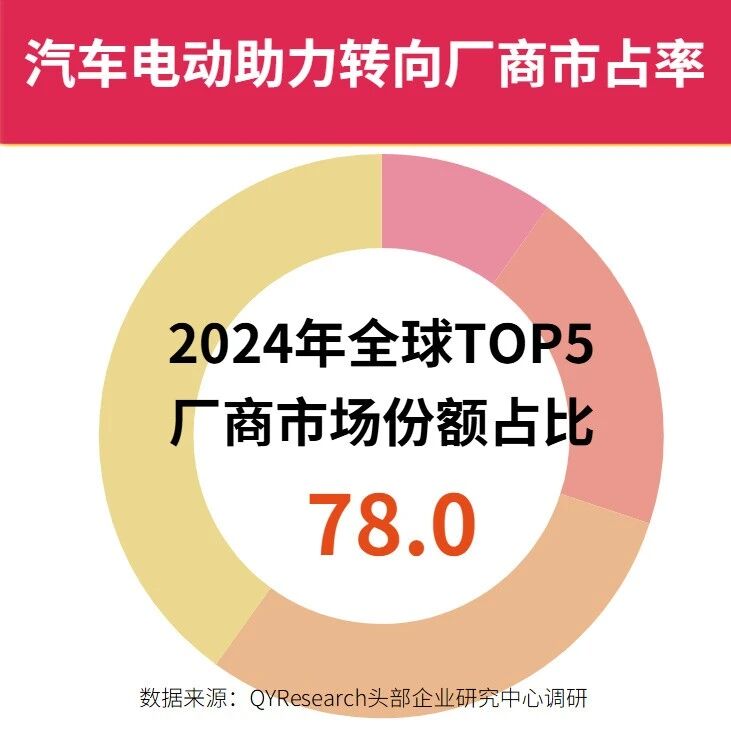
Core Viewpoint - The electric power steering (EPS) system is increasingly replacing traditional hydraulic systems in vehicles due to its efficiency, integration capabilities with electronic control units, and support for advanced driving assistance systems (ADAS) [1][13][14]. Market Overview - The global EPS market is projected to reach $21.66 billion by 2031, with a compound annual growth rate (CAGR) of 1.8% in the coming years [2]. - The top five manufacturers are expected to hold approximately 78.0% of the market share by 2024 [5]. Product Segmentation - The column-type EPS currently dominates the market, accounting for about 38.7% of the total share [8]. - Passenger vehicles represent the largest application segment, making up approximately 88.2% of the demand [10]. Driving Factors - Growing demand for energy-saving and emission-reducing technologies is pushing the adoption of EPS systems, which consume power only when needed [13]. - The rapid development of electric and hybrid vehicles is leading to EPS becoming the standard steering solution [13]. - EPS systems facilitate easy integration with ADAS, enhancing the functionality of smart vehicles [14]. - Stricter emission regulations are encouraging manufacturers to adopt EPS to reduce engine load and emissions [15]. - EPS enhances driving comfort and safety by adjusting assistance levels based on speed and driving conditions [16]. Challenges - High research and integration costs are significant barriers to transitioning from hydraulic to EPS systems, especially for older vehicle platforms [17]. - Reliability issues may arise in extreme environments, affecting the stability of electronic components in EPS systems [17]. - Some EPS designs may provide weaker feedback compared to hydraulic systems, potentially impacting the driving experience of high-performance vehicles [18]. - The complexity of EPS systems can lead to higher costs and difficulties in maintenance and diagnostics [19]. - Increased integration with ADAS and connected vehicle systems raises cybersecurity risks [20]. Industry Opportunities - Emerging markets present significant growth potential as automotive manufacturing capabilities and safety standards improve [21]. - The demand for electric and autonomous vehicles is driving the need for EPS, which is crucial for precise steering control [21]. - Integration with artificial intelligence and predictive systems could lead to personalized and adaptive steering solutions [21]. - The aftermarket for retrofitting older vehicles with EPS systems is becoming a new opportunity for manufacturers [21]. - The trend towards lightweight vehicles aligns with the smaller and lighter EPS systems, enhancing overall vehicle performance and efficiency [21].
全球与中国空间音频解决方案市场现状及未来发展趋势
QYResearch· 2025-09-16 03:55
Core Insights - The global spatial audio solutions market is experiencing dynamic growth, with a projected market size of 5.345 billion in 2024 and an expected increase to 10.49 billion by 2031, reflecting a compound annual growth rate (CAGR) of 9.87% [3] - China is a significant market, with a forecasted growth from 704 million in 2024 to 1.727 billion by 2031, indicating a CAGR of 13.37% [3] - North America currently holds the largest market share at 35.16% in 2024, followed by Europe and China, with China expected to grow the fastest in the coming years [3] Market Trends - The spatial audio solutions market is characterized by a "software + hardware" integration model, balancing cost and user experience [4] - Technological advancements, including 3D audio and AI applications, are driving market growth by enhancing audio production and playback efficiency [4] - The demand for immersive audio experiences is rising across various sectors, including education, healthcare, aviation, and architecture [6] Competitive Landscape - The market is competitive, with major players like Dolby, Sonos, Xperi (DTS), and Qualcomm Technologies leading the field [3][12] - Both established companies and startups are actively entering the spatial audio space, with larger firms leveraging their R&D capabilities and market channels, while startups focus on innovative solutions [6] - Companies are encouraged to enhance user experience and product iteration to stand out in the competitive landscape, with personalized audio experiences becoming crucial [6] Policy Analysis - The Chinese government is promoting the development of audiovisual electronic technologies, with spatial audio identified as a key technology [9] - A collaborative initiative among several government departments aims to accelerate the adoption of spatial audio solutions in various applications [9] - Compliance with regulations such as the GDPR is essential for companies operating in the European market, impacting operational costs and necessitating technological improvements [9] Future Outlook - The spatial audio solutions market is poised for significant growth, driven by technological advancements and diverse application scenarios [7] - Companies that can adapt to these dynamic trends are likely to gain a competitive edge in this emerging market [7]

行业聚焦:全球离子液体市场头部企业份额调研(附Top10 厂商名单)
QYResearch· 2025-09-15 04:17
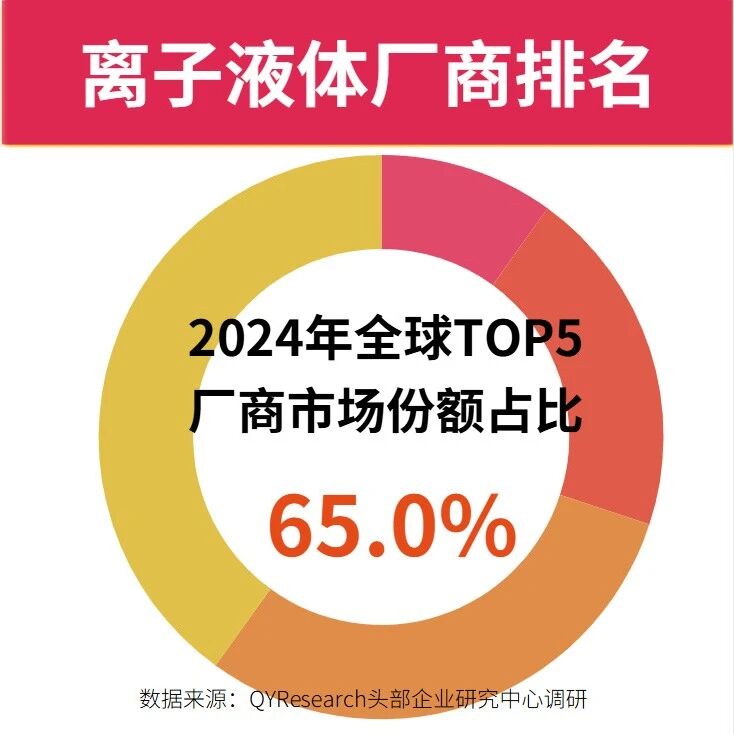
Core Viewpoint - Ionic liquids are gaining attention due to their unique properties such as low volatility, high thermal stability, and excellent solvation capabilities, with a projected global market size of $270 million by 2031 and a CAGR of 9.3% from 2025 to 2031 [1][9]. Market Overview - The global ionic liquid market is expected to reach $270 million by 2031, with a CAGR of 9.3% [1]. - The market is primarily driven by increasing regulatory pressure on hazardous solvents, advancements in production technology, and ongoing R&D efforts to explore new applications [9]. Key Players - Major manufacturers in the ionic liquid market include BASF, Evonik Industries, Solvay, Merck, KOEI Chemical, Sanyo Chemical, Proionic, Solvionic, IoLiTec, and Zhejiang Lande Energy Technology [6]. - The top five manufacturers are projected to hold approximately 65.0% of the market share in 2024 [6]. Market Segmentation - The ionic liquid market can be segmented by product type and application, with common applications including solvents, catalysts, and electrolytes in batteries and fuel cells [7][8]. Driving Factors - Regulatory pressure from agencies like the EPA is creating opportunities for ionic liquids as safer and more sustainable alternatives [9]. - Investment in research infrastructure and manufacturing processes is essential to support the commercialization of ionic liquids [9]. - Continuous R&D is expanding the potential applications and improving the performance of ionic liquids through tailored combinations of cations and anions [9]. Challenges - High synthesis costs and limited commercial availability of certain ionic liquids may hinder broader industrial applications [10]. - Existing technologies and solvents pose competition, making it challenging to persuade industries to switch to ionic liquids [10].
行业聚焦:全球空心纤维透析市场头部企业份额调研(附Top10 厂商名单)
QYResearch· 2025-09-15 04:17
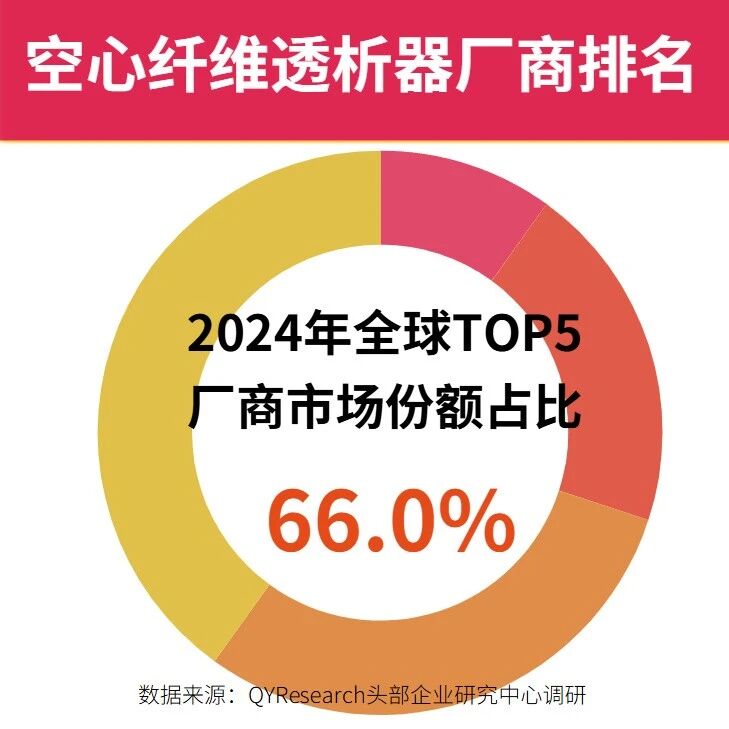
Core Viewpoint - The global hollow fiber dialysis market is projected to reach USD 10.48 billion by 2031, with a compound annual growth rate (CAGR) of 7.3% over the coming years [2]. Market Overview - The hollow fiber dialysis market is driven by the increasing burden of chronic kidney disease (CKD) and end-stage renal disease (ESRD), influenced by lifestyle changes, aging populations, and rising incidences of diabetes and hypertension [12]. - The top five manufacturers in the hollow fiber dialysis market hold approximately 66.0% market share as of 2024 [7]. Market Drivers - The demand for hollow fiber dialysis devices is fueled by the growing number of patients requiring regular dialysis, as millions rely on blood dialysis for life-sustaining treatment [12]. - Customization of dialysis prescriptions by healthcare providers based on patient needs is increasing the demand for high-efficiency and high-flux dialysis devices [12]. - Expansion of dialysis networks in emerging economies, along with the rise of home dialysis programs in developed markets, is creating a niche market for compact and user-friendly dialysis devices [12]. Market Challenges - High costs associated with dialysis treatment and equipment pose significant challenges, particularly in low- and middle-income countries [15]. - Risks of adverse reactions in patients, such as allergic responses or inflammation from certain membrane materials, remain a concern [15]. - Supply chain and manufacturing constraints, particularly regarding high-quality polymer materials and precision manufacturing equipment, can impact production and distribution [15].
行业聚焦:全球胶体金免疫层析产品市场头部企业份额调研(附Top10 厂商名单)
QYResearch· 2025-09-15 04:17
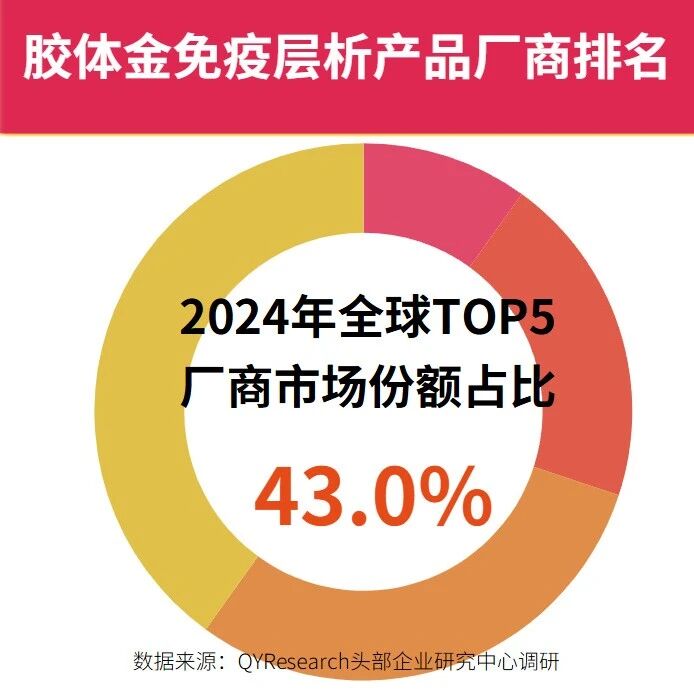
Core Insights - The article highlights the rapid development and widespread application of colloidal gold immunochromatography technology in the biomedical field, particularly in medical testing [1] - The global market for colloidal gold immunochromatography products is projected to reach $3.06 billion by 2031, with a compound annual growth rate (CAGR) of 3.4% in the coming years [2] Market Overview - The global market for colloidal gold immunochromatography products is primarily dominated by infectious disease test strips and kits, which account for approximately 72.9% of the market share [11][9] - The top five manufacturers in the global market hold about 43.0% of the market share as of 2024 [8] Market Drivers - The increasing prevalence of infectious diseases, especially respiratory and gastrointestinal infections, is driving the demand for rapid testing products [14] - Growing consumer awareness of health and the acceptance of self-testing products are further promoting market expansion [14] - Technological advancements, such as multiplex testing capabilities and the proliferation of portable devices, are expanding the application scenarios of these products [14] Challenges and Risks - Quality control and standardization issues need to be addressed, particularly regarding product consistency across different regions and manufacturers [15] - The rise of homogeneous products is intensifying price competition, potentially impacting profit margins for companies [15] - Increasing consumer demands for product accuracy and reliability necessitate ongoing research and development investments [15] Demand Trends - There is a growing demand for rapid and accurate testing products in clinical diagnostics, particularly in emergency and grassroots medical institutions [16] - The home testing market is expanding rapidly, with consumers seeking convenient health monitoring solutions [16] - The demand for rapid testing technologies in environmental monitoring and food safety is also increasing, broadening the application of colloidal gold immunochromatography products [16]
中国便携式交流充电枪市场现状研究分析与发展前景预测报告
QYResearch· 2025-09-15 04:17
Core Viewpoint - The portable AC charging gun market in China is projected to grow significantly, reaching 14.1 billion yuan by 2031, with a compound annual growth rate (CAGR) of 8.26% from 2024 to 2031 [3]. Market Overview - The portable AC charging gun is a convenient device for charging electric vehicles (EVs) by connecting to household or public AC power sources, enhancing the flexibility and convenience of EV usage [1][9]. - The market for portable AC charging guns is driven by the rapid increase in the number of new energy vehicles in China, which has surpassed 20 million units, accounting for over 60% of global annual sales [9]. Market Size and Growth - In 2024, the market size for portable AC charging guns in China is expected to reach 7 billion yuan, with projections indicating growth to 14.1 billion yuan by 2031 [3]. Supplier Landscape - The suppliers of portable AC charging guns in China can be categorized into three main types: traditional component manufacturers from the EV supply chain, traditional home appliance companies, and vehicle manufacturers [10]. - Key players include companies like Bull Group, Yonggui Electric, and Shenzhen Basiba Technology, which contribute to the improvement of product technology, production capacity, and quality standards [10]. Product Development Trends - The industry is witnessing a shift from traditional low-power charging guns (1.5 kW - 3.5 kW) to higher power options (7 kW, 11 kW, and above), with a focus on smart features, safety, and user-friendly designs [10]. - Leading companies are enhancing their products with features such as leakage protection, waterproofing, and remote monitoring capabilities [10]. International Market Potential - The portable AC charging gun is becoming an important product for Chinese manufacturers to export, with high acceptance among consumers in Europe and North America [11]. - Chinese manufacturers are improving their ODM/OEM capabilities and brand presence to meet the stringent design and safety standards required in international markets [11]. Challenges and Future Outlook - The industry faces challenges such as price competition, technological homogeneity, and evolving national standards [11]. - Future trends indicate a preference for efficient, intelligent, and versatile portable charging solutions, with companies needing to innovate in product development and after-sales service to gain a competitive edge [11]. Policy Environment - Key policies supporting the development of portable AC charging guns include the "New Energy Vehicle Industry Development Plan (2021-2035)" and various guidelines promoting flexible charging solutions [13].