QYResearch

Search documents
射频、直流和RPS电源维修行业报告 | 全球与中国市场现状及未来发展趋势
QYResearch· 2026-02-12 02:40
Core Viewpoint - The power supply system is crucial for high-tech industries such as semiconductor manufacturing, photovoltaics, medical devices, and industrial automation, with its stability directly affecting equipment precision and production continuity [2]. Market Overview - The Chinese market for RF, DC, and RPS power supply maintenance is projected to reach USD 296 million in 2024 and USD 700 million by 2031, with a compound annual growth rate (CAGR) of 14.24% [5]. - RF power supply maintenance is the largest segment, expected to account for over 60% of the market share in 2024, while RPS maintenance, though smaller in volume, has a high average selling price (ASP) and is projected to grow at 10.37%, surpassing the global average growth rate [6]. Competitive Landscape - Major competitors in the RF power supply software maintenance market include manufacturers and third-party service providers, with the top five global suppliers holding approximately 60% of the revenue share in 2024 [8]. Customer Needs and Pain Points - Customers demand quick response and repair times, especially in critical industries like communications and healthcare, where downtime can be costly [11]. - Regular maintenance and upgrades are expected to keep RF power supplies performing optimally, indicating a need for long-term support from service providers [11]. Industry Trends - The industry is moving towards intelligent and automated repair techniques, integrating AI and machine learning for more efficient diagnostics and analysis [12]. - There is an increasing emphasis on original manufacturer support and after-sales service, with manufacturers enhancing customer support through training and remote diagnostics [12]. - The establishment of localized repair centers and global network layouts is accelerating, particularly in regions with high concentrations of semiconductor and photovoltaic production [12]. Growth Opportunities and Key Drivers - The expansion of downstream industries, particularly in semiconductors and photovoltaics, is driving demand for RF, DC, and RPS maintenance services as equipment ages and requires refurbishment [13]. - The aging of existing equipment and the development of the second-hand market are contributing to increased maintenance needs, as older devices can still meet production requirements through refurbishment [13]. - Cost and compliance constraints are making maintenance a viable alternative to new equipment purchases, with repair costs typically ranging from 20% to 40% of new equipment prices [13].



合作无间:看QYResearch市场部与研究部如何协作产出爆款行业文章
QYResearch· 2026-02-12 02:40
Core Viewpoint - The article emphasizes the collaborative effort between the marketing and research departments at QYResearch to create impactful industry articles that address customer pain points and generate business opportunities [1]. Group 1: Demand Identification - The marketing department serves as the source of trending topics by identifying customer pain points through daily interactions with clients and channel partners, allowing QYResearch to capture market "itch" or "boiling point" topics effectively [3]. Group 2: Knowledge Extraction - The research department acts as the quality assurance for content, providing rigorous analysis and data-backed insights that transform scattered market information into deep industry insights, ensuring the articles are recognized by professional readers [4]. Group 3: Language Adaptation - The translation and copywriting team plays a crucial role in bridging the gap between complex academic language and the commercial logic needed by decision-makers, ensuring that reports resonate across different cultural contexts [5]. Group 4: Communication Strategy - The marketing team strategically disseminates high-quality content to maximize commercial value, utilizing various channels to engage target audiences and monitor data for dynamic optimization [6]. Group 5: Continuous Improvement - QYResearch employs a review process to assess the impact of articles on sales leads and industry discussions, fostering a culture of collaboration and continuous learning that enhances organizational capabilities [7]. Company Overview - QYResearch, established in 2007, operates in high-tech industry sectors, including electronic semiconductors, chemical raw materials, advanced materials, machinery manufacturing, and new energy vehicles, with headquarters in Los Angeles and Beijing [8].

BOPP香烟包装膜市场洞察:全球前10强生产商排名及市场份额
QYResearch· 2026-02-12 02:40
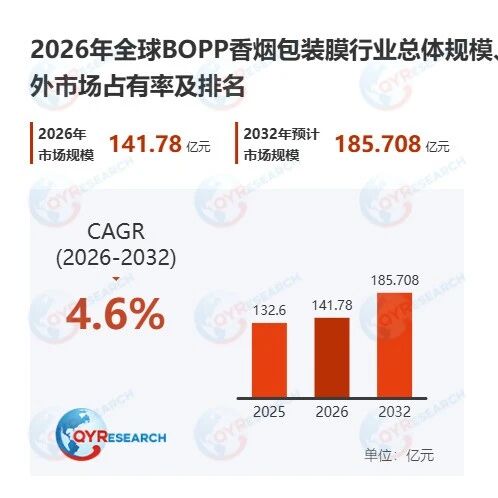
Core Insights - BOPP cigarette packaging film is a biaxially oriented polypropylene film used for cigarette boxes and packs, providing moisture protection, tamper-evidence, and a glossy appearance, compatible with high-speed packaging equipment [2] - The global BOPP cigarette packaging film market is projected to reach 1.5 billion USD by 2032, with a compound annual growth rate (CAGR) of 4.5% from 2026 to 2032 [4] - Major manufacturers in the global BOPP cigarette packaging film market include Innovia Films, Taghleef Industries, and Jindal Films, with the top ten companies holding approximately 71% market share in 2025 [6] Industry Trends - The "compliance-driven" structural trend emphasizes recyclable and auditable packaging designs, influenced by regulations such as the EU's PPWR, which mandates recyclable design in packaging materials [8] - The industry is shifting towards single-material solutions and recyclable-friendly coatings, moving from multi-material composites to aluminum-coated BOPP and transparent high-barrier coated BOPP [9] - Two main directions in specifications are lightweight (thinner films) and wider processing windows for high-speed packaging adaptability, focusing on resin systems and orientation processes [10] Market Drivers - Regulatory pressures for packaging redesign and compliance are evolving under the WHO FCTC, necessitating updates in the packaging supply chain and stricter compliance documentation [11] - High-speed performance requirements for external packaging are critical, with films needing low sealing initiation temperatures, strong heat sealability, and consistent sliding properties to avoid production downtime [12] - The focus on anti-counterfeiting, traceability, and machine readability is increasing due to the shrinking brand space and ongoing illicit trade, shifting value towards stability and integration with tax stamps and traceability features [13]
马斯克的商业帝国:六大产业链闭环,未来指向多星球文明
QYResearch· 2026-02-12 02:40
Core Viewpoint - Elon Musk's business empire is not limited to a single company but encompasses a vast industrial network covering space, earth, human-machine interaction, and energy, aiming for "sustainable prosperity" and "multi-planet civilization" [3] Group 1: Six Major Industrial Chains - Musk's empire is built on three main pillars: Tesla (energy + transportation), SpaceX (space exploration), and xAI (artificial intelligence), along with three extensions: Neuralink (brain-machine interface), The Boring Company (underground tunnels), and Optimus (humanoid robots), forming a self-reinforcing collaborative loop [4] Group 2: Key Data Summary for 2026 - SpaceX aims for $18.2 billion in revenue by 2025, with a 45% year-on-year increase, and plans to launch over 200 rockets, achieving a market share of 86% in U.S. space launches [5] - Tesla targets $94.827 billion in total revenue by 2025, with a projected delivery of 1.636 million vehicles and a 120% increase in FSD subscription users [5] - xAI has raised $20 billion in funding, with plans to build a data center and enhance its Grok model [5] - Neuralink has implanted devices in 12 individuals, aiming for large-scale production and expanded clinical cases [5] Group 3: Collaborative Logic of the Industrial Chain - The synergy among the six industrial chains creates a "1+1>2" effect, where energy systems from Tesla support SpaceX and xAI, while data from various sources feeds into xAI's Grok model, enhancing overall efficiency [6][7] Group 4: Global Industry Benefits - The commercialization of Musk's industrial chains is expected to drive growth in multiple related industries, including aerospace materials, lithium batteries, AI computing power, precision manufacturing, and underground engineering, with significant market growth projections for 2026 [8] Group 5: China's Related Industry Development - China's commercial space sector is rapidly developing, with over 300 companies and a market size exceeding 200 billion RMB by 2026, benefiting from global aerospace trends [9] - In the new energy and electric vehicle sector, China leads globally, with a projected production of 9.5 million electric vehicles by 2025, capturing over 60% of the global market [11] - The AI sector in China is expected to reach a scale of 500 billion RMB by 2026, with significant advancements in large models and computing infrastructure [13] - The humanoid robot and precision manufacturing sectors are also advancing, with Chinese companies focusing on key components and achieving a 35% localization rate by 2025 [14] Group 6: Insights from Musk's Industrial Logic - Musk's approach emphasizes ecological layout, long-termism, differentiated competition, and the importance of hard technology and complete industrial chains, providing valuable lessons for global and Chinese industries [15][16][17][18]


远程等离子体源行业报告 | 全球与中国市场现状及未来发展趋势
QYResearch· 2026-02-11 09:22
远程等离子体源( Remote Plasma Source , RPS )是一种用于产生等离子体的装置,它通常被用于在真空环境中进行表面 处理、材料改性、薄膜沉积等工艺。 RPS 通过将气体输送到装置中,利用电场或者磁场产生等离子体,然后将等离子体传 输到需要处理的表面区域。与传统等离子体源不同的是, RPS 通常不直接接触要处理的表面,而是在一定距离之外产生等 离子体,并将等离子体输送到目标表面,因此被称为"远程等离子体源"。 RPS 的主要优点在于它可以实现对表面的均匀处理,而且对于一些敏感的表面或者材料,由于远离等离子体,因此减少了 对表面的热和化学损伤。此外, RPS 可以被集成到真空处理系统中,使得表面处理和材料改性的工艺更加灵活和高效。 目前,远程等离子体源( Remote Plasma Source, RPS )的应用领域包括半导体、光电子器件制造、平板显示、精密表面处 理等多个行业。由于其能够在不直接接触工件的情况下产生高密度、高均匀性的活性等离子体,极大地降低了工件污染和 损伤风险, RPS 主要用于半导体制造的关键工艺环节,从而提高器件良率和性能稳定性。 远程等离子体源行业目前现状分析 0 ...

聚焦核心:QYResearch如何从纷繁信息中提取关键驱动因素?
QYResearch· 2026-02-11 09:22
在行业研究中,信息从来不缺:公告、新闻、观点、数据源层出不穷。真正稀缺的是能解释 "增长为什么发生、拐点何时出现、利润如何被重分配"的关键 驱动因素。QYResearch的思路是把研究从"收集信息"升级为"构建证据链":先用统一框架锁定驱动因素候选(需求、供给、价格/成本、政策/标准、技 术、竞争与渠道),再通过多源交叉验证、口径对齐与时间线复盘,最终输出能被复核、可用于决策的结论。Research也强调其研究基础来源覆盖国家统 计、海关、行业协会、企业年报/财报与访谈等渠道。 一、以 "法定披露"为主干:招股书、年报/季报与投资者沟通 对关键驱动因素的提炼,首先要抓住最 "硬"的信息源——招股书、年报/季报与管理层讨论(MD&A),以及电话会、路演、投资者问答等公开沟通材料。 这一类来源的优势在于结构化、可对比、可回溯:它不仅描述商业模式与产品结构,还披露客户、供应链、产能与扩产节奏、研发投入、定价与毛利变化、 库存与回款等关键经营变量。QYResearch通常会把这些表述拆解为可量化假设(例如产能爬坡对应的供给增量、产品迭代对ASP与毛利的影响、区域与渠 道策略对收入结构的影响),并用后续财务数据与产业链 ...

UPS锂电池解决方案,全球前20强生产商排名及市场份额
QYResearch· 2026-02-11 09:22
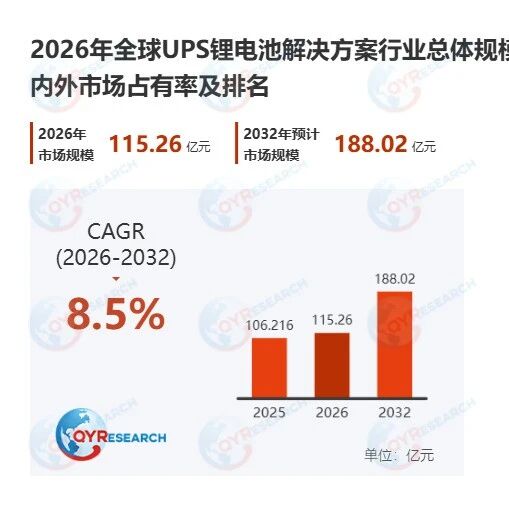
UPS 锂电池解决方案是一种集成式备用电源系统,它将不间断电源 (UPS) 与锂离子电池(作为储能核心)相 结合,旨在为断电或电压波动期间的关键负载提供可靠、高效且持久的电源保护。由于其卓越的性能,它正逐 步取代传统的铅酸电池 UPS 解决方案。 根据 QYResearch 最新调研报告显示,预计 2032 年全球 UPS 锂电池解决方案 市场规模将达到 27.65 亿美元, 未来几年年复合增长率 CAGR 为 8.5% 。 全球 UPS 锂电池解决方案 市场前 20 强生产商排名及市场占有率(基于 2025 年调研数据;目前最新数据以本 公司最新调研数据为准) 目前,全球核心厂商主要分布在欧美和亚太地区。 UPS 锂电池解决方案产业链分析 | | 产业 | 描述 | | --- | --- | --- | | | 矿产资源 | 锂(碳酸盐 / 氢氧化物)、钴、镍、石墨。 | | | | 全球锂资源集中在智利、澳大利亚和阿根廷;钴供应主要来自刚果民主共和 | | | | 国。 | | | 电池材料 | 正极(磷酸铁锂、镍基复合材料)、负极(石墨、钛酸锂)、隔膜、电解 液。 | | | | 磷酸铁锂因其安全性而 ...
行业聚焦:全球碳化硅粉末行业头部生产商市场份额及排名调查(附核心企业名单)
QYResearch· 2026-02-10 09:20
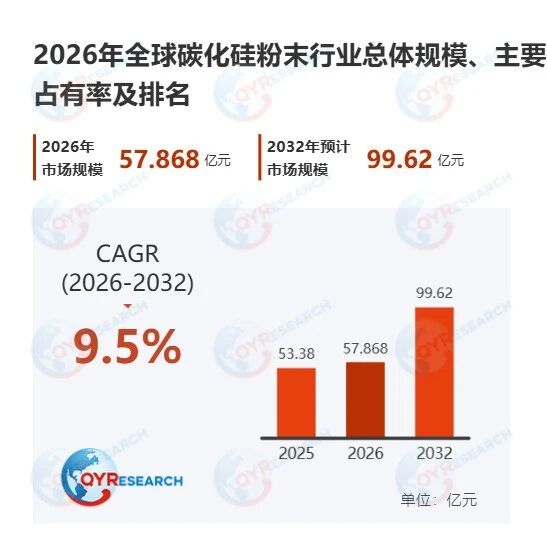
Core Viewpoint - Silicon Carbide (SiC) powder is a high-performance synthetic ceramic material known for its exceptional hardness, high thermal conductivity, excellent chemical stability, and wide bandgap characteristics, making it essential for next-generation technologies such as power electronics, electric vehicles, renewable energy systems, and aerospace applications [2]. Supply Chain Dynamics and Key End Users - The global SiC powder supply chain is characterized by technology-intensive upstream synthesis processes and diverse downstream applications. Key suppliers include Fiven, Washington Mills, and Shin-Etsu Chemical, each with proprietary technologies to control purity and particle morphology [3]. - Major end users of high-purity SiC powder include semiconductor substrate manufacturers like Wolfspeed and SK Siltron, who require low impurity levels and stable quality, often entering long-term supply agreements [3]. - The gross margin for SiC powder typically ranges from 25% to 30%, but may be pressured during periods of intense price competition in the commodity abrasive sector [3]. Market Size and Growth Projections - By 2025, the global production of SiC powder is expected to reach 133,000 tons, with an average market price of $5.90 per kilogram. The market is projected to grow to $1.47 billion by 2032, with a compound annual growth rate (CAGR) of 9.6% [4][5]. - The ceramic sector currently accounts for approximately 52.3% of the demand for SiC powder, while standard-grade SiC powder represents about 76.1% of the product type market share [7][8]. Key Drivers - The demand for SiC powder is driven by its wide range of applications, including lithium-ion batteries, where silicon-based nanoparticles can significantly enhance performance [10]. - The growth of power modules in electric vehicles highlights the attractive value proposition of compound semiconductors [10]. - The expanding applications of SiC as a sintering material and in metal surface coatings further contribute to its demand across various industries [10]. Major Obstacles - The diverse specifications required for different end uses create challenges for manufacturers in managing multiple SKUs while maintaining stable output and cost competitiveness [11]. - High energy consumption during synthesis and impurity control remain ongoing operational challenges [11]. Industry Development Opportunities - The acceleration of electric vehicles is driving the development of structural ceramics and composite materials, increasing the demand for high-purity SiC powders [13]. - The growth of technical ceramics supports the development of high-purity ultrafine powders suitable for advanced manufacturing processes [13]. - The semiconductor-grade products, while consumed in smaller quantities, have the highest specifications for impurity control, prompting suppliers to invest in purification and contamination control technologies [13].
严谨与激情并存:QYResearch团队的工作氛围是怎样的?
QYResearch· 2026-02-10 09:20
Core Viewpoint - QYResearch is recognized for its professional depth, rigorous data, and efficient delivery in the global market research industry, supported by a unique internal work atmosphere that emphasizes scientific rigor and encourages exploration of the unknown [1][8] Group 1: Cross-Regional Collaboration - The core feature of QYResearch's operation is cross-regional collaboration, with teams distributed across countries like China, the USA, Japan, and India, working under a unified methodology [3] - This collaboration allows the team to quickly integrate global information into systematic insights, providing a comprehensive perspective and robust evidence chain [3] Group 2: Data-Driven Research - QYResearch adheres to the principle of "data is king," using verifiable data to construct research frameworks and ensuring the reliability of conclusions through rigorous analysis and logical reasoning [4] - The combination of scientific data methods and professional industry understanding results in research that is not only accurate but also insightful and directional [4] Group 3: Team Culture - The team embodies a mature and vibrant culture, balancing rigor and passion, which enables the organization to remain steady, sensitive, and progressive in a rapidly changing global market [5][6] - QYResearch fosters an environment of openness and innovation, encouraging researchers to maintain strict adherence to established methods while exploring the unknown [6][9] Group 4: Conclusion - The work atmosphere at QYResearch is a balance of rigor and passion, a combination of science and creativity, and a unity of global collaboration and in-depth research, allowing the team to continuously deliver high-quality, reliable, and forward-looking market insights [8][9]

2026-2032全球及中国MT插芯行业研究分析报告(十五五版)
QYResearch· 2026-02-10 09:20
Core Viewpoint - MT ferrules are essential components in multi-core fiber optic connectors, playing a critical role in modern high-speed optical communication networks, with increasing demand driven by the expansion of 5G, 6G, and data centers [3][4][6]. Market Overview and Forecast - The global MT ferrule market is projected to grow from USD 262 million in 2024 to USD 416 million by 2031, with a compound annual growth rate (CAGR) of approximately 8.5% [6]. - In terms of volume, global sales of MT ferrules are expected to rise from approximately 84.87 million units in 2024 to 137.67 million units by 2031 [6]. - The 16-24 core type of MT ferrule is the most widely used, expected to account for about 65.31% of the market share in 2024, particularly in data centers and communication base stations [6]. Application Areas - The primary application area for MT ferrules is signal base stations, projected to account for approximately 39.08% of global revenue in 2024, followed by data centers and consumer electronics [6]. - The Asia-Pacific region has been the largest market for MT ferrules, expected to maintain a leading position with a market share of about 52.01% in 2024 [6]. Industry Drivers - The rapid development of cloud computing, artificial intelligence, and big data is driving the demand for high-speed and large-scale data center construction, which in turn increases the need for MT ferrules [9]. - The trend towards domestic production and the maturation of the supply chain for optical modules and connectors are raising the demand for high-precision MT ferrules [9][10]. Competitive Landscape - Major manufacturers of MT ferrules include USConec, Hakusan, Nissin Kasei, Sumitomo, and Furukawa Electric, which collectively hold over 71.57% of the market share [8]. - The industry is characterized by high concentration, and competition is expected to intensify as the optical communication market in China and the Asia-Pacific region grows rapidly [8]. Development Trends - There is a trend towards higher core counts and port densities in MT ferrules, with a shift from traditional 8-core and 12-core to 16-core and 24-core configurations to meet the demands of ultra-large data centers and AI computing clusters [15]. - The demand for single-mode MT ferrules is increasing as data center transmission distances lengthen, requiring higher precision and quality [16]. - Low-loss and ultra-low-loss MT ferrules are becoming core competitive indicators, with manufacturers focusing on optimizing materials and processing techniques to enhance performance [17].