QYResearch

Search documents
全球与中国显示器喇叭市场现状及未来发展趋势
QYResearch· 2025-08-22 09:25
Core Viewpoint - The display speaker industry is experiencing gradual growth, with increasing integration of audio capabilities in monitors to meet diverse user needs in both office and entertainment settings [2][4][6]. Industry Development Status - The current penetration rate of display speakers is moderate to low, not yet standard in the overall market. However, demand for built-in speakers is rising in niche markets such as gaming monitors, commercial all-in-one machines, portable displays, and home entertainment monitors [2][4]. - Most display speakers are designed for basic sound output, often resulting in average sound quality due to space and cost constraints. The performance across different frequency ranges is uneven, particularly lacking in bass [2][4]. - Manufacturers are optimizing speaker cavity structures and incorporating AI sound processing and virtual surround sound algorithms to enhance audio quality within the limited space of modern displays [2][4]. Development Trends - High integration and intelligence will be key trends, with displays incorporating speakers, cameras, and microphones to support voice interaction for daily office and entertainment needs [4]. - Improving sound quality will be a significant focus, utilizing technologies like square and low-frequency enhancement to elevate user audio-visual experiences [4]. - As manufacturing costs decrease and users prioritize a tidy workspace, more displays are expected to feature built-in speakers, simplifying device configurations and reducing overall usage costs [4]. Market Size and Forecast - According to QYResearch, the global display speaker market is projected to reach $14.045 million in 2024 and $26.118 million by 2031, with a compound annual growth rate (CAGR) of 9.20% from 2025 to 2031 [6]. - The Chinese market is rapidly evolving, with a projected market size of $6.358 million in 2024, accounting for 45.27% of the global market, and expected to reach $12.209 million by 2031, increasing its global share to 46.75% [9]. - Round speakers hold a significant market share, expected to reach 72.18% by 2031. In terms of application, the office segment is projected to account for 56.02% in 2024, with a CAGR of 8.70% in the coming years [9]. Key Players - Major global players in the display speaker market include Foster, Zhifeng Electronics, Meilut, Hosiden, and Em-tech. The first-tier manufacturers, including Foster and Zhifeng Electronics, are expected to hold a combined market share of 30.83% in 2024, while the second tier, including Meilut, Hosiden, Em-tech, and AAC Technologies, will account for 41.64% [9].


全球紫外线单体和低聚物市场前10强生产商排名及市场占有率
QYResearch· 2025-08-22 09:25
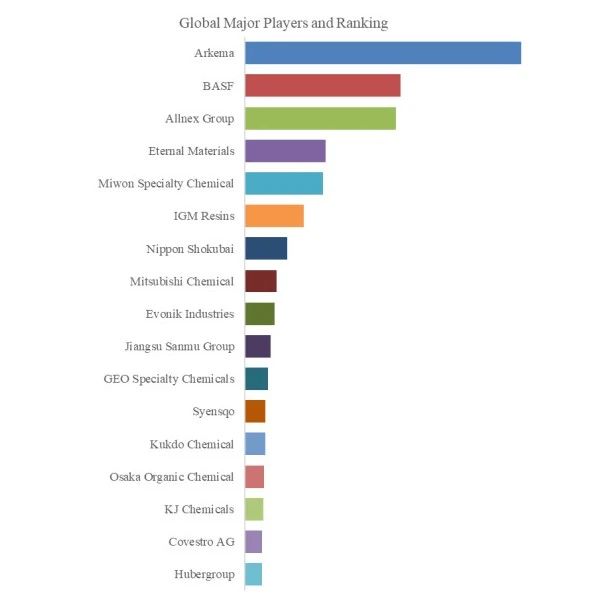
Core Viewpoint - The global UV monomers and oligomers market is undergoing rapid transformation, with an expected market size of $5.11 billion by 2031 and a CAGR of 7.0% from 2025 to 2031, driven by increasing demand from industries such as coatings, adhesives, 3D printing, and electronics [1]. Market Overview - The Asia-Pacific region dominates the global UV monomers and oligomers market, contributing 47.64% of revenue in 2024, primarily due to strong demand in automotive coatings, electronics, and inkjet printing from countries like China, South Korea, Japan, and India [2]. - Europe follows with a 26.28% share, driven by stringent environmental regulations promoting UV curing systems, while the Americas account for 21.94%, with the U.S. leading in medical adhesives and electronics innovation. The Middle East and Africa, though smaller at 4.14%, are gradually growing due to infrastructure investments and green manufacturing concepts [2]. Competitive Landscape - The market is highly concentrated, with the top ten global manufacturers accounting for approximately 48.0% of market revenue in 2024. Leading companies include Arkema, BASF, Allnex Group, Eternal Materials, and Miwon Specialty Chemical, which leverage their R&D and global supply chain advantages [3]. - Other notable players like IGM Resins, Nippon Shokubai, Mitsubishi Chemical, Evonik, and Jiangsu Sanmu Group are enhancing their market share through localized strategies and partnerships with downstream formulation companies [3]. Industry Trends - The UV curing industry is rapidly evolving towards low VOC and bio-based systems, with materials such as hydroxyalkyl acrylates, polyurethane acrylates, and polyester oligomers gaining popularity for their performance, flexibility, and environmental benefits. There is a growing demand for low-irritation monomers, particularly in the medical and personal care sectors [7]. - Leading companies are establishing closed-loop recycling systems and utilizing renewable raw materials to achieve sustainability goals, enhancing brand image and aligning with the green procurement preferences of developed markets [7]. - The application of UV monomers and oligomers is expanding beyond coatings and inks to critical roles in additive manufacturing (3D printing), fiber optics, semiconductor packaging, and wearable electronics. The 3D printing technology is significantly improving product precision and material performance through customized monomer and oligomer combinations [7]. Future Outlook - By 2031, the UV monomers and oligomers market is expected to enter a new phase driven by technological breakthroughs and sustainable development. Manufacturers that can balance performance, cost, and environmental compliance will hold competitive advantages in the future [9]. - The Asia-Pacific region is projected to continue leading the global market landscape, while the global expansion of leading companies signifies a transformative era for the UV curing industry ecosystem [9].
全球自给式呼吸器市场前10强生产商排名及市场占有率
QYResearch· 2025-08-22 09:25
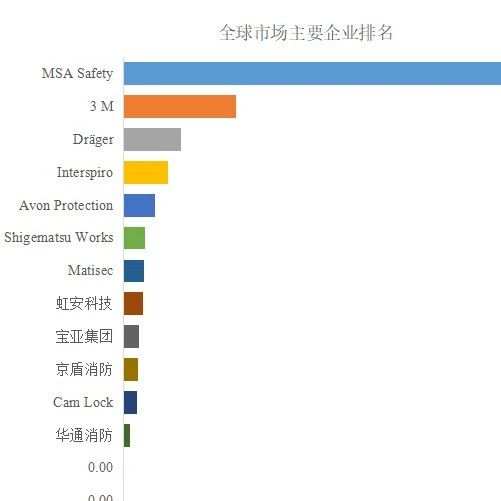
Core Viewpoint - The global self-contained breathing apparatus (SCBA) market is projected to reach $2.04 billion by 2031, with a compound annual growth rate (CAGR) of 4.7% in the coming years [1][4]. Market Overview - The major manufacturers of SCBA globally include MSA Safety, 3M, Dräger, Interspiro, and Avon Protection, with the top five companies holding approximately 91.0% of the market share in 2024 [4]. - Open-circuit breathing apparatus currently dominates the product type segment, accounting for about 72.0% of the market share [5]. - In terms of application, firefighting is the primary demand source, representing approximately 43.5% of the market [7]. Market Drivers - Increased focus on occupational safety and health has led to stricter regulations and standards, particularly in high-risk industries such as firefighting, mining, and chemicals, driving the demand for SCBA [10]. - The acceleration of industrialization and urbanization, especially in emerging economies, has resulted in more high-risk work scenarios, increasing reliance on effective respiratory protection equipment [12]. - Heightened safety awareness due to recent industrial accidents and fires has prompted companies and individuals to invest more in advanced protective gear, including SCBA [12]. - Technological advancements in SCBA, such as lightweight materials and intelligent air supply systems, have improved usability and safety, further stimulating market growth [12]. - The rising demand for public safety and emergency rescue equipment due to frequent natural disasters and chemical leaks has also contributed to market expansion [12]. Market Challenges - High manufacturing costs and complex materials lead to elevated product prices, making SCBA less accessible for small and budget-constrained enterprises [13]. - The complexity of maintenance and operation requires professional training, which can be a barrier to widespread adoption [13]. - The presence of low-quality or counterfeit products disrupts the market, undermining safety standards and creating intense price competition [13]. - Rapid technological updates pose adaptation challenges for users, leading to a mix of old and new products that can compromise overall protection [13]. - Variations in certification standards and regulations across different countries complicate compliance for companies operating internationally, increasing costs and extending time to market [13]. Future Outlook - The SCBA market shows promising growth potential driven by regulatory support, technological advancements, and increasing safety demands, despite facing challenges such as high costs and regulatory complexities [14].
全球与中国磁光材料行业现状研究分析及发展趋势预测报告
QYResearch· 2025-08-21 09:42
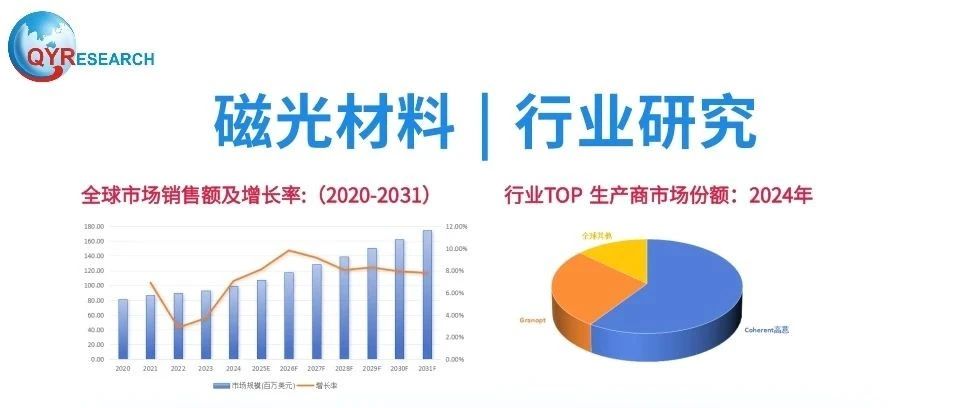
Core Viewpoint - The optical magnetic materials industry is characterized by high technical barriers, accelerated domestic production, and increasing market competition, with significant growth potential driven by advancements in optical communication and 5G/6G technologies [2][11]. Industry Development Characteristics - High technical barriers exist due to the complex crystal growth and film preparation technologies required for magnetic optical materials, leading to high entry thresholds [2]. - The domestic production process is accelerating as Chinese enterprises and research institutions focus on the independent development and industrialization of rare earth magnetic optical crystals and films, reducing reliance on imports [2]. - Market competition is intensifying, with European, American, and Japanese companies dominating the high-end market while Chinese companies rapidly rise in the mid-to-low end market [2]. Global Market Size and Forecast Analysis - The global market for magnetic optical materials is projected to grow from approximately $0.99 million in 2024 to $1.75 million by 2031, with a compound annual growth rate (CAGR) of 8.50% from 2025 to 2031 [6]. - The primary applications of magnetic optical materials include optical isolators and optical circulators, which are essential in optical communication, laser systems, and quantum information technologies [3][6]. Competitive Landscape - The magnetic optical materials market is primarily dominated by companies from the United States and Japan, with major players including Coherent, Granopt, OXIDE, and Fuzhijng Technology [7]. - The industry has high technical barriers and is concentrated, with the top two companies expected to hold approximately 87% of the market share by revenue in 2024 [7]. Regional Market Insights - The Asia-Pacific and North America regions are the main consumers of magnetic optical materials, accounting for 53.81% and 29.27% of the global market share by production volume in 2024, respectively [9]. Product Type Distribution - Magnetic optical materials are categorized into TGG, RIG, and others, with RIG expected to hold a significant market share of 66.93% by 2031 [10]. Downstream Market Applications - The communication sector is the dominant application area for magnetic optical materials, expected to account for 64.06% of the market share by revenue in 2024 [10]. Industry Development Opportunities and Driving Factors - The rapid development of optical communication and 5G/6G technologies is driving the demand for high-speed and high-stability devices, leading to a surge in demand for magnetic optical crystals [11]. - Government policies and technological advancements are promoting the domestic production of magnetic optical materials, supported by national plans and key technology initiatives [11]. - New magnetic optical storage technologies are emerging as potential breakthroughs, with high Kerr effect and thermal stability materials being key for next-generation high-density storage media [11].
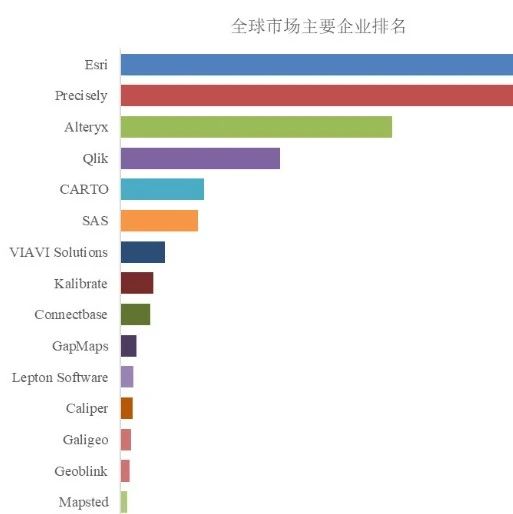
全球位置智能软件市场前10强生产商排名及市场占有率
QYResearch· 2025-08-21 09:42
Core Viewpoint - The global location intelligence software market is projected to reach $1.95 billion by 2031, with a compound annual growth rate (CAGR) of 8.1% in the coming years [1]. Market Overview - The leading manufacturers in the global location intelligence software market include Esri, Precisely, Alteryx, Qlik, CARTO, SAS, VIAVI Solutions, Kalibrate, Connectbase, and GapMaps, with the top ten companies holding approximately 73.0% market share in 2024 [5]. - Cloud-based solutions dominate the product type segment, accounting for about 58.2% of the market [6]. - Large enterprises represent the primary demand source, capturing around 64.8% of the market share [7]. Key Drivers - The advancement of mobile devices, social media, and the Internet of Things (IoT) has generated a vast amount of location-related data, which location intelligence software can leverage for deeper analysis and insights [8]. - Location intelligence software aids businesses in gaining competitive advantages by enhancing customer experience, service, marketing strategies, and optimizing operations and resource management [8]. - Government regulations regarding the collection, storage, sharing, and use of location data can promote the development and application of location intelligence software while ensuring user privacy and security [8]. Major Obstacles - The need to collect and analyze user location data may involve sensitive personal information and trade secrets, posing risks if data is leaked, altered, or misused [9]. - Integrating multiple data sources, platforms, and tools can increase technical complexity and costs, with potential compatibility issues due to a lack of unified standards [9]. - Location intelligence software is subject to legal regulations that may change over time, such as the EU's General Data Protection Regulation (GDPR), which imposes strict requirements on location data handling [9]. Industry Development Trends - Location intelligence software is applicable across various industries, including retail, logistics, tourism, healthcare, education, and government, helping organizations improve efficiency, reduce costs, increase revenue, and enhance competitiveness [10]. - As user awareness and trust in location intelligence software grow, its applications may expand into areas like smart cities, autonomous driving, social media, gaming, and advertising [10]. - The quality and accuracy of data are crucial for the performance and value of location intelligence software, with advancements in data collection, processing, and analysis technologies expected to enhance data quality [13]. - Artificial intelligence and machine learning are vital supporting technologies for location intelligence software, enabling the extraction of valuable information from large datasets and the discovery of hidden patterns [13].
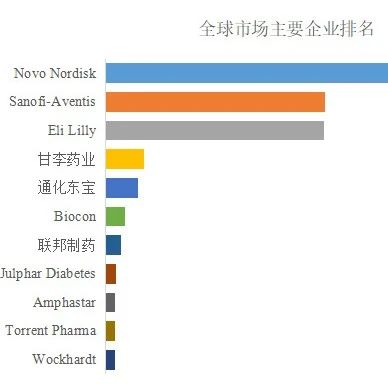
全球胰岛素原料药市场前10 强生产商排名及市场占有率
QYResearch· 2025-08-21 09:42
Core Viewpoint - The global insulin raw material market is projected to reach USD 3.76 billion by 2031, with a compound annual growth rate (CAGR) of 4.1% in the coming years [1][6]. Market Overview - Insulin raw materials are active pharmaceutical ingredients used in the production of various insulin formulations, crucial for diabetes management [1]. - The market is dominated by major players such as Novo Nordisk, Sanofi-Aventis, and Eli Lilly, with the top five companies holding approximately 88.0% of the market share in 2024 [6][16]. Product Segmentation - Insulin analogs represent the largest segment, accounting for about 82.0% of the market share [8]. - Rapid-acting insulin is the primary demand source, making up approximately 34.9% of the market [10]. Market Drivers - The increasing prevalence of diabetes, especially in developing countries and aging populations, is driving demand for insulin formulations, thereby expanding the upstream raw material market [13]. - Advances in biotechnology and production processes, including recombinant DNA technology, have made insulin production more efficient and cost-competitive [13]. - Countries are promoting generic drug policies to encourage local production of insulin raw materials, which supports the growth of domestic industries [13]. Challenges - The market faces high technical barriers, making it difficult for small and medium enterprises to enter and achieve stable production [14]. - The international market is highly concentrated, with major multinational companies dominating, posing challenges for new entrants in customer acquisition and product recognition [14]. - Stricter regulatory requirements, including GMP compliance and data integrity, are critical for market entry, necessitating continuous investment from companies [14]. - Fluctuations in raw material prices, stringent environmental policies, and geopolitical factors may disrupt the stability of raw material production and exports [14].
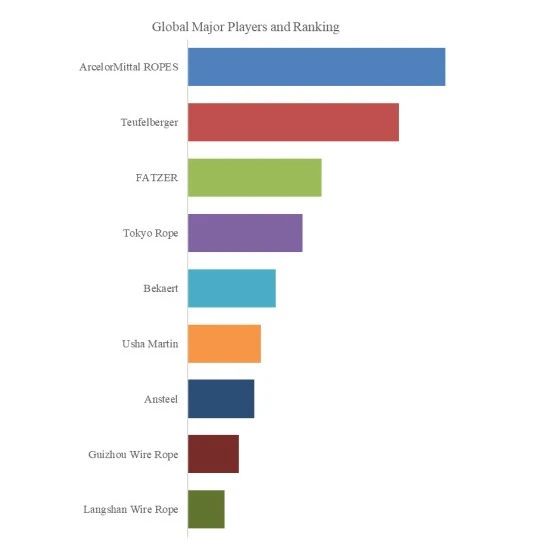
全球索道用钢丝绳市场稳步增长,2031年规模有望突破5.4亿美元
QYResearch· 2025-08-20 09:16
Core Viewpoint - The global market for Steel Wire Ropes for Ropeways is expected to grow steadily, reaching USD 540 million by 2031, with a compound annual growth rate (CAGR) of 3.7% from 2025 to 2031, driven by infrastructure development, urban air transport concepts, and high-altitude tourism projects [1]. Market Segmentation - The market is primarily divided into two categories: Passenger Ropeways, which account for 69.40% of the demand due to the global tourism boom and urban cable car systems, and Material Ropeways, which hold a 30.60% share, used in mining and construction to alleviate ground traffic [2]. - In terms of regional distribution, Europe leads with a 40.90% market share, followed by the Asia-Pacific region at 35.48%, and North America at 16.71%. Europe promotes low-carbon transport, while the Asia-Pacific region sees rapid growth driven by countries like China and India [2]. Industry Structure - The top five manufacturers hold 44% of the market share, and the top ten account for 60%, indicating a moderately concentrated market. Key players include ArcelorMittal ROPES, Teufelberger, and FATZER, known for their reliability and manufacturing processes [3]. - Asian companies such as Ansteel and Guizhou Steel Wire Rope Factory are rapidly entering the international market, competing on cost-effectiveness and improving product performance [3]. Innovation and Quality Standards - Innovation and quality certification are crucial for market advancement, with stringent certification requirements like EN 12385 and ISO 4309 becoming standard for high-end markets. New technologies such as non-destructive testing and hybrid ropes are gaining traction [6]. - The industry is focusing on higher strength-to-weight ratios, better energy absorption, and longer lifespans to meet safety and efficiency demands in passenger transport and material handling [6]. Future Outlook - The global market for Steel Wire Ropes for Ropeways is expected to continue expanding, driven by the growth of smart transportation, low-carbon construction, and climate-friendly tourism. The demand for next-generation steel wire ropes will increase across various applications [6].
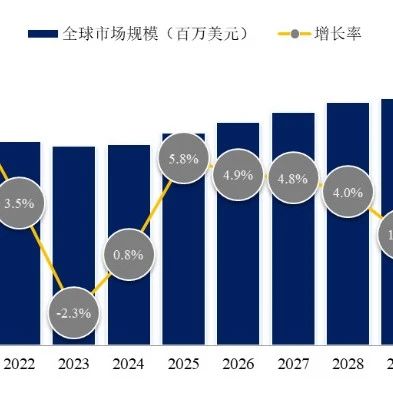
全球塑料编织布市场2031年将达78.9亿美元,农业与建筑需求驱动持续增长
QYResearch· 2025-08-20 09:16
Core Viewpoint - The plastic woven fabric market is projected to reach $7.89 billion by 2031, with a compound annual growth rate (CAGR) of 3.8% from 2025 to 2031, driven by demand across various sectors such as agriculture, construction, and advertising [1][4]. Market Segmentation - In 2024, plastic woven tarpaulins hold the largest market share at 55.45%, used extensively in logistics, temporary shelters, and emergency scenarios [4]. - Plastic greenhouse films and anti-seepage fabrics follow with market shares of 12.77% and 7.45%, respectively, playing crucial roles in modern agriculture and environmental projects [4]. - Plastic striped cloth and packaging cloth account for 11.80% and 6.60% of the market, respectively, with applications in daily use, industrial, and retail packaging [4]. - Emerging category, plastic advertising cloth, currently holds a 5.94% share but shows promising growth potential due to increasing outdoor advertising and event setups [4]. Regional Insights - China is the largest producer of plastic woven fabric, accounting for approximately 38% of global production in 2024, supported by a complete industrial chain and significant domestic demand [4]. - The market is expanding in Southeast Asia, South America, and the Middle East due to infrastructure development and agricultural modernization [4]. - In developed regions like Europe and North America, there is a trend towards high-end products, focusing on UV resistance, high strength, and eco-friendly packaging materials [4]. Competitive Landscape - The global plastic woven fabric market is highly fragmented, with the top five manufacturers holding less than 10% of the market share in 2024 [5]. - Companies are competing through product innovation, pricing strategies, and customization capabilities, with sustainable development becoming a key competitive factor amid stricter environmental regulations [5]. - Increasing customer focus on recyclability and reusability of products is driving innovation, with many companies exploring bio-based polymers and biodegradable materials, particularly in Europe and North America [5]. Future Outlook - The plastic woven fabric market is expected to maintain stable growth, driven by rising demands for material performance, environmental attributes, and cost control across various sectors [5]. - Companies with capabilities in large-scale production, innovative research, and sustainable practices are likely to excel in the global competition [5].
全球与中国消防指挥调度系统市场现状及未来发展趋势
QYResearch· 2025-08-20 09:16
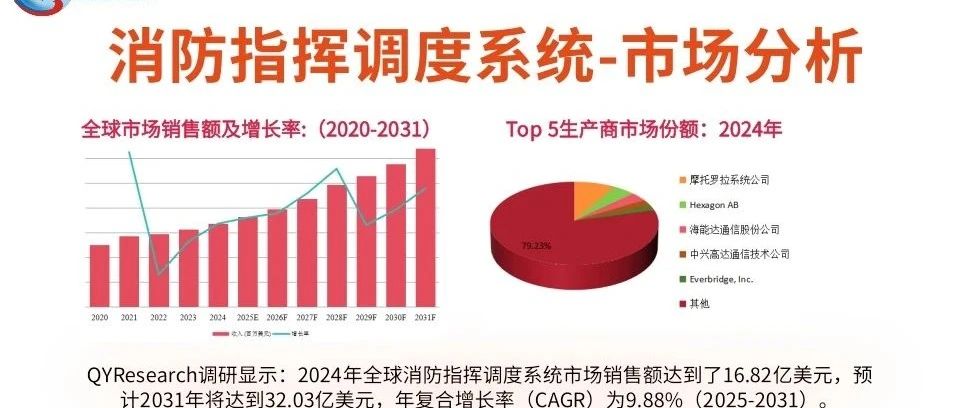
Core Viewpoint - The article emphasizes the importance of fire command and dispatch systems as integrated emergency management platforms that enhance response efficiency and resource coordination during fire incidents and other emergencies [2]. Global Market Size and Trends - The global fire command and dispatch system market is projected to reach $1.682 billion in sales by 2024 and $3.203 billion by 2031, with a compound annual growth rate (CAGR) of 9.88% from 2025 to 2031 [5]. - The Chinese market is expected to grow from $311 million in 2024, accounting for 18.51% of the global market, to $646 million by 2031, increasing its share to 20.16% [5]. - The Asia-Pacific region is the largest market, holding 43.58% of the market share in 2024, followed by North America and Europe with 25.39% and 22.88%, respectively [5]. Product Types and Applications - The market includes terminal devices, communication network equipment, and command dispatch software, with terminal devices representing 48.62% of the global market share in 2024 [5]. - Fire command and dispatch systems are typically deployed in emergency command centers, fire stations, industrial parks, commercial centers, and other scenarios, with fire station deployments accounting for 47.25% of the global market share in 2024 [6]. Major Players and Market Concentration - Key global manufacturers include Motorola Solutions, Hexagon AB, Hytera Communications, ZTE Corporation, and Everbridge, Inc., with the top five companies holding a combined market share of 20.77%, indicating a low market concentration [8]. Industry Drivers - The increasing frequency of extreme disasters, such as wildfires and floods, necessitates the upgrade of emergency response systems to improve efficiency and resource allocation [10]. - National policies are promoting the rapid deployment of fire dispatch systems, with initiatives like the EU's "NG112" action plan and the U.S. FEMA's funding programs supporting local fire agencies [10]. Technological Integration - AI and big data technologies are becoming central to dispatch decision-making, enabling automatic identification of alarm intents and real-time tracking of incidents [11]. - Upgrades in communication architecture and the introduction of edge computing enhance system resilience and flexibility, allowing for better performance in emergency scenarios [11]. Interdepartmental Collaboration - Fire dispatch systems are evolving towards interdepartmental connectivity, integrating police, medical, and municipal services into unified platforms [12]. Domestic and International Market Dynamics - The push for domestic alternatives to imported systems is accelerating, driven by data security concerns, while Chinese companies are expanding into emerging markets through comprehensive fire safety solutions [12].
东南亚脐带血储存市场前10强生产商排名及市场占有率
QYResearch· 2025-08-19 08:42
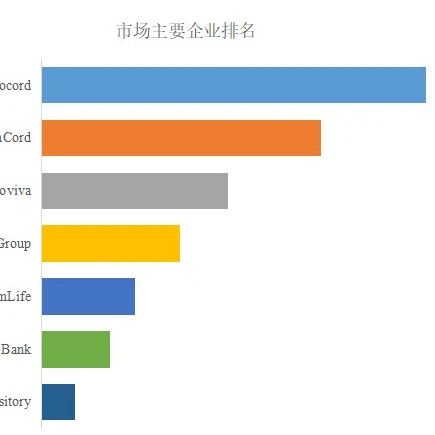
Core Viewpoint - The article emphasizes the growth potential of the private cord blood storage market in Southeast Asia, driven by increasing public health awareness and advancements in stem cell therapy, with a projected market size of $230 million by 2031 and a CAGR of 10.1% from 2025 to 2031 [1][12]. Market Overview - Cord blood storage involves the collection, processing, and cryopreservation of blood from the umbilical cord and placenta, rich in hematopoietic stem cells (HSC), which can treat various diseases [1][11]. - The market is segmented into public and private cord blood banks, with private banks focusing on storing blood for the donor's family, often viewed as a form of biological insurance [1][11]. Market Size and Growth - According to QYResearch, the Southeast Asian cord blood storage market is expected to reach $230 million by 2031, with a CAGR of 10.1% [1]. - The top four manufacturers in Southeast Asia hold approximately 62.0% of the market share as of 2024 [5]. Product Segmentation - The primary product type in the market is separation and concentration storage, accounting for about 68.5% of the market share [8]. Drivers of Market Growth - Increased public awareness of health and the recognized potential of cord blood in treating diseases like leukemia and immune deficiencies are driving market growth, particularly in countries like Singapore, Malaysia, Thailand, and the Philippines [12]. - Government initiatives in certain countries are promoting stem cell and regenerative medicine development, creating a favorable environment for industry growth [12]. Challenges in the Market - The market faces challenges such as limited income and healthcare coverage in many Southeast Asian countries, leading to low penetration rates for cord blood storage services, especially in remote areas [13]. - Regulatory discrepancies and a lack of unified standards across countries hinder industry development, resulting in issues like information opacity and varying service quality [13]. - Public understanding of the clinical value of cord blood remains limited, indicating a need for improved education and awareness efforts [13].