机器之心

Search documents
开源仅一周,鹅厂文生图大模型强势登顶,击败谷歌Nano-Banana
机器之心· 2025-10-05 06:42
Core Viewpoint - The article highlights the rapid rise of Tencent's Hunyuan Image 3.0 model, which has topped the LMArena leaderboard, showcasing its advanced capabilities in text-to-image generation and its potential to rival top proprietary models in the industry [3][54]. Model Performance - Hunyuan Image 3.0 has received significant attention in the creator community for its superior image quality, detail restoration, and understanding of composition and style consistency [4][39]. - The model has surpassed 1.7k stars on GitHub, indicating growing community interest and participation [6]. - It demonstrates strong performance in generating coherent narratives and detailed illustrations based on user prompts, effectively combining knowledge, reasoning, and creativity [9][15]. Technical Specifications - The model is built on the Hunyuan-A13B architecture, featuring 80 billion parameters, making it Tencent's largest and most powerful open-source text-to-image model to date [3][41]. - It employs a mixed discrete-continuous modeling strategy, allowing for efficient collaboration between text understanding and visual generation [42][43]. - The training process involved a large dataset of nearly 5 billion images, ensuring high-quality and diverse training data [45]. Training and Development - The training strategy included multiple progressive stages, focusing on enhancing multimodal modeling capabilities through various data types and resolutions [49][51]. - The model's architecture integrates language modeling, image understanding, and image generation into a unified framework, enhancing its overall performance [43][54]. Industry Context - The emergence of models like Hunyuan Image 3.0 reflects a broader trend in the AIGC field, where models are evolving from mere generation capabilities to understanding, reasoning, and controlling content creation [55][56]. - Open-source initiatives are becoming a core driver of innovation, with companies like Tencent leading the way in developing and sharing advanced models to foster community collaboration [56].



从「知题」到「知人」:UserRL让智能体学会「以人为本」
机器之心· 2025-10-05 06:42
"知人者智,自知者明。"——《道德经》 古人早已洞见:真正的人类智慧,不仅仅在于公式推演、掌握技艺,更是能理解他人、洞察人心。今天的大语言模型已能在代码、数学与工具使用上 出色 地完 成 任务 ,然而距离成为真正的 用户伙伴 ,它们依旧缺少那份 "知人" 的能力。这主要源于现实交互远比解题更加复杂: 这正是智能体面临的下一个时代课题: 从 "会解题" 迈向 "懂用户" 。而要真正回答这一课题,我们需要全新的动态评测框架与训练机制:不仅能测量模型在交互 中的表现,还能驱动其学会在用户不确定与多目标的世界里,问之有道,断之有衡,答之有据。为此,来自 UIUC 与 Salesforce 的研究团队提出了一套系统化方 案: 二者相辅相成,把 "以用户为中心" 从理念落地为 可复现的流程、接口与评测指标 。 UserBench 论文链接:https://arxiv.org/pdf/2507.22034 UserBench 代码仓库:https://github.com/SalesforceAIResearch/UserBench 现实交互中, 用户目标常常未在最初完全成形 (underspecification)、而是 ...

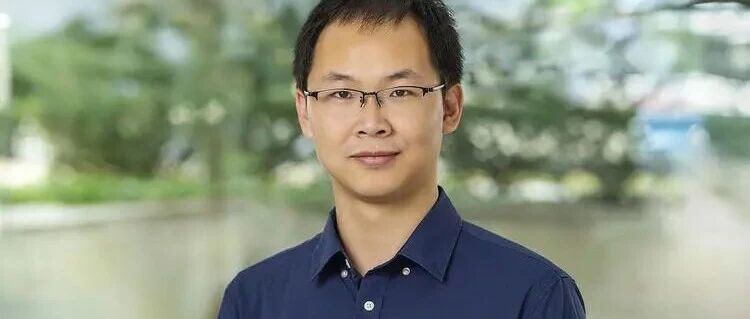
北大校友、华人学者金驰新身份——普林斯顿大学终身副教授
机器之心· 2025-10-04 05:30
Core Insights - Chi Jin, a Chinese scholar, has been promoted to tenured associate professor at Princeton University, effective January 16, 2026, marking a significant milestone in his academic career and recognition of his foundational contributions to machine learning theory [1][4]. Group 1: Academic Contributions - Jin joined Princeton's Department of Electrical Engineering and Computer Science in 2019 and has rapidly gained influence in the AI field over his six-year tenure [3]. - His work addresses fundamental challenges in deep learning, particularly the effectiveness of simple optimization methods like Stochastic Gradient Descent (SGD) in non-convex optimization scenarios [8][12]. - Jin's research has established a theoretical foundation for two core issues: efficient training of large and complex models, and ensuring these models are reliable and beneficial in human interactions [11]. Group 2: Non-Convex Optimization - One of the main challenges in deep learning is non-convex optimization, where loss functions have multiple local minima and saddle points, complicating the optimization process [12]. - Jin has demonstrated through multiple papers that even simple gradient methods can effectively escape saddle points with the presence of minimal noise, allowing for continued exploration towards better solutions [12][17]. - His findings have provided a theoretical basis for the practical success of deep learning, alleviating concerns about the robustness of optimization processes in large-scale model training [18]. Group 3: Reinforcement Learning - Jin's research has also significantly advanced the field of reinforcement learning (RL), particularly in establishing sample efficiency, which is crucial for applications with high interaction costs [19]. - He has provided rigorous regret bounds for foundational RL algorithms, proving that model-free algorithms like Q-learning can maintain sample efficiency even in complex settings [22]. - This theoretical groundwork not only addresses academic inquiries but also guides the development of more robust RL algorithms for deployment in high-risk applications [23]. Group 4: Academic Background - Jin holds a Bachelor's degree in Physics from Peking University and a Ph.D. in Electrical Engineering and Computer Science from the University of California, Berkeley, where he was mentored by renowned professor Michael I. Jordan [25]. - His academic background has equipped him with a strong foundation in mathematical and analytical thinking, essential for his theoretical research in AI and machine learning [25]. Group 5: Recognition and Impact - Jin, along with other scholars, received the 2024 Sloan Award, highlighting his contributions to the field [6]. - His papers have garnered significant citations, with a total of 13,588 citations on Google Scholar, indicating the impact of his research in the academic community [27].
你敢信?GPT-5的电脑操作水平只比人类低2%了
机器之心· 2025-10-04 03:38
Core Insights - The article discusses the advancements in computer-use agents (CUA), particularly focusing on the performance improvements of Agent S3, which has achieved a success rate of 69.9%, nearing human-level performance of 72% [1][15][16]. Technical Developments - Agent S3 builds on Agent S2, simplifying the framework and introducing a native code agent, which enhances performance from 62.6% to 69.9% [2][12]. - The introduction of the Behavior Best-of-N (bBoN) framework allows for parallel execution of agents, selecting the best outcomes from multiple runs, which significantly improves accuracy [2][8]. Performance Metrics - Agent S3's performance metrics show a 13.8% increase in success rate compared to Agent S2, with a reduction in the number of LLM calls per task by 52.3% and a decrease in average task completion time by 62.4% [15][18]. - The article highlights that when running 10 parallel agents, the performance peaks at 69.9% for GPT-5 and 60.2% for GPT-5 Mini [19]. Comparative Analysis - The bBoN framework demonstrates superior performance compared to traditional methods, achieving a success rate of 66.7% when combining models like GPT-5 and Gemini 2.5 Pro, indicating the importance of model diversity [21][22]. - Behavior narratives, as a representation method, outperform other trajectory representations, achieving a success rate of 60.2% [23][24]. Evaluation Mechanisms - The bBoN Judge shows higher accuracy in task evaluation compared to WebJudge, indicating its effectiveness in selecting the best execution results from multiple attempts [25][27]. - The alignment of the bBoN Judge with human preferences is noted, with a 92.8% accuracy in task selection, suggesting its potential as a reliable evaluation tool for CUA tasks [28][29].

吴恩达执教的深度学习课程CS230秋季上新,新增GPT-5专题
机器之心· 2025-10-04 03:38
Core Viewpoint - The updated CS230 Deep Learning course at Stanford, taught by Andrew Ng, emphasizes the importance of artificial intelligence, likening it to electricity, and introduces new content reflecting the latest advancements in AI, particularly focusing on the GPT-5 model [1][4]. Course Structure and Content - The course adopts a flipped classroom model where students must watch Coursera's deeplearning.ai videos before attending in-person classes [3]. - Since its inception in 2017, the course has maintained a similar core framework but has integrated updates relevant to recent AI developments, including a new chapter on GPT-5 [4]. - The course enhances the discussion on generative models and incorporates popular technologies like RAG and AI Agents, using GPT-5 for case studies [6]. - CS230 aims to provide comprehensive knowledge in deep learning, covering both theoretical foundations and practical skills necessary for building and applying deep learning models [10][12]. Key Topics Covered - The course covers a wide range of topics, including: - Basics of neural networks and deep learning [20]. - Optimization techniques such as regularization, Adam optimizer, hyperparameter tuning, Dropout, and Batch Normalization [20]. - Strategies for constructing machine learning projects from conception to successful deployment [20]. - In-depth understanding of Convolutional Neural Networks (CNN) and their applications in image classification and detection [20]. - Mastery of Recurrent Neural Networks (RNN) and Long Short-Term Memory (LSTM) networks for sequence tasks [20]. - Exploration of advanced topics like Generative Adversarial Networks (GANs) and deep reinforcement learning [20]. - Insights from industry and academia, along with practical career development advice in AI [20]. Course Schedule - The 2025 fall course will run for approximately 10 weeks, starting at the end of September [15]. - Weekly topics include introductions to deep learning, neural network basics, CNNs, RNNs, optimization algorithms, generative models, and advanced topics related to GPT-5 [16].

Insta360最新全景综述:全景视觉的挑战、方法与未来
机器之心· 2025-10-04 03:38
Core Insights - The article discusses the transition from perspective vision to panoramic vision, highlighting the "perspective-panorama gap" as a central theme for understanding the challenges and opportunities in this field [6][19]. - It emphasizes the need for a systematic upgrade across data, models, and applications to enhance the usability of panoramic vision technologies [16][19]. Research Background and Motivation - The paper titled "One Flight Over the Gap: A Survey from Perspective to Panoramic Vision" aims to systematically analyze the differences between perspective and panoramic vision, covering over 300 papers and 20 representative tasks [4][19]. - The article provides a comprehensive overview of the challenges faced in panoramic vision, which are categorized into three main gaps: geometric distortion, non-uniform sampling, and boundary continuity [6][9]. Strategies Overview - Four main strategies are identified for adapting tasks to panoramic vision: 1. **Geometric Distortion**: Issues arise when spherical images are projected onto a plane, leading to shape distortion [7]. 2. **Non-uniform Sampling**: Pixel density varies significantly across different regions, affecting resolution [7]. 3. **Boundary Continuity**: The separation of boundaries in 2D images can lead to learning continuity issues [7]. - The article outlines a cross-method comparison to clarify the applicability of different strategies to various tasks [9][15]. Task Toolbox - The article lists over 20 tasks categorized into four main areas: enhancement and assessment, understanding, multi-modal, and generation, along with representative methods and key papers for each task [12][15]. - It highlights the rapid emergence of new paradigms such as diffusion and generative models, particularly in text-to-image/video and novel view synthesis [15]. Future Directions - To transition from "usable" to "user-friendly," advancements must be made in three main areas: data, model paradigms, and downstream applications [16][21]. - Key challenges include: 1. **Data Bottlenecks**: Lack of large-scale, diverse, and high-quality 360° datasets limits general training and reproducible evaluation [21]. 2. **Model Paradigms**: The need for robust models that can adapt from perspective to panoramic vision while maintaining performance across various tasks [21]. 3. **Downstream Applications**: Applications in spatial intelligence, XR, 3D reconstruction, and various industry sectors require effective deployment and compliance [21][22].

又一推理新范式:将LLM自身视作「改进操作符」,突破长思维链极限
机器之心· 2025-10-03 03:39
Core Insights - The article discusses the exploration of a new reasoning method called Parallel-Distill-Refine (PDR) for large language models (LLMs), which aims to improve accuracy while managing context length and computational costs [3][4][12]. Group 1: PDR Methodology - PDR consists of three main steps: (i) generating diverse drafts in parallel, (ii) distilling them into a compact text workspace, and (iii) refining the output based on this workspace [3][4]. - By adjusting the degree of parallelism, PDR can control context length and reduce computational costs, distinguishing it from traditional long chain reasoning methods [3][4]. - When parallelism is set to 1, it results in Sequential Refinement (SR), which outperforms long reasoning chains but incurs higher latency [3][4]. Group 2: Experimental Results - In mathematical tasks with verifiable answers, the PDR method showed significant improvements, with accuracy increasing by 11% and 9% in AIME 2024 and AIME 2025 tasks, respectively [4][12]. - The article reports that the accuracy for the o3-mini model improved from 76.9% (long chain reasoning) to 81.5% (SR) and 86.7% (PDR), marking an absolute increase of +9.8 percentage points [14]. - The gemini-2.5-flash model demonstrated a smaller change from SR to PDR, indicating stronger self-verification capabilities [14]. Group 3: Research Questions and Findings - The researchers posed several questions, including whether short context iterations can outperform long reasoning chains under matched budgets, and which distillation strategies yield the best results [16][19]. - Findings indicated that the top-k sampling and global summarization strategies were more effective than shared top-k and random-k methods, particularly as the reasoning budget increased [19]. - The study also highlighted that the verification capability of models significantly impacts performance, with o3-mini showing a more substantial decline in performance when incorrect candidates were injected compared to gemini-2.5-flash [21]. Group 4: Operator Consistency Training - The article discusses the impact of operator consistency training on shifting the Pareto frontier, with PDR reinforcement learning showing improvements of +3.34 percentage points in AIME 2024 and +1.67 percentage points in AIME 2025 compared to baseline methods [26]. - Continuous updates from baseline RL checkpoints resulted in greater gains, with PDR RL training yielding improvements of +5.00 and +4.59 percentage points in AIME 2024 and AIME 2025, respectively [26][27].

NIPS 2025 Spotlight | 港大提出TreeSynth方法,一句话生成百万规模数据集
机器之心· 2025-10-03 03:39
Core Insights - TreeSynth is a novel data synthesis method inspired by decision trees, addressing the challenge of generating diverse and high-quality training data from scratch [6][7][25] - The method ensures systematic coverage of the data space, overcoming limitations of traditional data synthesis approaches [4][25] Methodology - TreeSynth employs a two-phase workflow: data space partitioning and subspace data synthesis [8][12] - In the first phase, the data space is divided into mutually exclusive subspaces using pivot samples and core criteria [9][12] - The second phase involves generating samples within each atomic subspace based on the path description from the root to the leaf node [13][14] Performance and Validation - Experimental results show that TreeSynth consistently outperforms baseline methods in various benchmarks, achieving significant performance improvements [19][23] - For instance, accuracy on the GSM8K dataset increased from 45.2% to 55.8% using the LLaMA3.1-8B model [19] - TreeSynth also demonstrated a 45% increase in data diversity compared to baseline methods, with improved distribution in the embedding space [23] Future Directions - TreeSynth opens new avenues for synthesizing diverse and comprehensive training datasets, with potential for scalability in large data scenarios [26][27] - Future exploration may focus on optimizing tree depth and partitioning criteria, as well as adapting to complex real-world scenarios [28]

Meta内部混乱持续:FAIR自由不再,LeCun考虑辞职
机器之心· 2025-10-03 03:39
Core Insights - Meta has implemented a new policy requiring additional internal review of research results from FAIR before public publication, which has sparked significant internal controversy [2][5] - The changes are seen as a restriction on the academic freedom that has historically attracted top talent to FAIR, as the company shifts its focus to internal product development and reducing external research sharing that could benefit competitors [5][6] - Yann LeCun, co-founder of FAIR, has expressed frustration over the new policy and the internal dynamics of the newly formed Meta Super Intelligence Lab (MSL), indicating a potential resignation from his position [6][7] Group 1: Internal Dynamics and Leadership Changes - The establishment of MSL has led to tensions between old and new teams, with many veteran researchers feeling discontent over the new leadership and the perceived high salaries of new hires from companies like OpenAI and Google [8][10] - Alexandr Wang, appointed as co-leader of MSL, faces the challenge of aligning the organization with CEO Mark Zuckerberg's ambitious vision for "superintelligence" [12][13] - The internal culture at Meta has been described as competitive and fraught with conflicts, complicating the integration of the new AI team [13][17] Group 2: Organizational Structure and Employee Sentiment - MSL has been restructured into four groups, with significant resources allocated to projects like Llama 5, but this has created a high-pressure work environment that some employees are reluctant to join [11][15] - Discontent has also arisen from the requirement for researchers in the TBD Lab to work on-site five days a week, contrasting with the more flexible arrangements for other AI researchers [15][16] - Leadership is actively seeking to improve internal conditions, with efforts to empower technical team members and reduce bureaucratic processes [16]


刚刚,Anthropic新CTO上任,与Meta、OpenAI的AI基础设施之争一触即发
机器之心· 2025-10-03 00:24
Core Insights - Anthropic has appointed Rahul Patil as the new Chief Technology Officer (CTO), succeeding co-founder Sam McCandlish, who will transition to Chief Architect [1][2] - Patil expressed excitement about joining Anthropic and emphasized the importance of responsible AI development [1] - The leadership change comes amid intense competition in AI infrastructure from companies like OpenAI and Meta, which have invested billions in their computing capabilities [2] Leadership Structure - As CTO, Patil will oversee computing, infrastructure, reasoning, and various engineering tasks, while McCandlish will focus on pre-training and large-scale model training [2] - Both will report to Anthropic's President, Daniela Amodei, who highlighted Patil's proven experience in building reliable infrastructure [2] Infrastructure Challenges - Anthropic faces significant pressure on its infrastructure due to the growing demand for its large models and the popularity of its Claude product [3] - The company has implemented new usage limits for Claude Code to manage infrastructure load, restricting high-frequency users to specific weekly usage hours [3] Rahul Patil's Background - Patil brings over 20 years of engineering experience, including five years at Stripe as CTO, where he focused on infrastructure and global operations [6][9] - He has also held senior positions at Oracle, Amazon, and Microsoft, contributing to his extensive expertise in cloud infrastructure [7][9] - Patil holds a bachelor's degree from PESIT, a master's from Arizona State University, and an MBA from the University of Washington [11]