机器之心

Search documents
36年卷积猜想被解决,华人唯一作者,AI或受益
机器之心· 2025-11-26 05:12
Core Viewpoint - The article discusses a significant mathematical breakthrough by Yuansi Chen, who solved the Talagrand convolution conjecture, a problem that has remained open for 36 years, with implications for modern computer science and machine learning [3][10]. Group 1: Background and Importance - The Talagrand convolution conjecture, proposed in 1989, is one of the most important open problems in probability theory and functional analysis, focusing on the regularization properties of the heat semigroup applied to L₁ functions on the Boolean hypercube [10]. - The conjecture predicts that applying a smoothing operator to any L₁ function will significantly improve tail decay, which is crucial for theoretical computer science, discrete mathematics, and statistical physics [10][21]. Group 2: Key Findings - Chen's proof shows that for any non-negative function f on the Boolean hypercube, the probability of the smoothed function exceeding a certain threshold decays at a rate better than the Markov inequality, specifically with a bound involving a log log factor [6][11]. - The result provides a positive answer to whether the tail probability disappears as η approaches infinity, marking a significant improvement over previous methods [13][21]. Group 3: Methodology - The core of Chen's method involves constructing a coupling between two Markov jump processes through a "perturbed reverse heat process," representing a major methodological advancement in discrete stochastic analysis [15][20]. - The proof combines several innovative techniques, including total variation control and a multi-stage Duhamel formula, to achieve dimension-free bounds [20][21]. Group 4: Implications for Future Research - The remaining log log η factor presents a clear target for future research, with potential improvements in coupling distance or alternative perturbation designs that could eliminate this factor [21][25]. - The work enhances the toolbox for handling high-dimensional discrete space probability distributions and connects to current AI trends, particularly in score-based generative models [23][24].


谷歌TPU逆袭英伟达,创始人一夜之间跃升全球第二、第三富豪
机器之心· 2025-11-26 05:12
Core Viewpoint - Google's stock price has surged significantly, driven by advancements in artificial intelligence, particularly the launch of the Gemini 3 model and potential AI chip deals with Meta [2][9][11]. Stock Performance - As of November 25, Alphabet's stock price reached $326, marking a 2.4% increase and a historical high. The stock has seen a cumulative increase of over 11.5% in the past five trading days and 22% in the last month [2]. - Alphabet's market capitalization is approximately $3.84 trillion, making it the third-largest company globally, just behind Nvidia and Apple [2]. Wealth Impact - The surge in stock price has significantly increased the wealth of Google's founders, with Larry Page and Sergey Brin now ranked as the second and third richest individuals globally, surpassing Jeff Bezos [5]. AI Breakthroughs - The core drivers of Google's stock increase are two major advancements in AI: the impressive performance of the Gemini 3 model and a potential deal for Google's AI chips with Meta [9][11]. - Gemini 3 has received widespread acclaim for its speed and capabilities, outperforming OpenAI's ChatGPT-5 in several benchmarks [9][10]. AI Chip Developments - Google's latest TPU chip, "Ironwood," is reported to be the most powerful and energy-efficient custom chip to date, with a potential multi-billion dollar deal with Meta for its use in data centers [10][11]. - This deal could allow Google to capture about 10% of Nvidia's annual revenue, establishing a competitive position in the AI hardware market [11]. Cloud Computing and AI Demand - Google's cloud AI infrastructure head indicated that the company needs to double its computing power every six months to meet the explosive demand for AI services, aiming for a 1000-fold increase in computing power over the next 4-5 years [12]. Competitive Landscape - Nvidia has responded to concerns about Google's AI chip potentially disrupting its market dominance, asserting that its technology remains a generation ahead [14][15]. - Despite Google's growing attention in the AI chip space, Nvidia still holds over 90% of the AI chip market share [15]. Strategic Shifts - Google's successful turnaround in the AI race is attributed to the launch of Gemini 3, which has restored market confidence and attracted industry leaders back to its products [19][20]. - The company has been promoting its TPU chips through cloud services, which may pose a long-term threat to Nvidia's market position [22]. Legal and Financial Developments - A recent antitrust ruling allowed Google to maintain its search business structure, alleviating concerns about potential disruptions to its revenue streams [23]. - Warren Buffett's Berkshire Hathaway has invested approximately $4.3 billion in Alphabet, signaling strong confidence in the company's future [24]. Search Business Resilience - Google's search advertising revenue increased by 15% in the third quarter, indicating that its core business remains robust despite the rise of AI technologies [25].



中兴发了一篇论文,洞察AI更前沿的探索方向
机器之心· 2025-11-26 01:36
Core Insights - The AI industry is facing unprecedented bottlenecks as large model parameters reach trillion-level, with issues such as low efficiency of Transformer architecture, high computational costs, and disconnection from the physical world becoming increasingly prominent [2][4][38] - ZTE's recent paper, "Insights into Next-Generation AI Large Model Computing Paradigms," analyzes the core dilemmas of current AI development and outlines potential exploratory directions for the industry [2][38] Current State and Bottlenecks of LLMs - The performance of large language models (LLMs) is heavily dependent on the scaling laws, which indicate that ultimate performance is tied to computational power, parameter count, and training data volume [4][5] - Building advanced foundational models requires substantial computational resources and vast amounts of training data, leading to high sunk costs in the training process [5][6] - The efficiency of the Transformer architecture is low, with significant memory access demands, and the current hardware struggles with parallel operations in specific non-linear functions [6][7] Challenges in Achieving AGI - Current LLMs exhibit issues such as hallucinations and poor interpretability, which are often masked by the increasing capabilities driven by scaling laws [9][10] - There is ongoing debate regarding the ability of existing LLMs to truly understand the physical world, with criticisms focusing on their reliance on "brute force scaling" and lack of intrinsic learning and decision-making capabilities [9][10] Engineering Improvements and Optimizations - Various algorithmic and hardware improvements are being explored to enhance the efficiency of self-regressive LLMs, including attention mechanism optimizations and low-precision quantization techniques [12][13][14] - Innovations in cluster systems and distributed computing paradigms are being implemented to accelerate training and inference processes for large models [16][17] Future Directions in AI Model Development - The industry is exploring next-generation AI models that move beyond the Next-Token Prediction paradigm, focusing on models based on physical first principles and energy dynamics [24][26] - New computing paradigms, such as optical computing, quantum computing, and electromagnetic computing, are being investigated to overcome traditional computational limitations [29][30] ZTE's Exploration and Practices - ZTE is innovating at the micro-architecture level, utilizing advanced technologies to enhance AI accelerator efficiency and exploring new algorithms based on physical first principles [36][38] - The company is also focusing on the integration of hardware and software to create more efficient AI systems, contributing to the industry's shift towards sustainable development [38]


NeurIPS 2025 Spotlight | 中国联通以全局优化重塑扩散模型加速
机器之心· 2025-11-26 01:36
Core Insights - The article discusses the rapid advancements in video generation models, particularly the performance of the Transformer-based DiT model, which is approaching real-life shooting effects. However, it highlights a significant bottleneck: long inference times, high computational costs, and challenges in increasing generation speed [2][29]. - A new approach called LeMiCa (Lexicographic Minimax Path Caching) is introduced, which is a cache acceleration framework that does not require training and achieves global optimal modeling while maintaining image quality and consistency [2][29]. LeMiCa Framework - LeMiCa addresses the long-standing issue of whether a truly "globally consistent, error-controllable, and fast" caching acceleration path exists for diffusion models, concluding that such a path does exist and is simpler than previously thought [2][7]. - The core idea of LeMiCa is that caching acceleration is not a local decision problem but a global path optimization problem [7]. Technical Implementation - The generation process of diffusion models can be abstracted as a weighted directed acyclic graph (DAG), where each node represents a time step and edges represent the behavior of skipping computations and reusing caches [8]. - LeMiCa introduces a novel error measurement method to quantify the impact of caching on the final video results by constructing a static DAG offline [11][12]. Optimization Strategy - The optimization problem is formalized as finding the optimal path from the start to the end within a fixed budget, using a lexicographic minimax path approach to ensure that the maximum error is minimized and the error distribution is more balanced [12][13]. - Experimental results show that LeMiCa achieves significant improvements in both speed and visual quality compared to other mainstream methods [14][19]. Performance Metrics - LeMiCa demonstrates a speedup of over 2.4× in inference performance while significantly enhancing visual consistency and quality across various video generation models [19][20]. - The framework has been validated across multiple mainstream video generation models, showing superior performance in maintaining visual consistency before and after acceleration [14][19]. Robustness and Compatibility - LeMiCa exhibits robustness in acceleration paths, maintaining effectiveness even when sampling schedules are altered [20]. - The framework is compatible with text-to-image models, as demonstrated with the QWen-Image model, achieving similar acceleration effects [21]. Industry Recognition - LeMiCa has received endorsements from top-tier multi-modal model development teams, including Alibaba's Tongyi Qianwen and Zhizhu AI, highlighting its significance in the industry [24][25]. Conclusion - LeMiCa redefines the acceleration problem in diffusion video generation from a global optimization perspective, breaking through the limitations of traditional local greedy caching strategies and providing a new paradigm for video generation that is both fast and stable [29].


Scaling时代终结了,Ilya Sutskever刚刚宣布
机器之心· 2025-11-26 01:36
Group 1 - The core assertion from Ilya Sutskever is that the "Age of Scaling" has ended, signaling a shift towards a "Research Age" in AI development [1][8][9] - Current AI models exhibit "model jaggedness," performing well on complex evaluations but struggling with simpler tasks, indicating a lack of true understanding and generalization [11][20][21] - Sutskever emphasizes the importance of emotions as analogous to value functions in AI, suggesting that human emotions play a crucial role in decision-making and learning efficiency [28][32][34] Group 2 - The transition from the "Age of Scaling" (2020-2025) to the "Research Age" is characterized by diminishing returns from merely increasing data and computational power, necessitating new methodologies [8][39] - Safe Superintelligence Inc. (SSI) focuses on fundamental technical challenges rather than incremental improvements, aiming to develop safe superintelligent AI before commercial release [9][11][59] - The strategic goal of SSI is to "care for sentient life," which is viewed as a more robust alignment objective than simply obeying human commands [10][11][59] Group 3 - The discussion highlights the disparity in learning efficiency between humans and AI, with humans demonstrating superior sample efficiency and the ability to learn continuously [43][44][48] - Sutskever argues that the current models are akin to students who excel in exams but lack the broader understanding necessary for real-world applications, drawing a parallel to the difference between a "test-taker" and a "gifted student" [11][25][26] - The future of AI may involve multiple large-scale AI clusters, with the potential for a positive trajectory if the leading AIs are aligned with the goal of caring for sentient life [10][11]

测完Nano Banana Pro的时空重现,我人傻了……
机器之心· 2025-11-26 01:36
Core Viewpoint - The article discusses the capabilities of the Nano Banana Pro, particularly its ability to recreate historical events and scenes based on provided coordinates and optional time, showcasing its potential as a "time machine" [1][9]. Group 1: Capabilities of Nano Banana Pro - Nano Banana Pro can generate realistic images of historical events by using coordinates and time, transforming from a tool that deduces locations from images to one that creates scenes from given data [7][9]. - The AI has demonstrated impressive results, such as accurately depicting the atmosphere of the 2008 Beijing Olympics, although it made notable errors regarding the location of the opening ceremony [9][10]. - In recreating the scene of Emperor Chongzhen's suicide, the AI displayed significant inaccuracies, including anachronistic elements like the Qing dynasty's "dragon flag" [21]. Group 2: User Experience and Limitations - Users have found that while Nano Banana Pro can generate visually appealing images, it often oscillates between impressive and absurd results, indicating instability in its performance [9][19]. - The AI shows confidence in its outputs, failing to correct errors even when prompted by users, which raises questions about its reliability [17][19]. - Despite its limitations, the AI successfully generated a black-and-white image of the Normandy landing, demonstrating an understanding of historical photographic styles [24]. Group 3: Potential Applications - The article suggests various innovative uses for Nano Banana Pro, such as estimating ages, mapping anime characters to real-life personas, and creating unique video content when combined with other technologies [29][34].

华为Mate 80系列发布:麒麟9030 Pro加持,性能提升42%
机器之心· 2025-11-25 10:56
Core Viewpoint - Huawei's Mate 80 series, featuring significant performance enhancements and innovative technologies, aims to strengthen its position in the competitive smartphone market [2][4][16]. Group 1: Performance Enhancements - The Mate 80 series introduces the new Kirin 9020 and Kirin 9030 chips, with overall performance improvements exceeding 35% compared to the previous generation [4]. - The Mate 80 Pro Max achieves a performance increase of over 42% due to advanced thermal management and larger heat dissipation components [4]. - The series supports 3DGS rendering acceleration, improving performance by 33% compared to the Mate 70 series, and features ray tracing hardware acceleration capable of rendering 20 million rays per second [5]. Group 2: Design and Durability - The Mate 80 series maintains the recognizable design of the Mate family, with a classic "star ring" camera module and a dual-ring design in a full metal body [6][7]. - The devices feature upgraded Kunlun glass, enhancing drop resistance by 20 times, bending resistance by 20%, and scratch resistance by 2 times [7]. - The series is rated IP68 for dust and water resistance, with the ability to withstand high-temperature and high-pressure water jets [8]. Group 3: Imaging Technology - The Mate 80 series incorporates the second-generation Red Maple imaging technology, improving color accuracy by 43% and light intake by 96% [12]. - The series allows for multiple shooting effects from a single capture, enhancing user experience in various lighting conditions [12]. - The Pro Max model features a high dynamic range main camera with 17.5EV and a dual telephoto configuration, totaling five cameras [14]. Group 4: Software and AI Integration - The Mate 80 series launches with HarmonyOS 6, enhancing system fluidity and app compatibility, along with immersive lighting effects [16]. - The new AI capabilities include features like "reorder" and "photo guide," improving user interaction and experience [17]. Group 5: Communication Capabilities - The Mate 80 series introduces industry-first 700MHz emergency communication capabilities, enabling connectivity in disaster scenarios over distances exceeding 13 kilometers [19]. - The devices support WiFi 7+, satellite communication, and other advanced connectivity options, enhancing overall communication reliability [19]. Group 6: Pricing and Availability - The standard version of the Mate 80 series is priced slightly lower than its predecessor, indicating a strategic pricing approach [22]. - Pre-orders for the Mate 80 series have begun, with high demand leading to extended shipping times [25].
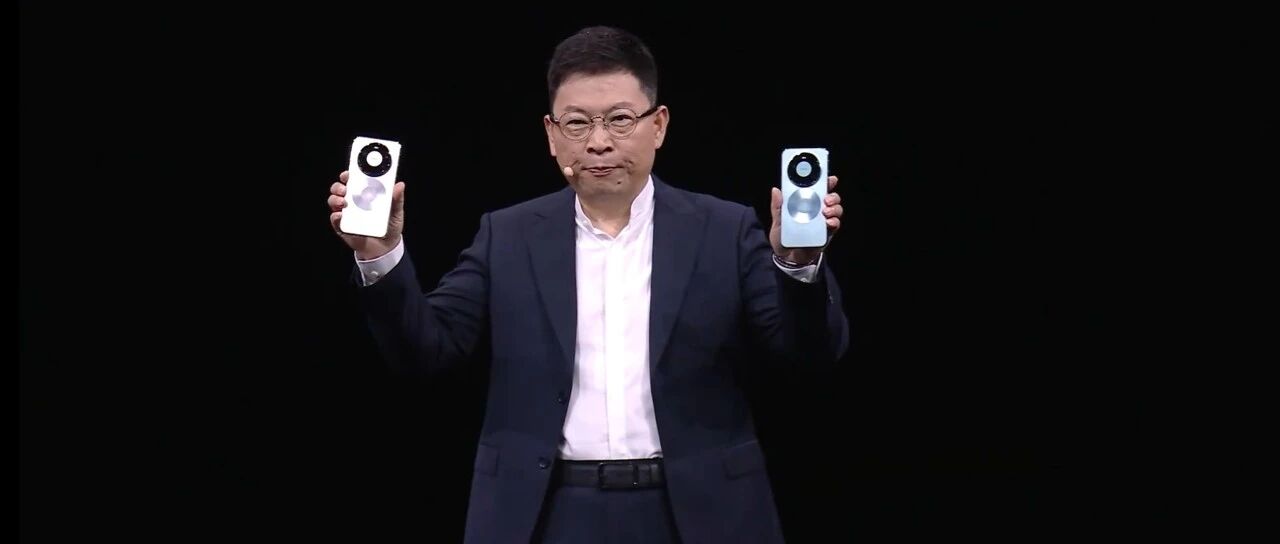
从推荐算法优化到AI4S、Pico和大模型,杨震原长文揭秘字节跳动的技术探索
机器之心· 2025-11-25 09:37
Group 1 - The core viewpoint of the article highlights ByteDance's commitment to fostering academic excellence through the ByteDance Scholarship, which has increased its award amount and expanded its reach to more universities [1] - The scholarship attracted over 500 applicants from 66 universities in China and Singapore, with 20 students awarded in various fields including AI and robotics [1] - The award amount has been upgraded from 100,000 yuan to 200,000 yuan, which includes 100,000 yuan in cash and 100,000 yuan for academic resources [1] Group 2 - ByteDance's Vice President of Technology, Yang Zhenyuan, shared insights on the company's technological explorations and encouraged students to tackle significant technical challenges [1][2] - The company has been involved in large-scale machine learning and recommendation systems since 2014, aiming to build a recommendation system capable of handling trillions of features [7][10] - ByteDance has made significant advancements in scientific computing, particularly in solving the Schrödinger equation to simulate various phenomena, indicating a focus on AI's potential in real-world applications [13][15] Group 3 - In 2021, ByteDance acquired Pico to explore XR technology, aiming to enhance user experience through hardware innovations [27] - The company is focusing on improving clarity in XR devices, targeting a pixel density (PPD) of nearly 4000, significantly higher than existing products [29][32] - ByteDance is also developing a dedicated chip for XR devices to address processing challenges, achieving a system latency of around 12 milliseconds [34][35] Group 4 - The emergence of large models, particularly after the launch of ChatGPT, has prompted ByteDance to invest in AI technologies, leading to the development of popular AI applications like Doubao [39][40] - The company has established a robust training infrastructure, achieving a floating-point utilization rate exceeding 55%, which is significantly higher than mainstream frameworks [39] - ByteDance is exploring the future of large models and their potential impact on various industries, emphasizing the need for continuous learning and interaction capabilities in AI [43][44]

哈工大深圳团队推出Uni-MoE-2.0-Omni:全模态理解、推理及生成新SOTA
机器之心· 2025-11-25 09:37
Core Insights - The article discusses the evolution of artificial intelligence towards Omnimodal Large Models (OLMs), which can understand, generate, and process various data types, marking a shift from specialized tools to versatile partners in AI [2] - The release of the second-generation "LiZhi" Omnimodal Large Model, Uni-MoE-2.0-Omni, is highlighted, showcasing advancements in model architecture and training strategies [3][11] Model Architecture - Uni-MoE-2.0-Omni is built around a large language model (LLM) and features a unified perception and generation module, enabling comprehensive processing of text, images, videos, and audio [7] - The model employs a unified tokenization strategy for multimodal representation, utilizing a SigLIP encoder for image and video processing and Whisper-Large-v3 for audio, significantly enhancing understanding efficiency [7] - The architecture includes a Dynamic-Capacity MoE, allowing for adaptive processing based on token difficulty, which improves stability and memory management [8] - A full-modal generator integrates understanding and generation tasks into a seamless flow, enhancing capabilities in speech and visual generation [8] Training Strategies - A progressive training strategy is designed to address instability in mixed expert architectures, advancing through cross-modal alignment, expert warming, MoE fine-tuning, and generative training [11] - The team proposes a joint training method that anchors multimodal understanding and generation tasks to language generation, breaking down barriers between the two [11] Performance Evaluation - Uni-MoE-2.0-Omni has been evaluated across 85 benchmarks, achieving state-of-the-art performance in 35 tasks and surpassing the Qwen2.5-Omni model in 50 tasks, demonstrating high data utilization efficiency [13] - The model shows a 7% improvement in video evaluation benchmarks compared to Qwen2.5-Omni, indicating significant advancements in multimodal understanding [13] Use Cases - The model is capable of various applications, including visual mathematical reasoning, image generation considering seasonal factors, image quality restoration, and serving as a conversational partner [18][20][28][30] Conclusion and Outlook - Uni-MoE-2.0-Omni represents a significant advancement in the field of multimodal AI, providing a robust foundation for future research and applications in general-purpose multimodal artificial intelligence [33]

吴恩达发布论文自动审阅器,ICLR上达到接近人类水平
机器之心· 2025-11-25 04:09
Core Viewpoint - The article discusses the challenges and potential solutions in the academic paper review process, particularly the integration of AI tools to enhance efficiency and feedback quality in the face of increasing submission volumes [2][6][14]. Group 1: Current State of Academic Review - There is no unified standard for using AI in paper reviews across major conferences, with ICLR requiring disclosure of AI use and CVPR prohibiting it entirely [2]. - Despite strict regulations, a significant portion of reviews at ICLR 2026 is generated by AI, with estimates suggesting that up to 20% of reviews are AI-generated [2][6]. - The lengthy review cycles are a growing concern, as exemplified by a Stanford professor's student who faced six rejections over three years, each requiring about six months for feedback [4][5]. Group 2: AI as a Solution - The slow feedback loop in academic publishing contrasts sharply with the rapid pace of technological advancement, prompting the exploration of AI to create a more efficient paper feedback workflow [6]. - Stanford professor Andrew Ng introduced the "Agentic Reviewer," an AI tool designed to provide high-quality feedback before formal submission, which has shown promising results in training on ICLR 2025 data [7][11]. - The correlation between AI-generated reviews and human reviews is notable, with a Spearman correlation coefficient of 0.42, indicating that AI is approaching human-level performance in this context [9]. Group 3: Community Reactions and Future Implications - The academic community generally views AI review tools positively, with hopes for features tailored to specific conferences and the ability to provide score estimates [11]. - Concerns have been raised about the potential impact on academic diversity if researchers rely too heavily on AI for preliminary reviews [13]. - The article questions whether the academic review system is on the brink of transformation due to the integration of AI, leaving the future role of AI in academic research development uncertain [14].