自动驾驶之心

Search documents
ICCV2025 | DexVLG:大规模灵巧视觉-语言-抓取模型~
自动驾驶之心· 2025-07-08 13:13
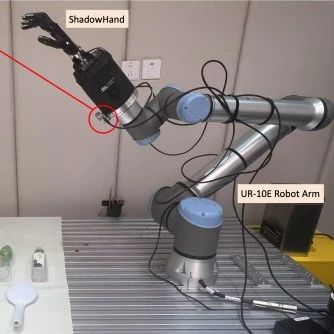
Core Viewpoint - The article discusses the development of DexVLG, a large-scale vision-language-grasp model that utilizes a newly created dataset, DexGraspNet 3.0, to enable robots to perform dexterous grasping tasks based on language instructions and single-view RGBD inputs [3][7][9]. Group 1: Motivation and Background - The rise of large models has enabled robots to handle increasingly complex tasks through visual-language-action systems, but research has primarily focused on simple end-effectors due to data collection challenges [3][4]. - DexGraspNet 3.0 is introduced as a large-scale dataset containing 1.7 billion dexterous grasping poses mapped to 174,000 simulated objects, aimed at training a vision-language model for functional grasping [5][9]. Group 2: Dataset Overview - DexGraspNet 3.0 is the largest dataset for dexterous grasping, featuring 1.7 billion poses validated in a physics-based simulator, with semantic titles and part-level annotations [9][10]. - The dataset includes a diverse range of objects sourced from the Objaverse dataset, with part segmentation performed using advanced models like SAMesh and GPT-4o [11]. Group 3: Model Development - DexVLG is developed to generate dexterous grasping poses based on language instructions and single-view point clouds, utilizing billions of parameters and pre-trained models for feature extraction [7][24]. - The model employs a point cloud encoder and a language foundation model to align visual and linguistic features, facilitating the generation of grasping poses [25][27]. Group 4: Performance Evaluation - DexVLG demonstrates superior performance in zero-shot generalization, achieving over 76% success rate in simulated environments and outperforming baseline models in various benchmarks [7][29][31]. - The model's grasping poses are evaluated for quality and alignment with language instructions, showcasing its capability to generate high-quality dexterous grasping poses across different objects and semantic parts [29][31].

想去华为,算法方向不对口,找工作有点慌了。。。
自动驾驶之心· 2025-07-08 12:45
Core Viewpoint - The article emphasizes the challenges faced by students and job seekers in the autonomous driving sector, particularly in aligning their skills with job requirements, and introduces a new career coaching service aimed at helping individuals transition into this rapidly evolving field [2][4][3]. Group 1: Job Market Challenges - Many students struggle to find internships or job positions that match their skills, especially in autonomous driving algorithm roles, due to the fast-paced evolution of technology [2][3]. - There is a common issue among job seekers regarding the mismatch between their educational background and the current job market demands in the autonomous driving industry [3]. Group 2: Coaching Service Introduction - The newly launched career coaching service targets individuals looking to transition into intelligent driving roles, including recent graduates and professionals without relevant experience [4]. - The coaching program is designed to be completed in approximately two months and focuses on quickly addressing skill gaps to meet job requirements [4]. Group 3: Coaching Service Details - The basic service includes a minimum of 10 one-on-one online meetings, each lasting at least one hour, with a total fee of 8000 [6]. - The service offers personalized analysis of the participant's profile, assessing their knowledge structure and identifying gaps relative to their target positions [7]. Group 4: Advanced Service Options - Advanced services include practical project opportunities that participants can include in their resumes, as well as simulated interviews that mimic both HR and business interviews [11]. - The coaching covers various roles such as intelligent driving product manager, intelligent driving system engineer, and intelligent driving algorithm positions [11]. Group 5: Instructor Qualifications - The coaching instructors are industry experts with over eight years of experience, working in leading autonomous driving companies and manufacturers [12].

写了两万字综述 - 视频未来帧合成:从确定性到生成性方法
自动驾驶之心· 2025-07-08 12:45
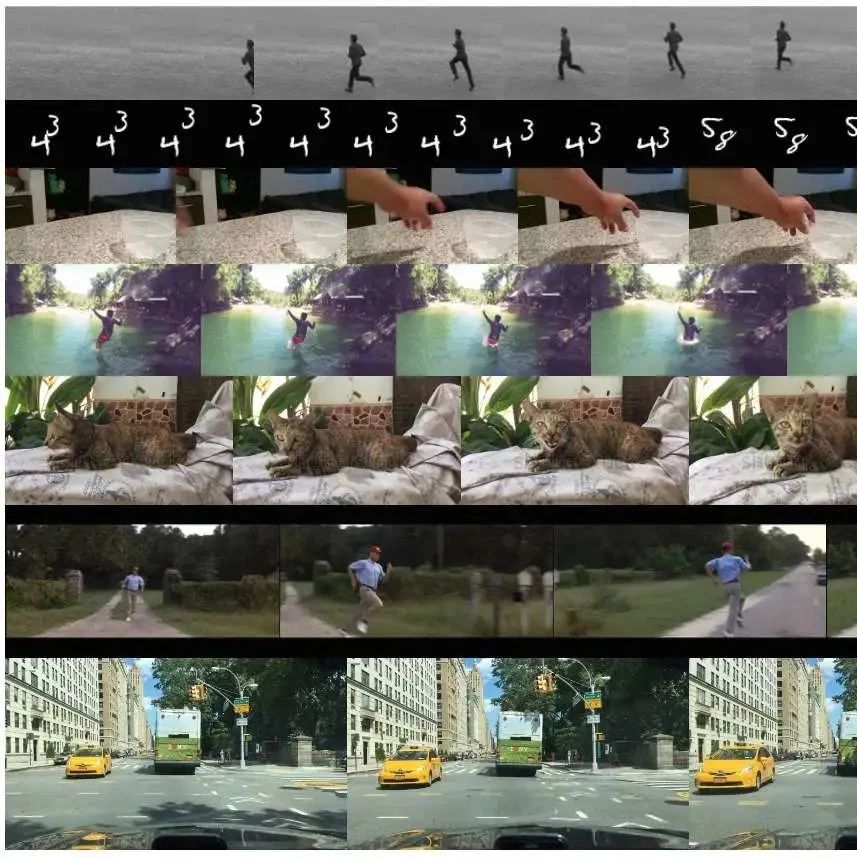
Core Insights - The article discusses Future Frame Synthesis (FFS), which aims to generate future frames based on existing content, emphasizing the synthesis aspect and expanding the scope of video frame prediction [2][5] - It highlights the transition from deterministic methods to generative approaches in FFS, underscoring the increasing importance of generative models in producing realistic and diverse predictions [5][10] Group 1: Introduction to FFS - FFS aims to generate future frames from a series of historical frames or even a single context frame, with the learning objective seen as a core component of building world models [2][3] - The key challenge in FFS is designing models that efficiently balance complex scene dynamics and temporal coherence while minimizing inference delay and resource consumption [2][3] Group 2: Methodological Approaches - Early FFS methods followed two main design approaches: pixel-based methods that struggle with object appearance and disappearance, and methods that generate future frames from scratch but often lack high-level semantic context [3][4] - The article categorizes FFS methods into deterministic, stochastic, and generative paradigms, each representing different modeling approaches [8][9] Group 3: Challenges in FFS - FFS faces long-term challenges, including the need for algorithms that balance low-level pixel fidelity with high-level scene understanding, and the lack of reliable perception and randomness evaluation metrics [11][12] - The scarcity of high-quality, high-resolution datasets limits the ability of current video synthesis models to handle diverse and unseen scenarios [18][19] Group 4: Data Sets and Their Importance - The development of video synthesis models heavily relies on the diversity, quality, and characteristics of training datasets, with high-dimensional datasets providing greater variability and stronger generalization capabilities [21][22] - The article summarizes widely used datasets in video synthesis, highlighting their scale and available supervision signals [21][24] Group 5: Evaluation Metrics - Traditional low-level metrics like PSNR and SSIM often lead to blurry predictions, prompting researchers to explore alternative evaluation metrics that align better with human perception [12][14] - Recent comprehensive evaluation systems like VBench and FVMD have been proposed to assess video generation models from multiple aspects, including perceptual quality and motion consistency [14][15]
上海期智&清华!BEV-VAE:首个自监督BEV视角的VAE,从图像到场景生成跃迁~
自动驾驶之心· 2025-07-08 12:45
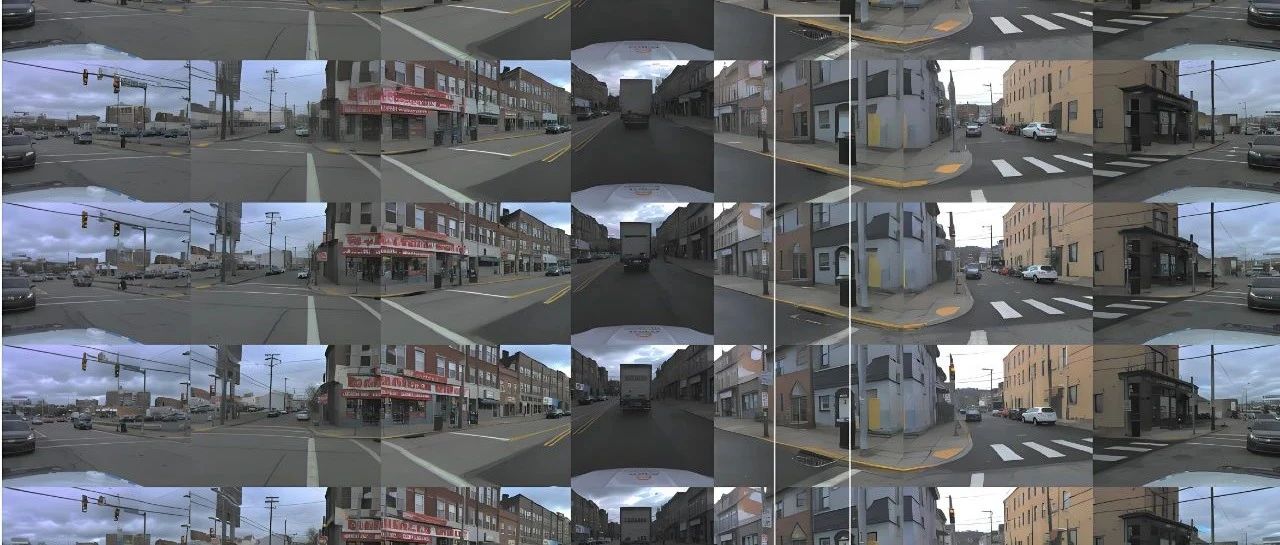
Core Viewpoint - The article discusses the BEV-VAE method, which enables precise generation and manipulation of multi-view images in autonomous driving, emphasizing the importance of structured representation for understanding three-dimensional scenes [2][4][28]. Group 1: Methodology - BEV-VAE employs a variational autoencoder (VAE) to learn a compact and unified bird's-eye view (BEV) latent space, followed by a Diffusion Transformer for generating spatially consistent multi-view images [2][7]. - The model supports generating images from any camera configuration while incorporating three-dimensional layout information for control [2][11]. - The architecture consists of an encoder, decoder, and a StyleGAN discriminator, ensuring spatial consistency among images from different views [7][8]. Group 2: Advantages - BEV-VAE provides a structured representation that captures the complete semantics and spatial structure of multi-view images, simplifying the construction of world models [28]. - The model decouples spatial modeling from generative modeling, enhancing the efficiency of the learning process [28]. - It is compatible with various camera configurations, demonstrating cross-platform applicability [28]. Group 3: Experimental Results - Experiments on the nuScenes and Argoverse 2 (AV2) datasets show that BEV-VAE outperforms existing models in multi-view image reconstruction and generation tasks [21][22]. - The model's performance improves with higher latent dimensions, achieving a PSNR of 26.32 and an SSIM of 0.7455 at a latent shape of 32 × 32 × 32 [22]. - BEV-VAE allows for fine-grained editing of objects in scenes, successfully learning the three-dimensional structure and complete semantics of the environment [18][19]. Group 4: Conclusion - BEV-VAE significantly lowers the barriers for applying generative models in autonomous driving, enabling researchers to participate in building and expanding world models with lower costs and higher efficiency [28].
最近才明白,智能驾驶量产的核心不止是模型算法。。。
自动驾驶之心· 2025-07-08 12:45
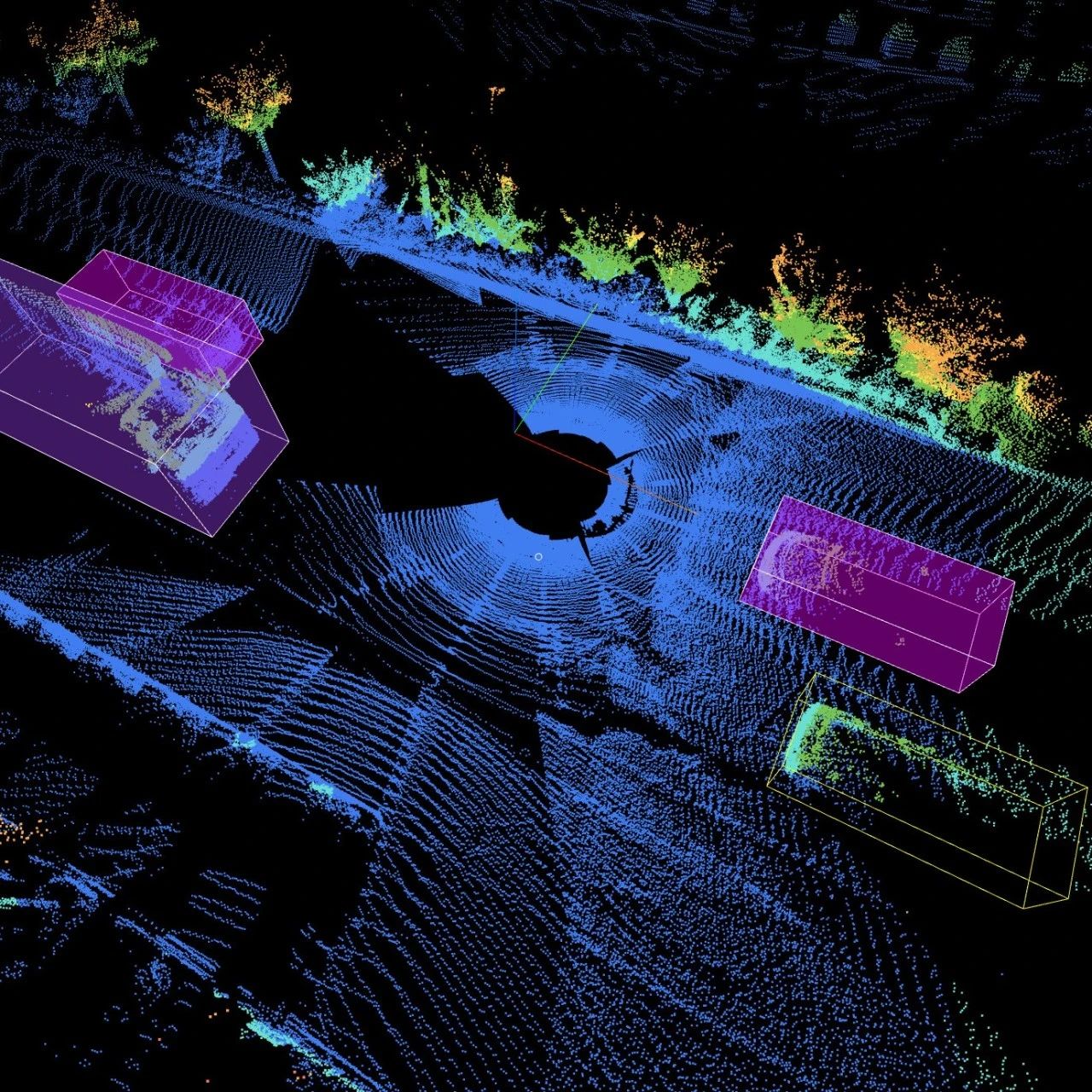
Core Viewpoint - The article emphasizes the importance of high-quality 4D automatic annotation in the development of intelligent driving, highlighting that while model algorithms are crucial for initial capabilities, the future lies in efficiently obtaining vast amounts of automatically annotated data [2][3]. Summary by Sections 4D Data Annotation Process - The article outlines the complexity of automatically annotating dynamic obstacles, which involves multiple modules and requires advanced engineering skills to effectively utilize large models and systems [2][3]. - The process includes offline 3D target detection, tracking, post-processing optimization, and sensor occlusion optimization [4][5]. Challenges in Automatic Annotation - High requirements for spatiotemporal consistency, necessitating precise tracking of dynamic targets across frames [7]. - Complexity in multi-modal data fusion, requiring synchronization of data from various sensors [7]. - Difficulty in generalizing dynamic scenes due to unpredictable behaviors of traffic participants and environmental interferences [7]. - The contradiction between annotation efficiency and cost, as high-precision 4D automatic annotation relies on manual verification, leading to long cycles and high costs [7]. - High requirements for scene generalization in mass production, with challenges in data extraction across different cities, roads, and weather conditions [8]. Course Offerings - The article promotes a course on 4D automatic annotation, designed to address entry-level challenges and optimize advanced learning [8]. - The course covers the entire process of 4D automatic annotation and core algorithms, including practical exercises [8][9]. - Key topics include dynamic obstacle detection, SLAM reconstruction, static element annotation, and end-to-end truth generation [11][12][14][16]. Instructor Background - The course is taught by an expert with extensive experience in data closure algorithms for autonomous driving, having participated in multiple mass production projects [20]. Target Audience and Prerequisites - The course is suitable for researchers, students, and professionals looking to transition into the field of data closure, requiring a foundational understanding of deep learning and autonomous driving perception algorithms [23][24].
2025秋招开始了,这一段时间有些迷茫。。。
自动驾驶之心· 2025-07-08 07:53
Core Viewpoint - The article discusses the current trends and opportunities in the fields of autonomous driving and embodied intelligence, emphasizing the need for strong technical skills and knowledge in cutting-edge technologies for job seekers in these areas [3][4]. Group 1: Job Market Insights - The job market for autonomous driving and embodied intelligence is competitive, with a high demand for candidates with strong backgrounds and technical skills [2][3]. - Companies are increasingly looking for expertise in advanced areas such as end-to-end models, visual language models (VLM), and reinforcement learning [3][4]. - There is a saturation of talent in traditional robotics, but many startups in the robotics sector are rapidly growing and attracting significant funding [3][4]. Group 2: Learning and Development - The article encourages individuals to enhance their technical skills, particularly in areas like SLAM (Simultaneous Localization and Mapping) and ROS (Robot Operating System), which are relevant to robotics and embodied intelligence [3][4]. - A community platform is mentioned that offers resources such as video courses, hardware learning materials, and job information, aiming to build a large network of professionals in intelligent driving and embodied intelligence [5]. Group 3: Technical Trends - The article highlights four major technical directions in the industry: visual language models, world models, diffusion models, and end-to-end autonomous driving [8]. - It provides links to various resources and papers related to these technologies, indicating a focus on the latest advancements and applications in the field [9][10].

自动驾驶岗位面试时,这个简历助力拿到了60k!
自动驾驶之心· 2025-07-08 01:47
自动驾驶岗位面试时,一份好的简历是什么样的? 可以适当夸大,别太过分(简历上写的一定要是自己非常了解的): 自驾行业是出了名的工资高,好多同学都想往这个方向卷!但你真的知道怎么写一份合格的简历 吗?最近好几位同学让我们帮忙改简历,但都存在各种各样的问题。 看了这么多简历,我觉得其中一位同学的蛮好,最终拿到了某新势力60k的offer,才3年经验!总结 下来,一份合格的简历是条理清晰、重点突出、细节体现、能力体现几个部分。不要乱堆项目和奖 励,要找符合项目岗位的优势点。 1)开门见山 结论先行,直接说出自己的成果和成就(可以在项目前) 举例主要成就: A公司:搭建了什么动态感知后融合,发表专利三篇; B公司:优化了静态目标的融合算法,优秀个人; 2)职责清晰 BEV 算法框架搭建:主要参与者(算法负责人) BEV 算法模型优化:负责人 3)逻辑清晰 每一个点都有目的,多用数字,条理分明,按照序号和标题进行改进(千万别段落式) 1)模型上 ,采用ohem + focal 解决长尾分布问题(经验),提升10%。改进ohem的方案(思考能 力) 2)数据上,10w数据整理,协调(综合能力和沟通能力) 3)部署和融合上 ...

大模型在自动驾驶后期的落地与研究方向有哪些?
自动驾驶之心· 2025-07-07 23:31
Core Insights - The article discusses the evolving landscape of large models in autonomous driving, highlighting the focus on lightweight solutions, hardware compatibility, knowledge distillation, and efficient fine-tuning of large models [1] - It emphasizes the importance of advanced reasoning paradigms such as Chain-of-Thought (CoT) and VLA combined with reinforcement learning in enhancing spatial perception capabilities [1] Group 1: Course Overview - The course aims to explore cutting-edge optimization methods for large models, focusing on parameter-efficient computation, dynamic knowledge expansion, and complex reasoning [2] - Key challenges in model optimization include parameter compression through pruning and quantization, dynamic knowledge injection techniques, and advanced reasoning paradigms [2][3] Group 2: Enrollment and Requirements - The course is limited to 6-8 participants per session, targeting individuals with a foundational understanding of deep learning and machine learning [4][8] - Participants are expected to have basic programming skills in Python and familiarity with PyTorch, along with a genuine interest in research [8] Group 3: Course Outcomes - The course aims to provide a systematic understanding of large model optimization, helping participants develop their own research ideas and enhance their coding skills [6][7] - Participants will receive guidance on writing and submitting academic papers, including methodologies for drafting and revising manuscripts [6][7] Group 4: Course Structure - The course spans 12 weeks of online group research followed by 2 weeks of paper guidance, covering topics such as model pruning, quantization, and dynamic knowledge expansion [7][18] - Each week focuses on specific themes, including advanced reasoning techniques and collaborative multi-agent systems [18][20] Group 5: Additional Information - The course will utilize publicly available datasets and baseline codes tailored to specific applications, ensuring practical relevance [15][16] - Participants will engage in discussions and hands-on experiments using mainstream large models like LLaMA and GPT [2][18]
自动驾驶之心课程续费来啦!欢迎和我们一起继续成长
自动驾驶之心· 2025-07-07 23:31
Core Viewpoint - The company offers discounted renewal options for existing students whose course validity has expired, eliminating the need to repurchase at full price [1]. Renewal Options - The company provides four renewal options: 1 month, 3 months, 6 months, and 12 months, with varying discounts based on the duration of renewal: - 1 month renewal is calculated as: (original price / 12) x 1 x 100% - 3 months renewal is calculated as: (original price / 12) x 3 x 70% - 6 months renewal is calculated as: (original price / 12) x 6 x 50% - 12 months renewal is calculated as: (original price / 12) x 12 x 30% - Longer renewal periods offer greater discounts [2]. Contact Information - For further inquiries regarding the renewal process, students are encouraged to contact the assistant for assistance [3].
快手团队发布8B Kwai Keye-VL!技术报告速递~
自动驾驶之心· 2025-07-07 12:17
Core Insights - The article discusses the launch of Kwai Keye-VL, an 8 billion parameter multimodal large language model (MLLM) designed to enhance understanding of short video content, addressing the limitations of existing models in processing dynamic and information-dense media [2][3]. Group 1: Model Development - Kwai Keye-VL is built on a large-scale dataset containing over 600 billion tokens, primarily focused on high-quality video data, and employs an innovative training strategy [2][4]. - The training process consists of a four-stage pre-training phase followed by a two-stage post-training phase, aimed at aligning visual and language features effectively [4][18]. Group 2: Training Methodology - The first stage of training focuses on optimizing basic capabilities such as instruction following through supervised fine-tuning and mixed preference optimization [5]. - The second stage enhances reasoning abilities using a five-mode "cold start" data mixing strategy, which includes various reasoning tasks and high-quality video data [6][12]. Group 3: Performance Evaluation - Keye-VL has demonstrated advanced performance in public benchmark tests, outperforming other leading models of similar size in user experience evaluations [3][27]. - The model's capabilities were validated through extensive evaluation experiments, including the development of a new benchmark, KC-MMBench, tailored for real-world short video scenarios [3][28]. Group 4: Technical Innovations - The model incorporates a hybrid parallelism strategy for efficient training, combining data and sequence parallelism to optimize memory usage and computational efficiency [22][23]. - A dynamic load balancing mechanism is implemented to address computational load imbalances during multimodal training, significantly improving training speed [24]. - A sample-level auto-resume mechanism enhances training stability by allowing automatic recovery from interruptions [25].