自动驾驶之心

Search documents
李弘扬团队PlannerRFT:扩散轨迹规划新方案,提升复杂驾驶场景性能(同济&港大)
自动驾驶之心· 2026-01-21 09:16
点击下方 卡片 ,关注" 自动驾驶之心 "公众号 戳我-> 领取 自动驾驶近30个 方向 学习 路线 >>自动驾驶前沿信息获取 → 自动驾驶之心知识星球 论文作者 | Hongchen Li等 编辑 | 自动驾驶之心 同济、上海创智学院、港大OpenDriveLab等团队的工作。基于闭环强化学习和高效微调的Diffusion Planner - PlannerRFT。提炼几个关键点: 基于扩散模型的规划器已成为自动驾驶中生成类人轨迹的一种极具潜力的方法。近期研究通过生成-评估循环中的奖励导向优化,将强化微调融入扩散规划器以提升其 鲁棒性。然而,这些方法难以生成多模态、场景自适应的轨迹,阻碍了微调过程中信息性奖励的利用效率。 为解决这一问题,港大OpenDriveLab联合同济大学等研究团队提出PlannerRFT——一种适用于基于扩散模型规划器的样本高效强化微调框架。PlannerRFT采用双分支 优化策略,在不改变原始推理流程的前提下,同时优化轨迹分布并自适应引导去噪过程朝向更具潜力的探索方向。为支持大规模并行学习,本文开发了nuMax仿真 器,其轨迹推演速度较原生nuPlan快10倍。大量实验表明,Pla ...

邀请到社区一位自驾转具身的同学,和大家线上聊聊......
自动驾驶之心· 2026-01-21 09:16
点击下方 卡片 ,关注" 自动驾驶之心 "公众号 戳我-> 领取 自动驾驶近30个 方向 学习 路线 选具身还是留自驾,很多同学都在咨询我们。关于这个问题,柱哥先分享下自己的看法,首先明确一点是不能一概而论,要看自己的情况。 具身现在是真的火,很多招聘的朋友都在问我们要自驾的简历。从风险端考虑,具身是未来5-10年的趋势,一定会有一大批初创倒下,问自己能不能接受高风险。 目前业内很多初创的估值都在百亿以下,一两个产品失败可能就没了。 二是具身的技术发展迭代很快,在这个领域成长会很快。和自驾不同的地方在于,具身更全栈一些,你需要的不仅仅是搞好算法,硬件也需要。而最重要的一点, 对自己的选择负责。 明晚星友面对面,邀请到一位自驾转具身的小伙伴和大家线上交流。欢迎加入自动驾驶之心知识星球。我们准备了大额新人优惠...... 嘉宾:Echo,清华联培硕士,自动驾驶转行到具身智能,具备7年相关经验。 从事过3D 检测,闭环仿真,OCC,e2e,world model。现在于具身头部公司从事 VLA+RL算法研究工作,主要研究机械臂操作和移动操作方向。熟悉IL训练,Reward model ,offline RL , o ...
有消息称FSD不是端到端One Model,而是近200个小场景模型的组合......
自动驾驶之心· 2026-01-21 00:51
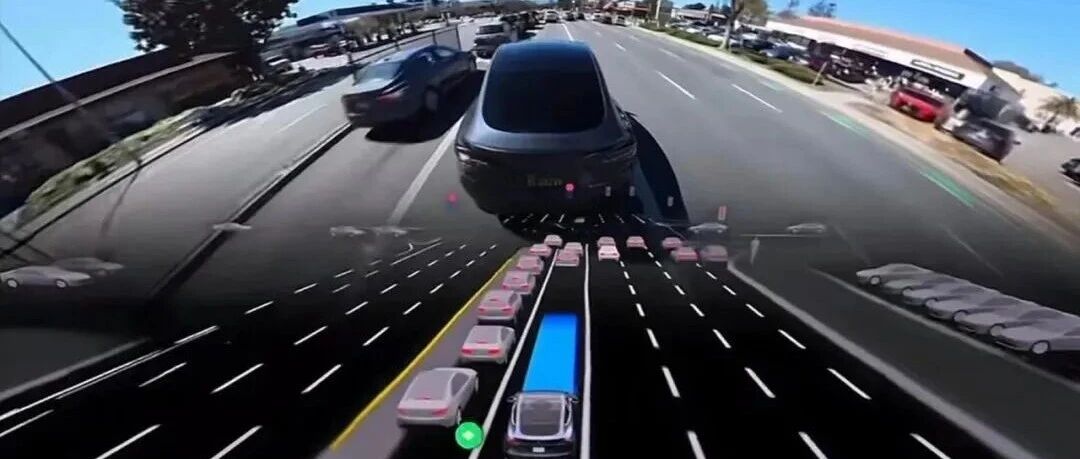
今天看到知乎一篇比较有意思的文章,根据海外绿神的一些分析判断特斯拉并非One Model,主要观点如下: 原文链接:https://zhuanlan.zhihu.com/p/1996714717922738540 据自动驾驶之心的了解,国内一段式端到端大都是One Model为主要模型,承担主要功能(95%),会增加一些小模型辅助做优化。从严格意义上来说,算不上真正 的"端到端",但One Model本身是具备完整功能的。 分享这篇文章主要是想提供一个新的角度了解特斯拉FSD,欢迎大家理性讨论。 作者 | 刘延@知乎 编辑 | 自动驾驶之心 原文链接: https://zhuanlan.zhihu.com/p/1996714717922738540 点击下方 卡片 ,关注" 自动驾驶之心 "公众号 戳我-> 领取 自动驾驶近30个 方向 学习 路线 >>自动驾驶前沿信息获取 → 自动驾驶之心知识星球 本文已获转载授权,转载请联系原文作者 1、特斯拉并非One Model,而是近200个小场景模型的组合。 根据海外绿神对于固件的反向分析可以看到, 1)HW4有110和189两套模型组合,其中 ——节点 A 包含 ...

自动驾驶之心行业交流群来了
自动驾驶之心· 2026-01-20 09:03
自动驾驶之心行业交流群来了,关注头部新势力、Tier1、主机厂最新动态、L4赛道融资、技术进展、智驾落 地、行业动态等方向~ 添加小助理微信AIDriver005,备注:昵称+机构/学校+进群。 ...
以DiffusionDriveV2为例,解析自动驾驶中强化学习的使用
自动驾驶之心· 2026-01-20 09:03
Core Viewpoint - The rapid development of large models has propelled reinforcement learning (RL) to unprecedented prominence, becoming an essential part of post-training in the autonomous driving sector. The shift to end-to-end (E2E) learning necessitates the use of RL to address challenges that imitation learning cannot solve, such as the centering problem in driving behavior [1]. Understanding Reinforcement Learning Algorithms in Autonomous Driving - Proximal Policy Optimization (PPO) and Generalized Recurrent Policy Optimization (GRPO) are currently the most prevalent algorithms in the field. The article emphasizes the importance of understanding reward optimization through classic algorithms [2]. PPO and GRPO Algorithm Insights - The classic PPO algorithm, particularly the PPO CLIP variant, is discussed with a focus on its application in autonomous driving. The formula for the algorithm is provided, highlighting the interaction between the system and the environment over multiple steps [3]. - The evaluation of actions in trajectory generation is based on overall trajectory quality rather than individual points, which is crucial for effective RL training [3]. RL Loss and DiffusionDriveV2 Architecture - The RL loss function is composed of three parts: anchor design, group design from GRPO, and the denoising process of diffusion. Each component plays a critical role in trajectory generation and optimization [9]. - The denoising process is framed as a Markov Decision Process (MDP), where each denoising step represents a decision-making step within the MDP framework [10]. Intra-Anchor and Inter-Anchor GRPO - Intra-Anchor GRPO modifies the group concept to ensure that each anchor has its own group, which is essential for distinguishing different driving behaviors. This prevents the dominance of straight driving data over other behaviors [12]. - Inter-Anchor GRPO addresses the risk of lacking global constraints between different anchors, optimizing the advantage calculation further [13]. Additional Improvements - The article discusses improvements such as trajectory noise management and the introduction of a model selector, which are crucial for ensuring the reliability and effectiveness of the RL approach in autonomous driving [15]. Conclusion - The article uses DiffusionDriveV2 to elucidate the application of reinforcement learning in autonomous driving, indicating that the current state of RL in this field is still evolving. The expectation is for advancements in closed-loop simulation and deeper applications of RL [15].
地平线再下一城......
自动驾驶之心· 2026-01-20 00:39
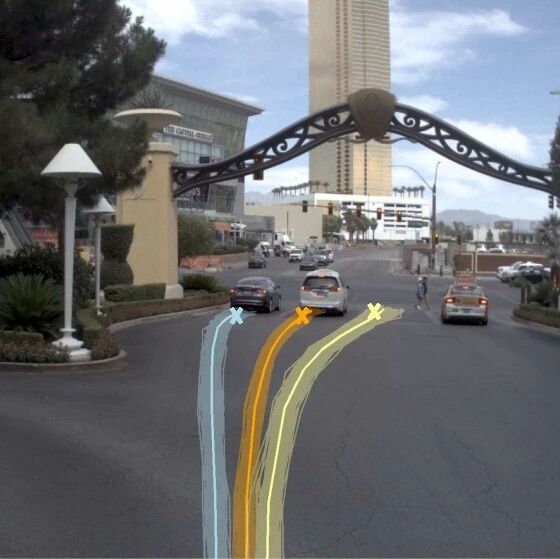
Core Viewpoint - The article discusses the collaboration models between automotive manufacturers and suppliers in the autonomous driving sector, highlighting the establishment of joint ventures as a strategic approach to enhance product development and brand positioning [4][6][14]. Group 1: Joint Venture Formation - Beijing Zhiyu Technology Co., Ltd. was established as a joint venture between BAIC and Horizon Robotics, with BAIC holding a 65% stake and Horizon 35%, focusing on intelligent assisted driving products [4]. - The joint venture model allows manufacturers to maintain brand identity while leveraging supplier expertise, enhancing the overall value proposition [7]. - This model also enables manufacturers to have greater control over the development process, ensuring alignment with their strategic goals [8]. Group 2: Product Ownership and Development Models - There are primarily two models for product ownership: a one-time buyout where the manufacturer owns the developed product, and a licensing model where the supplier retains ownership and charges per unit sold [9][10]. - The licensing model is becoming more prevalent due to its efficiency and adaptability in a rapidly changing market [11]. - Products developed through joint ventures are typically owned by the joint venture itself, allowing manufacturers to exert more influence over the development process [12]. Group 3: Industry Trends and Challenges - Many traditional manufacturers struggle with in-house development of autonomous driving technologies, often leading to partnerships with suppliers or the formation of joint ventures [18][19]. - The article suggests that as the industry evolves, the trend of forming joint ventures will likely increase, with manufacturers potentially abandoning in-house development in favor of supplier solutions [21]. - The challenges faced by manufacturers include limited technical capabilities and the need for substantial data to effectively develop and iterate autonomous driving models [20].
共一分享!复旦DriveVGGT:面向自动驾驶,高效实现多相机4D重建
自动驾驶之心· 2026-01-20 00:39
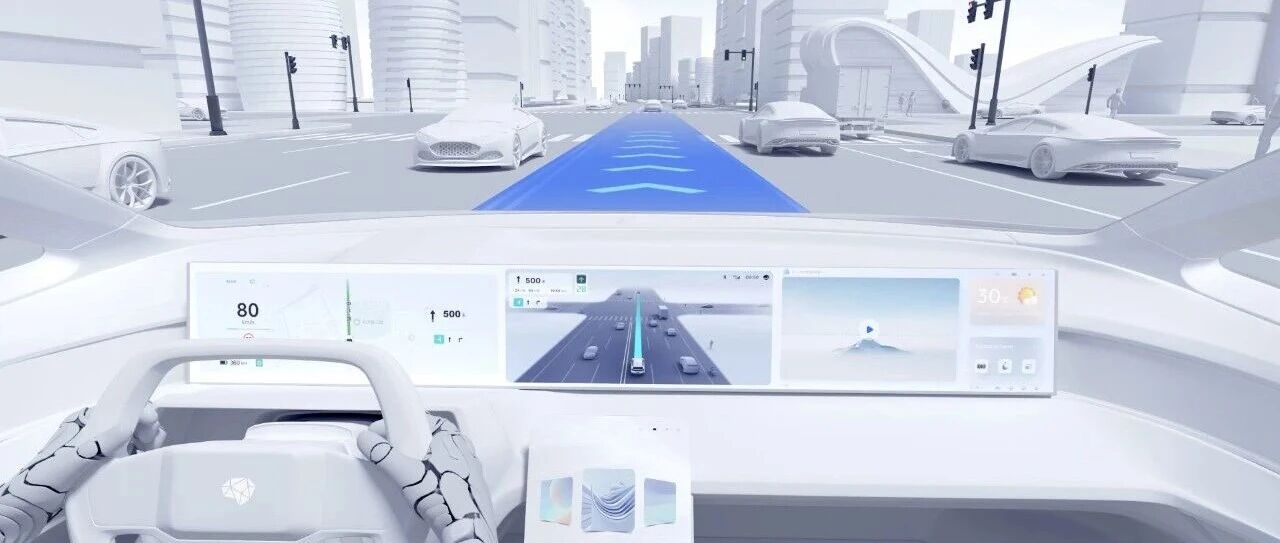
点击下方 卡片 ,关注" 自动驾驶之心 "公众号 戳我-> 领取 自动驾驶近30个 方向 学习 路线 很荣幸自动驾驶之心邀请到本文作者 刘彦淏,为大家分享这篇工作。今晚七点半,锁定自动驾驶之心直播间~ 论文标题 : DriveVGGT: Visual Geometry Transformer for Autonomous Driving 论文链接 : https://arxiv.org/abs/2511.22264 分享介绍 >>直播和内容获取转到 → 自动驾驶之心知识星球 点击按钮预约直播 前馈重建技术近年来备受关注,其中视觉几何Transformer(VGGT)是典型代表。然而,由于VGGT的设计初衷与自动驾 驶任务的先验知识存在本质差异,将其直接应用于自动驾驶(AD)系统会导致次优结果。在自动驾驶场景中,需重点考 量三类关键新先验:(i) 相机视图重叠度极低 ——自动驾驶传感器配置的核心目标是以低成本实现360度全场景覆盖; (ii) 相机内参与外参已知 ——这不仅为输出结果提供了更多约束,更使得绝对尺度估计成为可能;(iii) 相对位置固 定 ——尽管自车处于运动状态,所有车载相机的相对位置始终保持不 ...
L4数据闭环 | 模型 × 数据:面向物理 AI 时代的数据基础设施
自动驾驶之心· 2026-01-19 09:04
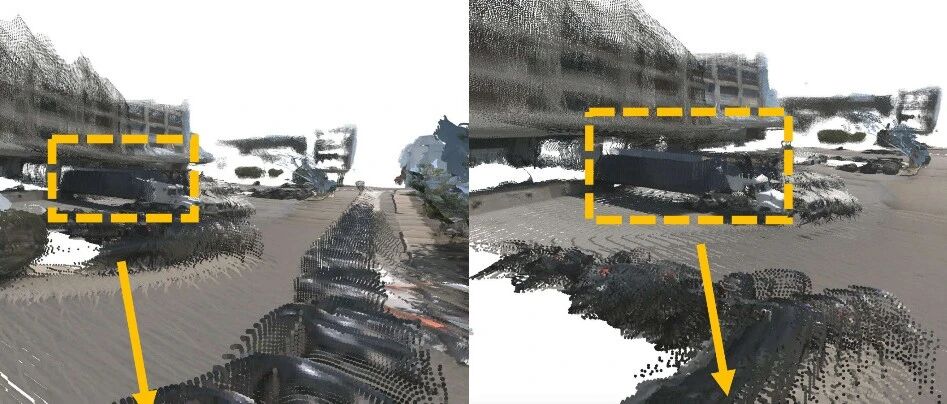
Core Viewpoint - The article emphasizes that in the pursuit of general physical intelligence, the model serves as the ceiling while the data infrastructure acts as the floor, highlighting the importance of both elements working in tandem as a competitive barrier [1]. Group 1: Shift in Talent Demand - There has been a noticeable shift in the automatic driving and AI sectors, with a growing emphasis on recruiting talent for "data infrastructure" [2]. - Leading companies like Tesla and Wayve are now focusing on extracting data from large-scale fleets rather than relying solely on manually written rules [3]. - The consensus is that while model algorithms are becoming rapidly replaceable, the foundational infrastructure for data extraction and defining quality remains a significant competitive advantage [5]. Group 2: Evolution of Physical AI - The article outlines three evolutionary stages of "Physical AI" using references from popular anime, illustrating the progression from early simulation to advanced world models [7]. - The first stage involves basic simulation and remote teaching, while the second stage incorporates augmented reality with real-world data [10][11]. - The third stage envisions a world model that allows for accelerated training in a virtual environment, significantly enhancing AI learning capabilities [13]. Group 3: Data Infrastructure Layers - The article describes a multi-layered approach to building a robust data infrastructure for autonomous driving, which includes metrics for physical world perception, data classification, and automated evaluation systems [16][20][22]. - The first layer focuses on creating a metric system to gauge physical world interactions, while the second layer emphasizes transforming raw data into structured, high-value information [18][20]. - The third layer involves tagging data for specific scenarios, enabling the creation of a comprehensive "question bank" for training AI models [21]. Group 4: Future of Physical AI - The article posits that as the industry moves towards end-to-end solutions and physical AI, the foundational infrastructure becomes increasingly valuable [27]. - Unlike text-based models, physical AI requires real-world data to avoid catastrophic errors, necessitating a closed-loop system for calibration [28]. - The future development model is expected to rely on a world model as a generator and the data infrastructure as a discriminator, ensuring that AI systems are guided by real-world parameters [29][36].
摸底GS重建在自动驾驶业内的岗位需求......
自动驾驶之心· 2026-01-19 09:04
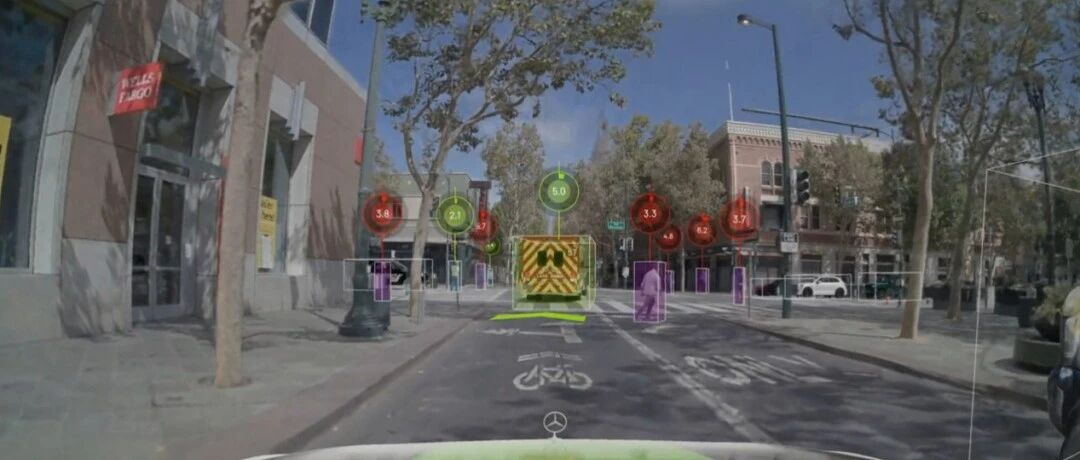
一般对应闭环仿真或场景重建的算法岗位,日常工作聚焦在: 一般公司需要 5-20 人的算法团队支撑闭环仿真中重建的优化。除此之外,在和其他小伙伴的交流过程中,我们发现 云端的数据生产 也有需求,比如BEV视角下 的静态路面重建,即2DGS重建,可以应用到静态真值生产中,比如RoGS。最近小米的ParkGaussian把GS应用到 泊车场景中 。综合来说,每个方向都需要至少10 人左右的算法团队规模支撑最基本的功能需求。 点击下方 卡片 ,关注" 自动驾驶之心 "公众号 戳我-> 领取 自动驾驶近30个 方向 学习 路线 上周有企业做招聘的朋友和柱哥聊了聊,26年需要在重建方向投入一些HC,借这个机会,和大家盘一下GS在自驾业内的职位和需求。 对于重建来说,主要是用于测试的闭环仿真。闭环仿真的用途比较明确,对于一个离线的clip数据,用3DGS重建动静态元素,验证新模型在重建clip上的效果,是 否可以预测合理的新轨迹,沿用新的轨迹能否正常行驶。 添加助理领取优惠! 讲师介绍 Chris:QS20 硕士,现任某Tier1厂算法专家,目前从事端到端仿真、多模态大模型、世界模型等前沿算法的预研和量产,参与过全球TOP ...
一个自驾算法工程师的具身智能思考
自动驾驶之心· 2026-01-19 03:15
自动驾驶要解决的是场景的泛化性,具身要解决的是行为的泛化性。 点击下方 卡片 ,关注" 第一具身范式 "公众号 第一时间获取具身智能 干货 编辑 | 第一具身范式 原文链接: http://xhslink.com/o/9dt9pYOtnY 谷歌waymo最近在一次采访中提到:自动驾驶是最简单的机器人,是最复杂的社交游戏。这启发了我去认真思 考一下自动驾驶和具身机器人的关系。 正好最近抽空把physical intelligence的pi系列论文好好看了下,一直觉得自动驾驶和机器人在技术栈上很类 似,甚至一度觉得自驾其实是机器人的子集,现在看完的想法是两者在量产角度上差异远比想象的大。具身 智能的发展周期可能也和自动驾驶不太一样。 泛化性: 自动驾驶一直想解决的是场景的泛化问题。简单来说,就是自动驾驶其实想要的是对当前场景能够有一个考 虑尽可能全面的理解,然后做出对应的决策。举个具体的例子自动驾驶需要在前面有个锥桶的时候知道刹车 但也需要当前面有个载着锥桶的工程车的时候知道不用刹车。体现的是对场景的认知泛化能力。 比如多段式模块规则时代,对运动信息有预测模块,对语义信息有融合模块,在规划层做场景信息的整合与 理 ...