自动驾驶之心

Search documents
学长让我最近多了解些技术栈,不然秋招难度比较大。。。。
自动驾驶之心· 2025-07-10 10:05
Core Viewpoint - The article emphasizes the rapid evolution of autonomous driving technology, highlighting the need for professionals to adapt by acquiring a diverse skill set that includes knowledge of cutting-edge models and practical applications in production environments [2][3]. Group 1: Industry Trends - The demand for composite talent in the autonomous driving sector is increasing, as companies seek individuals who are knowledgeable in both advanced technologies and practical production tasks [3][5]. - The industry has seen a shift from focusing solely on traditional BEV (Battery Electric Vehicle) knowledge to requiring familiarity with advanced concepts such as world models, diffusion models, and end-to-end learning [2][3]. Group 2: Educational Resources - The article promotes a knowledge-sharing platform that offers free access to valuable educational resources, including video tutorials on foundational and advanced topics in autonomous driving [5][6]. - The platform aims to build a community of learners and professionals in the field, providing a comprehensive learning roadmap and exclusive job opportunities [5][6]. Group 3: Technical Focus Areas - Key technical areas highlighted include visual language models, world models, diffusion models, and end-to-end autonomous driving systems, with resources available for further exploration [7][30]. - The article lists various datasets and methodologies relevant to autonomous driving, emphasizing the importance of data in training and evaluating models [19][22]. Group 4: Future Directions - The community aims to explore the integration of large models with autonomous driving technologies, focusing on how these advancements can enhance decision-making and navigation capabilities [5][28]. - Continuous updates on industry trends, technical discussions, and job market insights are part of the community's offerings, ensuring members stay informed about the latest developments [5][6].


传统规控和端到端岗位的博弈......(附招聘)
自动驾驶之心· 2025-07-10 03:03
Core Viewpoint - The article discusses the impact of end-to-end autonomous driving technology on traditional rule-based control (PNC) methods, highlighting the shift towards data-driven approaches and the complementary relationship between the two systems [2][6]. Summary by Sections Differences Between Approaches - Traditional PNC relies on manually coded rules and logic for vehicle planning and control, utilizing algorithms like PID, LQR, and various path planning methods. Its advantages include clear algorithms and strong interpretability, suitable for stable applications [4]. - End-to-end algorithms aim to directly map raw sensor data to control commands, reducing system complexity and enabling the model to learn human driving behavior through large-scale data training. This approach allows for joint optimization of the entire driving process [4]. Advantages and Disadvantages - **End-to-End Approach**: - Advantages include reduced system complexity, natural driving style emulation, and minimized information loss between modules [4]. - Disadvantages involve challenges in traceability of decision processes, high data scale requirements, and the need for rule-based fallback in extreme scenarios [4]. - **PNC Approach**: - Advantages include clear module functions, ease of debugging, and stable performance in known scenarios, making it suitable for high safety requirements [5]. - Disadvantages consist of high development costs and potential difficulties in handling complex scenarios without suitable rules [5]. Complementary Relationship - The analysis indicates that end-to-end systems require PNC for certain scenarios, while PNC can benefit from the efficiencies of end-to-end approaches. This suggests a complementary rather than adversarial relationship between the two methodologies [6]. Job Opportunities - The article highlights job openings in both end-to-end and traditional PNC roles, indicating a demand for skilled professionals in these areas with competitive salaries ranging from 30k to 100k per month depending on the position and location [8][10][12][14].
技术之外,谈一下自驾领域的HR面试和谈薪技巧!
自动驾驶之心· 2025-07-10 03:03
最近有社招的同学面到了HR环节,最终因为变现不是很出色被筛下来了,很可惜!今天,我们不谈技术, 就分享下在自驾面试中,HR这个环节应该怎么面? 3)性格上:乐观积极,团队意识,情绪稳定(合作舒服点) 自驾领域,HR最想考察的是什么? 4)抗压能力:抗压,失败了敢于重头再来 5)沟通合作能力:大局为重,积极沟通,敢于表达自己的观点 hr 最想要的人就是:稳定,忠诚,容易合作,善于沟通! 态度良好,负责。 HR面试常问的问题有哪些? 1)沟通,综合能力判断: 我们沟通下来,HR最看重的无外乎以下几点: 1)稳定性:工作稳定,工作负责(不要1年一次跳槽,你就是能力再强,也不敢要) 2)思维上:逻辑和推演能力,临场反应能力(聪明,情商高) 请做一个简单的自我介绍。关键点:谦逊,自信,建议总分结构,逻辑清晰,优势突出。 介绍一下你的优点和缺点。 关键点: 真诚,谦虚,不要过多,褒义中带贬义,沟通上还需加强,技术上爱 钻牛角尖等。 2)稳定性类问题: 你为什么离开上家公司。关键点: 不说不稳定,不要仇视上家公司,从客观的原因分析,最好是被动的。 找工作看中的点。关键点: 往应聘公司特点上靠,成长,机会。 为什么要来我们公 ...

Gaussian-LIC2:多传感器3DGS-SLAM 系统!质量、精度、实时全要
自动驾驶之心· 2025-07-09 12:56
Core Viewpoint - The article discusses the development of Gaussian-LIC2, a novel LiDAR-Inertial-Camera 3D Gaussian splatting SLAM system that emphasizes visual quality, geometric accuracy, and real-time performance, addressing challenges in existing systems [52]. Group 1: SLAM Technology Overview - Simultaneous Localization and Mapping (SLAM) is a foundational technology for mixed reality systems and robotic applications, with recent advancements in neural radiance fields (NeRF) and 3D Gaussian splatting (3DGS) leading to a new paradigm in SLAM [3]. - The introduction of 3DGS has improved rendering speed and visual quality, making it more suitable for real-time applications compared to NeRF systems, although challenges remain in outdoor environments [4][6]. Group 2: Challenges in Existing Systems - Current methods often rely on high-density LiDAR data, which can lead to reconstruction issues in LiDAR blind spots or with sparse LiDAR [7]. - There is a tendency to prioritize visual quality over geometric accuracy, which limits the application of SLAM systems in tasks requiring precise geometry, such as obstacle avoidance [7]. - Existing systems primarily focus on rendering quality from trained viewpoints, neglecting the evaluation of new viewpoint synthesis capabilities [7]. Group 3: Gaussian-LIC2 System Contributions - Gaussian-LIC2 is designed to achieve robust and accurate pose estimation while constructing high-fidelity, geometrically accurate 3D Gaussian maps in real-time [8]. - The system consists of two main modules: a tightly coupled LiDAR-Inertial-Camera odometry and a progressive realistic mapping backend based on 3D Gaussian splatting [9]. - It effectively integrates LiDAR, IMU, and camera measurements to enhance odometry stability and accuracy in degraded scenarios [52]. Group 4: Depth Completion and Initialization - To address reconstruction blind spots caused by sparse LiDAR, Gaussian-LIC2 employs an efficient depth completion model that enhances Gaussian initialization coverage [12]. - The system utilizes a sparse depth completion network (SPNet) to predict dense depth maps from sparse LiDAR data and RGB images, achieving robust depth recovery in large-scale environments [31][32]. Group 5: Performance and Evaluation - Extensive experiments on public and self-collected datasets demonstrate the system's superior performance in localization accuracy, novel viewpoint synthesis quality, and real-time capabilities across various LiDAR types [52]. - The system achieves a significant reduction in drift error and maintains high rendering quality, showcasing its potential for practical applications in robotics and augmented reality [47][52].

师兄自己发了篇自动驾大模型,申博去TOP2了。。。
自动驾驶之心· 2025-07-09 12:56
Core Viewpoint - The article discusses the advancements in large models (LLMs) for autonomous driving, highlighting the need for optimization in efficiency, knowledge expansion, and reasoning capabilities as the technology matures [2][3]. Group 1: Development of Large Models - Companies like Li Auto and Huawei are implementing their own VLA and VLM solutions, indicating a trend towards the practical application of large models in autonomous driving [2]. - The focus for the next generation of large models includes lightweight design, hardware adaptation, knowledge distillation, quantization acceleration, and efficient fine-tuning [2][3]. Group 2: Course Introduction - A course is being offered to explore cutting-edge optimization methods for large models, focusing on parameter-efficient computation, dynamic knowledge expansion, and complex reasoning [3]. - The course aims to address core challenges in model optimization, including pruning, quantization, retrieval-augmented generation (RAG), and advanced reasoning paradigms like Chain-of-Thought (CoT) and reinforcement learning [3][4]. Group 3: Enrollment and Requirements - The course will accept a maximum of 8 students per session, targeting individuals with a background in deep learning or machine learning who are familiar with Python and PyTorch [5][10]. - Participants will gain a systematic understanding of large model optimization, practical coding skills, and insights into academic writing and publication processes [8][10]. Group 4: Course Outcomes - Students will learn to combine theoretical knowledge with practical coding, develop their own research ideas, and produce a draft of a research paper [8][9]. - The course includes a structured timeline with specific topics each week, covering model pruning, quantization, efficient fine-tuning, and advanced reasoning techniques [20].
聊过十多位大佬后的暴论:自动驾驶还有很多事情没做,转行具身大可不必!
自动驾驶之心· 2025-07-09 12:56
Core Viewpoint - The article discusses the current state and future directions of autonomous driving technology, emphasizing the maturity of certain technologies like BEV and the emerging focus on VLA/VLM, while highlighting the challenges in corner case handling and the need for robust models [2][11][37]. Group 1: Current Technology Maturity - The BEV (Bird's Eye View) perception model is considered fully mature and widely adopted in the industry, effectively handling dynamic and static perception tasks [11][45]. - The introduction of VLA (Vision-Language Alignment) is seen as a promising approach to address corner cases, although its practical effectiveness remains under scrutiny [4][28]. - There is a consensus that while end-to-end models are usable, they cannot be solely relied upon for production due to their limitations in handling complex scenarios [37][45]. Group 2: Emerging Technologies - New technological directions such as VLA/VLM (Vision-Language Model) and diffusion models are being explored to enhance the capabilities of autonomous driving systems, particularly in complex environments [16][18][42]. - The integration of world models is recognized as essential for improving data generation and model training, addressing the high costs associated with real data collection [42][49]. - The industry is also focusing on closed-loop simulations to validate models before deployment, which is crucial for ensuring safety and reliability [44][48]. Group 3: Challenges and Gaps - A significant challenge remains in effectively addressing corner cases, with many companies still struggling to demonstrate robust performance in these scenarios [11][33]. - There is a noted gap between academic research and industrial application, particularly in data sharing and validation of new models like VLA [4][28]. - The efficiency of models is a critical concern, as larger models may not meet latency requirements while smaller models may lack necessary capabilities [5][37]. Group 4: Future Directions - The future of autonomous driving technology is expected to focus on enhancing safety, user experience, and comprehensive scene coverage, with a shift towards data-driven approaches [26][30]. - The industry is likely to see a transition from algorithm-centric development to data-driven efficiency, emphasizing the importance of robust data operations [26][30]. - There is an ongoing debate about whether to deepen expertise in autonomous driving or pivot towards embodied intelligence, with both fields offering unique opportunities [21][41].
端到端笔记:diffusion系列之Diffusion Planner
自动驾驶之心· 2025-07-09 12:56
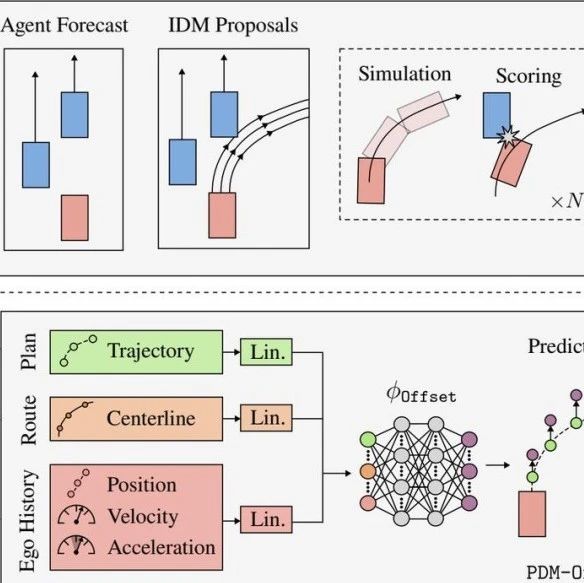
Core Viewpoint - The article discusses advancements in autonomous driving algorithms, particularly focusing on the decision-making aspect of motion planning through the use of diffusion models, which enhance closed-loop performance and allow for customizable driving behaviors [7][20]. Group 1: Autonomous Driving Algorithm Modules - Autonomous driving algorithms consist of two main modules: scene understanding, which involves comprehending the surrounding environment and predicting the behavior of agents, and decision-making, which generates safe and comfortable trajectories with customizable driving behaviors [1][2]. Group 2: Decision-Making Approaches - There are two primary approaches to decision-making in autonomous driving: rule-based methods, which have limitations in adaptability across different environments, and learning-based methods, which utilize imitation learning to replicate expert behavior but struggle with the multi-modal nature of driving data [4][6]. - The diffusion model is proposed as a solution to better fit multi-modal driving behavior, allowing for flexible and customizable driving actions without the need for retraining on specific scenarios [6][7]. Group 3: Diffusion Model Advantages - The diffusion model enhances closed-loop motion planning by effectively fitting multi-modal data distributions and providing flexible guidance during inference, which allows for the generation of preferred driving behaviors [6][17]. - The model has shown improvements in generating high-quality trajectories and fitting diverse driving behaviors, as evidenced by its application in various fields such as image generation and robotics [11][16]. Group 4: Performance Metrics - The diffusion planner outperforms existing models in terms of performance metrics, achieving significant scores in various tests while maintaining a faster inference time compared to other planners [20]. - The model demonstrates strong generalization capabilities, successfully transferring learned behaviors to different datasets and scenarios [23]. Group 5: Future Exploration Points - Future research directions for the diffusion planner include scaling up data and model parameters, designing end-to-end frameworks, accelerating training and inference processes, and implementing efficient guidance mechanisms in real vehicles to meet customization needs [28].
筹备了半年!端到端与VLA自动驾驶小班课来啦(一段式/两段式/扩散模型/VLA等)
自动驾驶之心· 2025-07-09 12:02
Core Viewpoint - End-to-End Autonomous Driving is the core algorithm for the next generation of intelligent driving mass production, marking a significant shift in the industry towards more integrated and efficient systems [1][3]. Group 1: End-to-End Autonomous Driving Overview - End-to-End Autonomous Driving can be categorized into single-stage and two-stage approaches, with the former directly modeling vehicle planning and control from sensor data, thus avoiding error accumulation seen in modular methods [1][4]. - The emergence of UniAD has initiated a new wave of competition in the autonomous driving sector, with various algorithms rapidly developing in response to its success [1][3]. Group 2: Challenges in Learning and Development - The rapid advancement in technology has made previous educational resources outdated, creating a need for updated learning paths that encompass multi-modal large models, BEV perception, reinforcement learning, and more [3][5]. - Beginners face significant challenges due to the fragmented nature of knowledge across various fields, making it difficult to extract frameworks and understand development trends [3][6]. Group 3: Course Structure and Content - The course on End-to-End and VLA Autonomous Driving aims to address these challenges by providing a structured learning path that includes practical applications and theoretical foundations [5][7]. - The curriculum covers the history and evolution of End-to-End algorithms, background knowledge necessary for understanding current technologies, and practical applications of various models [8][9]. Group 4: Key Technologies and Innovations - The course highlights significant advancements in two-stage and single-stage End-to-End methods, including notable algorithms like PLUTO and DiffusionDrive, which represent the forefront of research in the field [4][10][12]. - The integration of large language models (VLA) into End-to-End systems is emphasized as a critical area of development, with companies actively exploring new generation mass production solutions [13][14]. Group 5: Expected Outcomes and Skills Development - Upon completion of the course, participants are expected to reach a level equivalent to one year of experience as an End-to-End Autonomous Driving algorithm engineer, mastering various methodologies and key technologies [22][23]. - The course aims to equip participants with the ability to apply learned concepts to real-world projects, enhancing their employability in the autonomous driving sector [22][23].

调研了一圈,还是更想做自动驾驶!
自动驾驶之心· 2025-07-09 07:22
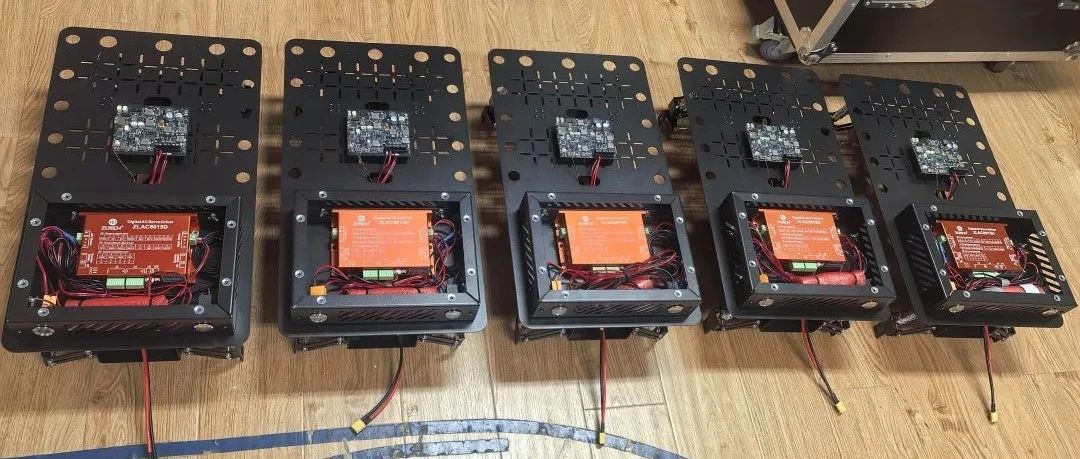
Core Viewpoint - The company has launched the "Black Warrior Series 001," an all-in-one autonomous driving vehicle aimed at research and education, currently available for pre-sale at a discounted price of 36,999 yuan, including three free courses on model deployment, point cloud 3D detection, and multi-sensor fusion [1]. Group 1: Product Overview - The Black Warrior 001 is a lightweight solution for teaching and research, supporting various functionalities such as perception, localization, fusion, navigation, and planning, built on an Ackermann chassis [5]. - The vehicle allows for secondary development and modification, with multiple installation positions and interfaces for adding cameras, millimeter-wave radars, and other sensors [6]. Group 2: Performance Demonstration - The vehicle has been tested in various environments, including indoor, outdoor, and basement scenarios, showcasing its capabilities in perception, localization, fusion, navigation, and planning [8]. - It is suitable for undergraduate learning progression, graduate research and publications, job-seeking projects, and as teaching tools for universities and vocational training institutions [9]. Group 3: Hardware Specifications - Key sensors include a Mid 360 3D LiDAR, a 2D LiDAR from Lidar, a depth camera from Orbbec with IMU, an Nvidia Orin NX 16G main control chip, and a 1080p display [16]. - The vehicle weighs 30 kg, has a battery power of 50W, operates at 24V, and has a runtime of over 4 hours [18][19]. Group 4: Software and Functionality - The software framework includes ROS, C++, and Python, supporting one-click startup and providing a development environment [21]. - The vehicle features various functionalities such as 2D and 3D SLAM, point cloud processing, vehicle navigation, and obstacle avoidance [22]. Group 5: After-Sales and Maintenance - The company offers one year of after-sales support (excluding human damage), with free repairs for damages caused by operational errors or code modifications during the warranty period [44].
2026届自动驾驶秋招招聘,趋势变化有些大。。。
自动驾驶之心· 2025-07-09 07:22
Group 1 - The overall hiring trend in the autonomous driving and internet sectors is improving compared to last year, with companies like Xiaomi, BYD, and Xpeng starting large-scale recruitment again, indicating a potential recovery for the 2026 graduates [2][4] - The effectiveness of early recruitment batches is diminishing, with most candidates expected to secure offers between late July and November, while the period from late November to the Lunar New Year is for supplementary recruitment [2][4] - Summer internships are crucial for large companies, with the recruitment period for internships running from February to October, and companies favoring candidates who can convert internships into full-time positions [2][3][4] Group 2 - The autumn recruitment timeline includes summer internship recruitment from February to July, summer internships concentrated from May to August, and formal autumn recruitment from July to October, with resume submissions starting in mid to late August [4][5] - Candidates are advised to avoid early resume submissions to prevent competition with top-tier candidates, suggesting a strategic approach to timing [4][5] - The article emphasizes the importance of interview experience for both fresh graduates and experienced hires, highlighting the need for effective preparation and understanding of the job market [5][6] Group 3 - A course focused on job interview preparation in the autonomous driving field is being offered, covering topics such as industry insights, interview techniques, resume optimization, and salary negotiation [6][7][8] - The course aims to provide a comprehensive guide for job seekers, helping them navigate the complexities of the job market and improve their chances of securing offers [18][19] - The course is designed for various audiences, including recent graduates and those looking to transition into the autonomous driving sector, with insights from industry leaders and successful candidates [17][18]