ZTE(00763)

Search documents
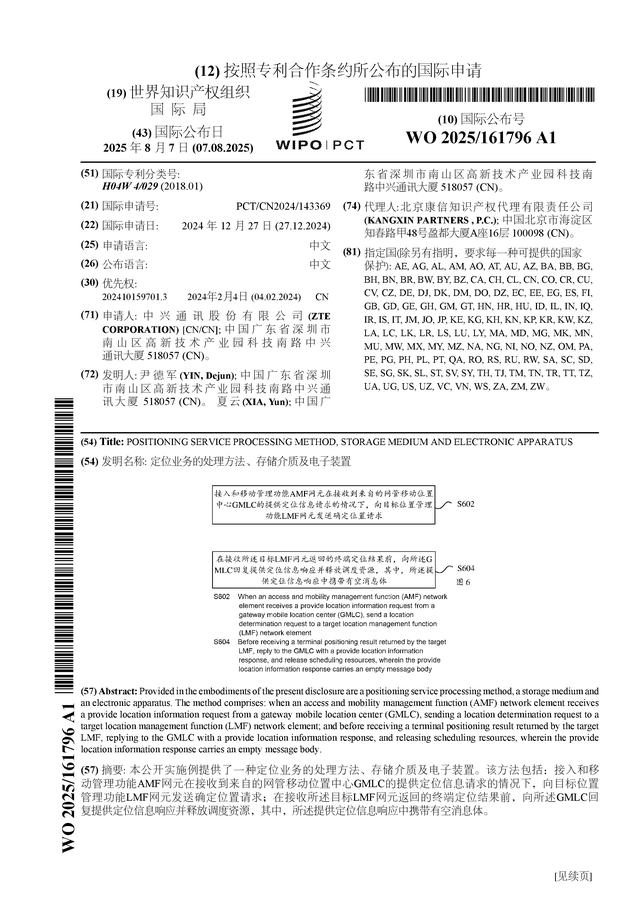
中兴通讯公布国际专利申请:“定位业务的处理方法、存储介质及电子装置”
Sou Hu Cai Jing· 2025-08-08 21:17
Core Insights - ZTE Corporation (000063) has filed an international patent application titled "Method for Processing Location Services, Storage Medium, and Electronic Device" with application number PCT/CN2024/143369, which is set to be published internationally on August 7, 2025 [1] Group 1: Patent Application - The patent application by ZTE is part of its ongoing innovation efforts in location services technology [1] - The company has filed a total of 801 international patent applications this year, which represents a decrease of 6.53% compared to the same period last year [4] Group 2: R&D Investment - In the 2024 annual report, ZTE reported a research and development investment of 24.031 billion yuan, reflecting a year-on-year decrease of 4.97% [4]

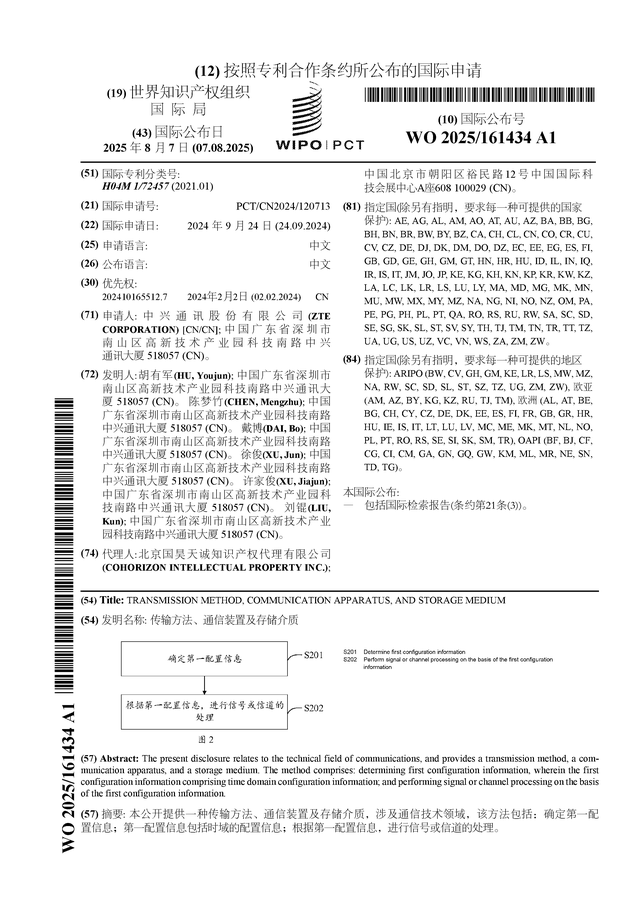
中兴通讯公布国际专利申请:“传输方法、通信装置及存储介质”
Sou Hu Cai Jing· 2025-08-08 21:17
Group 1 - ZTE Corporation (000063) has filed an international patent application titled "Transmission Method, Communication Device, and Storage Medium" with application number PCT/CN2024/120713, which is set to be published internationally on August 7, 2025 [1] - The company has announced a total of 801 international patent applications this year, representing a decrease of 6.53% compared to the same period last year [3] - In its 2024 annual report, ZTE reported a research and development investment of 24.031 billion yuan, which is a year-on-year decrease of 4.97% [3]
智通港股空仓持单统计|8月8日
智通财经网· 2025-08-08 10:37
Group 1 - The top three companies with the highest short positions as of August 1 are WuXi AppTec (02359), CATL (03750), and Luye Pharma (02186), with short ratios of 20.99%, 15.26%, and 13.94% respectively [1][2] - The companies with the largest absolute increase in short positions are ZTE Corporation (00763), Jinxin Fertility (01951), and Vanke Enterprises (02202), with increases of 2.92%, 2.49%, and 2.44% respectively [1][2] - The companies with the largest absolute decrease in short positions are UBTECH Robotics (09880), Kelai Ying (06821), and Mingyuan Cloud (00909), with decreases of -2.34%, -1.30%, and -1.28% respectively [1][3] Group 2 - The top ten companies with the highest short ratios include WuXi AppTec (02359) at 20.99%, CATL (03750) at 15.26%, and Luye Pharma (02186) at 13.94% [2] - The companies with the most significant increase in short ratios include ZTE Corporation (00763) from 8.47% to 11.39%, Jinxin Fertility (01951) from 7.94% to 10.43%, and Vanke Enterprises (02202) from 9.81% to 12.26% [2] - The companies with the most significant decrease in short ratios include UBTECH Robotics (09880) from 3.97% to 1.63%, Kelai Ying (06821) from 7.30% to 6.01%, and Mingyuan Cloud (00909) from 4.33% to 3.04% [3][4]


贝莱德对中兴通讯持仓比例降至7.76%
Ge Long Hui· 2025-08-08 10:24
格隆汇8月8日|港交所文件显示:8月5日,贝莱德对中兴通讯(0763.HK)持仓比例从8.28%降至7.76%。 ...
通信设备行业上市公司董秘PK:中兴通讯丁建中薪酬最高,达344.50万元,折合日薪达1.4万元
Xin Lang Cai Jing· 2025-08-08 07:10
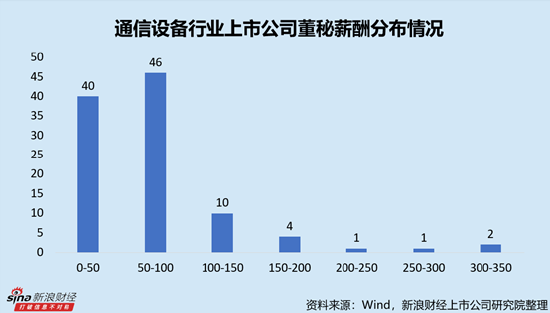
Core Insights - The report highlights that as of July 29, 2024, there are 5,817 listed companies in the A-share market, with a total of 1,144 secretaries earning over 1 million yuan, accounting for over 21% of the total [1] - The total salary for A-share secretaries reached 4.086 billion yuan in the previous year, with an average salary of 754,300 yuan [1] Salary Distribution in the Communication Equipment Industry - In the communication equipment sector, there are 104 listed companies, with an average secretary salary of 740,800 yuan, ranking 52nd among 125 secondary industries [1] - The average salary in this sector decreased by 20,600 yuan compared to the previous year, placing it 92nd in salary growth among primary industries [1] - Among the 104 secretaries, 40 earn between 0-500,000 yuan, and 46 earn between 500,000-1 million yuan, indicating that over 80% earn below 1 million yuan [1] Highest and Lowest Salaries - The highest-paid secretary in the communication equipment industry is Ding Jianzhong from ZTE, with a salary of 3.445 million yuan [1] - The lowest-paid secretary among those in office is Zhang Wan Hong from *ST Jinglun, earning 173,300 yuan [1] Age Distribution of Secretaries - The age of the 104 secretaries ranges from 30 to 61 years, with a relatively even distribution [3] - The highest average salary is found in the 57-year age group, at 2.1073 million yuan, largely influenced by Zheng Xin from Changfei Fiber, who earns 3.1007 million yuan [3] Educational Background - Among the 104 secretaries, 53 hold a master's degree, and 47 have a bachelor's degree, making up over 90% of the total [5] - The only doctoral degree holder is Wang Jun from Zhongji Xuchuang, with a salary of 2.097 million yuan, significantly higher than the average salaries of bachelor's and master's degree holders [5] - The average salary for those with a diploma is 1.1085 million yuan, exceeding that of bachelor's and master's degree holders, driven by the high salary of Cai Bo from Taicheng Light [5] Relationship Between Salary and Stock Performance - An analysis of secretaries' salaries in the range of 0-1.5 million yuan shows a positive correlation between salary increases and the number of company surveys conducted, with corresponding stock price annual changes of 3.19%, 13.88%, and 61.89% [7]


通信设备行业上市公司财务总监PK:中兴通讯李莹年薪852.10万元,为全行业最高
Xin Lang Cai Jing· 2025-08-08 07:06
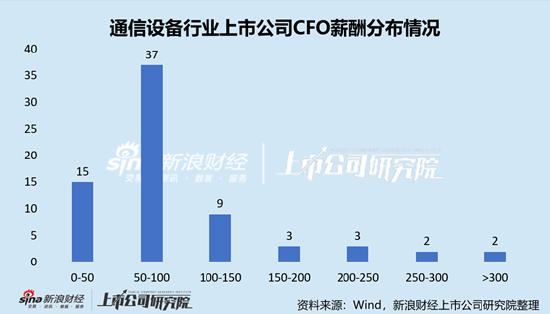
专题:专题|2024年度A股董秘数据报告:1144位董秘年薪超百万 占比超21% 数据显示,截止7月29日,A股市场共有5817家上市公司。作为上市公司核心管理层关键成员,财务总 监CFO不仅需要确保公司财务稳健、资金高效运转,更需要从财务视角为公司的战略制定提供支撑,其 能力与决策直接影响公司的财务健康、战略成败、资本市场形象乃至生存风险。据2024年年报显示,去 年A股CFO(财务总监、财务负责人等)薪酬合计达42.43亿元,平均薪酬76.03万元。 通信设备行业上市公司中,年龄最大的CFO为太辰光张艺明,而业内年龄最小的为云里物里姚素琴、震 有科技黎民君、日海智能严寒、铭普光磁杨勋文、新易盛林小凤,五位今年均为35岁。 从学历角度来看,除去2位缺失学历信息的CFO后,余下69位CFO中本科和硕士学历分别有40位、25 位,共计65位,占比超九成。值得注意的是,通信设备行业唯一一位博士CFO为楚天龙袁皓,其2024年 年薪仅为87.08万元,远低于硕士平均薪酬149.18万元。 关于通信设备行业CFO薪酬与业绩表现间的关系,我们选取0-150万元共三个薪酬段的数据进行考察。 在通信设备行业中,CFO薪酬与 ...
2024年度A股CFO数据报告发布
Xin Lang Cai Jing· 2025-08-08 06:05
Summary of Key Points Core Viewpoint - The 2024 A-share CFO compensation report reveals significant disparities in salaries among CFOs of listed companies, with some experiencing drastic increases while others face substantial decreases in their compensation. Group 1: Overall Compensation Data - The total compensation for CFOs in A-share listed companies reached 4.27 billion yuan in 2024, with an average annual salary of 814,800 yuan [1]. Group 2: Highest Paid CFOs - The highest-paid CFO in 2024 is Zhong Zheng from Midea Group, with an annual salary of 9.46 million yuan [2]. - The second highest is Zhou Yalin from BYD, earning 8.96 million yuan, followed by Li Ying from ZTE with 8.52 million yuan [2]. Group 3: Lowest Paid CFOs - Xu Wen, CFO of Maiqu'er, has the lowest salary at 16,600 yuan, a decrease of 143,400 yuan or 89% from the previous year [3]. - Huang Yunjie from Times New Materials ranks second lowest with a salary of 38,200 yuan, also down by 143,400 yuan or 80.56% [3]. - Wang Zhigang from Tiandi Technology is third lowest with a salary of 94,100 yuan, down by 908,600 yuan or 90.62% [3]. Group 4: Highest Salary Increases - Jiao Jifang from Jiaozuo Wanfang saw the largest salary increase, from 1.0176 million yuan to 4.1129 million yuan, an increase of 3.0953 million yuan [4]. - Yu Zhisen from Blue Eagle Equipment had a salary rise from 150,000 yuan to 3.201 million yuan, an increase of 3.051 million yuan [4]. - Yang Shaolin from Haida Group increased his salary from 1.9842 million yuan to 4.2581 million yuan, an increase of 2.27 million yuan [4]. Group 5: Largest Salary Decreases - Liu Xuewen from Longi Green Energy experienced the largest salary drop, from 8.8475 million yuan to 4.5111 million yuan, a decrease of 4.3364 million yuan or 49.01% [5]. - Li Shaohui from JA Solar saw his salary fall from 5.4512 million yuan to 2.3825 million yuan, a drop of 3.0687 million yuan or 56.29% [5]. - Jiang Wenguo from Guojin Securities had a salary reduction from 4.7698 million yuan to 1.9761 million yuan, a decrease of 2.7937 million yuan or 58.57% [5].





中兴通讯股价小幅回落 股东户数连续10期下降
Jin Rong Jie· 2025-08-07 19:56
2025年8月7日,中兴通讯主力资金净流出23615.92万元,占流通市值的0.17%。近五日主力资金累计净 流出49430.00万元,占流通市值的0.36%。 风险提示:股市有风险,投资需谨慎。 截至2025年8月7日收盘,中兴通讯股价报34.19元,较前一交易日下跌1.04%。当日成交量为598500手, 成交金额达20.49亿元,振幅为1.94%。 中兴通讯是全球领先的综合通信解决方案提供商,业务涵盖运营商网络、政企业务、消费者业务等领 域。公司为全球电信运营商、政企客户和消费者提供创新的技术与产品解决方案。 数据显示,中兴通讯股东户数已连续10期下降,最新股东户数为466473户,较上期减少2.28%。在股东 户数连续下降的个股中,中兴通讯是连降期数较多的公司之一。 ...
中兴通讯5亿元中期票据(科创票据)本期应偿付利息1125万元
Sou Hu Cai Jing· 2025-08-07 02:59
Group 1 - The announcement from Shanghai Clearing House details the issuance of a medium-term note by ZTE Corporation, with an issuance amount of 500 million RMB [1] - The bond has a maturity period of 5 years, with an interest rate of 2.25%, and the interest payment date is set for August 16, 2025 [1] - The total interest payable for this period amounts to 11.25 million RMB, and the bond is rated AAA [1] Group 2 - The bond's funds will be managed by the clearing house, which will transfer the interest payments to the bondholders' designated bank accounts on the payment date [1] - The company has committed to ensuring the accuracy and completeness of the announcement and will fulfill its subsequent disclosure obligations as required [1]
港股7月底市价总值同比增长44%;百福控股出售遇见小面1.71%股权丨港交所早参
Mei Ri Jing Ji Xin Wen· 2025-08-06 16:32
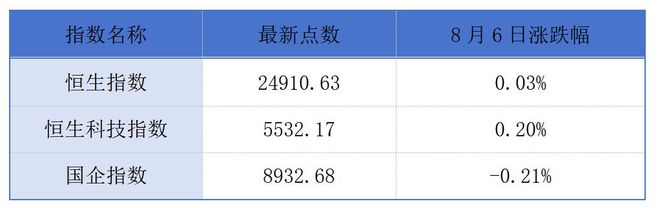
Group 1 - The market capitalization of the Hong Kong securities market increased to HKD 44.9 trillion as of July 2025, representing a year-on-year growth of 44% from HKD 31.1 trillion [1] - The growth is attributed to favorable policies, the return of Chinese concept stocks, and reforms within the Hong Kong stock market, which enhances its financing capabilities and attracts more enterprises and capital [1] Group 2 - Baifu Holdings announced the sale of a 1.71% stake in Guangzhou Yujian Xiaomian for HKD 48 million, reducing its ownership from approximately 17.16% to 15.46% [2] - The company reported a 24.4% decline in revenue and a 59.5% increase in net loss for 2024, indicating financial struggles that may have prompted the sale [2] - Yujian Xiaomian has submitted a prospectus for an IPO on the Hong Kong main board, with CMB International as the sole sponsor [2] Group 3 - Zhongyu Land expects a shareholder loss of approximately HKD 40 million for the first half of the year, a significant decline from a profit of HKD 91 million in the same period last year [3] - The loss is primarily due to reduced contributions from joint ventures and decreased fair value gains from investment properties in the UK, partially offset by exchange gains from the appreciation of GBP against HKD [3] Group 4 - ZTE Corporation completed the issuance of HKD 3.584 billion in zero-coupon convertible bonds, maturing in 2030, with net proceeds of approximately RMB 35.43 billion after expenses [4] - The funds will be used to enhance research and development in computing power products, which is expected to strengthen ZTE's competitiveness in AI and 5G sectors [4] - The bonds have been listed on the Hong Kong Stock Exchange, with trading permissions effective from August 6 [4] Group 5 - The Hang Seng Index closed at 24,910.63, with a slight increase of 0.03% on August 6 [5] - The Hang Seng Tech Index rose by 0.20% to 5,532.17, while the National Enterprises Index decreased by 0.21% to 8,932.68 [5]