
CHINA MOBILE(00941)

Search documents
锦州市政府与中国移动辽宁公司战略合作暨锦州市数据要素市场化配置改革阶段成果发布会举行
Zhong Guo Jin Rong Xin Xi Wang· 2025-12-27 09:51
Core Insights - The event titled "Digital Intelligence Jinzhou, Transforming the Future" marked a strategic cooperation between Jinzhou Municipal Government and China Mobile Communications Group Liaoning Co., Ltd, focusing on data market reform and high-quality development [1] Group 1: Strategic Cooperation - A strategic cooperation framework agreement was signed between Jinzhou Municipal Government and China Mobile Communications Group Liaoning Co., Ltd [1] - The cooperation aims to deepen central-local collaboration, activate data value, and cultivate new productive forces [1] Group 2: Data Resource Management - The Jinzhou Data Bureau presented the "Jinzhou Public Data Resource Authorization and Operation Management Measures (Trial)" [1] - The city launched a "Healthcare + Finance" data product as part of its public data initiatives [1] Group 3: Project Signings - Multiple projects were signed, including public data authorization agreements, data asset management projects, AI training projects, and agricultural finance cooperation [1] - Partners such as Shanghai Chinchao Data Technology Co., Ltd, and Qingyan Technology (Beijing) Co., Ltd participated in sharing their cooperation projects in Jinzhou [1] Group 4: Government Services - Following the event, the Director of the Liaoning Data Bureau reviewed the operation of the Jinzhou 12345 government service hotline and the 5187 enterprise demand service platform [2] - A visit to the Huawei Liaoning District (Jinzhou) Cloud Computing Center was conducted to enhance government service levels [2]

2025年1-10月中国移动通信手持机(手机)产量为12.5亿台 累计下降4.7%
Chan Ye Xin Xi Wang· 2025-12-27 03:02
Core Insights - The production of mobile communication handsets (smartphones) in China for October 2025 is projected to be 140 million units, representing a year-on-year decline of 4.2% [1] - Cumulatively, from January to October 2025, the total production of mobile communication handsets in China is 1.25 billion units, which reflects a cumulative decrease of 4.7% [1] Industry Analysis - The data indicates a downward trend in smartphone production in China, suggesting potential challenges in the mobile communication sector [1] - The statistics are sourced from the National Bureau of Statistics, highlighting the reliability of the data for industry analysis [2]


模组出货领跑全球 中国蜂窝物联网产业全面爆发
Zhong Guo Jing Ying Bao· 2025-12-26 20:13
Core Insights - The Chinese IoT industry is experiencing strong growth, with the number of connections expected to exceed 3.5 billion this year [2] - The global cellular IoT module shipments are projected to grow by 10% year-on-year by Q3 2025, with China showing a 7% increase driven by smart meters and POS terminals [2][3] - The development of IoT communication technology in China is rapidly advancing from 5G to 6G, satellite networks, and quantum communication [3] Industry Overview - Cellular IoT, also known as mobile IoT, allows devices to connect to the internet using mobile communication networks, facilitating ubiquitous connectivity [4] - As of June 2025, China's three major telecom operators are expected to have developed 2.831 billion mobile IoT terminal users [4] - The development of mobile IoT in China can be divided into three stages: technological foundation, commercial breakthrough, and scale explosion, with the commercial launch of 5G in 2019 marking a significant turning point [4][5] Market Dynamics - The growth of China's cellular IoT is driven by a combination of policy support, technological advancements, and market demand [5][6] - The Cat-1 bis technology has emerged as a mainstream choice for mid-speed IoT applications, with its global shipment share expected to approach 50% by Q3 2025 [5] - The demand for digital transformation in traditional industries, along with the need for upgrading devices like smart meters and POS terminals, is fueling market growth [6] Competitive Landscape - China has established a complete industrial chain for cellular IoT, with competitive companies emerging in chip design, module manufacturing, and application deployment [7] - Key players in the chip design sector include Aojie, Unisoc, and Shanghai Yixin, which are recognized for their advancements in the Cat-1 bis field [7] - The module industry is led by companies like Quectel, China Mobile, and Rida, with Rida achieving a remarkable 73% year-on-year growth [7][8] Future Outlook - The industrial internet market in China is expected to exceed 1 trillion yuan by 2025, becoming a significant driver for overall IoT growth [8] - The transition from a "selling connectivity" model to a "selling computing power" model is seen as a crucial challenge for the industry [9][10] - The commercialization of RedCap technology is anticipated to further enhance the capabilities of IoT applications, with significant growth expected in sectors like industrial inspection and smart factories [10] Challenges - Despite the positive growth indicators, the industry faces challenges such as reliance on imported core technologies and price sensitivity in the market [9] - The competition in the Cat-1 bis module market is intensifying, leading to a decline in average selling prices (ASP) and creating a "revenue without profit" scenario for many small and medium-sized manufacturers [9] - The need for collaboration across the industry to enhance technological routes, service capabilities, and global compliance is essential for sustaining growth [11]


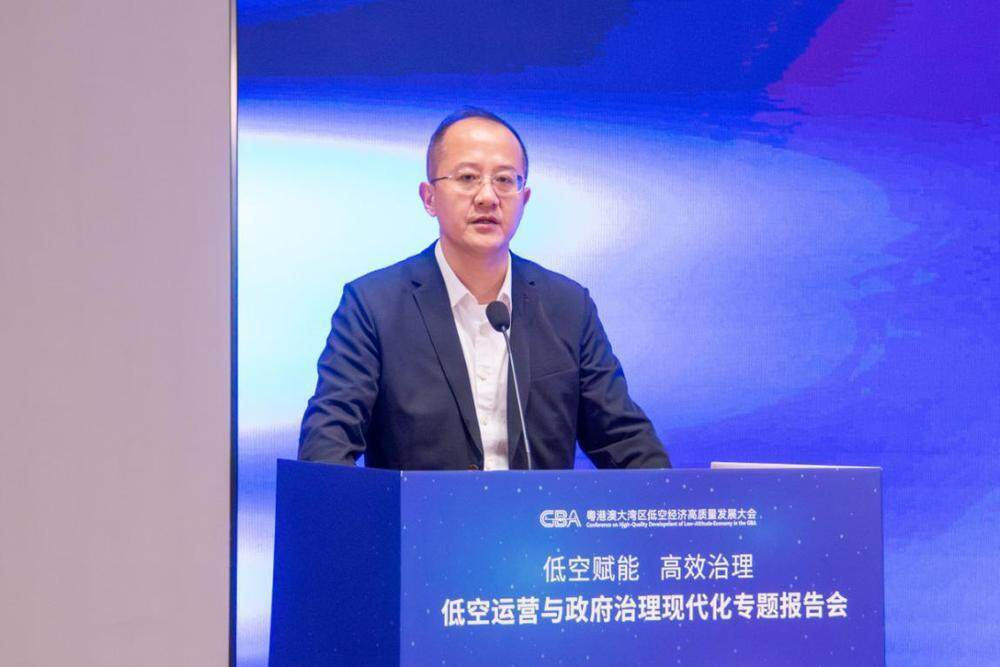
数智筑基 低空启航 | 广州移动为粤港澳大湾区低空经济高质量发展注入新动能
Xin Lang Cai Jing· 2025-12-26 14:58
Core Viewpoint - The conference on "Low Altitude Operations and Modernization of Government Governance" highlighted the importance of low altitude economy as a key area for technological revolution and industrial transformation in the Guangdong-Hong Kong-Macao Greater Bay Area, aiming to foster new growth points and productive forces [1] Group 1: Low Altitude Economy Development - The low altitude economy is entering a new phase of deep layout and systematic promotion, with the conference focusing on "empowering low altitude and efficient governance" [1] - The event gathered representatives from government, enterprises, and research institutions to discuss the construction path of low altitude operation management and service systems [1] Group 2: Infrastructure and Collaboration - Guangzhou Mobile has built over 60% of the city's integrated sensing base stations, achieving continuous communication network coverage for airspace below 120 meters [2] - The company collaborates with the Haizhu District government to establish a low altitude smart network with functions such as situational awareness and flight route planning [2] - The launch of the "Guangzhou Low Altitude Flight Comprehensive Management Service Platform" aims to enhance management efficiency and service levels in low altitude airspace [4] Group 3: Future Directions - Guangzhou Mobile plans to continue strengthening the integration of information communication technology with the low altitude economy, improving network and service platform functions [6] - The company aims to contribute to the development of the low altitude economy in the Guangdong-Hong Kong-Macao Greater Bay Area by building an industrial ecosystem [6]
浙江移动绘就跨越山海的“心级服务”图景
Ren Min Wang· 2025-12-26 11:09
Group 1 - The core viewpoint of the articles highlights the significant impact of communication network expansion in Zhejiang on the production and lifestyle of the local population, emphasizing the integration of communication support with convenient services to enhance digital connectivity [1][5]. Group 2 - In Zhoushan, the implementation of 5G-A technology by Zhejiang Mobile has resolved long-standing issues of unstable signals and limited network speed, leading to improved user experiences in video calls and online applications [1][3]. - The company has also initiated age-friendly services, including communication package integration, volunteer services, and digital skills training, to assist the elderly in adapting to digital life and bridging the digital divide [1][3]. Group 3 - In the Dazhai Mountain area, Zhejiang Mobile has addressed communication blind spots by investing in innovative solutions such as using industrial drones to deliver heavy equipment for network coverage, significantly enhancing communication capabilities for outdoor activities and emergency rescues [3]. Group 4 - In remote villages of Wenzhou Taishun, the company has formed a "Happy Backpacker" team to provide on-site visits, service assistance, and digital education, helping over 320 elderly individuals overcome challenges in using smart devices and accessing essential services [3][5]. Group 5 - In urban communities, Zhejiang Mobile has established a grid service system to conduct public welfare activities aimed at helping elderly residents understand common applications and communication fees, enhancing their safety and convenience in network usage [5]. - Since 2025, these activities have reached over a thousand elderly residents, demonstrating the company's commitment to integrating technological capabilities with community needs [5].

一碗香飘世界的“臭”粉背后的数智密码
Huan Qiu Wang· 2025-12-26 08:51
Core Viewpoint - The unique flavor of Luosifen (snail rice noodle) has gained global popularity, and behind this phenomenon, a digital transformation driven by smart technology is occurring in the industry [1]. Group 1: Industry Transformation - The annual sales of pre-packaged Luosifen have surpassed 10 billion yuan, but traditional production methods face challenges such as low scheduling efficiency and poor supply chain collaboration [6]. - China Mobile Guangxi has innovatively constructed a "Party Building + Industry Chain + Service Chain" integration model to address these challenges, forming a "Party Building Alliance" to support 126 enterprises in the Luosifen industrial park [6]. - The deployment of AI and smart solutions has improved production efficiency by over 30%, allowing for quicker responses to market changes [6]. Group 2: Technological Advancements - A "5G + Luosifen Industry Big Data Platform" has been established to implement full-process traceability, enhancing customer complaint handling efficiency by 60% [7]. - The introduction of AI visual recognition models has improved the inspection pass rate by nearly 5% by creating a complete "digital history" for each product [6]. - Digital transformation initiatives have led to a 45% reduction in labor costs for a pickled bamboo shoot production company, showcasing the benefits of smart technology in the industry [7]. Group 3: Economic Impact - The total sales revenue of the Luosifen industry chain reached 66.99 billion yuan, reflecting an 11.5% year-on-year growth, significantly boosting local economy and employment [7]. - The "Party Building Empowerment" approach has facilitated precise support for small and medium-sized enterprises, enhancing their digital capabilities [7]. - The transformation from "individual efforts" to "collaborative chains" and from "experience-driven" to "data-driven" models illustrates the ongoing evolution of the Luosifen industry [7].

中国移动取得数据交易方法专利提升交易效率
Sou Hu Cai Jing· 2025-12-26 06:02
Group 1 - The State Intellectual Property Office of China has granted a patent titled "Data Trading Method, Device, Equipment, Medium, and Program Product" to China Mobile Zijin (Jiangsu) Innovation Research Institute Co., Ltd., China Mobile Communications Group Jiangsu Co., Ltd., China Mobile Communications Group Co., Ltd., and Nanjing Boya Blockchain Research Institute Co., Ltd. The patent authorization announcement number is CN120996938B, with an application date of October 2025 [1] - China Mobile Zijin (Jiangsu) Innovation Research Institute Co., Ltd. was established in 2020 and is located in Nanjing. The company primarily engages in telecommunications, broadcasting, television, and satellite transmission services, with a registered capital of 100 million RMB. It has participated in 503 bidding projects and holds 368 patents [1] - China Mobile Communications Group Jiangsu Co., Ltd. was founded in 1998 and is also based in Nanjing. This company focuses on telecommunications, broadcasting, television, and satellite transmission services, with a registered capital of 2.8 billion RMB. It has invested in 2 companies, participated in 5,000 bidding projects, and holds 1,413 patents [1] - China Mobile Communications Group Co., Ltd. was established in 1999 and is located in Beijing. The company specializes in telecommunications, broadcasting, television, and satellite transmission services, with a registered capital of 30 billion RMB. It has invested in 54 companies and participated in 5,000 bidding projects, holding 5,000 patents [2] - Nanjing Boya Blockchain Research Institute Co., Ltd. was founded in 2019 and is situated in Nanjing. The company primarily operates in software and information technology services, with a registered capital of 10 million RMB. It has invested in 8 companies and holds 63 patents [2]
2025年1-10月中国移动通信基站设备产量为421.3万射频模块 累计增长14.7%
Chan Ye Xin Xi Wang· 2025-12-26 03:19
Core Viewpoint - The report highlights significant growth in China's mobile communication base station equipment production, indicating a robust market trend in the telecommunications sector from 2025 to 2031 [1]. Group 1: Industry Overview - In October 2025, the production of mobile communication base station equipment reached 451,000 RF modules, representing a year-on-year increase of 56.6% [1]. - From January to October 2025, the cumulative production of mobile communication base station equipment totaled 4.213 million RF modules, reflecting a cumulative growth of 14.7% [1]. Group 2: Companies Involved - Listed companies in the telecommunications equipment sector include ZTE Corporation (000063), Datang Telecom (600198), XinKe Mobile (688387), FiberHome Technologies (600498), Shenglu Communications (002446), *ST Rihai (002313), and Chaoxun Communication (603322) [1].

中国广电电话卡值得办吗?5G套餐真香还是智商税?
Sou Hu Cai Jing· 2025-12-25 16:06
Core Viewpoint - The introduction of China Broadcasting's mobile service is neither inherently beneficial nor a scam; it represents a unique partnership leveraging China Mobile's established network, making its value and risks closely tied to the quality of China Mobile's service [3][18]. Group 1: Understanding China Broadcasting - China Broadcasting is a new entrant in the mobile communication sector, lacking the extensive network infrastructure built by established players like China Mobile, China Unicom, and China Telecom [4]. - The signal and speed of China Broadcasting's service come from a national strategy involving a co-construction and sharing agreement with China Mobile, meaning users will experience service quality similar to that of China Mobile in their location [5]. Group 2: Pricing and Packages - As a market newcomer, China Broadcasting uses competitive pricing as a primary strategy to attract users, offering packages like "19 yuan for 192GB" and "29 yuan for over 100GB" [6]. - Users should be cautious of potential pitfalls in these low-cost packages, which may include hidden terms related to resource allocation, pricing duration, and speed limitations [7]. Group 3: 5G Experience - China Broadcasting claims to provide genuine 5G services by utilizing China Mobile's 5G network, allowing users to access 5G speeds where available [8]. - However, the quality of the 5G experience is contingent upon the local infrastructure of China Mobile, meaning that the actual user experience may vary significantly based on location [9]. Group 4: Hidden Issues - Users should be aware of several potential issues, including the breakdown of data allowances into general and specific usage categories, the possibility of price increases after promotional periods, and speed throttling after reaching data limits [10]. - Additional considerations include the limited number of physical service outlets, potential delays in receiving verification messages from third-party services, and the compatibility of devices with the service [12]. Group 5: Decision-Making Process - To determine if China Broadcasting's service is suitable, users should first assess the quality of China Mobile's network in their area, as this is a critical factor in the service's viability [13]. - Users should clarify their data needs, analyze the actual capacity of the chosen package, and calculate long-term costs, including any potential price increases after promotional periods [14]. - It is essential to review the user agreement for any hidden fees or limitations before finalizing the service [15]. Group 6: Target Audience - China Broadcasting's service may be appealing to users in areas with strong China Mobile coverage, those seeking high-value data packages, and users comfortable with online service management [17][19]. - Conversely, it may not be suitable for users in areas with poor China Mobile service, those who rely heavily on in-person support, and users sensitive to inter-operator connectivity issues [19].
抢滩低空新赛道 中国移动广东公司激活南粤发展新引擎
2 1 Shi Ji Jing Ji Bao Dao· 2025-12-25 01:08
Core Viewpoint - The low-altitude economy is recognized as a new blue ocean for industrial upgrading, with a focus on technological innovation as the core driver for high-quality development. The Chinese government has included the low-altitude economy in its strategic emerging industry development plan for the 14th Five-Year Plan period, emphasizing the need for a robust industrial ecosystem in this sector [1]. Group 1: Technological Advancements - China Mobile Guangdong has made significant progress in low-altitude communication, transitioning from single-station functionality to network collaboration, and successfully commercializing 5G-A integrated sensing technology in complex urban environments [2]. - The company has completed a year-long large-scale verification test for low-altitude communication in Qingyuan, marking a substantial breakthrough for the application of mobile 5G-A technology in urban settings [2]. Group 2: Industry Standards and Collaboration - Challenges such as inconsistent testing standards and inadequate certification systems in the low-altitude intelligent network sector hinder high-quality industry advancement. China Mobile Guangdong is collaborating with the Guangdong Low Altitude Economic Development Company to establish a testing base focused on developing industry standards and validating equipment [3]. Group 3: Applications of Low-Altitude Technology - The integration of AI algorithms for forest fire prevention and drowning risk management has enhanced emergency response efficiency through automated drone operations, showcasing the potential of low-altitude technology in various applications [4]. - The company has developed a low-altitude capability platform that integrates multiple core technologies to address safety challenges in the low-altitude sector, including real-time data collection and analysis for airspace management [5]. Group 4: Smart Applications and Security - China Mobile Guangdong has implemented a comprehensive intelligent inspection and defense system using 5G-A technology to protect critical power supply lines during major events, addressing vulnerabilities to unauthorized drone incursions [6][7]. - The company has established a rapid response mechanism for unauthorized drone activities, enabling real-time tracking and monitoring of airspace targets, thereby enhancing security measures in low-altitude operations [7]. Group 5: Strategic Development - By focusing on low-altitude, 5G-A, and artificial intelligence technologies, China Mobile Guangdong aims to drive new productive forces and contribute to high-quality development in Guangdong, positioning the region at the forefront of China's modernization efforts [7].