
CITIC FAMC(02799)

Search documents
违规掩盖处置不良、违规放贷揽储!审计署剑指商业银行乱象
券商中国· 2025-06-28 05:05
Core Viewpoint - The audit report highlights weaknesses in financial risk management among certain financial institutions, including issues related to non-compliance in asset disposal and improper lending practices. Financial Risk Weaknesses - The audit report indicates that while financial risks are being effectively managed, there are still notable weaknesses, such as six banks issuing a total of 20.968 billion yuan in development loans to real estate projects lacking complete documentation since 2022 [3] - Seven banks failed to adhere to guidelines that differentiate between the overall risk of real estate companies and the risks of individual projects when issuing loans [3] - Five banks exhibited inadequate supervision over unusual account fund flows, leading to 11 local financing platforms raising 24.743 billion yuan from the public, primarily to repay existing debts [4] Improper Disposal of Non-Performing Assets - The audit revealed that major banks, including the Agricultural Development Bank of China and the Export-Import Bank of China, did not classify 19.38 billion yuan in loans as non-performing despite borrowers being unable to repay [6] - Three local small and medium-sized banks concealed 31.8 billion yuan in non-performing loans by extending repayment periods and adjusting repayment plans, resulting in a true non-performing loan ratio of 2.77%, significantly higher than the national average [7] Non-Compliance in Lending Practices - The report noted that the Agricultural Development Bank of China issued loans to 270 enterprises with fabricated documents from November 2020 to 2024, indicating a lack of due diligence [13] - The Export-Import Bank of China engaged in improper fundraising practices by linking deposit and loan rates, increasing financing costs for enterprises [13] - The report emphasizes that issues identified in policy banks are indicative of broader risks faced by many commercial banks [14] Trends in Deposit Competition - As major state-owned banks have lowered deposit rates, the phenomenon of "deposit migration" has intensified, leading to unconventional deposit solicitation methods [15] - Some banks have offered promotional activities, such as deposits linked to popular IP products, reflecting the pressure on banks to attract deposits [16] - A report from Dongfang Securities indicates that while the overall deposit gap in the banking sector has eased since 2025, state-owned banks still face significant deposit shortages, highlighting a divergence in deposit growth between large and small banks [17][18]




从中信集团上市公司矩阵看国际化布局中的协同效应与未来增长极
Sou Hu Cai Jing· 2025-05-21 07:36
Group 1 - CITIC Group is a large comprehensive enterprise group founded in 1979, headquartered in Beijing, and is one of the first multinational enterprises established after China's reform and opening up [1] - The group operates under a unique "finance + industry" dual-drive model, covering sectors such as finance, resource energy, high-end manufacturing, and engineering contracting [1] - CITIC Group has a significant presence in both domestic and international markets, consistently ranking in the Fortune Global 500 [1] Group 2 - CITIC Bank, established in 1987, is one of the earliest emerging commercial banks in China, providing a wide range of financial services [3] - CITIC Securities, founded in 1995, is the largest securities company in China, leading in investment banking market share for five consecutive years [5] - CITIC Special Steel, established in 1993, is a global leader in special steel manufacturing, with products used in high-end applications [7] Group 3 - CITIC Heavy Industries, founded in 2008, specializes in heavy machinery manufacturing and has a global presence in 68 countries [10][11] - CITIC Offshore Helicopter, established in 1999, is the largest general aviation operator in China, focusing on offshore oil and emergency rescue services [13] - CITIC Guoan Information Industry, founded in 1997, holds a significant position in the integrated information services sector [15] Group 4 - CITIC Metal, established in 1988, is a leading trader of metal and mineral products, with a focus on iron ore and non-ferrous metals [17] - CITIC Publishing Group, founded in 1993, is a leading publishing group in China, focusing on book publishing and digital reading [18] - CITIC Resources Holdings, established in 1997, engages in the exploration and trading of natural resources [20] Group 5 - CITIC International Financial Holdings serves as the main asset integration platform for CITIC Group, covering various sectors including finance and manufacturing [22] - CITIC International Telecommunications is one of the largest international telecommunications hubs in the Asia-Pacific region [24] - CITIC Financial Asset Management, restructured in 2023, focuses on managing non-performing assets and financial services [26] Group 6 - CITIC Group's listed companies benefit from a "strategic control + market-oriented operation" model, enjoying resource synergy while maintaining competitiveness in niche markets [26] - Many of the group's listed companies are currently undervalued compared to their industry positions, presenting potential investment opportunities [26] - The ongoing national policy for state-owned enterprise value reassessment and the effective layout of emerging industries may lead to structural opportunities for CITIC Group companies [26]



中信金融资产(02799) - 2024 - 年度财报
2025-04-25 09:30
Company Overview - The company operates 33 subsidiaries, providing services across 30 provinces, autonomous regions, and municipalities in China, including Hong Kong and Macau[10]. - The company was officially renamed to "China CITIC Financial Asset Management Co., Ltd." in January 2024, following approval from higher authorities[8]. - The company has undergone structural changes, including a transition to a joint-stock company in 2012 and listing on the Hong Kong Stock Exchange in 2015[8]. - The company is primarily owned by CITIC Group, the Ministry of Finance, and other significant stakeholders, indicating strong backing from state-owned enterprises[8]. Financial Performance - Total revenue for the year ended December 31, 2024, reached RMB 107,359.0 million, a significant increase from RMB 69,949.6 million in 2023, representing a growth of approximately 53.4%[24]. - The company reported a net profit attributable to shareholders of RMB 9,618.4 million for the year, compared to a loss of RMB 27,587.1 million in 2022, indicating a substantial recovery[26]. - Total assets as of December 31, 2024, amounted to RMB 984,328.6 million, slightly up from RMB 968,103.2 million in 2023[27]. - The company’s cash and cash equivalents decreased to RMB 0.1 million in 2024 from RMB 112.1 million in 2023, indicating a significant liquidity contraction[27]. - The company’s tax benefit for the year was RMB 6,679.6 million, a notable recovery from a tax expense of RMB 885.1 million in 2023[26]. - The company achieved a revenue of RMB 12,919.4 million from the disposal of non-performing loan assets during the year[55]. Non-Performing Asset Management - The company reported a significant focus on non-performing asset management, which remains its core business[10]. - The non-performing asset management segment generated revenue of RMB 90,671.3 million, up 35.4% from RMB 66,955.3 million in the previous year[129]. - The total fair value change of non-performing loan assets amounted to a loss of RMB 9,069.2 million, a drastic increase of 915.5% compared to a loss of RMB 893.1 million in the previous year[58]. - The company supported the disposal of non-performing assets for commercial banks and participated in the reform of small and medium-sized banks[37]. - The company achieved a reduction in interest expenses related to discontinued operations, which amounted to RMB 2,963.1 million in 2024, a 6.5% increase from RMB 2,782.7 million in 2023[83]. Risk Management - The company has established a comprehensive risk management framework to address financial and operational risks[10]. - The group has implemented a comprehensive liquidity management mechanism, ensuring liquidity risk remains controllable and monitoring liquidity indicators dynamically[198]. - The group has strengthened post-investment management and established a comprehensive post-investment management system[194]. - The group has set clear short-term and medium-to-long-term risk control objectives, implementing differentiated management policies[194]. - The group has optimized risk monitoring and early warning systems to support credit risk management efforts[194]. Strategic Focus and Goals - The company aims to enhance its asset management and investment services, focusing on market expansion and new product development[10]. - The company is focused on enhancing its core capabilities in asset acquisition, restructuring, equity investment, and special bond investment[42]. - The company aims to fully realize significant improvements in quality and efficiency by 2025[44]. - The company is committed to serving the real economy and mitigating risks in the real estate and small financial institutions sectors[129]. - The company aims to enhance its market competitiveness by deepening collaboration within the CITIC Group and leveraging its unique financial service models[180]. Employee and Organizational Development - As of December 31, 2024, the total number of employees reached 5,068, with 53% holding a master's degree or higher[186]. - The group has signed four phases of the "Special Collective Contract for the Protection of Female Employees' Rights," reinforcing mechanisms for safeguarding women's rights[186]. - The group has implemented a performance assessment system that aligns with business development and talent acquisition, enhancing the incentive mechanism based on operational contributions[187]. - The group emphasizes the importance of a diverse workforce, with male and female employees comprising 53.5% and 46.5% respectively, maintaining gender diversity[186]. Investment and Acquisition Activities - The company made new investments of RMB 166.1 billion in 2024, with 80% allocated to key regions such as Beijing-Tianjin-Hebei, Yangtze River Delta, and Guangdong-Hong Kong-Macao Greater Bay Area[129]. - The total amount of non-performing loans acquired in 2024 was RMB 49,070.4 million, a 3.8% increase from RMB 47,275.6 million in 2023[136]. - The total acquisition cost of financial non-performing assets in 2024 was RMB 37,837.8 million, compared to RMB 33,658.8 million in 2023, reflecting a growth in acquisition activities[143]. - The company actively expanded its acquisition channels for non-performing assets from non-bank financial institutions, which accounted for 22.7% of total acquisitions in 2024[143]. - The company’s acquisition and disposal business accounted for 83.5% of the new non-performing asset acquisition costs in 2024, totaling RMB 40,976.1 million, up 16.4% from the previous year[148].
与中信集团协同深化 中信金融资产创六年来最好业绩
Zhong Guo Jing Ying Bao· 2025-04-01 08:25
主业转型加速 具体来看,截至2024年12月31日,中信金融资产资产总额9843.29亿元,较上年年末增加162.25亿元,其 中不良资产经营分部资产占比86.7%;不良资产经营分部收入达到906.71亿元,较上年增长35.4%。 日前,中信金融资产(02799.HK)召开2024年度业绩发布会。在加入中信集团3年后,中信金融资产 2024年实现营业收入1127.66亿元,较上年同期增长60%,实现归母净利润96.18亿元,达到上年同期的 5.4倍,多项盈利指标为6年来最好水平。 回顾三年前的此时,中信集团刚拿下中信金融资产第一大股东席位,中信集团副总经理、中信股份副总 经理、中信信托董事长刘正均临危受命,赴任中信金融资产董事长一职,新一届管理层陆续到位。中信 金融资产亟待从此前的重创中恢复过来,重整旗鼓迈向一个"新纪元"。 "回想过去,中信金融资产这三年来的变化不是一蹴而就的,而是管理团队于无路处开辟新路、于不可 能中实现新可能的坎坷过程。"刘正均在会上谈到,中信集团刚入主时,这家AMC(资产管理公司)正 处于经营业绩大幅下滑、主业转型亟待破局、不良资产亟待出清、队伍亟待强本固基的困境中。通过三 年的共同努 ...
中信金融资产(02799)年报解读: 盈利百亿远超市场预期 长期价值中枢有望逐步上移
智通财经网· 2025-03-28 14:32
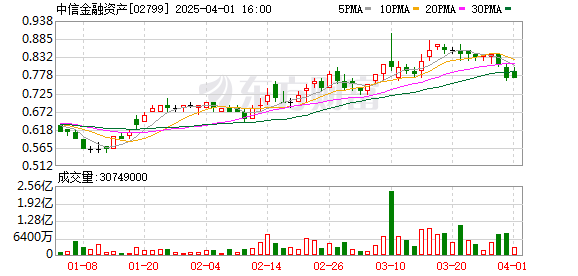
Core Viewpoint - The financial performance of CITIC Financial Asset Management Co., Ltd. for the fiscal year 2024 has significantly exceeded market expectations, indicating a successful transformation and a return to high-quality development [1][2]. Financial Performance - For the year ending December 31, 2024, CITIC Financial Asset reported total revenue of 112.766 billion yuan, a 60% increase year-on-year, and a net profit attributable to shareholders of 9.618 billion yuan, which is 5.4 times that of the previous year [1]. - The total assets at year-end reached 984.329 billion yuan, an increase of 16.225 billion yuan from the previous year, with an average return on equity rising by 14.8 percentage points to 18.4% [1]. - The company achieved a 53.5% growth in revenue from continuing operations, with core financial indicators surpassing capital market expectations [1]. Business Strategy and Structure - CITIC Financial Asset has fully divested from financial services, focusing on non-performing asset management and asset management and investment divisions, which now drive its operations [3]. - The non-performing asset management business generated 90.671 billion yuan in revenue, accounting for 84.4% of total revenue, with assets in this division totaling 833.185 billion yuan, representing 86.7% of total assets [3]. Market Position and Growth - The company maintains a leading market position in the non-performing asset sector, with a debt balance of approximately 180 billion yuan in non-performing asset claims and a market share that remains among the top in the industry [4]. - CITIC Financial Asset has improved its asset quality and risk resistance, with a 30% reduction in non-performing asset balance and a doubling of the provision coverage ratio to 226% [4]. Social Responsibility and Strategic Support - The company plays a crucial role in supporting national policies, contributing to financial risk prevention and economic stability, while also achieving economic and social value [5]. - CITIC Financial Asset has actively participated in initiatives to alleviate financial distress in the real estate sector, ensuring the delivery of 66,000 housing units and addressing wage arrears for migrant workers [5]. Industry Outlook - The current economic environment presents significant opportunities for asset management companies (AMCs) to expand their non-performing asset acquisition business, driven by ongoing risks in various sectors [7]. - Regulatory policies are encouraging AMCs to broaden their scope, enhancing their capabilities in acquiring, managing, and disposing of non-performing assets [7]. Market Response - The capital market has responded positively to CITIC Financial Asset's new brand image, with a 62.5% increase in stock price and active trading volume exceeding 100 million shares over ten consecutive trading days [8]. - The inclusion of CITIC Financial Asset in multiple Hang Seng indices is expected to diversify fund allocations and attract more capital, particularly from southbound funds [8].
中信金融资产(02799)发布年度业绩 股东应占利润96.18亿元 同比增加444.58%
智通财经网· 2025-03-28 13:39
Core Viewpoint - The company reported significant growth in revenue and profit for the fiscal year 2024, highlighting a transformative year with improved asset quality and operational efficiency [1][2] Financial Performance - Total revenue reached RMB 107.36 billion, a year-on-year increase of 53.48% [1] - Shareholder profit amounted to RMB 9.62 billion, reflecting a substantial year-on-year increase of 444.58% [1] - Basic earnings per share were RMB 0.11 [1] - Total income from various sources was RMB 112.77 billion, up 60% from the previous year [1] Asset Management - The total assets of the company steadily increased, with a focus on core business operations [1] - The proportion of non-performing asset management segment assets rose to 86.7%, an increase of 34.8 percentage points compared to early 2022 [1] - The balance of non-performing assets was reduced by 30% from the beginning of the year [1] - The company's provision coverage ratio doubled compared to early 2022, exceeding regulatory requirements [1] Brand and Market Position - The company's market value grew by 62.5% in 2024, achieving the highest price-to-book ratio among Chinese financial enterprises listed in Hong Kong [1] - The company enhanced its investment attractiveness [1] Human Resources - The company increased the selection of outstanding young talent, significantly raising the proportion of middle management personnel born in the 1980s [1] Strategic Focus - The company emphasized its role in supporting national economic development and risk management, particularly in the context of non-performing asset disposal and financial assistance [2] - It actively participated in the resolution of credit risks and supported the reform of small and medium-sized banks [2] - The company facilitated the stabilization of the real estate market by ensuring the delivery of 66,000 housing units and paying over RMB 11.3 billion to upstream suppliers [2] - The company aims to enhance its core competitiveness in the non-performing asset management industry and contribute to national financial strength and economic revitalization [2]
中信金融资产(02799) - 2024 - 年度业绩
2025-03-28 12:56
Financial Performance - The company reported its audited financial results for the year ending December 31, 2024, in compliance with the Hong Kong Stock Exchange listing rules[2]. - The company did not declare any cash dividends for the year ending December 31, 2024[9]. - Total revenue for the year ended December 31, 2024, reached RMB 107,359.0 million, a significant increase from RMB 69,949.6 million in 2023, representing a growth of approximately 53.4%[13]. - The company reported a profit attributable to shareholders of RMB 9,618.4 million for the year 2024, compared to a loss of RMB 27,587.1 million in 2022, indicating a substantial recovery[14]. - Interest income for 2024 was RMB 8,302.6 million, slightly down from RMB 8,595.7 million in 2023, reflecting a decrease of about 3.4%[13]. - The company achieved a net income from other income and gains of RMB 77,750.9 million in 2024, a significant rise from RMB 45,550.6 million in 2023, representing an increase of about 70.7%[13]. - The company’s total expenses for 2024 amounted to RMB 113,165.4 million, up from RMB 69,724.6 million in 2023, reflecting an increase of approximately 62.5%[13]. - The tax benefit for the year was RMB 6,679.6 million, a significant recovery from a tax expense of RMB 885.1 million in 2023[14]. - The average return on equity for 2024 was 18.4%, a significant increase from 3.6% in 2023[17]. - Basic earnings per share for common shareholders was RMB 0.11 in 2024, up from RMB 0.01 in 2023[17]. - The company reported a net profit attributable to common shareholders, marking a turnaround from a loss of RMB 0.34 per share in 2022[17]. Asset Management and Investment - The company is primarily engaged in the management of non-performing assets, asset management, and investment businesses, with non-performing asset management being its core business[4]. - The company achieved a net income from the disposal of subsidiaries and joint ventures of RMB 143.7 million, a remarkable increase of 1,895.8% from RMB 7.2 million in the previous year[38]. - The revenue from the non-performing asset management segment was RMB 90,671.3 million in 2024, up 35.4% from the previous year[74]. - The asset management and investment segment generated revenue of RMB 19,082.7 million, a remarkable increase of 267.5% year-on-year[74]. - The company enhanced its core business capabilities in asset acquisition, restructuring, equity investment, and special bond investment[23]. - The company aims to establish a leading position in the non-performing asset management industry and contribute to national economic development[24]. Strategic Initiatives and Future Outlook - The company plans to focus on improving asset quality and enhancing operational efficiency in the upcoming fiscal year[14]. - The company aims to achieve its "135" strategic goals in 2024, emphasizing foundational stability and quality improvement[20]. - The company is committed to deepening financial supply-side structural reforms and promoting high-quality financial development[30]. - The company aims to fully achieve significant improvements in quality and efficiency by 2025[28]. - The company is focused on enhancing its core functions and optimizing its operational performance assessment system[28]. - The company is committed to supporting the real economy and preventing financial risks through differentiated core competitiveness[183]. Risk Management - The group has established a comprehensive risk management system, focusing on risk identification, measurement, assessment, monitoring, and reporting[162]. - The group has made significant progress in asset quality control, continuously improving the credit risk management system and enhancing management efficiency[166]. - The group has strengthened market risk management, particularly in monitoring stock, bond, and foreign exchange market fluctuations[168]. - The group has improved its interest rate risk management mechanisms, regularly conducting measurements and analyses to enhance its response capabilities[168]. - The overall provision coverage ratio for debt instruments measured at amortized cost and those measured at fair value was 226%, meeting regulatory requirements[63]. Corporate Governance - The company’s board includes key executives such as Liu Zhengjun (Chairman) and Li Zimin (CEO), with terms starting in April 2022 and January 2023 respectively[195]. - The company has a structured board with various committees including risk management and strategic development[196]. - The board's term is three years, with the possibility of re-election upon term expiration[196]. - The company emphasizes the importance of governance and compliance through its board structure[196]. Shareholder Information - As of December 31, 2024, the total issued share capital of the company is approximately 80.25 billion shares, with domestic shares accounting for 55.93% and H-shares for 44.07%[184]. - China CITIC Group holds 47.30% of the domestic shares, representing 26.46% of the total share capital[185]. - Major shareholders holding over 5% of the company's shares include China CITIC Group with 32.33% of domestic shares and 11.09% of H shares[186]. Employee and Diversity Initiatives - As of December 31, 2024, the total number of employees in the group is 5,068, with 53% holding a master's degree or higher[159]. - The gender distribution among employees is 53.5% male and 46.5% female, indicating a commitment to gender diversity[159]. - The group has signed four phases of the "Special Collective Contract for the Protection of Women's Rights" since 2013, ensuring the protection of female employees' rights[159]. Economic Context - The GDP of China is projected to grow by 5.0% in 2024, with a total GDP of RMB 134.9 trillion[29]. - The International Monetary Fund forecasts a global economic growth of 3.2% in 2024, a decrease of 0.1 percentage points from 2023[29]. - The global inflation rate is expected to continue declining, with the world economy showing differentiated recovery trends by 2025[181]. - The domestic economy is projected to maintain stability and resilience, with a long-term positive trend expected to remain unchanged by 2025[181].
中信金融资产(02799) - 2024 - 中期财报
2024-09-25 09:00
Financial Performance - The company reported a total revenue of RMB 1.5 billion for the first half of 2024, representing a 10% increase compared to the same period last year[39]. - Total revenue for the six months ended June 30, 2024, was RMB 30,257.0 million, a decrease of 7.9% from RMB 32,648.7 million in the same period of 2023[42]. - The total revenue for the first half of 2024 was RMB 30.257 billion, a decrease of 7.3% compared to RMB 32.649 billion in the same period of 2023[49]. - The total revenue from continuing operations for the first half of 2024 was RMB 30,257.0 million, a decrease of 7.3% year-on-year[52]. - The total revenue from discontinued operations for the first half of 2024 was RMB 3,162.0 million, representing a year-on-year increase of 6.8%[61]. - The total revenue of the group in the first half of 2024 was RMB 33,419.0 million, a decrease from RMB 35,610.7 million in the same period of 2023[98]. Profitability - The company reported a net profit attributable to shareholders of RMB 5,332.3 million, compared to a loss of RMB 4,818.1 million in the previous year[42]. - In the first half of 2024, the company achieved a net profit attributable to shareholders of RMB 5.332 billion, an increase of 210.7% year-on-year[48]. - The pre-tax profit from continuing operations was RMB 4.753 billion, a turnaround from a loss of RMB 4.938 billion in the same period last year, marking a 196.2% improvement[49]. - The pre-tax profit for the group in the first half of 2024 was RMB 5,546.3 million, compared to a loss of RMB 4,639.1 million in the same period of 2023[98]. - The annualized return on equity for the period was 21.2%, consistent with the previous year[45]. Asset Management - The company successfully converted RMB 500 million of non-performing loans into equity through its debt-to-equity swap program, enhancing its asset quality[39]. - Total assets as of June 30, 2024, reached RMB 1,055,341.8 million, an increase of 9.0% from RMB 968,103.2 million at the end of 2023[43]. - The company’s total liabilities increased to RMB 1,002,636.7 million, up from RMB 920,066.4 million at the end of 2023[43]. - The company reported a significant reduction in credit impairment losses, down to RMB 9,766.6 million from RMB 19,506.9 million year-on-year[42]. - The company’s strategy focuses on optimizing asset structure and enhancing risk management, contributing to improved asset quality and operational performance[48]. Market Expansion - User data indicates a growth in the client base by 15%, reaching a total of 1.2 million clients as of June 30, 2024[39]. - The company plans to expand its market presence in Southeast Asia, targeting a 20% increase in market share by the end of 2025[39]. - New product offerings in the financial technology sector are expected to launch in Q4 2024, aiming to capture a younger demographic[39]. Risk Management - The company is actively participating in risk resolution in both financial and non-financial sectors, particularly in the real estate market[47]. - The company plans to continue focusing on enhancing its risk management framework to further reduce losses in the future[65]. - The company has implemented a comprehensive credit risk management system, focusing on project entry management and post-investment management to enhance asset quality[144]. - The company has strengthened market risk management by monitoring stock, bond, and foreign exchange market fluctuations, ensuring compliance with regulatory requirements[145]. - The company has established a robust operational risk management framework, focusing on process control and risk identification[147]. Shareholder Information - By June 30, 2024, the total issued share capital of the company is 80,246,679,047 shares, with domestic shares accounting for 55.93% and H shares for 44.07%[156]. - The largest shareholder, China CITIC Group, holds 21,230,929,783 domestic shares, representing 26.46% of the total share capital[158]. - The Ministry of Finance holds 7,493,684,063 domestic shares, representing 9.34% of the total share capital[158]. Corporate Governance - The company has integrated the leadership of the party into all aspects of corporate governance, continuously improving the effectiveness of its governance mechanisms[176]. - The company held 6 board meetings during the reporting period, approving 32 proposals including the 2023 annual performance announcement and the 2024 external donation fund plan[177]. - The company’s supervisory board held 3 meetings during the reporting period, approving 8 proposals[179]. Future Outlook - The company anticipates a revenue growth forecast of 12% for the full year 2024, driven by improved operational efficiency and market expansion[39]. - The global economic growth rate for 2024 is projected to remain at 3.2%, the same as in 2023, significantly lower than the historical average of 3.8% from 2000 to 2019[154]. - The company expects to see a gradual stabilization in the real estate sector supported by new policies, alongside significant equipment upgrades to enhance economic development[154].
中信金融资产(02799) - 2024 - 中期业绩
2024-08-30 08:34
Financial Performance - The company reported unaudited interim results for the six months ended June 30, 2024, in compliance with the Hong Kong Stock Exchange listing rules[1]. - Total revenue for the six months ended June 30, 2024, was RMB 30,257.0 million, a decrease of 7.9% compared to RMB 32,648.7 million for the same period in 2023[11]. - The pre-tax profit from continuing operations was RMB 4,752.8 million, a significant recovery from a loss of RMB 4,938.2 million in the previous year[11]. - The net profit attributable to the company's shareholders for the current period was RMB 5,332.3 million, compared to a loss of RMB 4,818.1 million in the same period last year[11]. - The annualized return on equity for the period was 21.2%, consistent with the previous year[13]. - Basic earnings per share attributable to ordinary shareholders was RMB 0.056, down from RMB 0.071 in the same period last year[13]. - The company achieved a net profit attributable to shareholders of RMB 5.332 billion, a year-on-year increase of 210.7%[17]. - The total revenue from continuing operations was RMB 30.257 billion, a decrease of 7.3% compared to RMB 32.649 billion in the same period last year[18]. - The company reported a significant reduction in credit impairment losses, down 49.9% to RMB 9.767 billion from RMB 19.507 billion[19]. - The fair value changes of non-performing asset income increased by 398.4%, reaching RMB 2.317 billion compared to a loss of RMB 0.776 billion in the previous year[18]. Assets and Liabilities - Total assets as of June 30, 2024, amounted to RMB 1,055,341.8 million, an increase from RMB 968,103.2 million as of December 31, 2023[12]. - Total liabilities increased to RMB 1,002,636.7 million from RMB 920,066.4 million at the end of 2023[12]. - The company's equity attributable to shareholders rose by 10.0% to RMB 52,814.2 million, compared to RMB 47,995.4 million at the end of the previous year[56]. - The company's financial assets measured at fair value through profit or loss increased by 18.0% to RMB 374,637.2 million, up from RMB 317,516.0 million[61]. - The company's loans from the central bank reached RMB 5,971.9 million, marking a 100.0% increase as it was not present at the end of the previous year[56]. - The total amount of non-performing assets at the end of June 2024 was RMB 185,921.1 million, an increase of RMB 1,484.6 million compared to the end of the previous year[98]. Business Strategy and Outlook - The company aims to enhance its capital management and risk management strategies[2]. - The company plans to continue expanding its market presence and investing in new technologies to enhance growth prospects[14]. - The company is committed to the "One Three Five" strategic goals, aiming for significant improvements in quality and efficiency over the next three years[17]. - The company is focused on enhancing its risk management framework, aiming to improve risk control capabilities and support high-quality development[130]. - The company plans to strengthen risk management and control to ensure stable and sustainable development[143]. - The company is entering a critical period of institutional restructuring in the financial asset management industry, with potential for high-quality development and transformation of non-performing asset management[142]. Regulatory and Compliance - The financial data is prepared in accordance with International Financial Reporting Standards (IFRSs) and presented in RMB[10]. - The independent review report confirmed that the financial data was prepared in accordance with International Accounting Standards, with no significant issues noted[188]. - The company has adhered to the corporate governance code as per the listing rules and adopted applicable best practices[168]. Operational Highlights - The company is involved in debt-to-equity swaps as part of its asset management strategy[3]. - The company is focusing on enhancing asset quality and optimizing management, contributing to positive progress in its main business transformation[17]. - The company has actively explored new models for corporate relief and steadily improved its restructuring capabilities during the first half of 2024[65]. - The company is implementing a talent development strategy to strengthen its professional workforce and improve employee engagement and performance[125]. Market and Economic Environment - The domestic GDP for the first half of 2024 grew by 5% year-on-year, indicating a favorable economic environment for the company's operations[14]. - The global economic growth forecast for 2024 is 3.2%, which is lower than the historical average of 3.8% from 2000 to 2019[141]. Shareholder Information - The company reported a total share capital of 80,246,679,047 shares as of June 30, 2024, with domestic shares accounting for 44,884,417,767 shares (55.93%) and H shares accounting for 35,362,261,280 shares (44.07%)[144][145]. - China CITIC Group holds 21,230,929,783 domestic shares, representing approximately 26.46% of the total share capital, making it the largest shareholder[146][148].
中信金融资产(02799) - 2023 - 年度财报
2024-04-26 11:05
Financial Performance - The total revenue for 2023 was RMB 75,800.1 million, a significant increase from RMB 36,933.2 million in 2022[15]. - In 2023, the company achieved a net profit attributable to shareholders of CNY 1.766 billion, marking a turnaround from losses, with total revenue reaching CNY 75.8 billion, a 105% increase year-on-year[23]. - The profit from continuing operations before tax was RMB 1,071.5 million, a turnaround from a loss of RMB 37,185.9 million in the previous year[40]. - The company reported a profit of RMB 212.1 million for the year, a recovery from a loss of RMB 33,387.3 million in 2022[16]. - The total operating income from non-performing assets was RMB 17,364.3 million in 2023, down from RMB 22,794.3 million in 2022, indicating a decrease of 23.8%[126]. - The total revenue from continuing operations for 2023 was RMB 75,800.1 million, an increase of 105.2% compared to RMB 36,933.2 million in 2022[40]. - The total pre-tax profit for the group in 2023 was RMB 1,071.5 million, a significant increase from a loss of RMB 37,185.9 million in 2022[68]. Asset Management - The company operates in three main business segments: distressed asset management, financial services, and asset management and investment, with distressed asset management being the core business[5]. - The total amount of non-performing assets at the end of 2023 was RMB 184,436.5 million, an increase from RMB 182,951.0 million in 2022, representing a growth of 0.8%[120]. - The company aims to enhance its core business capabilities in non-performing asset management, focusing on asset disposal, project revitalization, corporate restructuring, and crisis management[100]. - The non-performing asset management segment generated total revenue of RMB 66,955.3 million in 2023, an increase of 110.8% year-over-year, accounting for 88.4% of total revenue[71]. - The company acquired non-performing loans from small and medium financial institutions totaling CNY 47.923 billion, a year-on-year growth of 75.11%[24]. - The total acquisition cost of newly acquired non-performing assets in 2023 was RMB 47,275.6 million, a decrease of 2.2% from RMB 48,337.4 million in 2022[108]. Risk Management - The report includes a section on risk management, highlighting the company's strategies to mitigate financial risks[5]. - The company is committed to improving risk management and has implemented a comprehensive risk management system to enhance operational safety[29]. - The company aims to enhance its risk management capabilities by establishing a comprehensive risk management system covering all institutions, customers, processes, and categories[164]. - The provision coverage ratio for non-performing assets increased to 22.6% in 2023 from 15.4% in 2022, indicating a stronger buffer against potential losses[127]. - The company confirmed asset impairment losses and fair value changes amounting to CNY 41 billion, indicating significant risk management efforts[23]. Shareholder Information - Major shareholders include China CITIC Group, the Ministry of Finance, and the National Social Security Fund Council[4]. - As of December 31, 2023, China CITIC Group holds 21,230,929,783 shares, representing approximately 47.30% of the domestic shares and 26.46% of the total share capital[184]. - The Ministry of Finance owns 7,493,684,063 domestic shares, accounting for 16.70% of domestic shares and 9.34% of total share capital[184]. - The total number of shares issued is 80,246,679,047, with domestic shares accounting for 55.93% and H shares for 44.07%[183]. Corporate Governance - The current board includes 9 directors, with Liu Zhengjun serving as Chairman and Executive Director since April 2022, and Li Zimin as President since January 2023[197][198]. - The board's term is set for three years, with the possibility of re-election upon expiration[199]. - The company has seen changes in its board composition, with new appointments including Tang Hongtao as Non-Executive Director effective April 2023 and Lu Minlin as Non-Executive Director effective December 2023[199]. Strategic Goals - The company aims to continue its focus on expanding its market presence and enhancing its asset management capabilities in the coming year[14]. - The company is focused on becoming an industry benchmark within five years, aligning with its strategic goals of "one three five"[26]. - The company plans to implement a three-year development strategy focused on significantly improving quality and efficiency[182]. - The company aims to enhance its operational efficiency and market competitiveness through organizational restructuring and digital management improvements[30]. Financial Position - Total assets increased to RMB 968,103.2 million in 2023, up from RMB 957,803.9 million in 2022, reflecting a growth of approximately 1.4%[17]. - Total liabilities rose to RMB 920,066.4 million in 2023, compared to RMB 907,060.0 million in 2022, marking an increase of about 1.1%[18]. - The total equity attributable to shareholders decreased to RMB 47,995.4 million in 2023 from RMB 49,353.3 million in 2022, a decline of about 2.8%[18]. - The company's cash and deposits with central banks increased to RMB 112.1 million in 2023, up from RMB 23.2 million in 2022[17]. Operational Efficiency - The company has implemented a new core business system to enhance operational efficiency and address long-standing management issues[155]. - The company is focusing on digital transformation with a three-year action plan aimed at integrating technology with business operations[154]. - The company has strengthened its information and network security management, including the establishment of a network security operation management platform[156]. Employee Information - The total number of employees as of December 31, 2023, is 5,080, with 52% holding a master's degree or higher[159]. - The proportion of male and female employees is 55.14% and 44.86%, respectively, maintaining a reasonable level of gender diversity[159].