Workflow
GAC GROUP(601238)
icon
Search documents
17家车企承诺应付账款不超过60天,或将助力改善产业链资金周转效率
Guang Zhou Ri Bao· 2025-06-11 15:43
Core Viewpoint - Major Chinese automotive companies have committed to a maximum supplier payment term of 60 days, effective from June 1, 2025, as part of a new regulation aimed at improving cash flow for small and medium-sized enterprises [1][7]. Group 1: Supplier Payment Terms - 17 key automotive manufacturers have pledged to adhere to a 60-day payment term for suppliers, which is a response to the new regulation from the State Council [1]. - The average payment cycle for major companies is significantly longer, with BYD at 127 days, Chery at 143 days, Great Wall at 163 days, NIO at 195 days, and Changan exceeding 200 days [3][5]. Group 2: Financial Impact on Suppliers - Extended payment terms lead to increased financial costs for upstream suppliers, resulting in reduced profits [3]. - The ratio of accounts payable to revenue is a critical indicator of a company's operational health, with NIO at 52%, Changan at 49%, Great Wall at 39%, SAIC at 38%, and BYD at 31% [3][5]. Group 3: Industry Competition and Profitability - Intense competition has caused component procurement prices to decline by 10%-15% annually, putting additional pressure on profitability and supply chains [6]. - The automotive industry's profit margin was reported at 4.3% in 2024, decreasing to 3.9% in the first quarter of 2025 [6]. Group 4: Future Considerations - The commitment to a 60-day payment term is seen as a positive step towards reducing risks in the automotive supply chain and promoting sustainable development [7]. - There are still many operational details that need clarification, such as the calculation methods for payment terms and the types of payment instruments used [7][8].
60天内付款将加大车企现金流压力
Di Yi Cai Jing· 2025-06-11 14:54
Group 1 - The average accounts payable turnover days for 12 major automotive companies is 170 days, with the longest being BAIC Blue Valley at 248 days and Xpeng Motors at nearly 233 days [1] - 12 automotive companies have a cumulative accounts payable exceeding 1.1 trillion yuan, with BYD, SAIC Motor, and Geely Holding leading at 244 billion yuan, 241 billion yuan, and 182 billion yuan respectively [1] - The average accounts payable as a percentage of revenue for these companies exceeds 40%, with 11 out of 12 companies surpassing 30%, and some like Chery, Changan, and NIO reaching around 50% [1] Group 2 - 17 automotive companies have collectively committed to a 60-day payment term, which may alleviate supplier cash flow pressure but increase cash flow pressure on the companies themselves [2] - The automotive industry has a high average debt-to-asset ratio, with NIO and Seres projected to reach 87.45% and 87.38% respectively in 2024, while the industry average is 66.32% [2] - Other companies' debt-to-asset ratios for 2024 include BAIC Blue Valley at 75.33%, BYD at 74.64%, Geely Holding at 69.74%, and SAIC Motor at 63.77% [2]
晚报 | 6月12日主题前瞻
Xuan Gu Bao· 2025-06-11 14:31
Rare Earth - China's Ministry of Commerce has stated that it will continue to review export license applications for rare earth materials, having already approved a certain number of compliant applications [1] - After the implementation of export control measures, there has been a surge in overseas replenishment demand, benefiting the prices of light rare earths such as praseodymium and neodymium [1] - Analysts expect that the export control measures will lead to a significant increase in overseas rare earth prices, similar to previous controls on germanium and indium, potentially widening the price gap between domestic and international markets [1] Gaming - Zhejiang Province has introduced measures to support the overseas expansion of the gaming industry, aiming to enhance international cultural trade [2] - With policy support and advancements in AI and cloud gaming technologies, China's gaming export revenue is projected to grow at a CAGR of over 20%, reaching $32.8 billion by 2025 [2] - The gaming industry is expected to enter a new development phase characterized by content refinement, AI industrialization, and systematic overseas expansion [2] Automotive Parts - Major automotive companies in China have committed to not delaying payments to suppliers, with a payment term of no more than 60 days [3] - This initiative is part of a broader effort to stabilize the supply chain and promote high-quality development in the automotive industry [3] - Analysts suggest that the automotive industry is shifting from price competition to value competition, with leading companies maintaining market share through technological and scale advantages [3] Automotive Testing - The National Certification and Accreditation Administration has launched a pilot program for mandatory product certification (CCC certification) in the automotive sector to enhance international competitiveness [4] - As China becomes the world's largest automotive exporter, the focus is shifting from scale expansion to quality improvement, addressing diverse international market demands [4] - The pilot program aims to provide better market information and compliance support for Chinese automotive enterprises in international trade [4] Mobile Payment - Huawei has launched the Pura 80 series and WATCH 5 smartwatches, featuring a new payment method that allows users to make payments even when the device is in sleep mode [5] - The "tap-to-pay" feature has expanded to over 400 cities and more than 5,000 brands, with over 100 million users [5] - This innovation is expected to drive further development in domestic consumption and create a complete ecosystem involving software, hardware, and service providers [5] Smart Glasses - Xiaomi is set to launch its AI smart glasses by the end of June, featuring advanced technology for multimodal interaction [7] - The global smart glasses market is projected to maintain a CAGR of over 60% from 2025 to 2029 [7] - Xiaomi's entry into the AI smart glasses market is anticipated to stimulate domestic demand and competition [7]
从170天降到60天,车企在“60天账期承诺”下迎资金“大考”?
Di Yi Cai Jing· 2025-06-11 14:03
Core Insights - The automotive industry is facing significant cash flow pressures as major companies have committed to a 60-day payment term for suppliers, while their current average accounts payable turnover days exceed 170 days, with some companies reaching up to 248 days [1][3][5] Group 1: Accounts Payable Situation - The average accounts payable turnover days for 12 major automotive companies is 170 days, with the longest being BAIC Blue Valley at 248 days and Xpeng Motors at 233 days [1][2] - The total accounts payable for the 12 companies exceeds 1.1 trillion yuan, with BYD, SAIC Group, and Geely Holding having the largest amounts at 244 billion, 241 billion, and 182 billion yuan respectively [1][2] - The average accounts payable as a percentage of revenue for these companies is over 40%, with several companies like Chery, Chang'an, and NIO exceeding 50% [1][2] Group 2: Impact on Suppliers - Automotive manufacturers are extending payment terms to improve their cash flow, effectively transferring financial pressure to suppliers who are often unable to refuse due to the manufacturers' market power [3][5] - Steel suppliers are particularly affected, facing demands for price reductions that exceed their capacity, leading to a lack of profitability in supplying automotive steel [4][5] Group 3: Financial Health and Debt Levels - The automotive sector is characterized by high debt levels, with NIO and Seres having asset-liability ratios of 87.45% and 87.38% respectively, significantly above the industry average of 66.32% [6] - Many companies are investing heavily in new energy vehicles without corresponding revenue, contributing to elevated debt ratios [6]
60天账期新政背后:汽车已经快卷崩了
Core Viewpoint - The automotive industry is responding to national calls to unify payment terms to suppliers within 60 days, addressing long-standing issues of delayed payments and cash flow challenges faced by suppliers [1][7][9]. Group 1: Industry Response - GAC Group was the first to announce the commitment to a 60-day payment term for suppliers on June 10 [2]. - Following GAC, major state-owned enterprises like FAW and Dongfeng also made similar announcements, emphasizing their responsibility and leadership in the industry [3]. - Other leading companies such as Seres, Geely, Changan, and BYD quickly followed suit, indicating a collective industry shift towards shorter payment terms [4][5]. Group 2: Payment Terms Context - Historically, the average payment cycle for domestic automotive companies has exceeded 170 days, with some companies reaching over 240 days, contrasting sharply with international counterparts like Toyota and Ford, which average around 54 to 64 days [10][11]. - The long payment terms have been attributed to intense market competition, where manufacturers have used suppliers as a "zero-interest funding pool" to alleviate their financial pressures [10][19]. Group 3: Regulatory Framework - The revised "Regulations on Guaranteeing Payment to Small and Medium Enterprises" came into effect on June 1, aiming to address issues of prolonged payment cycles and unclear responsibilities [21][22]. - The new regulations include a rigid 60-day payment requirement and prohibit non-cash payment methods that could extend payment periods, aiming to create a more equitable environment for suppliers [31]. Group 4: Market Implications - The shift to a 60-day payment term is expected to enhance the resilience of the supply chain, reducing the risk of cash flow crises for suppliers and improving overall liquidity in the industry [25][28]. - However, this change may impose greater financial pressure on automotive manufacturers in the short term, as they adapt to the new payment structure [24][26]. Group 5: Industry Sentiment - There is a mix of optimism and skepticism among industry stakeholders regarding the implementation of the 60-day payment term, with many questioning the actual enforcement and potential loopholes [29][30]. - The sentiment reflects a broader concern about trust and confidence in the industry's ability to adhere to the new regulations and genuinely improve supplier relationships [29][32].
多家车企承诺60天支付!供应商:或被要求降价,曾出现0.1元报价
21世纪经济报道· 2025-06-11 12:05
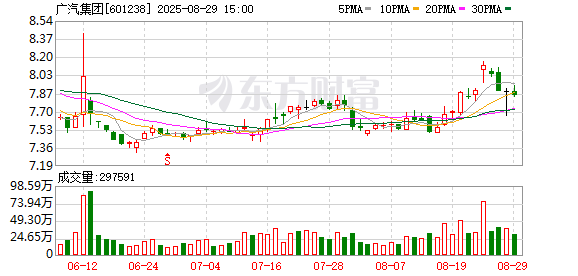
以下文章来源于一见Auto ,作者一见编辑部 从6月10日夜间开始,多家一线车企陆续宣布,自即日起对供应商支付账期统一缩短至60天以 内,截至发稿, 做出公开承诺的车企达到16家 ,包括一汽、广汽、东风、吉利、赛力斯、长 安、奇瑞、比亚迪、小鹏、蔚来、小米和长城汽车等。(→ 回顾 ) 作 者丨何煦阳 郑植文 易思琳 焦文娟 编 辑丨吴晓宇 一见Auto . 汽车竞争中的野心、方法论与新秩序。21世纪经济报道旗下汽车报道品牌。 这被业内解读为利好汽车供应链企业,二级市场亦迅速响应。6月11日早盘,汽车零部件概念 股集体走强,截至午间收盘,东方财富汽车零部件板块上涨2.32%,美晨科技、欣锐科技、华 阳变速、迪生力、泉峰汽车、金麒麟等多股涨停。(→ 回顾 ) 一个不容忽视的背景是,6月1日,修订后的《保障中小企业款项支付条例》正式实施,其中 第九条明确规定,"大型企业从中小企业采购货物、工程、服务,应当自货物、工程、服务交 付之日起60日内支付款项。" 一位汽车行业人士认为, "账期缩短至60天,是解决车企内卷的方式之一。但对于资金不宽裕 的车企,处境就更困难了。" 过去三年,在激烈的价格战背景下,车企利润连年跳 ...
汽车业“反内卷”进行时 | 供应商盼来“及时雨”,17家车企承诺“账期不超60天”
Bei Jing Shang Bao· 2025-06-11 11:09
在政府相关部门整治汽车行业"内卷式"竞争背景下,各车企率先从解决供应商账期问题入手"反内卷", 推动上下游关系重构。6月10日晚,中国一汽、东风汽车、广汽集团、赛力斯集团等车企相继宣布,对 供应商的支付账期不超过60天。6月11日,比亚迪汽车、奇瑞汽车、小鹏汽车等多家车企跟进。据统 计,目前共有17家重点汽车生产企业作出相应承诺。在外界看来,政府相关部门与行业协会相继发声, 强化对"价格战"等无序竞争的监管,将推动汽车产业链向高质量的协同转型,而车企的"账期"自律则能 够进一步缓解供应链资金压力。 汽车"链"60天提现 在汽车行业"反内卷"背景下,众多车企开始破除上游供应商痛点。6月10日晚开始,中国一汽、东风汽 车、广汽集团和赛力斯集团相继发声,承诺将供应商支付账期压缩至60天以内,意在通过实际行动维护 市场经济秩序健康稳定。 此后,吉利汽车宣布,将旗下各品牌供应商账期统一压缩至60天以内,进一步提升产业链资金周转效 率,稳定产业链运作,并以行业领军企业身份推动整个行业的健康发展。同样作出承诺的还有长安汽 车,涵盖旗下长安启源、长安凯程、深蓝汽车、阿维塔等品牌,表示将统一执行60天付款账期,以履行 央企社会 ...
每日速递 | 国务院严令,锂电客户承诺“60天付款”
高工锂电· 2025-06-11 10:51
Group 1: Industry Developments - The State Council has mandated that automotive companies limit supplier payment terms to within 60 days to ensure efficient capital turnover in the supply chain, aiding collaborative development in the industry [2][3] - CATL has officially announced the mass production of its next-generation large-capacity energy storage cell, the 587Ah cell, which is expected to be produced at its Jining base in Shandong [4][5] - China Salt Lake has made significant progress with its 40,000 tons/year integrated lithium salt project in the Qaidam Basin, transitioning from construction to trial production [6][7] Group 2: Corporate Actions - Deyang Nano has announced plans to introduce strategic investors through a capital increase and share expansion for its subsidiary, Shenzhen Deyang Chuangyu New Energy Technology Co., Ltd. [8][9] Group 3: International News - Swedish battery manufacturer Northvolt is set to halt production at its last factory in northern Sweden by the end of June if it fails to find a buyer amid bankruptcy proceedings [10][11] - Zimbabwe's Minister of Mines announced a ban on lithium concentrate exports starting in 2027 to promote local processing [12]
电池企业重大利好!车企承诺“60天付款”
起点锂电· 2025-06-11 10:30
Core Viewpoint - The implementation of the revised "Regulations on Payment of Funds for Small and Medium-sized Enterprises" by the State Council aims to shorten the payment period for suppliers to within 60 days, which has been positively received by multiple automotive companies, potentially improving supply chain efficiency and collaboration [2][6][7]. Group 1: Automotive Industry Response - Over ten automotive companies, including GAC Group, FAW Group, and BYD, have committed to reducing supplier payment terms to within 60 days, marking the beginning of a significant shift in the automotive industry's payment practices [3][4]. - The average payment cycle for domestic automotive companies has deteriorated from approximately 45 days a decade ago to much longer periods due to intensified competition and market pressures [6]. - The collective response from major automotive manufacturers is seen as a resistance to "involution" in the industry, with leaders publicly criticizing the negative impacts of price wars and extended payment terms [6][7]. Group 2: Impact on Suppliers - Shortening payment terms is expected to benefit suppliers by allowing quicker access to funds, thereby reducing operational risks and enabling faster production scale-up and product iteration [8]. - However, this shift may pose challenges for automotive companies with poor cash flow management, potentially leading to the elimination of weaker players in the market [8]. Group 3: Battery Industry Implications - The commitment to a 60-day payment term is particularly significant for the battery supply chain, where battery costs account for 30% to 40% of the total vehicle cost [12]. - The current lithium battery industry is facing challenges such as increased accounts receivable and extended customer payment cycles, impacting even leading companies like CATL [13][14]. - The new payment terms could enhance cash flow for battery suppliers, especially smaller firms, and foster deeper partnerships between automakers and battery manufacturers, promoting innovation and new business models [16].
一汽/东风/长安/北汽/江淮/比亚迪等密集官宣!商用车行业或迎巨变
第一商用车网· 2025-06-11 08:56
Core Viewpoint - Major Chinese automotive groups have collectively announced a reduction in supplier payment terms to within 60 days, driven by the revised "Regulations on Payment for Small and Medium-sized Enterprises" set to take effect on June 1, 2025, which mandates large enterprises to pay within 60 days of delivery [1][35]. Group Summaries China FAW Group - China FAW Group emphasizes responsibility by optimizing internal procurement and financial settlement processes, ensuring timely payments within 60 days, and enhancing efficiency through digital monitoring of payment processes [2]. Dongfeng Motor - Dongfeng Motor has unified its payment terms to within 60 days to support the healthy development of small and medium-sized enterprises and promote efficient capital flow within the industry [5][6]. Changan Automobile - Changan Automobile has committed to a 60-day payment term for suppliers, aiming to enhance collaboration and support high-quality industry development [8]. BAIC Group - BAIC Group has announced strict adherence to a 60-day payment term, eliminating unreasonable settlement methods that increase financial pressure on suppliers [11]. GAC Group - GAC Group maintains a commitment to a maximum 60-day payment term to ensure efficient capital turnover and support high-quality industry development [15]. SAIC Motor - SAIC Motor has pledged to unify payment terms to within 60 days, avoiding methods that increase supplier financial pressure, thereby promoting sustainable development in the automotive industry [18]. Jianghuai Automobile - Jianghuai Automobile has committed to a 60-day payment term and is optimizing its internal processes through digital management for efficient capital turnover [21]. Geely Automobile - Geely has announced a unified payment term of 60 days to enhance capital turnover efficiency and stabilize the supply chain [23]. BYD - BYD has committed to a 60-day payment term, focusing on technological innovation and management optimization to support the automotive industry's sustainable development [27]. Chery Automobile - Chery has decided to implement a 60-day payment term to improve capital turnover efficiency and foster a fair and healthy market environment [29]. Great Wall Motors - Great Wall Motors has unified its payment terms to 60 days to ensure supply chain stability and promote fair competition and innovation within the industry [31]. Conclusion - The collective announcements from major automotive groups reflect a strong commitment to "anti-involution," "promoting high-quality development," and "healthy development of the industry chain," indicating a pressing desire for high-quality growth and stability in the automotive sector [35].