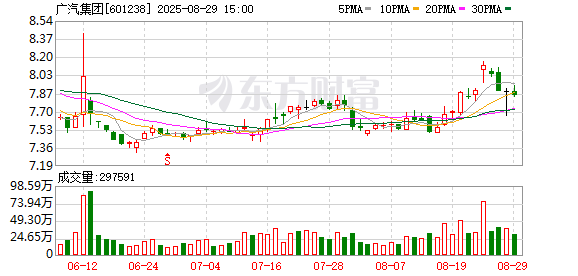
GAC GROUP(601238)
Search documents
5月跳楼价活埋价中,十大佬六小龙地位渐稳
汽车商业评论· 2025-06-12 09:51
Core Viewpoint - The article discusses the recent developments in the Chinese automotive market, highlighting the government's intervention to curb price wars and promote high-quality industry growth through measures such as regulating supplier payment terms [4][6]. Group 1: Market Trends and Performance - From January to April, the profit margin of the Chinese automotive industry was 4.1%, increasing to 4.4% in April, compared to 3.9% in Q1 and 3.5% in March, indicating a positive trend [7]. - In May, the retail sales of passenger vehicles reached 1.932 million units, a year-on-year increase of 13.3% and a month-on-month increase of 10.1%, surpassing the level of 1.81 million units in May 2018 [9]. - Cumulative retail sales from January to May reached 8.811 million units, up 9.1% year-on-year [9]. Group 2: Sales Data and Company Performance - In the first five months, sales of Chinese brand passenger vehicles reached 7.562 million units, a year-on-year increase of 26.3%, accounting for 68.8% of total passenger vehicle sales [10]. - The top ten automotive groups sold 10.708 million units in total, representing 84% of the overall market, with varying performance among individual companies [11]. - In May, BYD sold 382,476 units, a year-on-year increase of 15.35%, while SAIC Group sold 366,000 units, up 10.25% [13][14]. Group 3: Competitive Landscape - The article notes that some companies engaged in aggressive pricing strategies, leading to a temporary surge in market activity, but this has raised concerns about sustainability [12]. - The sales performance of major companies varied, with some like Geely and Changan showing significant growth, while others like GAC and Dongfeng experienced declines [14][39]. - New energy vehicle sales are highlighted as a key growth area, with companies like Changan and BYD reporting substantial increases in this segment [29][37].
60天账期,给恶性竞争浇一盆冷水
3 6 Ke· 2025-06-12 09:09
Core Viewpoint - An increasing number of automotive companies have committed to a payment term of no more than 60 days for suppliers, responding to regulatory changes aimed at alleviating cash flow pressures in the supply chain [1][2]. Group 1: Industry Commitments - As of now, 15 automotive companies, including GAC Group, China FAW, Dongfeng Motor, NIO, Li Auto, Xiaomi Auto, Geely, BYD, Chery, Changan, Seres, BAIC, SAIC, Leap Motor, and Jianghuai Automobile, have pledged to keep payment terms within 60 days [1]. - SAIC and BAIC have not only committed to the 60-day payment term but also stated they will not use commercial acceptance bills, which can increase financial pressure on suppliers [1]. Group 2: Regulatory Context - The 60-day payment term aligns with the revised "Regulations on the Payment of Funds to Small and Medium-sized Enterprises" issued by the State Council, which took effect on June 1, requiring large enterprises to pay small and medium-sized enterprises within 60 days of delivery [1][2]. - The regulations also prohibit forcing small and medium-sized enterprises to accept non-cash payment methods, such as commercial bills, to prevent the extension of payment cycles [1]. Group 3: Current Payment Practices - Historically, payment terms for suppliers in the joint venture era did not exceed three months, but current practices have extended average payment terms to over 170 days, with some exceeding 240 days [3]. - Some Tier 1 suppliers report payment terms extending beyond eight months, and upstream suppliers often face even longer terms, exacerbating financial strain on smaller suppliers [3]. Group 4: Challenges with Commercial Bills - Commercial bills, which can have a redemption period of 3-6 months, force suppliers to choose between longer payment terms and accepting discounted payments [4][5]. - The discount rates for commercial bills can be significantly high, with some reaching up to 11% for six-month periods, further impacting suppliers' cash flow [4]. Group 5: Ambiguities in Payment Terms - Despite commitments to a 60-day payment term, there are ambiguities regarding when this term begins, as it can vary based on delivery, acceptance, and invoicing processes [6][7]. - Suppliers have expressed skepticism about the sincerity of these commitments, viewing them as potentially empty promises, given the historical context of payment practices in the industry [7].
广汽首款量产飞行汽车预售价不超168万,2026年底开启交付
Xin Lang Cai Jing· 2025-06-12 08:18
Group 1: GAC's GOVY AirCab Launch - GAC officially launched its mass-produced flying car, GOVY AirCab, at the 2025 Hong Kong International Auto and Supply Chain Expo, with a price not exceeding 1.68 million RMB [1] - The GOVY AirCab is the first mass-produced unmanned multi-rotor flying vehicle, featuring over 90% carbon fiber composite materials and multiple redundancy safety designs [1] - The flying car is set to begin demonstration operations in the Guangdong-Hong Kong-Macao Greater Bay Area this year, with deliveries expected to start by the end of 2026 [1] Group 2: Industry Trends and Competitors - Xpeng Motors is also advancing the commercialization of flying cars, with its "Land Carrier" flying car priced under 2 million RMB and a planned annual production capacity of 10,000 units [2] - The low-altitude economy, valued in trillions, is accelerating the development of flying cars, with several domestic automakers like Geely and Changan entering the market [2] - Morgan Stanley predicts that the flying car industry will create a market size of $300 billion by 2030 and grow to $9 trillion by 2050, with China potentially becoming the largest urban low-altitude transportation market [2]
促进汽车产业健康可持续发展 17家重点车企承诺“支付账期不超60天”
Yang Shi Wang· 2025-06-12 07:17
Group 1 - Key Point 1: Seventeen major automotive companies, including FAW, Dongfeng, GAC, and Seres, have committed to a payment term not exceeding 60 days, which is seen as a significant step for the sustainable development of the automotive industry [1][7] - Key Point 2: The commitment from automotive companies reflects a proactive response to national calls and demonstrates corporate social responsibility, contributing to a collaborative ecosystem between vehicle manufacturers and parts suppliers [1][5] - Key Point 3: The automotive supply chain is crucial for the industry's transformation and upgrading, with increasing competition in the electric vehicle market leading to longer payment cycles and financial difficulties for suppliers [3][5] Group 2 - Key Point 1: The Ministry of Industry and Information Technology supports vehicle manufacturers in fulfilling their commitments and encourages the establishment of stable partnerships with supply chain companies to enhance resilience and safety in the supply chain [5][7] - Key Point 2: The recent revision of the "Regulations on Guaranteeing Payment to Small and Medium Enterprises" limits large enterprises' payment terms to a maximum of 60 days, which is expected to improve the business environment for SMEs and boost market confidence [7] - Key Point 3: The automotive industry is currently at a critical stage of high-quality development, and there is a call for industry self-discipline and support from all sectors to foster a positive and orderly development environment [5][7]
工业和信息化部:支持整车企业切实践行“支付账期不超过60天”承诺
中汽协会数据· 2025-06-12 07:02
一汽、东风、广汽、赛力斯等17家重点汽车企业日前发表声明,就对供应商"支付账期不 超过60天"作出承诺。如何看待汽车企业承诺?推动构建"整车—零部件"协作共赢发展生态, 将会采取哪些措施?工业和信息化部相关负责人回答了记者问题。 这位负责人说,汽车企业主动承诺"支付账期不超过60天",对构建"整车—零部件"协作共赢 发展生态、促进产业健康可持续发展具有重要意义。 这位负责人表示,产业链供应链是汽车产业的"筋骨血脉",是产业转型升级的关键一环。随 着新能源汽车市场竞争加剧,竞争压力从整车向产业链环节传导,出现了供应商货款支付账 期加长、资金周转困难等现象,不利于产业技术创新和健康可持续发展。 工业和信息化部支持整车企业切实践行有关承诺,继续引导整车企业与供应链企业建立长期 稳定的合作关系,促进大中小企业融通创新、协同发展,积极营造"大河有水小河满"的良好 局面,不断提升产业链供应链韧性和安全水平,也为全球汽车产业发展作出新贡献。 延伸阅读 一汽、东风、广汽、赛力斯四家车企承诺:支付账期不超过60天! 吉利、长安、比亚迪、奇瑞陆续承诺支付账期不超过60天 最新!小鹏、小米、长城、零跑、上汽陆续承诺:支付账期不超过 ...
A股广汽集团午后直线拉升触及涨停,现涨7.8%,成交额3.8亿元。消息面上,广汽丰田官方微博发布信息称,广汽丰田与华为深化合作2.0上线,从车机点到点合作,升级到全域面到面合作。
news flash· 2025-06-12 06:18
Group 1 - GAC Group's stock surged by 7.8%, reaching the daily limit, with a trading volume of 380 million yuan [1] - GAC Toyota announced an upgrade in its collaboration with Huawei, moving from point-to-point cooperation to a comprehensive face-to-face partnership [1]
车圈卷向了好方向:60天账期,谁压力最大?
Xin Lang Cai Jing· 2025-06-12 05:38
Core Viewpoint - The automotive industry is experiencing a new wave of price cuts and improved payment terms for suppliers, initiated by GAC Group's commitment to a maximum 60-day payment period, which has been followed by other major automakers [1][2][8]. Group 1: Industry Dynamics - GAC Group's announcement has prompted other automakers like FAW, Dongfeng, and BYD to adopt similar payment terms, indicating a shift towards better supplier relations [2][3]. - The new regulations, effective from June, mandate that large enterprises must pay small and medium-sized enterprises within 60 days, prohibiting the use of non-cash payment methods to extend payment periods [4][5]. - Historically, domestic automakers had an average payment cycle exceeding 170 days, with some exceeding 240 days, creating significant cash flow issues for suppliers [6][8]. Group 2: Supplier Challenges - Suppliers face immense pressure from automakers to reduce prices, with 74% of industry professionals reporting increased cost-cutting demands, often requiring annual reductions of 5% to 10% [6][9]. - The relationship between automakers and suppliers has deteriorated, with suppliers often bearing the financial burden of optimistic sales forecasts from automakers [7][10]. - The automotive industry's profit margins are under pressure, with the average profit margin for the automotive sector at only 4.1%, lower than the 5.6% average for downstream industries [7][8]. Group 3: Regulatory Impact - The implementation of the new payment regulations is seen as a potential turning point for suppliers, offering hope for improved cash flow and stability [11][12]. - There are concerns that automakers may find ways to circumvent these regulations, such as manipulating the start date for the 60-day payment period [11][12]. - Regulatory bodies are expected to introduce stricter measures to prevent price wars and protect suppliers, including potential antitrust investigations against dominant automakers [12][13].
供应商账期缩短到60天内,财务成本或数亿级增加,车企生死淘汰赛再升级
Sou Hu Cai Jing· 2025-06-12 03:46
从多家车企的官宣内容看,此举一方面是落实国务院《保障中小企业款项支付条例》,保障中小企业资金高效流转;另一方面是响应中 国汽车工业协会《关于维护公平竞争秩序促进行业健康发展的倡议》。 自6月1日起,《保障中小企业款项支付条例》正式实施,明确规定大型企业向中小企业采购货物、工程或服务时,最长付款周期不得超 过60天。 6月10日至11日,多家车企宣布将供应商支付账期统一至60天内,包括吉利、比亚迪、赛力斯、东风汽车、广汽集团、中国一汽、长城汽 车、小米汽车,以及长安汽车旗下长安启源、长安凯程、深蓝汽车、阿维塔等。 截至发稿,至少已有17家车企承诺"支付账期不超过60天",当中也包含小鹏、小米、零跑、蔚来和理想等造车新势力。 出品 | 搜狐财经 作者 | 王泽红 冯紫彤 此次,诸多车企表态缩短账期,意味着其应付账款周期将至少减少60天。具体来看,长安汽车减少145天,赛力斯106天,长城汽车、上 汽集团减少104天,比亚迪至少减少67天,广汽集团53天。 应付账款大部分为无息负债,在业内不乏车企将供应商视为"无息资金池"的言论,但在车企的负债构成中,应付账款是主要构成,这也 导致车企应付账款规模不断攀升,有息负债 ...
内卷行情拨云见日,车市生态优化向上
HTSC· 2025-06-12 02:25
Investment Rating - The industry is rated as "Overweight" [6] Core Views - Multiple automakers have committed to shortening payment terms to within 60 days, which is expected to improve the automotive supply chain ecosystem [1] - The shortening of payment terms is anticipated to alleviate concerns regarding automakers' repayment capabilities and promote healthy industry development [1] - The average cash turnover rates for components, complete vehicles, and dealers in 2024 are projected to be 4.5, 2.2, and 8.9 respectively, with the new payment terms expected to enhance cash flow [1] - The reduction in payment terms aligns with international standards, potentially benefiting Chinese brands in overseas markets [2] - Price competition has paused, leading to a narrowing of discount rates, which is favorable for healthy competition within the industry [2] Summary by Sections Section 1: Impact of Shortened Payment Terms - The adjustment to a 60-day payment term is expected to have limited impact on the cash flow of complete vehicle manufacturers, as many currently operate with payment terms exceeding 110 days [2] - The new terms are expected to enhance the cash turnover ability and cash levels of upstream component manufacturers, with an estimated increase in cash funds of approximately 32 billion yuan (+37%) if accounts receivable turnover improves to 6 [3] Section 2: Export Growth of Domestic Passenger Vehicles - Domestic brands are leading in competitiveness within the market, driving foreign brands out [4] - In 2024, market shares for domestic brands in various price segments are projected to be 80%, 48%, and 42% respectively, with year-on-year increases of 7, 14, and 4 percentage points [4] - In May, domestic brand exports reached 375,000 units, a year-on-year increase of 18% and a month-on-month increase of 10% [4] - The global market is viewed as a significant growth opportunity for Chinese automakers, with a recommendation to focus on industry leaders with global competitiveness [4]
治理汽车业“长账期”问题可探索强化立法
21世纪经济报道· 2025-06-11 23:26
Core Viewpoint - The collective commitment of domestic automotive companies to unify supplier payment terms to within 60 days is a response to the "anti-involution" policy and aims to stabilize the industry while complying with the new regulations effective June 1, 2025 [1][2]. Group 1: Industry Context - The rapid development of China's new energy vehicle (NEV) industry has led to continuous price reductions to compete with fuel vehicles, negatively impacting upstream suppliers who bear the cost of these price cuts [1]. - The average accounts payable turnover days for 16 listed Chinese automotive companies is estimated to be 182 days in 2024, significantly longer than the 60 days maintained by 14 international automotive companies [2]. Group 2: Financial Implications - The profit margin of the Chinese automotive industry is projected to decline from 4.3% in 2024 to 3.9% in Q1 2025, which is below the average level of the manufacturing sector [3]. - Companies with high accounts payable ratios and extended payment terms face increased risks of losses from price competition, which could lead to cash flow issues and impact upstream suppliers [3]. Group 3: Regulatory and Structural Issues - The current self-regulation and corporate commitments lack sufficient effectiveness and enforcement, as some companies may still pressure suppliers to lower prices or absorb costs that should be borne by the automakers [4]. - Long-term solutions to the issue of extended payment terms require legal and systematic approaches, including stricter legislation against delayed payments and better quality regulation of components and materials [4].